
What a Cease and Desist Letter Actually Means (Legally)
A cease and desist letter is a formal demand that you stop doing something the sender claims is illegal, harmful, or violates their rights. It is typically the step before a lawsuit - the sender is saying "stop this, or we will take legal action."
Here is what most people get wrong: a cease and desist letter is not a legal order. It is not issued by a court. It is not a subpoena, a summons, or an injunction. It is a letter - sometimes from a lawyer, sometimes from an individual or company - expressing a legal claim and demanding action.
That said, ignoring a cease and desist letter is not always wise. It serves several strategic purposes for the sender:
- Creating a record: The sender is documenting that they put you on notice. If the dispute goes to court, they can show the judge they attempted to resolve the matter first.
- Establishing a timeline: For some legal claims (particularly intellectual property), the date you were notified of the alleged infringement affects the damages calculation.
- Testing your response: How you respond (or do not respond) tells the sender whether you are likely to fight or fold. Many cease and desist letters are sent hoping the recipient will comply immediately out of fear.
- Fulfilling legal prerequisites: Some types of claims require a formal notice before a lawsuit can be filed.
The critical first step when you receive a cease and desist is simple: do not panic, and do not respond immediately. You have time. Read the letter carefully, understand what is being claimed, and then decide on a strategic response.
Disclaimer: This is general information, not legal advice. If you have received a cease and desist letter, consider consulting with an attorney about your specific situation.
See our real-world walkthrough: got a cease and desist.
Is a Cease and Desist Letter Legally Binding?
No. A cease and desist letter is not legally binding. It has no legal force on its own. You cannot be arrested, fined, or penalized simply for receiving one or for not complying with it.
This is one of the most important things to understand. A cease and desist letter is a communication - an assertion of rights and a demand for action. It is roughly equivalent to someone saying "stop that or I will sue you." The threat of a lawsuit is not the same as a lawsuit.
However, there are important nuances:
What a Cease and Desist CAN Do
- Put you on legal notice: Once you receive the letter, you can no longer claim you did not know about the alleged infringement or violation. This is particularly significant in trademark and copyright cases, where "willful" infringement (continuing after being notified) carries higher damages. The Lanham Act (15 U.S.C. 1117) allows courts to triple damages for willful trademark infringement.
- Start a clock: Some legal claims have specific response deadlines once notice is given. For example, DMCA takedown notices have specific timelines under federal law.
- Serve as evidence: If the matter goes to court, the letter becomes evidence that the sender attempted resolution before litigation.
What a Cease and Desist CANNOT Do
- Compel you to do anything: Only a court order can force you to take or stop an action.
- Create legal liability: Receiving a letter does not make you guilty of anything.
- Override your legal rights: If you have a legitimate right to do what you are doing (fair use, first amendment speech, contractual rights), a cease and desist letter does not change that.
The distinction between "not legally binding" and "safe to ignore" is important. Just because you are not legally required to comply does not mean ignoring it is the best strategy. Evaluate the merits of the claim before deciding your response.
Types of Cease and Desist Letters and What They Target
Cease and desist letters come in several common varieties, and the type determines how seriously you should take it and how to respond.
Trademark Infringement
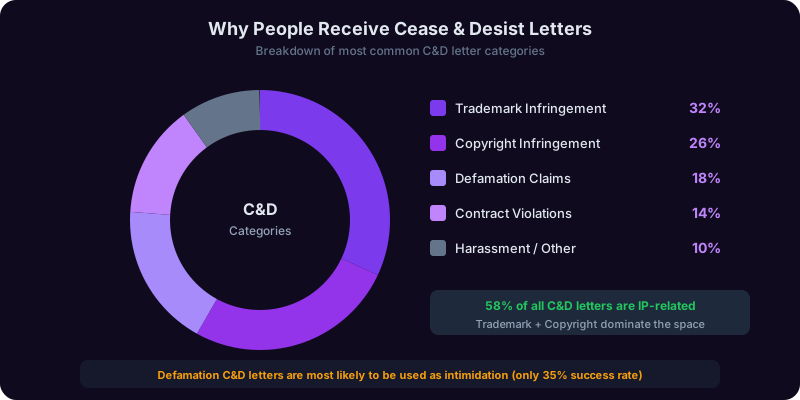
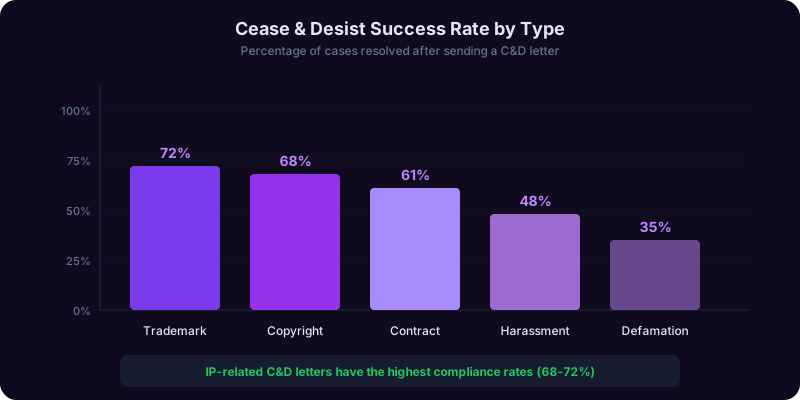
A company or individual claims you are using their trademark - a brand name, logo, slogan, or similar identifier - in a way that confuses consumers. These letters often come from larger companies with active legal departments. Trademark holders have a legal obligation to enforce their marks, so these letters are often legitimate even if the claim is aggressive. Common scenarios: using a similar business name, selling products with similar branding, or using someone's trademark in your marketing. You can search existing trademarks through the USPTO Trademark Electronic Search System (TESS). Try our trademark search tool for step-by-step help.
Copyright Infringement
Someone claims you are using their copyrighted material without permission - photos, text, music, video, software, or designs. Copyright cease and desist letters range from legitimate (you actually used their photo on your website) to questionable (a copyright troll sending mass letters hoping for settlements). Check whether the sender actually owns the copyright and whether your use qualifies as fair use under U.S. copyright law.
Defamation
Someone claims your statements (online reviews, social media posts, blog articles, public comments) are false and damaging to their reputation. These are extremely common and often used as intimidation tactics. Truth is an absolute defense to defamation. If what you said is true and you can prove it, a defamation cease and desist has no teeth.
Contract Violations
A party claims you are violating a contract - a non-compete agreement, NDA, non-solicitation clause, or other contractual obligation. Evaluate whether the contract is valid, whether you are actually violating it, and whether the specific clause is enforceable in your state. Many non-compete agreements, for example, are unenforceable or overly broad. The FTC's Non-Compete Clause Rule has also significantly narrowed the enforceability of non-competes. A Contract Review Copilot session can help you analyze the contract terms. For a deeper dive, read our guide on how to read and negotiate contracts.
Harassment or Neighbor Disputes
An individual or their attorney sends a cease and desist regarding personal conduct - noise complaints, property boundary disputes, harassment claims. These are typically less legally complex but can escalate if ignored. Consider whether the underlying complaint has merit before deciding your response.

Get Answers From the Consumer Rights Copilot
Upload your cease and desist letter and get an instant analysis of the claims, your options, and a draft response - without the $350/hr attorney fee.
Step-by-Step: How to Respond to a Cease and Desist Letter
Follow this process to respond strategically rather than emotionally.
Step 1: Read It Carefully - Twice
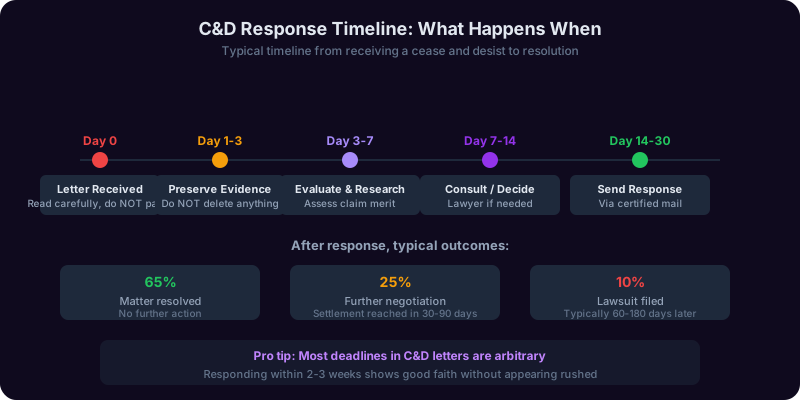
Read the entire letter. Identify: Who sent it (individual, company, or law firm)? What exactly are they claiming you did? What specific legal basis do they cite (statute, contract clause, common law)? What do they want you to do? What is their deadline? Understanding the claim precisely is essential before taking any action. Try our AI contract review tool for step-by-step help.
Step 2: Preserve Everything
Do not delete anything related to the dispute - emails, files, social media posts, business records. Even if you plan to comply with the demand, destroying evidence after receiving legal notice can create serious problems if the matter goes to court. This includes not altering your website, social media, or any content referenced in the letter.
Step 3: Evaluate the Claim's Merit
Is there any truth to the allegation? Be honest with yourself. If you did use someone's trademarked name, if you did post their copyrighted photo, if you are operating under a non-compete - acknowledge that privately, even if you plan to dispute it. Understanding the strength of their claim helps you decide whether to fight, negotiate, or comply.
Step 4: Research the Sender
Who actually sent the letter? A major law firm represents a serious threat to litigate. A solo attorney may or may not follow through. A letter from an individual without legal representation suggests a lower likelihood of litigation. Check whether the sender has a history of filing similar lawsuits - public court records are searchable online through PACER (federal courts) and your state's court records system.
Step 5: Decide Your Strategy
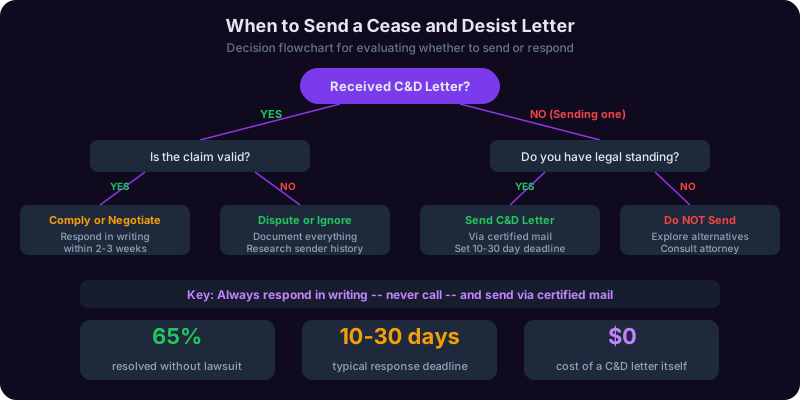
You have four basic options: (1) Comply fully, (2) Comply partially and negotiate, (3) Respond disputing the claim, or (4) Ignore the letter entirely. The right choice depends on the merit of the claim, the likelihood of a lawsuit, and the cost of each option. We cover when to use each strategy in the following sections.
Step 6: Respond in Writing
Whatever you decide, put it in writing. Send your response via certified mail. Keep your response professional, factual, and brief. Do not admit fault unnecessarily, but do not be hostile either. If you are complying, document what you are doing and when. If you are disputing, state your basis clearly.
For help evaluating the claims in your cease and desist letter, the Consumer Rights Copilot can help you understand the legal concepts involved and draft an appropriate response.
When You Can Safely Ignore a Cease and Desist Letter
Sometimes the best response is no response. Here are situations where ignoring a cease and desist may be appropriate.
The Claims Are Clearly Baseless
If the letter claims you are infringing a trademark you have never heard of, violating a contract you never signed, or defaming someone with statements that are demonstrably true, the claim may have no legal foundation. Baseless cease and desist letters are common - some businesses send them as a first resort, hoping recipients will comply out of fear.
It Is a Mass-Mailed Template
Copyright trolls and aggressive trademark holders sometimes send hundreds of nearly identical letters. If your letter reads like a template with your name filled in, lacks specific details about your alleged infringement, or comes from a firm known for mass litigation, it may not warrant a response. Research the sender's litigation history.
The Sender Has No Standing
Only the actual rights holder can enforce a trademark, copyright, or contractual obligation. If the letter comes from someone who does not own the intellectual property or is not a party to the contract, they may lack standing to pursue the claim.
The Cost of Compliance Outweighs the Risk
If complying would require shutting down your business, abandoning a brand you have used for years, or paying an unreasonable amount, and the sender's claim is weak or the sender is unlikely to actually litigate, strategic non-response may be appropriate.
When NOT to Ignore
Do not ignore a cease and desist if: the claim has clear merit, the sender is a well-funded company or law firm with a litigation history, the letter references pending or imminent court action, or you are in a regulated industry where the complaint could trigger regulatory action. In these cases, at minimum consult with an attorney before deciding not to respond.
Even when ignoring the letter, document that you received it and your reasons for not responding. If the sender does file a lawsuit later, you will want to show the court that you made a reasoned decision, not that you were simply negligent.
When You Need a Lawyer
Many cease and desist situations can be handled without a lawyer. But some require professional legal help. Here is how to tell the difference.
You Definitely Need a Lawyer If:
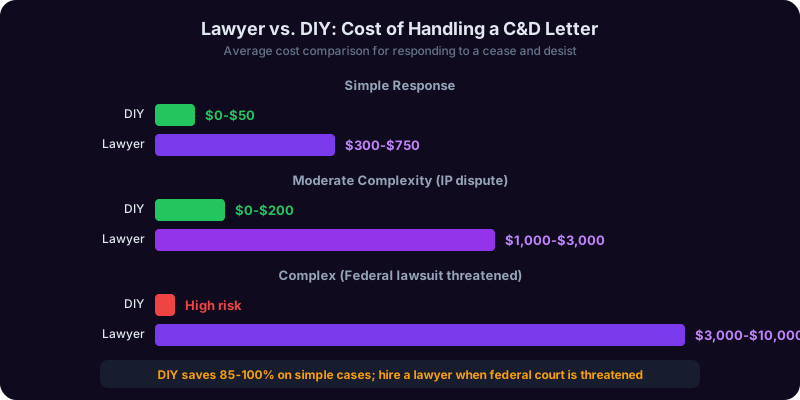
- The letter threatens a federal lawsuit. Federal court litigation is complex, expensive, and the stakes are higher. If someone is threatening to sue in federal court (common for trademark and copyright claims), get legal counsel.
- The damages claimed are significant. If the letter demands $50,000 or more, or references statutory damages that could reach those levels, the financial risk justifies legal fees.
- The letter comes from a large law firm. Large firms represent clients with litigation budgets. They are more likely to follow through on threats.
- Your livelihood depends on the outcome. If the cease and desist targets your business name, your primary product, or your ability to work in your field (non-compete), the stakes justify professional help.
- You are accused of willful infringement. Willful infringement carries enhanced damages in IP cases. If you continued an activity after being put on notice, the damages calculation changes significantly.
You Probably Do Not Need a Lawyer If:
- The claim is clearly meritless and the sender has no litigation history.
- The fix is simple. If someone wants you to take down a photo, change a business name for a side project, or remove a social media post, and you do not mind complying, just do it and send a brief confirmation.
- The amount at stake is small. For disputes under a few thousand dollars, attorney fees may exceed the claim value.
Finding Affordable Legal Help
If you need a lawyer but are concerned about cost:
- Free consultations: Many attorneys offer a free 30-minute consultation for cease and desist review.
- Legal aid organizations: If you qualify based on income, legal aid societies provide free representation.
- Law school clinics: Many law schools operate intellectual property and small business clinics staffed by supervised law students.
- Prepaid legal services: Services like LegalShield provide attorney access for a monthly fee.
- Flat-fee cease and desist response: Some attorneys offer flat-fee services specifically for cease and desist responses, typically $500-$1,500. Find an attorney through your state bar association's referral service.
How to Write Your Own Cease and Desist Response
If you have decided to respond without a lawyer, here is how to write an effective response letter.
Format and Tone
Use a formal business letter format. Be professional and measured. Never be sarcastic, hostile, or dismissive - your letter may be read by a judge someday. Address the letter to the person who signed the cease and desist (the attorney, if one is named).
If You Are Complying
A compliance response is straightforward:
- Acknowledge receipt of the letter
- State that you have taken the requested action (removed the content, stopped using the name, etc.)
- Describe specifically what you have done
- Request written confirmation that the matter is resolved
- Do not admit liability unnecessarily - "I have removed the image as a courtesy" is different from "I acknowledge that I infringed your copyright"
If You Are Disputing
A dispute response requires more care:
- Acknowledge receipt of the letter
- State that you disagree with the claims
- Provide your legal basis: fair use, first sale doctrine, independent creation, contractual right, first amendment protection, lack of consumer confusion, or whatever applies
- Reference any evidence supporting your position
- State that you do not intend to comply with the demand
- Invite further discussion if appropriate
If You Are Partially Complying
This is often the most practical approach:
- Acknowledge the valid aspects of the claim
- Describe what you are willing to do
- Explain why you are not complying with the remaining demands
- Propose a resolution
Key Rules for Any Response
- Do not admit fault unless you are intentionally settling
- Do not make threats - state your position factually
- Do not provide unnecessary information - answer what was asked, nothing more
- Send by certified mail with return receipt
- Keep a copy of everything you send
For help drafting your response, the Contract Review Copilot can help you analyze the legal claims in the cease and desist and draft an appropriate response based on your situation.
For more on this topic, read our guide on How to Write a Demand Letter That Gets Results. If the situation escalates and you need to take legal action yourself, our small claims court guide covers what to expect in court. You may also want to review your contract negotiation skills if the C&D involves a contractual dispute.
Frequently Asked Questions
Recommended Copilots
Recommended Copilots
Understand the legal claims in your cease and desist and draft an appropriate response
Try Free →Analyze contract terms referenced in the cease and desist letter
Try Free →Get guidance on trademark or copyright claims in the letter
Try Free →Continue Exploring
Related Scenarios
How It Works
Related Articles
Get Answers From the Consumer Rights Copilot
Upload your cease and desist letter and get an instant analysis of the claims, your options, and a draft response - without the $350/hr attorney fee.