
Understanding Eviction Notices: The Three Types and What They Mean
Receiving an eviction notice is terrifying. But an eviction notice is not an eviction - it is the beginning of a legal process, and that process is full of rules your landlord must follow. If they get any step wrong, the eviction can be dismissed entirely. Understanding what type of notice you received is the first step toward mounting an effective defense.
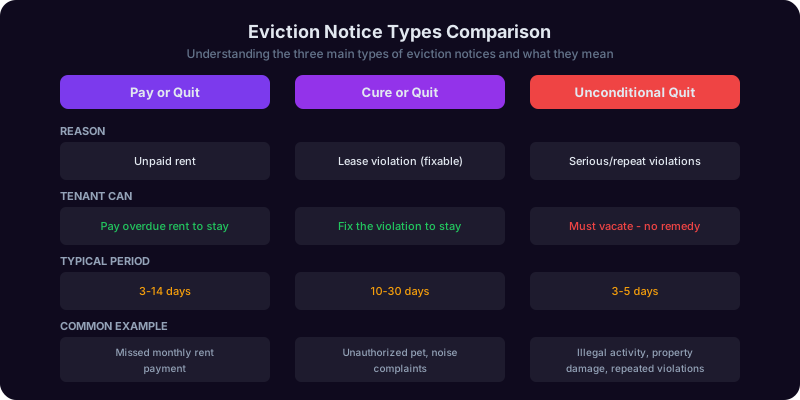
There are three primary types of eviction notices used across the United States. Each one triggers different rights, different timelines, and different defense strategies.
1. Pay or Quit Notice
This is the most common eviction notice. It tells you that you owe rent and gives you a specific number of days to pay the full amount or vacate the property. If you pay within the deadline, the notice is void and you stay.
- Common timelines: 3 days (CA, FL, TX, NV), 5 days (IL, CO), 7 days (OH, WI), 10 days (WA, NC), 14 days (NY, VT, MA)
- Your rights: You have the full number of days to pay. The landlord cannot file an eviction lawsuit until the notice period expires. If you pay in full within the deadline (including any late fees if specified in your lease), the landlord must accept payment and the eviction process stops.
- Key defense: The notice must state the exact amount owed. If the amount is wrong - even by a few dollars - the notice may be defective. Courts have dismissed evictions over incorrect amounts, missing dates, and improper service methods.
2. Cure or Quit Notice
This notice is used when you have violated a lease term other than nonpayment of rent. Common triggers include unauthorized pets, excessive noise complaints, unauthorized occupants, or illegal activity on the premises. It gives you a set number of days to fix ("cure") the violation or vacate.
- Common timelines: 3-30 days depending on the state and the nature of the violation
- Your rights: You have the right to cure the violation within the notice period. If you remove the unauthorized pet, reduce the noise, or address whatever triggered the notice, the eviction process stops. The landlord must give you the opportunity to cure before filing a lawsuit.
- Key defense: Did you actually violate the lease? If the lease does not prohibit the specific conduct the landlord is complaining about, the cure or quit notice has no legal basis. Also, in many states, you are entitled to cure the same type of violation at least once before the landlord can proceed with an unconditional quit.
3. Unconditional Quit Notice
This is the most severe type. It tells you to vacate with no option to pay or fix the problem. Unconditional quit notices are only permitted in specific circumstances, and many states heavily restrict when landlords can use them.
- Common permitted uses: Repeated lease violations after previous cure notices, serious criminal activity on the premises, substantial damage to the property, or situations where the tenant poses a health or safety risk to other residents
- Common timelines: 3-30 days depending on the state and the nature of the violation
- Key defense: Unconditional quit notices are the easiest to challenge because landlords frequently use them in situations where a cure or quit notice was legally required instead. If your state requires a cure opportunity for first-time lease violations, an unconditional quit notice issued for a first offense is defective and should be dismissed.
Regardless of the type of notice you receive, do not ignore it. Ignoring an eviction notice does not make it go away - it allows the landlord to proceed to the next step (filing a lawsuit) without opposition. Even if you believe the notice is wrong, you need to respond within the stated timeline. The U.S. Department of Housing and Urban Development (HUD) provides a state-by-state directory of tenant rights and legal aid resources.
Disclaimer: This guide provides general information about tenant rights and eviction defense. It is not legal advice. Landlord-tenant laws vary significantly by state, county, and city. If you are facing an active eviction, consult with a local tenant rights attorney or legal aid organization immediately.
Eviction Notice Periods by State: Know Your Timeline
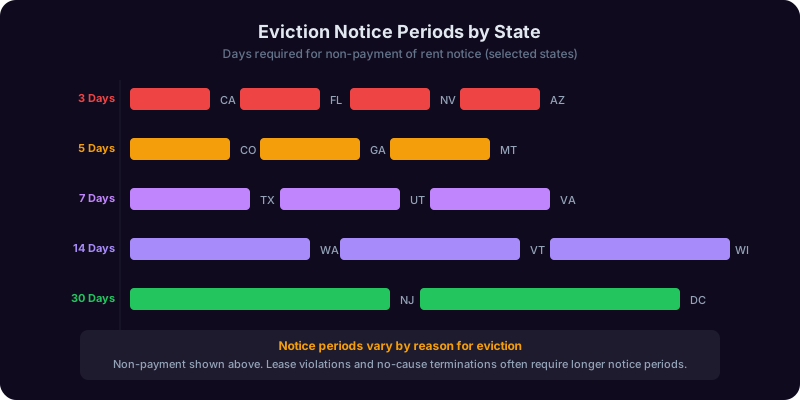
The amount of time your landlord must give you before filing an eviction lawsuit varies dramatically from state to state. Knowing your state's notice requirements is critical because if the landlord filed before the notice period expired, or served the wrong type of notice, the case should be dismissed.
| State | Pay or Quit | Cure or Quit | Unconditional Quit | Key Notes |
|---|---|---|---|---|
| California | 3 days | 3 days | 3 days (limited use) | Just cause required statewide for tenancies over 12 months (AB 1482). Rent control cities may have additional protections. |
| New York | 14 days | 10 days (NYC: 10 days to cure) | Varies | Good Cause Eviction Act (2024) applies statewide for most tenants. NYC has additional protections under HPD. |
| Texas | 3 days | 3 days (unless lease says otherwise) | 3 days | Landlord must give written notice before filing. Lease can shorten or lengthen the notice period. |
| Florida | 3 days | 7 days | 7 days | Pay or quit notice excludes weekends and holidays. Cure or quit applies to most non-rent violations. |
| Illinois | 5 days | 10 days | 10 days | Chicago RLTO provides additional protections. Landlords must follow strict service requirements. |
| Washington | 14 days | 10 days | 3 days (limited to specific causes) | Just Cause Eviction ordinances in Seattle and other cities. State law requires 14-day pay or quit. |
| Colorado | 10 days | 10 days | 3 days (for substantial violations) | As of 2025, landlords must provide a 10-day demand for compliance before filing for most violations. |
| Oregon | 10 days (first offense); 4 days (repeat within 12 months) | 14 days (30 days for first offense in Portland) | 24 hours (specific emergencies only) | Statewide rent control under SB 608. Just cause required for tenancies over 12 months. |
| Massachusetts | 14 days | No separate cure notice required | 14 days (30 days for tenancy at will) | No self-help eviction. Summary process must be filed in court. Tenants can raise habitability counterclaims. |
| New Jersey | 30 days (or as specified in lease) | Varies by violation | 3 days (disorderly conduct) | Anti-eviction act provides strong protections. Landlords must prove one of the statutory grounds for eviction. |
| Nevada | 7 days | 5 days | 3 days (unlawful activity) | AB 486 (2023) requires 7-day pay or quit. Tenants in rent-controlled areas have additional notice rights. |
| Georgia | No statutory minimum | No statutory cure requirement | 60 days (tenant at will) | Limited tenant protections. Landlord must file formal dispossessory proceeding in court. |
How Notice Must Be Served
The method of delivering the eviction notice matters as much as the content. Most states require one of the following methods:
- Personal service: Handing the notice directly to the tenant. This is the strongest form of service and hardest to challenge.
- Substituted service: Leaving the notice with another adult at the property, then mailing a copy. Only permitted when personal service fails.
- Posting and mailing: Taping the notice to the door and mailing a copy via certified mail. This is typically the last resort and only permitted after attempts at personal and substituted service fail.
If your landlord used an improper service method - for example, just slipping the notice under your door without attempting personal service in a state that requires it, or emailing or texting the notice when the statute requires written notice - the notice is defective. A defective notice means the eviction lawsuit was filed prematurely, and the court should dismiss it. This is one of the most common and effective procedural defenses. Check Nolo's eviction notice guide for detailed state-by-state requirements.
For help understanding your specific notice and whether it was properly served, the Legal Copilot can analyze the notice language and identify potential defects. Also see our guide on how to read your lease agreement to understand what your lease says about notice procedures.
Valid vs. Invalid Eviction Reasons: When Your Landlord Cannot Legally Evict You
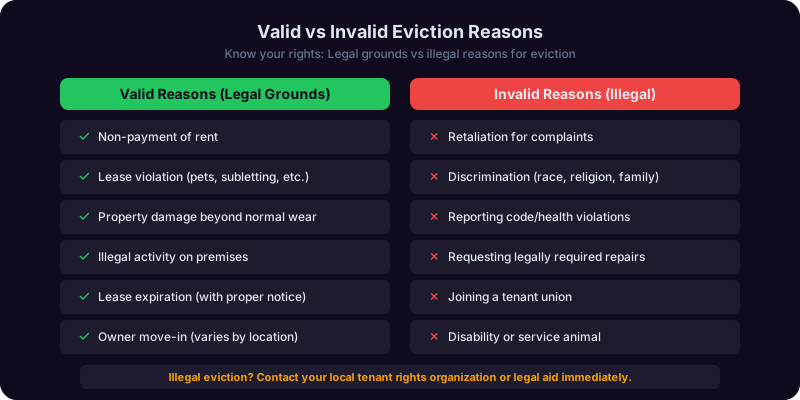
Not every reason a landlord gives for eviction is legally valid. In fact, a significant percentage of eviction filings are based on grounds that are legally questionable, procedurally defective, or outright prohibited. Understanding the difference between valid and invalid eviction reasons is your most powerful tool.
Valid Reasons for Eviction
A landlord generally has the legal right to evict a tenant for the following reasons, provided they follow the proper notice and court procedures:
- Nonpayment of rent: The most common and straightforward ground. If you owe rent and fail to pay within the notice period, the landlord can proceed with an eviction lawsuit.
- Lease violations: Violating specific terms of your lease - unauthorized pets, exceeding occupancy limits, causing repeated disturbances, subletting without permission, or using the property for illegal purposes.
- Holdover tenancy: Remaining in the property after your lease expires and the landlord has given proper notice that they do not wish to renew.
- Owner move-in (in just cause jurisdictions): The landlord or an immediate family member intends to move into the unit. Most just cause laws require the landlord to provide relocation assistance.
- Substantial property damage: Intentional or negligent damage to the property that significantly reduces its value or habitability.
- Criminal activity: Drug manufacturing, drug dealing, or violent criminal activity on the premises.
Invalid Reasons for Eviction
The following are never valid grounds for eviction, regardless of what your lease says:
- Retaliation: Evicting you for exercising a legal right - filing a complaint with code enforcement, requesting repairs, joining a tenant union, withholding rent for habitability issues, or testifying in another tenant's case. Every state prohibits retaliatory eviction in some form, and most create a presumption of retaliation if the eviction is filed within 6-12 months of the protected activity.
- Discrimination: Evicting you because of your race, color, religion, sex, national origin, familial status, or disability (all protected under the Fair Housing Act). Many states add additional protections for sexual orientation, gender identity, source of income, marital status, age, and immigration status.
- Refusal to waive rights: You cannot be evicted for refusing to agree to lease changes that waive your legal rights, such as agreeing to waive the implied warranty of habitability or agreeing not to call code enforcement.
- Reporting code violations: If you reported building code violations, health hazards, or safety issues to a government agency, evicting you for that report is retaliatory and illegal.
- Exercising your right to organize: Joining or forming a tenant association, participating in collective bargaining, or advocating for tenant rights is protected activity.
Just Cause Eviction Laws: The Growing Trend
An increasing number of states and cities now require landlords to have "just cause" before evicting a tenant. Under just cause laws, the landlord must prove one of a specific list of permitted reasons - simply choosing not to renew a month-to-month tenancy is not enough.
As of 2026, states and major cities with just cause eviction protections include:
- California (statewide, AB 1482 - tenancies over 12 months)
- New York (statewide Good Cause Eviction Act, 2024)
- Oregon (statewide, SB 608 - tenancies over 12 months)
- Washington (Seattle, Tacoma, and other cities)
- New Jersey (statewide Anti-Eviction Act - one of the strongest in the country)
- Washington, D.C.
- San Francisco, Oakland, Los Angeles, Portland, Philadelphia, Boston, Minneapolis, and many other cities
If you live in a just cause jurisdiction and your landlord is trying to evict you for a reason not on the permitted list, you have a strong defense. The Legal Copilot can help you determine whether just cause protections apply to your tenancy and whether the landlord's stated reason qualifies.
For a deeper understanding of how lease clauses interact with eviction rights, see our guide to reading lease agreements.

Get Answers From the Legal Copilot
The Legal Copilot analyzes your eviction notice, identifies procedural defects and legal defenses, helps you draft your court answer, and guides you through the eviction process step by step. Tell it what happened and get personalized guidance immediately.
Retaliatory Eviction: Your Strongest Shield Against Illegal Landlord Behavior
Retaliatory eviction is one of the most common and most underused tenant defenses. If your landlord is trying to evict you because you exercised a legal right - complained about conditions, requested repairs, reported code violations, or organized with other tenants - the eviction is illegal in every state, and you can use it as a complete defense in court.
What Counts as Protected Activity
The following actions are protected in most states, meaning your landlord cannot evict you, raise your rent, reduce services, or take any other adverse action against you for doing them:
- Complaining to the landlord about needed repairs or maintenance
- Reporting health, safety, or building code violations to a government agency
- Filing a complaint with a housing authority or tenant protection office
- Contacting code enforcement about habitability issues
- Withholding rent for habitability violations (where permitted by state law)
- Joining or organizing a tenant union or tenant association
- Testifying or providing evidence in another tenant's legal proceeding against the landlord
- Exercising any right granted by your lease, local ordinance, or state statute
The Presumption of Retaliation
Many states create a legal presumption of retaliation when a landlord takes adverse action within a specified time after the tenant's protected activity. This means the burden shifts to the landlord to prove they had a legitimate, non-retaliatory reason for the eviction.
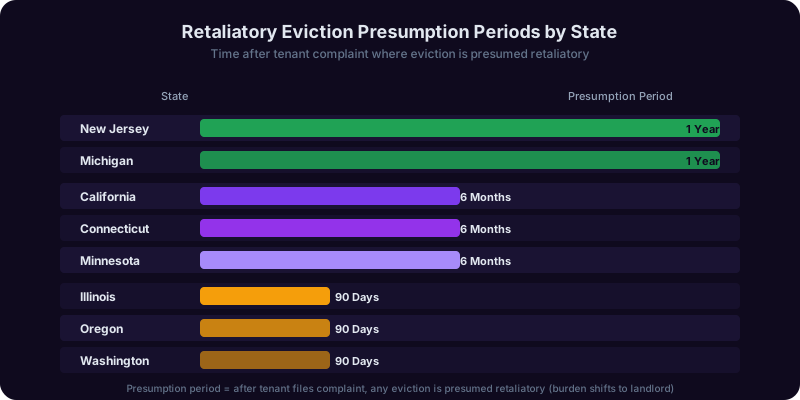
| State | Presumption Period | What Triggers It |
|---|---|---|
| California | 180 days (6 months) | Complaint to government agency, exercise of any tenant right, organizing activity |
| New York | 1 year | Good faith complaint to landlord or government agency, tenant organizing |
| Texas | 6 months | Exercise of any right or remedy under the lease or state law |
| Washington | 90 days | Complaint about conditions, report to government agency, tenant organizing |
| Illinois | No statutory period (courts apply case-by-case analysis) | Complaint, organizing, exercise of rights |
| Oregon | 6 months | Complaint, repair request, government report, organizing |
| New Jersey | No statutory period (strong common law protection) | Any exercise of tenant rights under the Anti-Eviction Act |
| Colorado | 12 months | Complaint about health and safety violations, code enforcement report |
| Massachusetts | 6 months | Exercise of any right under the law, report to code enforcement |
| Florida | No specific period (courts look at totality of circumstances) | Complaint to government agency about code violations |
How to Prove Retaliation
Even outside the presumption period, you can prove retaliation through circumstantial evidence. Courts look at:
- Timing: How close in time was the eviction to your protected activity? The closer, the stronger the inference of retaliation.
- Pattern: Did the landlord's behavior toward you change after your complaint? Were you previously a good tenant with no issues? Did they suddenly start citing minor violations they had ignored before?
- Pretextual reasons: Is the stated reason for eviction inconsistent with the landlord's prior behavior? If they never enforced the "no guests over 3 nights" rule before, but suddenly cite it after you filed a code complaint, that is pretext.
- Disparate treatment: Are other tenants doing the same thing without consequences? If your neighbor also has a dog but only you are being evicted after reporting mold, that is evidence of retaliation.
- Landlord statements: Did the landlord say anything threatening or vengeful? "You should not have called the city" or "I'll make you regret complaining" are powerful evidence. Save all texts, emails, voicemails, and written communications.
What to Do If You Suspect Retaliation
- Document everything. Keep a detailed log of every interaction with your landlord. Save all communications. Note dates, times, and witnesses for verbal interactions.
- Document your protected activity. Keep copies of every complaint you filed, every repair request you made, every letter you sent. If you reported to a government agency, keep the complaint number and any acknowledgment letters.
- Do not leave voluntarily. A retaliatory eviction is only a defense if you fight it in court. If you leave voluntarily, you waive the defense and may lose the ability to recover damages.
- Raise it as an affirmative defense in court. When you file your answer to the eviction complaint, specifically state that the eviction is retaliatory and cite the relevant statute. Provide the timeline showing the connection between your protected activity and the eviction.
- Seek legal help. Retaliatory eviction cases are strong candidates for free legal aid, and many legal aid organizations prioritize them. The LawHelp.org directory can connect you with free representation in your area.
In many states, if you successfully prove retaliatory eviction, you can recover damages beyond just staying in your home - including attorney's fees, statutory penalties, and in some states, multiple damages. The Legal Copilot can help you build a retaliation timeline and identify the evidence you need to present in court.
Habitability Defenses: When Bad Conditions Are Your Best Defense
If your landlord is evicting you for nonpayment of rent while your apartment has serious habitability problems, you may have one of the most powerful defenses in tenant law: the implied warranty of habitability. This legal doctrine, recognized in nearly every state, says that a landlord has a fundamental obligation to maintain the property in livable condition - and if they fail, the tenant may be entitled to reduced rent, rent withholding, or even lease termination.
What Qualifies as a Habitability Violation
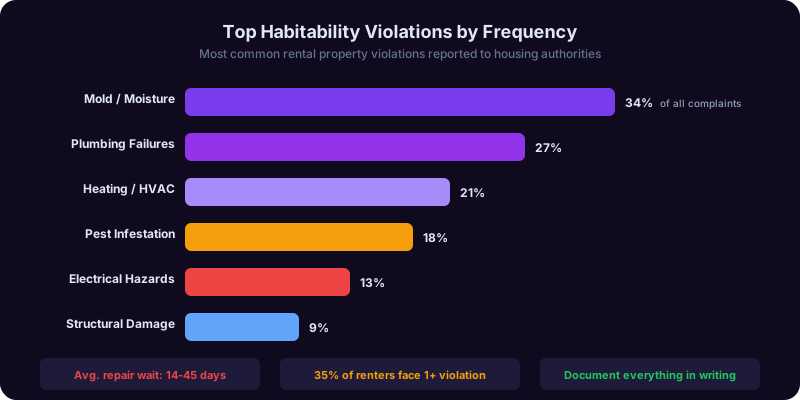
Habitability violations are conditions that make the property unsafe, unhealthy, or unfit for human habitation. The standard is not perfection - it is basic livability. Common habitability violations include:
- No heat in cold weather (or no functioning HVAC in extreme heat, in states that include cooling)
- No hot water or no running water
- No electricity (or wiring that creates fire hazards)
- Severe pest infestations - cockroaches, rodents, bedbugs
- Mold and mildew caused by structural issues (leaking pipes, poor ventilation, roof damage)
- Structural defects - holes in walls or floors, broken windows, unstable stairways, roof leaks
- Non-functioning plumbing - backed-up sewage, broken toilets, persistent leaks
- Broken locks or security issues - inability to secure exterior doors or windows
- Lead paint hazards in pre-1978 housing
- Fire safety violations - no smoke detectors, blocked exits, faulty fire escapes
- Building code violations cited by a government inspector
How to Use Habitability as an Eviction Defense
The habitability defense works in two main ways:
1. Counterclaim / Rent Abatement: If the landlord is suing you for unpaid rent, you can argue that the rent owed should be reduced because the landlord breached the warranty of habitability. The court can calculate a "fair rental value" of the property in its defective condition and reduce or eliminate the rent owed accordingly. For example, if your apartment had no heat for two months and the court determines the fair rental value without heat is 50% of the contract rent, you may only owe half of the claimed amount.
2. Constructive Eviction: If the conditions were so severe that the property was essentially uninhabitable, you may have been "constructively evicted" - meaning the landlord's failure to maintain the property forced you out. Constructive eviction can be a complete defense to an eviction for nonpayment and may entitle you to damages.
Requirements for the Habitability Defense
To successfully raise a habitability defense, you typically need to show:
- You notified the landlord in writing. You must have given the landlord written notice of the defective conditions and a reasonable opportunity to make repairs. Keep copies of every maintenance request, email, text message, or letter.
- The landlord failed to act within a reasonable time. What is "reasonable" depends on the severity - a broken heater in January requires faster action than a leaking faucet. Most states set specific timelines (24 hours for emergencies, 7-30 days for non-emergencies).
- The condition was not caused by you. The habitability defense does not apply if the tenant caused the problem through negligence or intentional damage.
- You have evidence. Photos, videos, dated maintenance requests, code enforcement reports, and testimony from witnesses (neighbors, friends who visited, repair technicians) all strengthen your case.
Repair and Deduct as a Related Strategy
In many states, if your landlord fails to make necessary repairs within the statutory period after written notice, you have the right to hire someone to make the repairs yourself and deduct the cost from your rent. This is called "repair and deduct," and it is a statutory right in California, Washington, Massachusetts, Texas, Colorado, and many other states. The key rules:
- The repair must address a habitability issue, not a cosmetic problem
- You must have given the landlord proper written notice and waited the required period
- The cost of the repair is typically capped at one to two months' rent
- Keep all receipts and documentation of the repair work
If your landlord then tries to evict you for "nonpayment" of the rent you deducted for repairs, you have a strong defense: you exercised a statutory right, and the rent deduction was legally authorized. For more on your landlord's repair obligations, see our lease agreement guide and our security deposit guide, which covers related maintenance and damage disputes.
Rent Control Areas and New 2026 Tenant Protection Laws
The landscape of tenant protection is shifting rapidly. Since 2019, more states and cities have enacted or strengthened rent control laws, just cause eviction protections, and anti-displacement measures than in any comparable period in U.S. history. If you live in a rent-controlled area, you have additional eviction defenses that tenants in unregulated markets do not.
Rent Control and Eviction Protections
Rent control laws do more than cap rent increases - they typically include strong eviction protections that limit the reasons a landlord can remove a tenant. In most rent-controlled jurisdictions, a landlord can only evict for specific enumerated reasons ("just cause"), and many of those reasons come with requirements for relocation assistance payments.
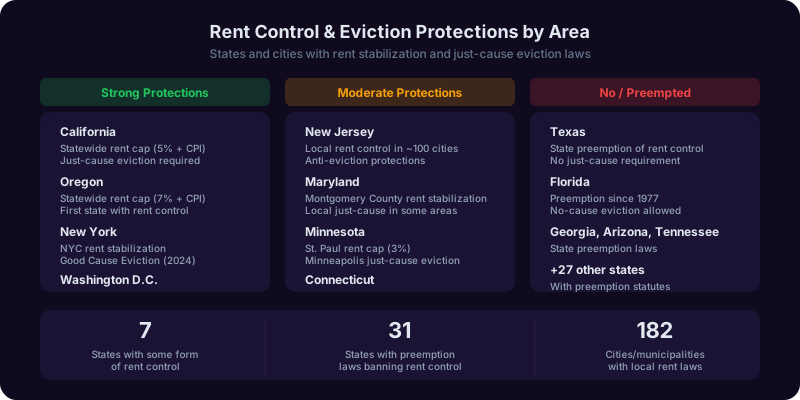
| Jurisdiction | Rent Cap | Just Cause Required | Relocation Assistance |
|---|---|---|---|
| California (statewide, AB 1482) | 5% + local CPI (max 10%) | Yes, after 12 months | 1 month rent for no-fault evictions |
| Oregon (statewide, SB 608) | 7% + CPI | Yes, after 12 months | 1 month rent for no-fault evictions |
| New York (statewide HSTPA + Good Cause) | Varies (regulated units capped by Rent Guidelines Board) | Yes | Varies by municipality |
| New Jersey (Anti-Eviction Act) | Varies by municipality | Yes (strongest statewide protection) | Varies by municipality |
| San Francisco | 60% of CPI increase | Yes (16 enumerated just causes) | $7,700-$23,000+ depending on circumstances |
| Los Angeles (RSO) | 3-8% (set annually) | Yes | $9,000-$22,000+ depending on unit size and tenant age |
| Washington, D.C. | CPI + 2% (elderly/disabled: CPI only) | Yes | Varies |
| Portland, OR | 7% + CPI (statewide cap) | Yes | $2,900-$4,500 per tenant |
| Seattle, WA | No rent cap (just cause only) | Yes (18 enumerated just causes) | Required for certain no-fault evictions |
Key 2026 Tenant Protection Updates
Several significant new protections have taken effect or been strengthened in 2026:
- New York Good Cause Eviction Act expansion: The 2024 act continues to expand in implementation, with courts increasingly applying it to protect tenants from no-cause terminations statewide. Local municipalities are adopting additional implementing regulations.
- California AB 1482 enforcement updates: Stronger enforcement mechanisms and penalties for landlords who violate the rent cap or evict without just cause. Tenants can now recover up to three times actual damages for willful violations.
- Colorado tenant protection expansion: New legislation extending notice periods and requiring landlords to offer payment plans before filing eviction for nonpayment. Increased protections for tenants with children during the school year.
- Minnesota statewide protections: New pre-eviction notice requirements and expanded just cause protections in Minneapolis and St. Paul, with statewide legislation under consideration.
- Connecticut eviction sealing: Expanded rights to seal eviction records that did not result in a judgment against the tenant, helping protect tenants from "eviction scarring" on background checks.
- Federal Emergency Rental Assistance: While the large-scale pandemic-era programs have ended, targeted federal funding continues to support state and local emergency rental assistance programs. Check your local housing authority for current availability.
Eviction Sealing and Record Protection
Even when an eviction case is dismissed or the tenant wins, the filing itself can appear on background checks and make it harder to find future housing. A growing number of states and cities now allow tenants to seal or expunge eviction records:
- Automatic sealing: Some jurisdictions automatically seal eviction records when the case is dismissed or the tenant prevails (Nevada, Connecticut, Illinois, and others)
- Petition to seal: Other jurisdictions allow tenants to petition to seal records after a certain period or when the case was resolved in their favor
- Limitations on reporting: Federal law limits credit reporting agencies from reporting eviction filings that did not result in a judgment against the tenant
If you have a prior eviction on your record that was dismissed or resolved in your favor, check whether your jurisdiction allows sealing. Removing an unfair eviction record can dramatically improve your ability to find housing. The Legal Copilot can help you understand the eviction sealing process in your state and draft a petition if one is required.
Responding to an Eviction Notice and Preparing for Court
If you receive an eviction notice, your response in the first 48 hours determines your options for the next several months. Here is a step-by-step plan for responding effectively and preparing for court if the case proceeds to a hearing.
Step 1: Read the Notice Carefully (Day 1)
Identify: What type of notice is it (pay or quit, cure or quit, unconditional quit)? What is the stated reason? How many days do you have to respond? When was it served, and how was it delivered? Is the amount owed correct (for pay or quit)? Does the notice comply with your state's requirements for format and content?
Step 2: Do Not Ignore It (Day 1-2)
Ignoring an eviction notice is the worst thing you can do. If you do nothing, the landlord will file an eviction lawsuit (called an "unlawful detainer" in many states), and if you do not respond to the court summons, the court will enter a default judgment against you. A default judgment means the landlord wins automatically, and you may be ordered to vacate within days. You also lose the ability to raise any defenses.
Step 3: Contact Legal Aid Immediately (Day 1-3)
Free legal help is available in every state for tenants facing eviction. Do not assume you cannot afford a lawyer - many legal aid organizations provide free representation for eviction defense. Start with these resources:
- LawHelp.org: National directory of free legal aid by state and issue type
- HUD Tenant Rights page: State-by-state tenant resources and counseling agencies
- Your local bar association: Most offer lawyer referral services, and many have free or low-cost clinics for housing issues
- 211: Dial 211 for free, confidential referrals to local social services, including legal aid and emergency rental assistance
Step 4: File Your Answer (Within the Court Deadline)
When the landlord files the eviction lawsuit, you will receive a court summons with a deadline to file a written response (called an "answer"). This deadline is typically 5-14 days depending on your state. In your answer, you must:
- Deny the allegations that are untrue or that you dispute
- Raise all defenses - improper notice, retaliation, habitability violations, discrimination, rent was paid, landlord accepted partial payment, etc.
- File any counterclaims - if the landlord owes you money (withheld security deposit, repair costs you paid, damages from habitability violations), file a counterclaim in the same case
Step 5: Gather Your Evidence
Prepare an evidence folder (physical or digital) organized chronologically:
- Your lease agreement
- All rent payment records (bank statements, receipts, money order stubs, payment app history)
- The eviction notice you received (noting date, method of service, and any defects)
- All correspondence with the landlord (emails, texts, letters)
- Maintenance requests and the landlord's responses (or lack thereof)
- Photos and videos of habitability issues (with dates)
- Code enforcement reports or inspection results
- Documentation of any protected activity (complaints, organizing, reporting)
- Witness contact information for anyone who can corroborate your account
Step 6: Courtroom Preparation
Eviction hearings are usually short - 15 to 45 minutes. Judges hear many eviction cases per day and appreciate organized, focused presentations. Here is how to prepare:
- Dress professionally. First impressions matter. Business casual is appropriate.
- Arrive early. Check in with the clerk, find your courtroom, and observe other hearings before yours to understand the flow.
- Be respectful and calm. Address the judge as "Your Honor." Never interrupt. Even if the landlord says something untrue, wait for your turn to respond.
- Present your case chronologically. Start with the tenancy (when you moved in, the lease terms, your payment history), then address the events leading to the eviction notice, then present your defenses.
- Let your evidence speak. Instead of making emotional arguments, show the judge your documents. "Your Honor, I have bank statements showing rent was paid on time for 36 consecutive months" is more powerful than "I always pay my rent."
- Ask for a continuance if you need more time. If you were just served and have not had time to prepare or find legal representation, you can ask the judge for a continuance (postponement). Most judges will grant at least one continuance for a tenant who is unrepresented.
If you need to write a formal response or a demand letter to your landlord before or during this process, our guide on how to write a demand letter covers effective legal correspondence. The Legal Copilot can help you draft your answer to the eviction complaint and organize your evidence.
Free Legal Aid Resources and How Copilotly Helps You Fight Back
You do not have to fight an eviction alone. The legal system can feel overwhelming, especially when you are at risk of losing your home, but there is an entire network of free and low-cost legal services designed specifically to help tenants in your situation. Studies consistently show that tenants with legal representation are significantly more likely to stay in their homes - in some jurisdictions, represented tenants win or settle favorably in over 80% of cases, compared to less than 10% for unrepresented tenants.
National Legal Aid Resources
| Resource | What They Offer | How to Access |
|---|---|---|
| LawHelp.org | Free legal aid directory by state and issue. Find housing attorneys, clinics, and self-help resources. | Search by state and select "Housing" as the issue |
| HUD Tenant Rights | Approved housing counseling agencies, tenant rights information, and complaint filing for fair housing violations. | Call 1-800-569-4287 or search online by ZIP code |
| Nolo Renters' Rights | Comprehensive legal guides, state-by-state tenant rights information, and self-help resources for renters. | Free articles and guides available online |
| Legal Aid Society (your city/county) | Free legal representation for low-income tenants in eviction proceedings. Income-based eligibility. | Search "Legal Aid Society [your city]" or call 211 |
| Tenant Rights Hotlines | Free phone consultations with housing attorneys. Many cities and states operate dedicated tenant hotlines. | Search "tenant rights hotline [your state]" or call 211 |
| Law School Clinics | Free representation from supervised law students. Often high quality and thorough. | Contact your nearest law school's legal clinic |
| Right to Counsel Programs | Guaranteed free legal representation for tenants facing eviction. Available in NYC, San Francisco, Philadelphia, Cleveland, Baltimore, and a growing list of cities. | Contact your local court or legal aid organization |
Emergency Rental Assistance
If the eviction is for nonpayment and you need help catching up on rent, emergency rental assistance programs may be available in your area. While the large federal programs from the pandemic era have wound down, many state and local programs continue to operate:
- Check with your local housing authority
- Contact 211 for referrals to local assistance programs
- Religious organizations and community nonprofits often have emergency funds
- Some utility companies offer assistance programs that free up money for rent
How Copilotly Helps Tenants Facing Eviction
Copilotly's AI copilots provide immediate, personalized guidance for tenants who need help understanding their rights and navigating the eviction process. While AI cannot replace a lawyer, it can help you understand your situation, prepare your defense, and take the right steps quickly - especially in the critical early hours after receiving a notice.
The Legal Copilot can help you:
- Analyze your eviction notice to identify defects in service, timing, or content that could result in dismissal
- Identify your defenses based on your specific situation - retaliation, habitability, improper notice, discrimination, or procedural errors
- Understand your state's laws including notice periods, just cause requirements, rent control protections, and tenant rights
- Draft your answer to an eviction complaint, including affirmative defenses and counterclaims
- Prepare for court by organizing your evidence, understanding what the judge will look for, and anticipating the landlord's arguments
- Find local legal aid based on your location and income level
The Consumer Rights Copilot can additionally help you:
- Draft demand letters to your landlord for habitability violations, security deposit disputes, or retaliatory behavior
- Understand your rights under federal and state consumer protection laws
- File complaints with housing authorities, the HUD, or your state's attorney general
Start by telling the copilot what happened - when you received the notice, what type it is, what it says, and any relevant background (repair requests, complaints you filed, conditions in the apartment). The copilot will walk you through your options step by step.
For related issues that may arise during or after an eviction dispute, see our guides on security deposit rights, getting out of a lease early, and writing a demand letter.
Disclaimer: Copilotly provides general legal information and AI-assisted guidance. It is not a substitute for legal advice from a licensed attorney. If you are facing an active eviction, contact a local legal aid organization or tenant rights attorney for representation. Eviction law varies by state, county, and city, and the specific facts of your case determine your legal options. Nothing in this guide or in Copilotly's responses constitutes legal advice or creates an attorney-client relationship.
Frequently Asked Questions
Recommended Copilots
Recommended Copilots
Analyze your eviction notice, identify defenses, and draft your court answer
Try Free →File complaints, draft demand letters, and understand your protections under tenant law
Try Free →Related Articles
Get Answers From the Legal Copilot
The Legal Copilot analyzes your eviction notice, identifies procedural defects and legal defenses, helps you draft your court answer, and guides you through the eviction process step by step. Tell it what happened and get personalized guidance immediately.