
Legal & Rights
Illegal Lease Clauses Your Landlord Cannot Enforce (and How to Spot Them)
Some lease clauses are flatly unenforceable, no matter what the document says or what your landlord claims. This guide breaks down the 12 essential clauses in a standard lease, the illegal and unconscionable terms courts strike down, how to dispute unfair deposit deductions, and what is actually negotiable before you sign.
Why Reading Your Lease Matters More Than You Think
A lease agreement is a legally binding contract that controls where you live, how much you pay, and what rights you have for the next 12 months or longer. Yet according to a 2025 survey by the National Apartment Association, nearly 62% of renters admit they did not read their entire lease before signing. They skimmed, they trusted the landlord's verbal promises, or they felt pressured to sign quickly before someone else took the apartment. Every one of those renters handed over legal rights without knowing what they agreed to.
The consequences of not reading your lease are not hypothetical. They are expensive, stressful, and painfully common.
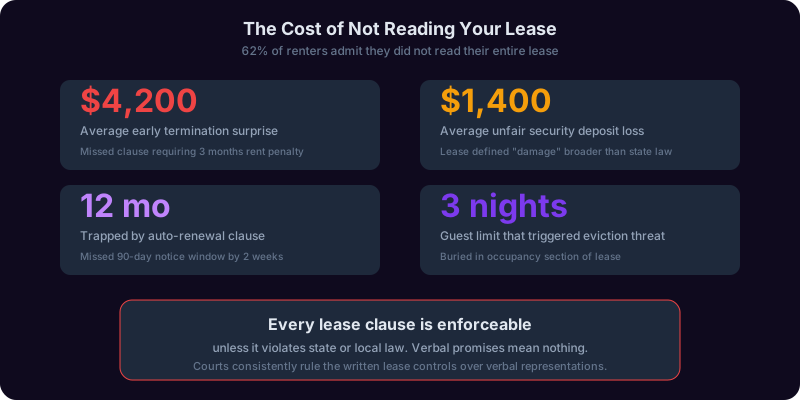
Real Stories of Missed Clauses
- The $4,200 early termination surprise: A renter in Austin, TX needed to relocate for a job. She assumed she could give 60 days notice and leave. Her lease contained an early termination clause requiring three months rent as a penalty plus forfeiture of her security deposit. Total cost to break her lease: $4,200. She had no legal recourse because the clause was clearly stated on page 7 of the lease she never read.
- The "no guests over 3 nights" eviction threat: A couple in Chicago had a family member stay for two weeks during a medical emergency. Their lease limited overnight guests to three consecutive nights without prior written approval from the landlord. The landlord issued a lease violation notice and threatened eviction proceedings. The clause was buried in the "occupancy" section.
- The vanishing security deposit: A renter in Phoenix paid a $1,800 security deposit. When he moved out, the landlord deducted $1,400 for "normal wear and tear" that the lease defined as tenant damage - including nail holes, minor carpet wear, and appliance cleaning. The lease's definition of "damage" was far broader than the state's default standard, and because the tenant signed it, the landlord's definition controlled.
- The automatic renewal trap: A renter in Atlanta planned to move when her lease ended. She did not realize her lease contained an automatic renewal clause that converted to a new 12-month term unless she provided written notice 90 days before expiration. She missed the window by two weeks. The landlord held her to the renewal and threatened to report her to collections if she did not pay the full term.
What a Lease Actually Is
A lease is not a formality. It is a contract with the same legal force as any business agreement. Every clause in it is enforceable unless it violates state or local law. Verbal promises from the landlord - "do not worry, we never enforce that" or "we will fix that after you move in" - mean nothing if they are not written into the lease. Courts consistently rule that the written lease controls over verbal representations.
This guide will walk you through every major clause in a residential lease, teach you to identify red flags that could cost you thousands, show you what is negotiable, and explain your rights when things go wrong. Whether you are a first-time renter or have signed a dozen leases, reading this guide before your next signing will save you money and protect your rights.
The Contract Review Copilot can help you analyze your specific lease agreement clause by clause, flagging terms that are unusual, potentially illegal, or worth negotiating before you sign.
Disclaimer: This guide provides general legal information about residential lease agreements, not legal advice. Landlord-tenant laws vary significantly by state, county, and city. If you are facing a specific dispute or have concerns about the legality of a lease clause, consult with a local tenant rights attorney or your area's legal aid organization.
The 12 Essential Lease Clauses Explained
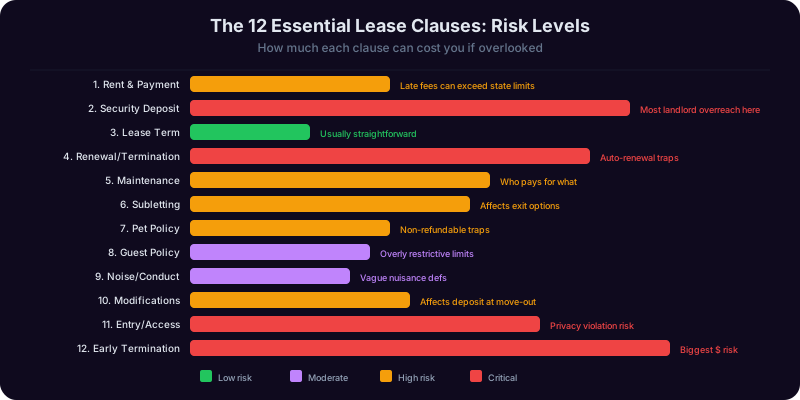
Every residential lease contains a core set of clauses that define your obligations and rights. Some are straightforward. Others contain language designed to favor the landlord at your expense. Here is what each clause means, what to look for, and where landlords commonly insert terms that hurt tenants.
| Clause | What It Covers | What to Watch For |
|---|---|---|
| 1. Rent Amount and Payment Terms | Monthly rent, due date, acceptable payment methods, grace period | Late fees that exceed state limits; no grace period; requirement to pay only by cashier's check or money order |
| 2. Security Deposit | Amount, conditions for return, deduction rules, timeline for refund | Deposits exceeding state maximum; vague deduction language; no timeline for return |
| 3. Lease Term and Dates | Start date, end date, duration (month-to-month vs. fixed-term) | Mismatched dates; unclear about when possession begins |
| 4. Renewal and Termination | Auto-renewal provisions, required notice period, month-to-month conversion | Auto-renewal to another full-year term; 90-day notice requirements; penalties for not renewing |
| 5. Maintenance and Repairs | Landlord vs. tenant responsibilities, repair request process, timelines | Clauses making tenant responsible for all repairs; no timeline for landlord response |
| 6. Subletting and Assignment | Whether you can sublet, approval process, fees | Absolute prohibition on subletting; unreasonable subletting fees; landlord can withhold approval "for any reason" |
| 7. Pet Policy | Allowed pets, breed/size restrictions, pet deposit, monthly pet rent | Non-refundable pet deposits (illegal in some states); excessive pet rent; retroactive breed restrictions |
| 8. Guest Policy | Overnight guest limits, definition of unauthorized occupant | Overly restrictive limits (e.g., no guests over 2 nights); landlord approval required for any overnight guest |
| 9. Noise and Conduct | Quiet hours, prohibited activities, nuisance definitions | Vague "nuisance" language that could apply to normal living; quiet hours that are unreasonably long |
| 10. Modifications and Alterations | What changes you can make (painting, shelves, fixtures), restoration requirements | Prohibition on any modifications including hanging pictures; requirement to repaint at move-out regardless of condition |
| 11. Entry and Access Notice | When and how the landlord can enter your unit, required notice period | No notice requirement; "landlord may enter at any time"; entry for non-emergency reasons without 24-48 hour notice |
| 12. Early Termination | Conditions for breaking the lease, penalties, required notice | Penalty equal to remaining rent; no exceptions for job relocation, military deployment, or domestic violence |
Deep Dive: The Clauses That Cost Renters the Most
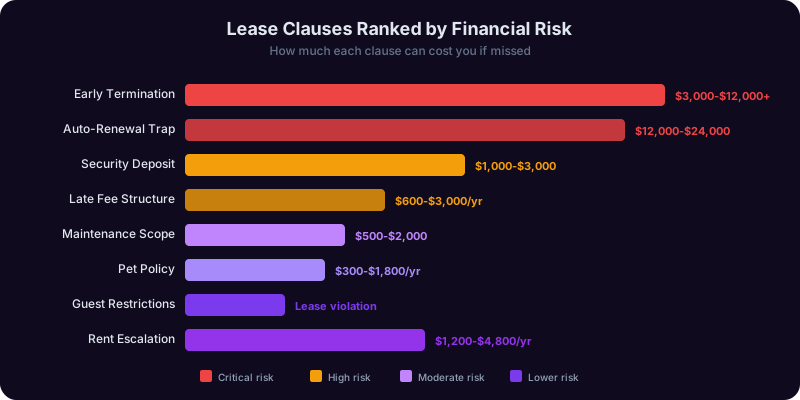
Rent escalation clauses deserve special attention. Some leases include language allowing the landlord to increase rent during the lease term, either by a fixed percentage or at the landlord's discretion. In a standard fixed-term lease, your rent should be locked for the entire term. If your lease includes mid-term rent escalation language, push back before signing.
Late fee structures vary enormously. Some leases charge a flat fee ($50-$100), while others impose a daily penalty ($10-$25 per day). Many states cap late fees at 5-10% of monthly rent, but some landlords include higher penalties hoping tenants will not know the law. A $2,000/month rent with a $25/day late fee adds up to $750 per month in penalties - almost certainly unenforceable, but the landlord will still try to collect. Check your state's late fee limits and compare them to what your lease says.
Security deposit clauses are where landlords most frequently overreach. Your lease may define "normal wear and tear" differently than your state's law does. It may claim the deposit is "non-refundable" (illegal in most states). It may set a return timeline of 60 or 90 days when your state requires 14 or 30 days. For a detailed breakdown of your deposit rights, see our complete guide to security deposits.
The Tenant Rights Copilot can help you compare each of these clauses against your state's landlord-tenant statutes to determine whether a specific provision is enforceable or illegal where you live.
Red Flags to Watch For: Illegal and Unconscionable Lease Clauses
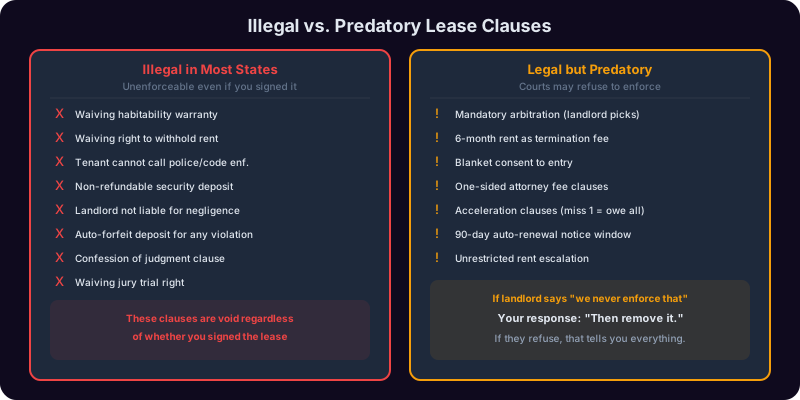
Not every clause in a lease is enforceable. Landlords routinely include provisions that violate state law, either because they do not know the law themselves or because they know most tenants will not challenge them. Here are the red flags that should make you pause before signing - and in some cases, walk away.
Clauses That Are Illegal in Most States
| Red Flag Clause | Why It Is Illegal | States with Explicit Prohibitions |
|---|---|---|
| Waiver of landlord's duty to maintain habitable conditions | Implied warranty of habitability (Cornell Law definition) cannot be waived by contract in most states | CA, NY, IL, MA, WA, OR, NJ, and most others |
| Waiver of tenant's right to withhold rent for uninhabitable conditions | Rent withholding for habitability violations is a statutory right | CA, NY, MA, WI, HI, DC, and others with repair-and-deduct statutes |
| Tenant agrees to waive right to jury trial | Constitutional right to jury trial cannot be waived in a lease in many jurisdictions | Varies; courts frequently strike these provisions |
| Tenant agrees not to call police, fire, or code enforcement | Retaliatory eviction protections prohibit penalizing tenants for exercising legal rights | All 50 states have some form of anti-retaliation protection |
| Non-refundable security deposit | Security deposits must be refundable minus legitimate deductions | CA, TX, NY, IL, FL, WA, and most others (some states allow non-refundable fees but not deposits) |
| Landlord not liable for injuries due to negligence | Exculpatory clauses for personal injury are void as against public policy | Most states; particularly strong in CA, NY, IL, NJ |
| Automatic forfeiture of deposit for any lease violation | Deposits can only be deducted for actual damages, not as punishment | Nearly all states |
| Confession of judgment clause | Tenant pre-agrees to a court judgment without a hearing; unconstitutional in residential leases | Explicitly banned in PA, IL, OH, NJ, and others; unenforceable in most jurisdictions |
Unconscionable Terms: Legal but Predatory
Some clauses are technically legal in your state but are so one-sided that a court might refuse to enforce them - or that you should refuse to sign. These include:
- Mandatory arbitration with landlord-selected arbitrator: While arbitration clauses are generally enforceable, a clause requiring disputes to go to an arbitrator chosen and paid by the landlord creates an inherent conflict of interest. Courts have struck down some of these provisions as unconscionable.
- Liquidated damages far exceeding actual harm: An early termination fee of six months rent on a $2,000/month apartment ($12,000) when the landlord could realistically re-rent the unit in 30 days is a penalty, not a reasonable estimate of damages. Courts can and do refuse to enforce disproportionate liquidated damages.
- Blanket consent to entry without notice: Even if your state's entry notice statute allows the tenant to "consent" to waive notice, a pre-printed consent in the lease - where you had no real ability to negotiate - may not constitute meaningful consent.
- Attorney fee clauses that only benefit the landlord: Some leases state that the tenant must pay the landlord's attorney fees if the landlord prevails in a dispute, but do not provide the same right to the tenant. Many states have statutes making attorney fee clauses reciprocal regardless of how they are written.
- Acceleration clauses: A clause stating that if you miss one month's rent, the entire remaining balance of the lease becomes immediately due. While occasionally enforceable, courts frequently strike these as penalties rather than legitimate remedies.
The Consumer Financial Protection Bureau (CFPB) housing page provides resources on tenant rights and predatory rental practices. You can also check your state's attorney general website for specific landlord-tenant complaint processes.
Red Flag Checklist Before You Sign
Use this checklist to scan any lease for the most common problem areas:
- Does the lease match what the landlord promised verbally? If not, get it in writing or do not believe it.
- Is the security deposit within your state's legal maximum?
- Does the lease specify a timeline for returning your deposit?
- Are late fees within your state's legal limits?
- Does the landlord retain the right to enter without notice?
- Are there clauses waiving your right to call code enforcement or report violations?
- Does the lease include an acceleration clause or confession of judgment?
- Is the early termination penalty proportionate to actual damages?
- Does the lease require you to waive any statutory rights?
- Are there any clauses you do not understand? If so, do not sign until you do.
If you spot any of these red flags, the Legal Copilot can help you determine whether the clause is enforceable in your state and advise you on how to raise the issue with your landlord. For a broader understanding of how to evaluate contract terms, see our guide on how to read and negotiate contracts.
Negotiating Lease Terms: What Is Negotiable and How to Ask
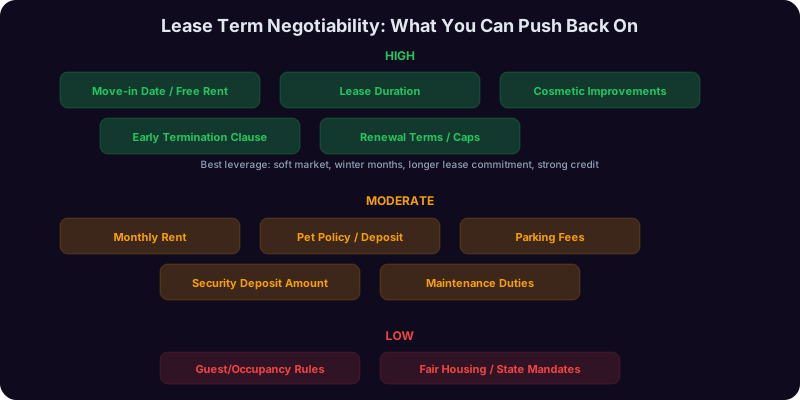
Most renters assume a lease is a take-it-or-leave-it document. It is not. Landlords - particularly individual landlords and smaller property management companies - negotiate lease terms more often than you would expect. Even large corporate landlords may have flexibility on certain provisions, especially in markets with high vacancy rates or during slower rental seasons (typically November through February).
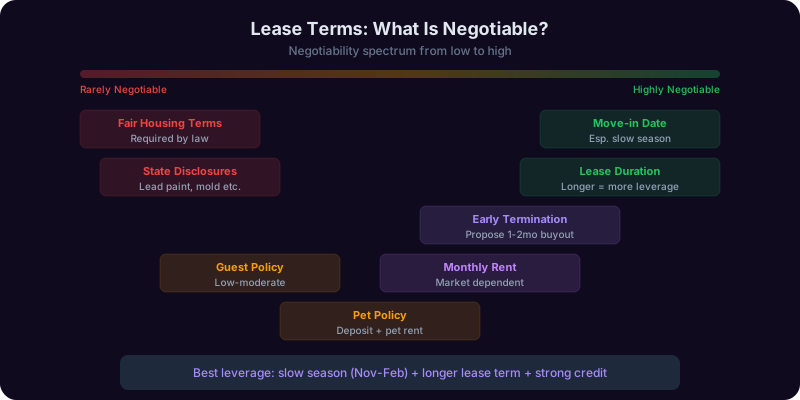
What Is Typically Negotiable
| Lease Term | Negotiability | Your Leverage |
|---|---|---|
| Monthly rent amount | Moderate to high, depending on market conditions | Higher in soft markets, lower vacancies, longer lease terms; lower in hot markets |
| Lease duration | High | Landlords often prefer longer leases for stability; offer 18-24 months for a rent reduction |
| Security deposit amount | Moderate | Offer to pay several months upfront; provide strong references and credit |
| Pet policy and pet rent | Moderate | Provide pet references, offer a larger pet deposit, show proof of renter's insurance covering pet damage |
| Early termination clause | Moderate to high | Propose a reasonable buyout (1-2 months rent) instead of punitive penalties |
| Parking fees | Moderate | Bundle with rent negotiation; ask for included parking on a longer lease |
| Move-in date / free rent | High during slow seasons | Ask for a free month on a 13-month lease; negotiate move-in timing |
| Maintenance responsibilities | Moderate | Clarify what constitutes tenant vs. landlord responsibility; push for landlord to handle HVAC, plumbing, electrical |
| Renewal terms | Moderate | Negotiate a cap on rent increases at renewal (e.g., no more than 3-5% per year) |
| Guest and occupancy policies | Low to moderate | Ask for reasonable guest allowances (7-10 consecutive nights) instead of overly restrictive limits |
Script Examples: How to Ask
The key to negotiating lease terms is to be professional, specific, and prepared to explain why your request is reasonable. Here are scripts you can adapt:
Negotiating rent:
"I am very interested in this apartment and ready to sign. I have noticed that comparable units in the area are listed at $1,800-$1,900. Would you be open to adjusting the rent to $1,850, especially if I sign a 15-month lease? I have strong credit, stable income, and excellent rental references."
Negotiating early termination:
"I noticed the early termination clause requires three months rent as a penalty. Given that the average vacancy period in this area is about 3-4 weeks, would you consider reducing the early termination fee to two months rent with 60 days written notice? That gives you time to find a new tenant while being fair to both of us."
Negotiating pet terms:
"I have a 30-pound dog who is well-trained and house-broken. I am happy to provide a pet reference from my previous landlord and proof of renter's insurance that covers pet damage. Would you consider a $300 refundable pet deposit instead of the $500 non-refundable fee? I will also agree to professional carpet cleaning at move-out."
Removing an illegal or unfair clause:
"I noticed that Section 14 of the lease includes a clause waiving my right to withhold rent for habitability issues. Under [state] law, this provision is not enforceable in residential leases. I would like to have it removed or revised before I sign. I am happy to proceed with everything else as written."
How to Document Negotiated Changes
Any changes to the lease must be documented in writing. There are two standard approaches:
- Lease addendum: A separate document that references the original lease and states the specific changes. Both parties sign and date the addendum, which becomes part of the lease.
- Strike-through and initial: For minor changes, both parties can strike through the original language, write in the new language, and initial and date each change directly on the lease.
Never accept a verbal promise that contradicts the written lease. If the landlord says "we never enforce that clause," your response should be: "Great, then you will not mind removing it." If they refuse to remove a clause they claim is meaningless, that tells you everything you need to know.
For additional negotiation strategies specific to rent amounts, see our guide on how to negotiate rent. The Rental Copilot can help you prepare for lease negotiations by identifying which terms in your specific lease are worth pushing back on and suggesting reasonable alternatives to propose.
Breaking a Lease: Early Termination Fees, Legal Justifications, and Protections
Sometimes you need to leave before your lease ends. A job transfer, a family emergency, unsafe living conditions, or a relationship breakdown can all make it impossible to stay. Understanding your options before you need them - ideally before you sign the lease - can save you thousands of dollars and significant legal headaches. For a comprehensive walkthrough of every option, see our dedicated guide on how to get out of a lease early.
Understanding Early Termination Clauses
Most leases include a specific early termination provision. Common structures include:
- Fixed penalty: A set fee (typically 1-3 months rent) plus forfeiture of the security deposit. This is the most common and usually the most predictable option.
- Remaining rent liability: The tenant is responsible for rent through the end of the lease term, minus any rent the landlord collects from a new tenant. This is the default rule in most states when the lease has no early termination clause.
- Buyout provision: Some leases allow early termination with a specific number of days notice (often 60-90) plus a buyout fee. This is the most tenant-friendly structure.
- No early termination clause: If the lease says nothing about early termination, you are generally liable for the remaining rent, but the landlord has a duty to mitigate damages in most states - meaning they must make reasonable efforts to re-rent the unit and cannot simply collect rent from you while leaving the unit vacant.
Legal Justifications for Breaking a Lease Without Penalty
Certain circumstances allow you to break a lease without owing early termination fees, regardless of what the lease says:
| Justification | Legal Basis | What You Need |
|---|---|---|
| Uninhabitable conditions | Implied warranty of habitability; state housing codes | Documented evidence of serious habitability violations (no heat, water, or electricity; mold; pest infestation; structural hazards) that the landlord failed to remedy within a reasonable time after written notice |
| Landlord harassment or illegal entry | State privacy and entry notice statutes; constructive eviction doctrine | Documentation of repeated illegal entries, harassment, or interference with quiet enjoyment |
| Military deployment (SCRA) | Servicemembers Civil Relief Act (federal law, 50 U.S.C. Section 3955) | Written notice plus copy of military orders or deployment letter. Lease terminates 30 days after the next rent payment is due. |
| Domestic violence | State domestic violence tenant protection statutes | Varies by state: typically a protective order, police report, or written statement from a DV service provider. Available in all 50 states plus DC, though protections vary significantly. |
| Landlord failure to disclose material defects | State disclosure requirements; fraud | Evidence the landlord concealed known defects (lead paint, flooding history, mold) that materially affect habitability |
| Illegal lease provisions | Varies by state; unconscionability doctrine | If the lease itself contains illegal provisions, some courts allow the tenant to void the entire agreement |
Military and Servicemember Protections (SCRA)
The Servicemembers Civil Relief Act provides powerful protections for active-duty military members, including the right to terminate a lease early without penalty upon receiving deployment orders or permanent change of station (PCS) orders. The Department of Justice SCRA page provides the full text and guidance. Key provisions:
- Applies to any lease signed before entering military service or during military service
- Requires written notice to the landlord plus a copy of orders
- Lease terminates 30 days after the next rent payment is due following delivery of notice
- No early termination fee, no penalty, and no negative credit reporting
- Landlord cannot impose any additional financial obligation
- Protection extends to dependents of the servicemember
Domestic Violence Protections
Every state now has some form of lease-breaking protection for victims of domestic violence, sexual assault, or stalking. The specifics vary widely:
- California: Victim can terminate with 14 days notice plus documentation (restraining order, police report, or documentation from a DV agency)
- New York: Victim can terminate by providing notice and qualifying documentation; locks must be changed within 24 hours of request
- Texas: Victim of family violence can terminate with documentation from a court, attorney, or qualified DV program; requires 30 days notice
- Washington: Victim can terminate with documentation; landlord cannot charge any fee or penalty; deposit must be returned per normal timeline
Practical Steps for Breaking a Lease
- Review your lease's early termination clause carefully. Know exactly what you owe.
- Check your state's duty to mitigate. If your landlord must make reasonable efforts to re-rent, your liability may be much less than the full remaining rent.
- Provide written notice. Always deliver your notice in writing via certified mail or hand delivery with a witness. Keep copies of everything.
- Help find a replacement tenant. In many states, if you find a qualified replacement tenant, the landlord must accept them (or at least cannot unreasonably refuse).
- Document everything. Photograph the unit's condition when you leave, keep copies of all correspondence, and get written confirmation of any agreements about fees or deposit return.
If you need to break your lease and are not sure about your rights, the Tenant Rights Copilot can help you understand your state's specific protections and the steps you need to take. For disputes that arise from a lease termination, our Consumer Rights Copilot can help you understand your options for resolving the conflict.
Landlord Obligations: What Your Landlord Must Do (and When)
Your lease creates obligations for both parties. While tenants are keenly aware of their duties - pay rent, do not damage the property, follow the rules - many are unaware of the extensive legal obligations landlords carry. These obligations exist regardless of what the lease says, because they are imposed by state law and cannot be waived by contract.
The Implied Warranty of Habitability
In nearly every state, landlords are required to maintain rental units in a condition fit for human habitation. This is called the implied warranty of habitability, and it exists whether or not the lease mentions it. The specific standards vary by state, but generally require the landlord to provide and maintain:
- Structural integrity (sound roof, walls, floors, foundations)
- Working plumbing with hot and cold running water
- Adequate heating (and in some states, cooling)
- Functioning electrical systems
- Working smoke and carbon monoxide detectors
- Locks on exterior doors and windows
- Freedom from pest infestations (rodents, cockroaches, bedbugs)
- Compliance with all applicable building, housing, and health codes
- Safe common areas (hallways, stairwells, laundry rooms, parking areas)
A lease clause stating "tenant accepts the property as-is" or "landlord is not responsible for repairs" does not override the implied warranty of habitability. These clauses are unenforceable in residential leases in the vast majority of states.
Repair Response Timelines by State
How quickly must your landlord respond to a repair request? The answer depends on the severity of the issue and your state's law.
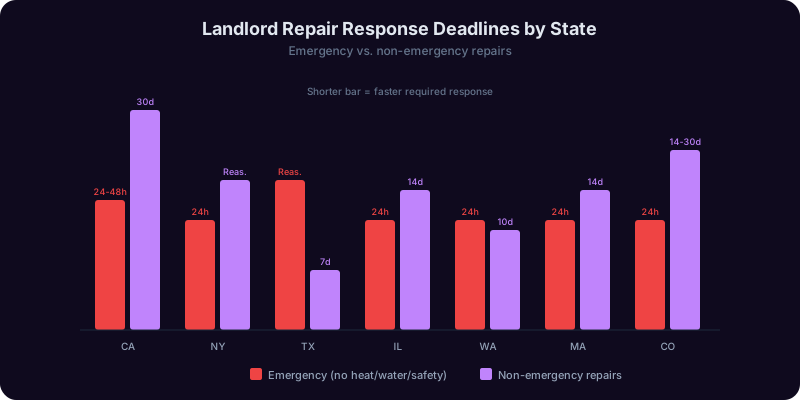
| State | Emergency Repairs (no heat, water, or safety hazard) | Non-Emergency Repairs | Tenant Remedy if Landlord Fails |
|---|---|---|---|
| California | 24-48 hours | 30 days after written notice | Repair and deduct (up to one month's rent); rent withholding; lease termination |
| New York | 24 hours (NYC: immediately for heat/hot water in winter) | Reasonable time after notice | Rent withholding; HP proceeding in housing court (NYC); repair and deduct in some jurisdictions |
| Texas | Reasonable time (courts generally find 24-72 hours) | 7 days after second written notice | Repair and deduct; terminate lease; sue for damages plus one month's rent plus $500 |
| Florida | Reasonable time | 7 days for material issues; 20 days for non-material issues after written notice | Rent withholding (with proper notice); lease termination |
| Illinois | 24 hours (Chicago: 72 hours for most code violations) | 14 days after written notice | Repair and deduct; rent withholding; sue for damages |
| Washington | 24 hours | 10 days after written notice | Repair and deduct (up to two months' rent); rent withholding; lease termination |
| Massachusetts | 24 hours | 14 days after written notice (or 5 days for code violations) | Repair and deduct; rent withholding; sue for up to three months' rent in damages |
| Colorado | 24 hours for heat, water, electricity | Reasonable time (typically 14-30 days) | Repair and deduct (up to one month's rent); terminate lease with proper notice |
Entry and Privacy Obligations
Your landlord does not have unlimited access to your apartment. Every state recognizes a tenant's right to quiet enjoyment, and most states have specific statutes governing when and how a landlord can enter your unit.
- Notice required: 24 hours in most states (CA, WA, CO, IL); 48 hours in some (e.g., HI); "reasonable notice" in states without a specific statute (NY, TX)
- Permitted purposes: Repairs, inspections, showing the unit to prospective tenants or buyers, emergencies
- Time restrictions: Entry is generally limited to reasonable daytime hours unless it is an emergency
- Emergency exception: Landlords can enter without notice in genuine emergencies (fire, flood, gas leak, suspected medical emergency)
If your landlord is entering your unit without notice or consent, document each incident in writing (date, time, circumstances) and send a written request to stop. If the behavior continues, it may constitute constructive eviction or harassment, which can give you grounds to break the lease without penalty.
Disclosure Obligations
Landlords are legally required to disclose certain information before you sign the lease. The EPA lead paint disclosure requirements apply nationwide for housing built before 1978:
- Lead paint (federal): For any housing built before 1978, landlords must disclose known lead paint hazards and provide the EPA pamphlet "Protect Your Family from Lead in Your Home"
- Mold history: Required in CA, IN, TX, MD, and a growing number of states
- Flood zone or flooding history: Required in some states and increasingly common in municipal ordinances
- Sex offender proximity: Some states require disclosure or provide databases for tenant lookup
- Bed bug history: Required in NY (NYC), ME, CA (SB 328), and several cities
- Owner/manager identity: Most states require the lease to identify the property owner and the person authorized to manage the property and receive legal notices
If your landlord is not meeting their obligations, the Tenant Rights Copilot can help you understand your remedies and draft appropriate written notices. For specific disputes about your security deposit or other financial matters, knowing your landlord's legal duties is the foundation of any claim.
Documenting Move-In Condition: Your Best Protection for Getting Your Deposit Back
The single most effective thing you can do to protect your security deposit is to document the condition of your apartment on the day you move in, before you unpack a single box. Landlords deduct from security deposits by claiming the tenant caused damage. Without move-in documentation, it is your word against theirs - and in that dispute, the landlord usually wins because they hold your money.
The Move-In Inspection: Step by Step
Set aside 30-60 minutes on move-in day (or the day you get your keys, before you start moving in) to do a thorough walk-through.
- Start with photos and video. Use your phone to take photographs of every room, every wall, every floor, every appliance, every fixture. Get close-ups of any existing damage: stains, scratches, dents, cracks, holes, discoloration. Take a video walk-through of the entire unit with narration ("This is the kitchen on move-in day, May 20, 2026. There is a scratch on the countertop near the sink and two burners on the stove appear discolored").
- Check every system. Run every faucet (hot and cold). Flush every toilet. Turn on every light switch. Test every outlet with a phone charger. Open and close every window. Test every lock. Run the dishwasher, garbage disposal, oven, and range. Turn on the HVAC system (both heat and AC if applicable). Check the water heater. Test smoke detectors and carbon monoxide detectors.
- Document the exterior and common areas. If you have a patio, balcony, garage, or storage unit, photograph those too. Note the condition of hallways, stairwells, and any shared spaces that could be relevant to future disputes.
- Note everything that does not work or is damaged. Be exhaustive. It is far better to over-document than to miss something.
Move-In Condition Checklist
Use this room-by-room checklist to make sure you do not miss anything:
| Area | Items to Inspect and Photograph |
|---|---|
| Kitchen | Countertops, cabinets (open every one), sink and faucet, oven/range, refrigerator (inside and out), dishwasher, garbage disposal, flooring, walls, light fixtures, outlets, under-sink area (leaks), exhaust fan |
| Bathroom(s) | Toilet (flush and check for leaks), tub/shower (run water, check for mold/caulking), sink and faucet, mirror, medicine cabinet, towel bars, ventilation fan, flooring (check for soft spots), grout condition, walls and ceiling (water stains) |
| Living Room / Bedrooms | Walls (every wall, including behind doors), ceiling, flooring/carpet (stains, wear, damage), windows (open, close, lock each one), window screens, blinds/curtains, closet doors and interiors, outlets, light switches, light fixtures, smoke detectors |
| Doors and Hardware | Front door (lock, deadbolt, peephole), all interior doors (hinges, knobs, locks), patio/balcony door (lock, screen), garage door and opener |
| HVAC and Utilities | Thermostat, heating system, air conditioning, water heater (age and condition), electrical panel (labeled?), washer/dryer connections or units |
| Exterior / Storage | Patio/balcony condition, parking space, storage unit, mailbox, building entry system |
The Written Inspection Report
Most landlords provide a move-in inspection form - sometimes called a "condition report" or "walk-through checklist." If your landlord does not provide one, create your own. A proper move-in report should include:
- Date of inspection
- Address and unit number
- Names of everyone present during the inspection
- Room-by-room list of all existing conditions, damage, and deficiencies
- Signatures of both tenant and landlord (or landlord's representative)
- Copies retained by both parties
Some states require a move-in inspection. In Washington state, for example, the landlord must provide a written checklist at the beginning of the tenancy, and failure to do so limits the landlord's ability to make deductions from the security deposit. Several other states have similar provisions.
How to Preserve Your Documentation
- Email everything to yourself and to the landlord. Send the photos, video, and written inspection report to the landlord via email on move-in day. This creates a timestamped record they cannot deny receiving.
- Back up to cloud storage. Upload all photos and videos to Google Drive, iCloud, or Dropbox. Phone storage can fail, and you will need this documentation 12 or more months from now.
- Keep a copy of the signed inspection form. Photograph it and store the digital copy alongside your other documentation.
- Save the metadata. Photos taken on your phone automatically include date, time, and GPS location in the metadata. Do not edit the original photos - the metadata is your proof of when and where they were taken.
When it is time to move out, you will repeat this entire process. Compare your move-out photos to your move-in photos side by side. Any deductions the landlord tries to make for conditions that existed at move-in are illegitimate, and your documentation is your proof. For detailed guidance on getting your deposit back, see our complete guide to security deposits. The Rental Copilot can help you create a customized move-in checklist and draft a move-in inspection report for your specific property.
Your Rights as a Tenant: State-by-State Protections
Tenant rights are not optional. They are not something your landlord "gives" you. They are legal protections established by state statute, local ordinance, and decades of case law. Even if your lease says otherwise, these rights exist. Knowing them is the difference between being taken advantage of and standing on solid legal ground.
Core Tenant Rights That Exist in Every State
- Right to habitable premises: Your landlord must maintain the property in livable condition, including working plumbing, heating, electricity, structural integrity, and freedom from pest infestation.
- Right to quiet enjoyment: You have the right to use and enjoy your home without unreasonable interference from the landlord or other tenants. This includes freedom from landlord harassment, unauthorized entry, and constructive eviction tactics.
- Protection from retaliation: Your landlord cannot raise your rent, decrease services, or evict you in retaliation for exercising your legal rights - including filing complaints with code enforcement, joining a tenant union, or withholding rent for habitability violations.
- Protection from discrimination: The Fair Housing Act (federal) prohibits discrimination based on race, color, national origin, religion, sex, familial status, and disability. Many states and cities add additional protected classes including sexual orientation, gender identity, source of income, age, marital status, and immigration status.
- Right to proper notice before eviction: No landlord can change your locks, shut off utilities, or remove your belongings without going through the formal eviction process. "Self-help" evictions are illegal in every state.
- Right to security deposit return: Your landlord must return your deposit within the timeline set by state law, minus only legitimate deductions for actual damage beyond normal wear and tear.
State-by-State Protections Comparison
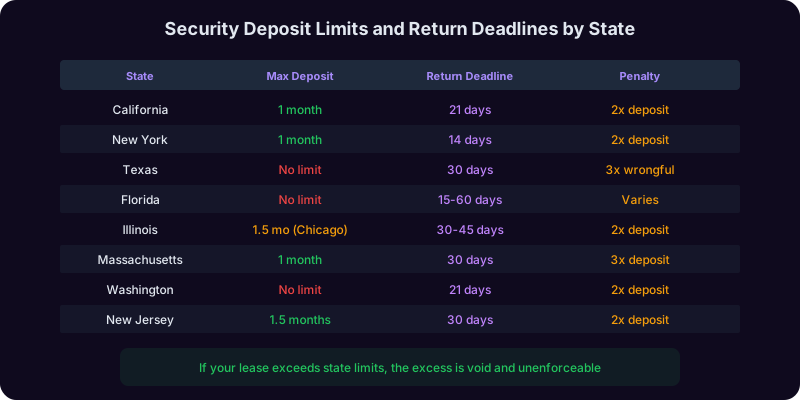
| State | Max Security Deposit | Deposit Return Deadline | Rent Control | Repair and Deduct | Late Fee Cap |
|---|---|---|---|---|---|
| California | 1 month (unfurnished); 2 months (furnished) | 21 days | Yes (statewide since 2020, AB 1482: 5% + CPI, max 10%) | Yes (up to 1 month rent) | Not specified by statute; must be reasonable |
| New York | 1 month | 14 days | Yes (NYC and some surrounding counties; statewide HSTPA 2019) | Limited (varies by jurisdiction) | $50 or 5% of rent (whichever is less) in NYC |
| Texas | No state limit | 30 days | No (state preempts local rent control) | Yes (after proper notice) | No statutory cap; must be reasonable |
| Florida | No state limit (practical limit: market norms) | 15-60 days (depending on whether landlord intends to impose a claim) | No | No (tenant can withhold rent after notice) | No statutory cap |
| Illinois | No state limit (Chicago: 1.5 months) | 30-45 days (Chicago: 30 days) | No statewide (Chicago has limited protections) | Yes (Chicago: repair and deduct) | Chicago: $10/month for first $500 of rent, 5% above that |
| Washington | No state limit | 21 days | Some cities (Seattle, Tacoma have just-cause eviction; no statewide rent control) | Yes (up to 2 months rent) | No statutory cap; must be reasonable |
| Massachusetts | 1 month | 30 days | No statewide (local options repealed in 1994) | Yes | No statutory cap; must be reasonable |
| Colorado | No state limit | 30 days (unless lease specifies up to 60) | No statewide (some local ordinances emerging) | Yes (up to 1 month rent) | $50 or 5% of rent (whichever is greater) per statute |
| Oregon | No state limit | 31 days | Yes (statewide since 2019, SB 608: 7% + CPI) | Yes | Reasonable; typically 5-10% of rent |
| New Jersey | 1.5 months | 30 days | Many municipalities have rent control ordinances | Yes | No statutory cap; must be reasonable |
What to Do When Your Rights Are Violated
If your landlord violates your rights, take these steps in order:
- Document everything. Save texts, emails, photos, and written notices. Keep a log of dates, times, and descriptions of every incident. Documentation is the foundation of every successful tenant rights claim.
- Send written notice. Many remedies (repair and deduct, rent withholding, lease termination) require that you give the landlord written notice of the violation and a reasonable opportunity to cure it. Send notice via certified mail or email (with delivery confirmation) and keep copies.
- Contact your local tenant rights organization. Nearly every city and county has a legal aid organization, tenant union, or housing rights group that provides free or low-cost assistance. They know the local ordinances and can advise you on your specific situation.
- File a complaint with code enforcement or the housing authority. If the violation involves habitability, safety, or housing code issues, file a formal complaint. Inspectors can compel the landlord to make repairs and impose fines for non-compliance. Your landlord cannot retaliate against you for filing a complaint.
- Consider legal action. For significant violations - wrongful eviction, deposit theft, habitability failures, discrimination - you may have grounds for a lawsuit. Many tenant protection statutes allow recovery of attorney fees, multiple damages (2x or 3x actual damages in some states), and penalties. If you need to send a formal letter to your landlord demanding compliance, our guide on how to write a demand letter provides templates and step-by-step instructions.
Resources for Renters
- HUD Tenant Rights Page: hud.gov/topics/rental_assistance (federal resources and state links)
- National Low Income Housing Coalition: nlihc.org (policy information and local resources)
- Your state's attorney general office: Most have a landlord-tenant complaint process
- Local legal aid organizations: Search "legal aid [your city]" for free legal assistance
- Tenant union: Search "tenant union [your city]" for organized renter advocacy
The Tenant Rights Copilot can help you understand your specific rights based on where you live, draft written notices to your landlord, and determine whether a lease clause is enforceable in your state. For broader legal questions beyond landlord-tenant law, the Legal Copilot covers a wide range of legal topics. And if you are just starting your apartment search, our first-time renter checklist will help you find the right place and avoid common pitfalls before you ever get to the lease-signing stage.
If you need to take action against a landlord who has violated your rights - whether for deposit recovery, habitability issues, or illegal lease provisions - you can explore your options with the Consumer Rights Copilot or browse our real-life scenario guides for step-by-step walkthroughs of common disputes.
Disclaimer: This guide provides general information about tenant rights across the United States. Landlord-tenant laws vary significantly by state, county, and city, and they change frequently. The information in this guide reflects laws as of early 2026. For advice about a specific situation, consult with a local tenant rights attorney or legal aid organization. Nothing in this guide constitutes legal advice or creates an attorney-client relationship.
Frequently asked questions
Can a landlord enforce a lease clause that violates state law?
No. A lease clause that contradicts state or local landlord-tenant law is unenforceable regardless of whether you signed it. For example, if your state caps security deposits at one month's rent but your lease requires two months, the clause exceeds the legal limit and is void to that extent. Similarly, clauses waiving the implied warranty of habitability, prohibiting tenants from calling code enforcement, or imposing illegal late fees are unenforceable. However, unenforceable clauses do not necessarily void the entire lease - typically only the illegal provision is struck while the rest of the lease remains in effect. The practical challenge is that many landlords attempt to enforce illegal clauses anyway, counting on tenants not knowing the law. If you believe your lease contains an illegal clause, document it in writing and raise the issue with your landlord before signing. If you have already signed, the clause remains unenforceable.
What should I do if the landlord refuses to give me a copy of the signed lease?
You have the right to a copy of any contract you sign, and most states require landlords to provide tenants with a copy of the signed lease within a reasonable time. Send a written request (email or certified letter) asking for a copy of the fully executed lease. If the landlord still refuses, contact your local tenant rights organization or housing authority. In some states, failure to provide a copy of the lease limits the landlord's ability to enforce its terms against you. As a practical matter, never sign a lease without keeping your own copy. Photograph or scan every page at the signing if the landlord will not give you a copy immediately. Going forward, always request a digital copy via email before you sign so you have time to review it thoroughly and maintain your own records.
Is a verbal lease agreement legally binding?
Yes, verbal (oral) lease agreements are generally legally binding for terms of one year or less. The Statute of Frauds in most states requires leases longer than one year to be in writing, but a month-to-month or short-term verbal agreement is typically enforceable. The problem with verbal leases is proof. If a dispute arises, it is your word against the landlord's about what was agreed. Without a written lease, courts generally apply the default rules of your state's landlord-tenant statute, which may or may not favor you. If you are on a verbal lease, you still have all the protections of your state's landlord-tenant laws, including habitability requirements, security deposit rules, and eviction procedures. However, you should always push for a written lease to protect your interests and clarify the terms.
Can my landlord raise the rent during a fixed-term lease?
Generally no. A fixed-term lease (for example, a 12-month lease) locks in the rent for the entire term. The landlord cannot raise the rent mid-lease unless the lease itself contains a specific rent escalation clause that you agreed to when you signed. If your lease does contain a mid-term increase provision, check whether it specifies a fixed amount, a percentage cap, or gives the landlord discretion - and check whether your city or state has rent control laws that would cap the increase. At the end of the lease term, the landlord can propose a rent increase for the renewal period, subject to any applicable rent control or rent stabilization laws. If you are on a month-to-month lease, the landlord can generally raise the rent with proper written notice (usually 30 days, though some states require 60 or 90 days for increases above a certain percentage).
What counts as normal wear and tear versus tenant damage?
Normal wear and tear refers to the natural deterioration that occurs from ordinary, reasonable use of the property. It is not damage caused by negligence, abuse, or misuse. Common examples of normal wear and tear include: minor scuffs on walls, small nail holes from hanging pictures, slight carpet wear in high-traffic areas, faded paint or wallpaper from sunlight, minor scratches on hardwood floors, loose door handles from regular use, and worn weatherstripping. Examples of tenant damage include: large holes in walls, stains or burns on carpet, broken windows, pet damage (scratched doors, urine stains), unauthorized paint colors, broken fixtures or appliances from misuse, and mold caused by tenant failure to ventilate. Your landlord cannot deduct from your security deposit for normal wear and tear. If they do, you can dispute the deductions in writing and, if necessary, take the landlord to small claims court. Move-in and move-out photos are your best evidence in these disputes.
How do I dispute unfair security deposit deductions?
Start by sending your landlord a written dispute letter within 14-30 days of receiving their deduction itemization. Reference your move-in and move-out photos showing the condition of the unit, cite your state's security deposit laws and the deadline for return, and clearly state the amount you believe is owed to you. If the landlord does not respond or refuses to return the improperly withheld portion, your next step is small claims court. In most states, you do not need a lawyer for small claims. Filing fees are typically $30-$100, and many states award penalties of 2-3 times the wrongfully withheld deposit if the landlord acted in bad faith. Bring all documentation: your lease, move-in photos, move-out photos, the landlord's deduction itemization, your dispute letter, and any correspondence.
Should I get renter's insurance even if my lease does not require it?
Yes. Renter's insurance is one of the best financial protections available to tenants, and it typically costs only $15-$30 per month. Your landlord's insurance covers the building structure but does not cover your personal belongings or your liability. Renter's insurance typically covers: theft or damage to your personal property (electronics, furniture, clothing, jewelry), liability if someone is injured in your apartment, additional living expenses if your unit becomes uninhabitable due to a covered event, and sometimes pet liability. Even if your lease does not require it, having renter's insurance protects you from significant financial loss. A fire or burglary could cost you tens of thousands of dollars in lost possessions without coverage.
Can I withhold rent if my landlord refuses to make repairs?
In many states, yes - but you must follow the correct procedure exactly, or you risk eviction. The general process is: (1) document the problem thoroughly with photos, videos, and written descriptions; (2) send written notice to your landlord describing the issue and requesting repair within a specific timeframe (your state's statute will specify the required waiting period); (3) if the landlord fails to respond within the statutory period, you may withhold rent, repair and deduct the cost from rent, or terminate the lease, depending on your state's laws. Some states require you to deposit withheld rent in an escrow account rather than simply not paying. The repair must involve a serious habitability issue - withholding rent over a cosmetic problem like peeling wallpaper will not be upheld in court. Always consult your state's specific repair-and-deduct statute before withholding rent, as the rules vary significantly.
Review Your Lease Agreement with AI Before You Sign
The Contract Review Copilot analyzes your lease clause by clause, flags red flags and illegal provisions, and helps you negotiate better terms. Upload your lease and get personalized guidance before you commit.
- Legal CopilotGet guidance on lease clauses, tenant protections, and landlord-tenant law in your state
Free plan, no card. Pro from $4.99/week for every copilot across all 20 domains - about what one hour with any single professional costs per year.
Not a law firmThis is legal information, not legal advice. Consult a licensed attorney for your specific situation.