

What a Credit Freeze Is and Why It Matters
A credit freeze (also called a security freeze) prevents new creditors from accessing your credit report. Since most lenders will not approve credit applications without checking your report, a freeze effectively blocks anyone from opening new accounts in your name, including identity thieves.
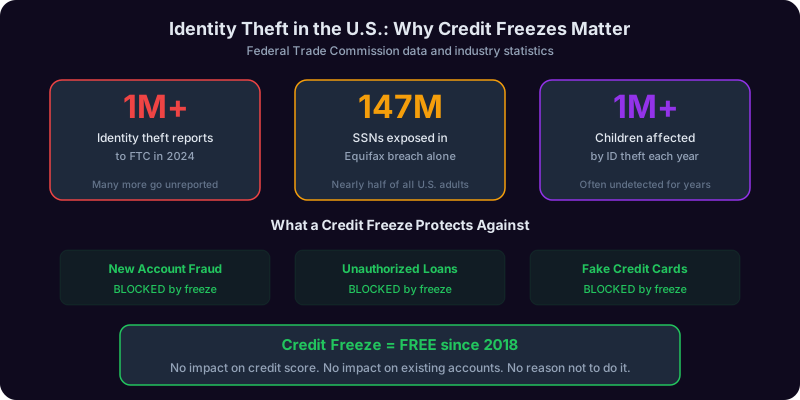
Identity theft is not a rare event. The Federal Trade Commission received over 1 million identity theft reports in 2024, and the actual number of victims is significantly higher because many cases go unreported. The most common type is new account fraud, where a thief uses your personal information to open credit cards, loans, or utility accounts. A credit freeze is the single most effective defense against this type of fraud.
Since the Economic Growth, Regulatory Relief, and Consumer Protection Act of 2018, credit freezes are completely free for all consumers at all three major bureaus. Before this law, bureaus charged up to $10 per freeze. There is no reason not to freeze your credit if you are not actively applying for new credit.
Important: A credit freeze does NOT affect your credit score, prevent you from using existing credit cards, stop you from checking your own credit report, or interfere with employment background checks in most states. It only blocks new credit applications.
The Consumer Rights Copilot can help you understand your rights related to credit reporting and identity theft protection.
How to Freeze Your Credit at All 3 Bureaus
You must freeze your credit at each bureau separately. All three offer online, phone, and mail options. Online is fastest, typically taking 5 to 10 minutes per bureau. Here is exactly how to do it:

Equifax
- Online: Go to equifax.com/personal/credit-report-services/credit-freeze and create an account or log in. Follow the prompts to place a freeze. You will receive a confirmation with a PIN or password.
- Phone: Call 1-800-349-9960. Automated system available 24/7.
- Mail: Send a request to Equifax Information Services, P.O. Box 105788, Atlanta, GA 30348. Include your full name, Social Security number, date of birth, current and previous addresses (for the past 2 years), and a copy of a government-issued ID.
Experian
- Online: Go to experian.com/freeze and create an account. Follow the prompts. Experian will provide a PIN that you need to save securely.
- Phone: Call 1-888-397-3742.
- Mail: Send a request to Experian Security Freeze, P.O. Box 9554, Allen, TX 75013. Include the same documentation listed above.
TransUnion
- Online: Go to transunion.com/credit-freeze and create an account. The process takes about 5 minutes.
- Phone: Call 1-888-909-8872.
- Mail: Send a request to TransUnion, P.O. Box 160, Woodlyn, PA 19094.
Critical step: Save your PINs or passwords from each bureau in a secure location (password manager, locked file, or safe). You will need them to unfreeze your credit later. If you lose your PIN, the recovery process can take days or weeks.
The Finance Copilot can walk you through each step and help you keep track of your freeze status at all three bureaus.
How to Unfreeze (Thaw) Your Credit When You Need It
Unfreezing your credit is simple and can usually be done in minutes. By law, bureaus must lift a freeze within one hour of receiving your request online or by phone (three business days for requests by mail).
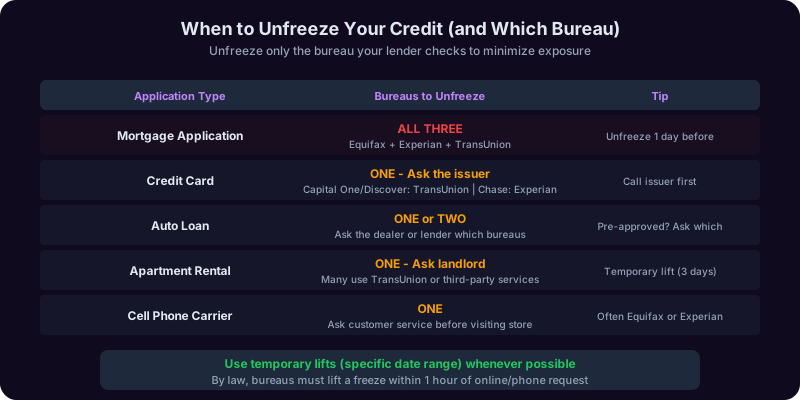
When you need to unfreeze: Anytime you apply for new credit (credit card, mortgage, auto loan, personal loan), a new apartment lease (most landlords run credit checks), new utilities (some providers check credit), or certain jobs (in states that allow credit checks for employment). Ask the lender or landlord which bureau they check so you can unfreeze only that one.
Temporary vs. permanent lift: Most bureaus let you temporarily lift the freeze for a specific date range (for example, 3 days while your mortgage application is processed) or permanently remove it. A temporary lift is better for security because the freeze automatically reactivates after the specified period.
How to unfreeze at each bureau:
- Equifax: Log into your account at equifax.com or call 1-800-349-9960. You can lift the freeze for a specific date range or permanently.
- Experian: Log in at experian.com/freeze or call 1-888-397-3742. You will need your PIN.
- TransUnion: Log in at transunion.com/credit-freeze or call 1-888-909-8872.
Pro tip: When applying for a mortgage, your lender will pull from all three bureaus. Unfreeze all three at least one day before your application. For a credit card, ask the issuer which bureau they use. Capital One and Discover typically pull TransUnion. Chase often pulls Experian. American Express varies by state. Unfreezing only the relevant bureau minimizes your exposure.
If you are in the process of buying a home, our guide on first-time home buyer mistakes covers additional steps to prepare your credit for a mortgage application.

Get Answers From the Consumer Rights Copilot
The Consumer Rights Copilot can walk you through freezing your credit at all three bureaus, explain your rights, and help you recover if you have been a victim of identity theft.
Credit Freeze vs. Fraud Alert: Which One Do You Need?
A credit freeze and a fraud alert are two different tools that serve different purposes. Here is how they compare:
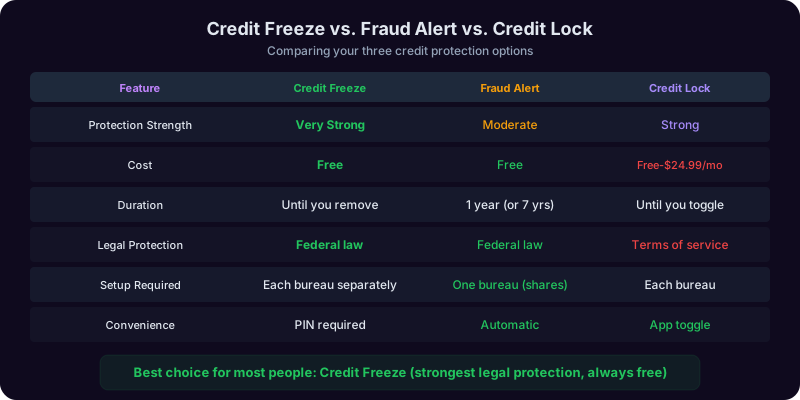
| Feature | Credit Freeze | Fraud Alert |
| What it does | Blocks all new credit inquiries | Requires creditors to verify your identity before opening accounts |
| How strong is it | Very strong; creditors cannot access your report at all | Moderate; creditors should verify identity but are not legally required to deny credit |
| Cost | Free | Free |
| Duration | Until you remove it | 1 year (initial) or 7 years (extended, with identity theft report) |
| How many bureaus | Must be placed at each bureau separately | Place at one bureau; they notify the other two |
| Impact on your credit | None | None |
When to use a freeze: A freeze is the better choice for ongoing, long-term protection. If you are not actively applying for new credit, keep your credit frozen at all three bureaus. This is the gold standard for preventing new account fraud.
When to use a fraud alert: A fraud alert is appropriate as an immediate first step if you suspect your information has been compromised (data breach notification, lost wallet, suspicious mail). It takes one phone call to one bureau (they share it with the other two) and provides some protection while you decide whether to place a full freeze.
Can you use both? Yes. You can have a fraud alert and a credit freeze active at the same time. If your Social Security number was exposed in a data breach, doing both provides layered protection.
The Consumer Rights Copilot can help you decide which combination of protections makes sense for your situation.
Credit Lock vs. Credit Freeze: Know the Difference
All three bureaus now offer "credit lock" products that sound similar to a credit freeze but are fundamentally different. Understanding the distinction can save you money and protect your rights.
Credit freeze: A legally protected right under federal law. Free. Cannot be taken away. Bureaus must comply with your request. You can enforce your rights through the FTC and state attorney general.
Credit lock: A commercial product offered by the bureaus, often bundled with paid subscription services. Equifax offers Lock & Alert (free basic version). Experian offers CreditLock as part of its paid membership ($24.99/month). TransUnion offers TrueIdentity lock (free basic version). Credit locks are governed by the bureau's terms of service, not federal law, meaning the bureau could change the terms at any time.
Key differences:
- A freeze is a legal right; a lock is a commercial product
- Freezes are always free; some locks require paid subscriptions
- Freeze protections are defined by federal and state law; lock protections are defined by the company's terms of service
- Locks may offer faster on/off switching through mobile apps
- Locks may require you to agree to terms that limit your rights (such as mandatory arbitration)
Bottom line: A credit freeze provides stronger legal protection and costs nothing. A credit lock may offer more convenience (app-based toggling) but provides weaker legal protections. For most people, a credit freeze is the better choice. If you value the convenience of app-based toggling, you can use a lock in addition to a freeze, but never instead of one.
For a deeper understanding of how your credit report works and what information it contains, see our guide on understanding your credit score.
When to Freeze Your Credit (and When Not To)
You should freeze your credit if:
- You are not actively applying for new credit (this applies to most people most of the time)
- Your Social Security number was exposed in a data breach (the Equifax breach of 2017 alone exposed 147 million SSNs)
- You received a notice that your information was compromised
- You lost your wallet or had your mail stolen
- You are a victim of identity theft
- You want proactive protection against new account fraud
- You have children under 16 (you can freeze a minor's credit to prevent child identity theft, which affects over 1 million children per year)
You may want to temporarily unfreeze if:
- You are applying for a mortgage, auto loan, or credit card
- You are apartment hunting and landlords need to run credit checks
- You are applying for new insurance (some insurers check credit)
- You are switching cell phone carriers (some run credit checks)
- You are applying for a job in a state that allows employer credit checks
Timing considerations: If you know you will be applying for a mortgage in the next 30 days, unfreeze all three bureaus before you start the process. Mortgage lenders pull from all three. If you are shopping for a single credit card, find out which bureau the issuer checks and unfreeze only that one for a few days.
If you are currently building credit, our guide on building credit from nothing explains how to manage a credit freeze alongside active credit-building strategies. And if you are negotiating rent, our guide on how to negotiate rent covers how landlord credit checks work and when to unfreeze.
The Budgeting Copilot can help you plan around credit freeze timing when making major financial decisions.
How to Freeze a Child's Credit
Child identity theft is a growing problem that most parents do not think about. Children's Social Security numbers are valuable to thieves because the fraud often goes undetected for years, until the child turns 18 and applies for their first credit card or student loan. Studies estimate that over 1 million children are victims of identity theft each year.
Since 2018, parents and legal guardians can freeze a minor child's credit at all three bureaus for free. The process is more involved than freezing your own credit because the bureaus may not have a file for your child yet.
What you will need:
- The child's name, Social Security number, and date of birth
- Your name, Social Security number, and date of birth
- Proof of your identity (government-issued ID)
- Proof of the child's identity (birth certificate)
- Proof of your authority (birth certificate showing you as parent, or court order for guardians)
How to do it: Each bureau has a slightly different process. In general, you will need to mail copies of the documents listed above to each bureau. Online and phone options are limited for child freezes. Plan on 2 to 4 weeks for processing.
- Equifax: Mail to Equifax Information Services, P.O. Box 105788, Atlanta, GA 30348. Mark the envelope "Minor Child Freeze Request."
- Experian: Mail to Experian, P.O. Box 9554, Allen, TX 75013, with a letter requesting a minor freeze.
- TransUnion: Mail to TransUnion, P.O. Box 160, Woodlyn, PA 19094, with all required documentation.
Check annually to confirm the freeze is still active, especially as your child approaches 16. The Finance Copilot can help you track freeze status for your entire family.
What to Do If You Have Already Been a Victim of Identity Theft
If someone has already opened accounts in your name or used your identity, a credit freeze is one step in a broader recovery process. Here is the full action plan:
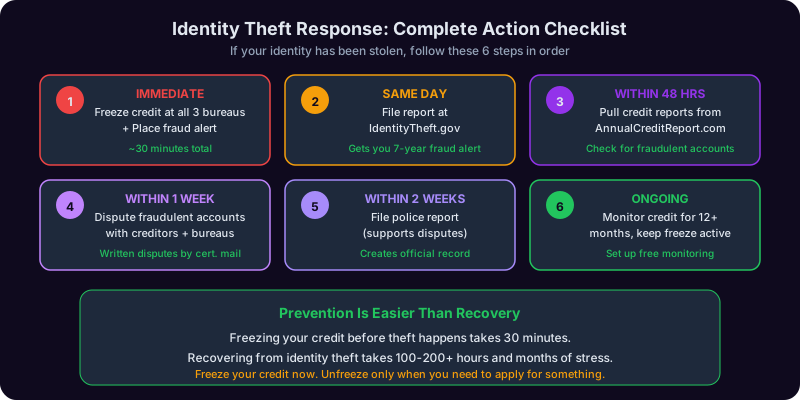
1. Place a fraud alert and credit freeze immediately. A fraud alert at one bureau (which shares it with the other two) plus a freeze at all three provides maximum protection against further damage.
2. File an identity theft report at IdentityTheft.gov. The FTC's recovery site generates a personalized recovery plan and creates an official Identity Theft Report that you can use with creditors, the police, and the credit bureaus. This report entitles you to an extended 7-year fraud alert (instead of 1 year).
3. Review your credit reports from all three bureaus. Go to AnnualCreditReport.com (the only federally authorized source) and pull reports from all three bureaus. Look for accounts you do not recognize, addresses you have never lived at, employers you have never worked for, and hard inquiries you did not authorize.
4. Dispute fraudulent accounts. Contact each creditor that has a fraudulent account in your name. Ask them to close the account and confirm in writing that you are not responsible for the debt. Send disputes to the credit bureaus to remove fraudulent information from your report.
5. File a police report. While many police departments do not actively investigate identity theft, a police report creates an official record that supports your disputes with creditors and bureaus.
6. Monitor your credit for at least 12 months. After identity theft, remain vigilant. Check your credit reports regularly and consider a credit monitoring service (many are offered free to breach victims). Keep your credit frozen except when you need to apply for new credit.
If a debt collector contacts you about a fraudulent account, our guide on your rights when dealing with debt collectors explains exactly what they can and cannot do, and how to dispute debts that are not yours.
The Consumer Rights Copilot can walk you through each step of the identity theft recovery process and help you draft dispute letters to creditors and bureaus.
Frequently Asked Questions
Recommended Copilots
Recommended Copilots
Understand your credit reporting rights and get help with identity theft recovery
Try Free →Plan credit freeze timing around major financial decisions like mortgage applications
Try Free →Build a financial plan that accounts for credit protection and monitoring
Try Free →Related Articles
Get Answers From the Consumer Rights Copilot
The Consumer Rights Copilot can walk you through freezing your credit at all three bureaus, explain your rights, and help you recover if you have been a victim of identity theft.