
The Decision That Can Save Your Life or $3,000
Important: This guide provides general health information to help you make more informed decisions. It is NOT a substitute for professional medical judgment. When in doubt, always err on the side of caution and seek emergency care. If you believe you or someone else is experiencing a life-threatening emergency, call 911 immediately.
Every year, approximately 130 million visits are made to emergency rooms in the United States. Studies suggest that up to 30% of those visits could have been handled at urgent care or through telehealth - at a fraction of the cost. At the same time, delayed emergency treatment is a leading cause of preventable death and disability.
Both mistakes carry real consequences:
| Care Setting | Average Cost | Average Wait Time | Hours of Operation |
|---|---|---|---|
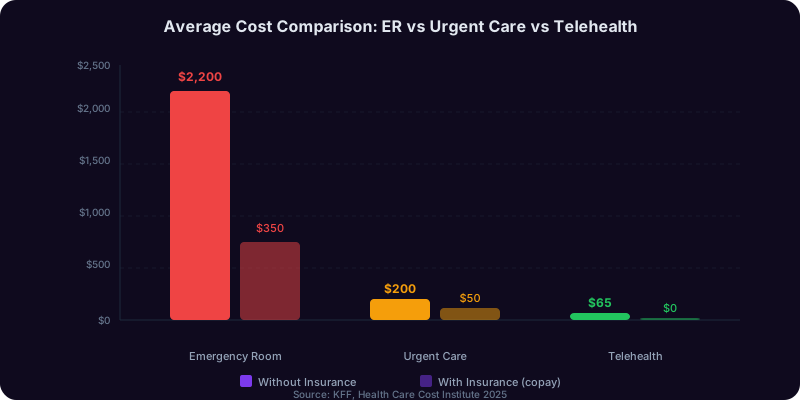
| Emergency Room | $2,200 (without insurance) | 2 hours 20 minutes | 24/7 |
| Urgent Care | $200 (without insurance) | 15-45 minutes | 8am-8pm typical |
| Telehealth Visit | $50-$75 | 0-10 minutes | 24/7 (many platforms) |
| Primary Care Office | $150-$300 | Days to weeks for appointment | Business hours |
The cost difference is staggering. An ER visit for a condition that urgent care could handle costs you an extra $2,000 on average. With insurance, the gap narrows but remains significant - ER copays typically run $150-$500 compared to $25-$75 for urgent care.
But the cost of going to urgent care when you actually need the ER can be measured in something far more valuable than dollars. A heart attack treated within the first hour has a survival rate above 90%. Delay treatment by 3-4 hours and that rate drops dramatically. A stroke treated within 3 hours with tPA (clot-busting medication) can result in full recovery. Miss that window and the damage may be permanent.
This guide will give you specific, evidence-based criteria for making the right call. We will cover the situations that demand the ER, the conditions urgent care handles well, when telehealth is sufficient, and special considerations for children. Bookmark this page - you will want it accessible when the decision matters most. If cost is a concern, see our guide on what to do when you cannot afford a doctor.
True Emergencies: Go to the ER NOW
If any of the following apply, go to the emergency room immediately or call 911. Do not drive yourself if you are experiencing chest pain, difficulty breathing, severe bleeding, or altered consciousness - have someone else drive or call an ambulance.
Chest Pain or Pressure
Any chest pain or tightness that is new, severe, or accompanied by shortness of breath, pain radiating to the arm/jaw/back, nausea, sweating, or lightheadedness. This applies even if you are young, fit, and have no history of heart disease. Heart attacks in people under 40 are more common than most people realize - approximately 1 in 5 heart attacks occurs in adults under 65, according to the CDC's heart disease statistics.
Do not wait to see if it gets better. Do not Google your symptoms for 30 minutes. If you feel pressure, squeezing, or pain in your chest that lasts more than a few minutes or comes and goes, call 911.
Signs of Stroke - Remember FAST
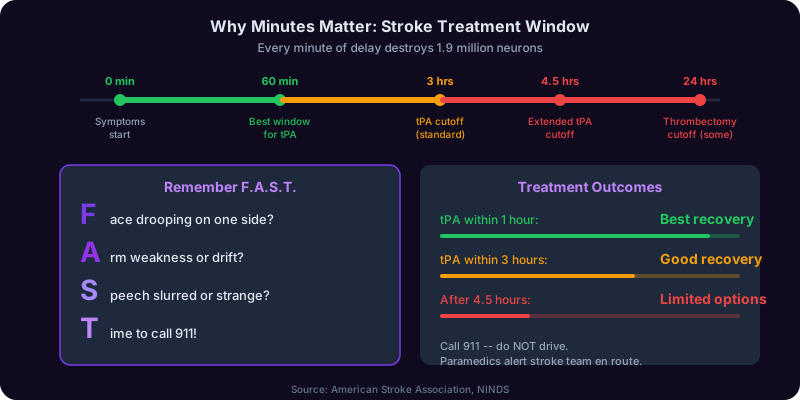
- Face: Is one side of the face drooping? Ask the person to smile.
- Arms: Can they raise both arms evenly, or does one drift downward?
- Speech: Is their speech slurred or strange?
- Time: Note the exact time symptoms started. This information is critical for treatment decisions.
Stroke treatment is intensely time-dependent. The clot-busting drug tPA must be administered within 3-4.5 hours of symptom onset, as outlined by the American Stroke Association. Mechanical thrombectomy (physically removing the clot) can be performed up to 24 hours later in some cases. Every minute of delay kills approximately 1.9 million neurons. Call 911 immediately - do not drive to the ER, because paramedics can begin assessment en route and alert the stroke team.
Difficulty Breathing
Severe shortness of breath that comes on suddenly, is rapidly worsening, or is accompanied by chest pain, blue lips or fingertips (cyanosis), or inability to speak in full sentences. This includes severe asthma attacks that do not respond to a rescue inhaler, allergic reactions affecting breathing, and signs of pulmonary embolism (sudden shortness of breath with chest pain, especially after recent surgery, travel, or period of immobility).
Uncontrolled Bleeding
Bleeding that does not slow or stop after 10-15 minutes of firm, continuous pressure. Deep wounds with visible fat, muscle, or bone. Bleeding from a major artery (bright red, spurting blood). Any significant bleeding in a person taking blood thinners (warfarin, apixaban, rivaroxaban) - these individuals can bleed internally without obvious external signs.
Severe Allergic Reaction (Anaphylaxis)
Symptoms include swelling of the throat/tongue, difficulty breathing or swallowing, hives spreading across the body, dizziness or fainting, rapid heartbeat, and a feeling of impending doom. If the person has an EpiPen, use it immediately AND still go to the ER - epinephrine is a temporary measure, and anaphylaxis can have a biphasic reaction (symptoms return hours later). For more on recognizing allergic reactions, see our complete rash guide.
Head Injury With Danger Signs
Not every bump on the head needs the ER. But go immediately if there is: loss of consciousness (even briefly), confusion or disorientation, vomiting more than once, clear fluid draining from the nose or ears, unequal pupil size, seizure, worsening headache, or inability to recognize people or places. These signs suggest a concussion at minimum and potentially a brain bleed that requires imaging.
Other ER-Level Emergencies
- Seizures: First-time seizures always require ER evaluation. Known epilepsy patients should go if a seizure lasts more than 5 minutes, they have multiple seizures without regaining consciousness, or they are injured during the seizure.
- Poisoning or overdose: Call Poison Control (1-800-222-1222) first for guidance, but go to the ER if symptoms are severe or the substance is highly toxic. Bring the container or substance if possible.
- Severe burns: Burns covering more than 10% of the body, burns on the face/hands/feet/genitals/joints, chemical or electrical burns, or burns that are deep (white or charred appearance, no pain - which indicates nerve damage).
- Compound fractures: Bone visible through the skin, obvious deformity, inability to move the limb, loss of sensation below the injury, or severe swelling that develops rapidly.
- Sudden severe abdominal pain: Especially with rigidity (a hard, board-like abdomen), high fever, or signs of shock (rapid pulse, cold clammy skin, confusion). This could indicate appendicitis, bowel obstruction, ectopic pregnancy, or other surgical emergencies. See our stomach pain guide for more on abdominal pain causes.
- Suicidal thoughts or psychotic episodes: If you or someone you know is in immediate danger. Call 988 (Suicide & Crisis Lifeline) or go to the nearest ER.
Urgent Care Is Right For These Situations
Urgent care centers are designed to handle conditions that need prompt attention but are not life-threatening. They are staffed by physicians, nurse practitioners, or physician assistants, and most have basic diagnostic equipment including X-ray machines and rapid testing capabilities.
When to Choose Urgent Care
| Condition | What Urgent Care Can Do | Typical Cost |
|---|---|---|
| Sprains and minor fractures | X-ray, splint, pain management, referral if needed | $150-$350 |
| Cuts needing stitches (not arterial) | Clean, stitch, tetanus shot if needed | $150-$400 |
| Urinary tract infections (UTIs) | Urine test, antibiotics prescribed same-visit | $100-$200 |
| Ear infections | Examination, antibiotics if bacterial | $100-$200 |
| Flu, strep throat testing | Rapid test, prescription for antivirals or antibiotics | $100-$250 |
| Minor burns (small area, first/second degree) | Clean, dress, pain management | $100-$300 |
| Eye infections (pink eye, stye) | Examination, prescription drops | $100-$200 |
| Minor allergic reactions (localized, no breathing issues) | Antihistamines, steroids, monitoring | $100-$250 |
| Back pain (acute, no numbness/tingling) | Examination, muscle relaxants, referral | $150-$300 |
| Animal bites (not severe) | Cleaning, antibiotics, tetanus, rabies assessment | $150-$400 |
What Urgent Care Typically Cannot Do
- CT scans or MRIs: Most urgent care centers only have X-ray equipment. If you need advanced imaging, they will refer you to the ER or a radiology center.
- Surgery: Even minor surgical procedures beyond wound closure are typically outside urgent care's scope.
- Cardiac workup: Urgent care cannot run troponin tests, perform EKGs at most locations, or monitor you for heart-related emergencies.
- IV medications or fluids: Some urgent care centers can administer IV fluids for dehydration, but most cannot provide IV antibiotics or other IV medications.
- Psychiatric emergencies: Urgent care is not equipped for mental health crises requiring immediate stabilization.
Urgent Care Practical Tips
- Hours: Most urgent care centers are open 8am-8pm on weekdays and 9am-5pm on weekends. Some are open later. Check before you go - arriving 30 minutes before closing may result in being turned away for complex issues.
- Wait times: Average wait is 15-45 minutes, compared to 2+ hours at the ER. Many urgent care centers now offer online check-in so you can wait at home.
- Insurance: Most urgent care centers accept major insurance plans. Your copay is typically $25-$75 with insurance. Call ahead if you are unsure about coverage.
- Bring your medications list: Even for simple visits, knowing what you take helps the provider avoid drug interactions.
- Follow-up: Urgent care will handle the immediate problem, but they will typically ask you to follow up with your primary care provider within 1-3 days for ongoing management.
Not sure whether your situation calls for urgent care or the ER? The Health Copilot can help you think through your symptoms and make a more informed decision - though it will always recommend erring on the side of the ER when there is any doubt.

Get Answers From the Health Copilot
Describe your symptoms and get an instant assessment of urgency level, recommended care setting, and what to bring to your visit - plus help understanding your diagnosis afterward.
Telehealth Can Handle More Than You Think
Telehealth has expanded dramatically since 2020, and in 2026 it is a legitimate first option for a wide range of non-emergency health concerns. A video or phone visit with a licensed provider costs $50-$75 without insurance and is often free or $0-$20 with insurance. Many platforms offer 24/7 availability with wait times under 10 minutes.
Conditions Well-Suited for Telehealth
| Condition | What Telehealth Can Do | Typical Cost |
|---|---|---|
| Rashes (non-emergency) | Visual assessment via camera, diagnosis, prescription | $50-$75 |
| Cold and flu symptoms | Assessment, prescription antivirals if within window | $50-$75 |
| Medication refills | Review history, renew prescriptions (non-controlled) | $50-$75 |
| Minor allergic reactions | Assessment, antihistamine recommendation or prescription | $50-$75 |
| Pink eye (conjunctivitis) | Visual assessment, antibiotic drops prescribed | $50-$75 |
| Sinus infections | Symptom assessment, antibiotics if bacterial suspected | $50-$75 |
| Mental health check-ins | Therapy sessions, medication management, crisis assessment | $50-$200 |
| Urinary symptoms (women) | Symptom-based UTI diagnosis, antibiotics prescribed | $50-$75 |
| Skin conditions (acne, eczema) | Visual assessment, prescription treatments | $50-$75 |
| Follow-up on known conditions | Review symptoms, adjust treatment plans | $50-$75 |
Telehealth Platform Comparison (2026)
| Platform | Cost Without Insurance | Wait Time | Availability | Prescriptions? |
|---|---|---|---|---|
| Your insurance's telehealth | $0-$20 copay | Varies | Varies | Yes |
| Amazon Clinic | $30-$75 | Minutes (async) | 24/7 | Yes |
| Teladoc | $75 | Under 10 min | 24/7 | Yes |
| MDLive | $75 | Under 15 min | 24/7 | Yes |
| PlushCare | $99 | 15-30 min | 8am-8pm | Yes |
Always check if your health insurance offers free or discounted telehealth through their own platform before using a third-party service. Most major insurers now include telehealth at no additional cost.
When Telehealth Is NOT Appropriate
- Any condition from the "True Emergencies" section above
- Injuries requiring physical examination (possible fractures, deep wounds)
- Symptoms requiring diagnostic tests (blood work, X-rays, urinalysis for complex cases)
- Severe pain that is not well-controlled
- New lumps, masses, or suspicious moles (while telehealth can do initial assessment, these need in-person evaluation)
- Conditions that have been worsening despite previous treatment
Telehealth works best as a triage tool - the provider can assess your situation and tell you whether you need in-person care, which saves you time and money even when the answer is "go to urgent care." Think of it as an expert second opinion on whether to stay home or go in.
The Pediatric Decision Tree: When Kids Need the ER
Children are not small adults. Their symptoms can escalate faster, their communication about what hurts is less reliable, and the thresholds for emergency care are different - particularly for infants. This section provides age-specific guidance for the most common pediatric situations.
Fever Thresholds by Age
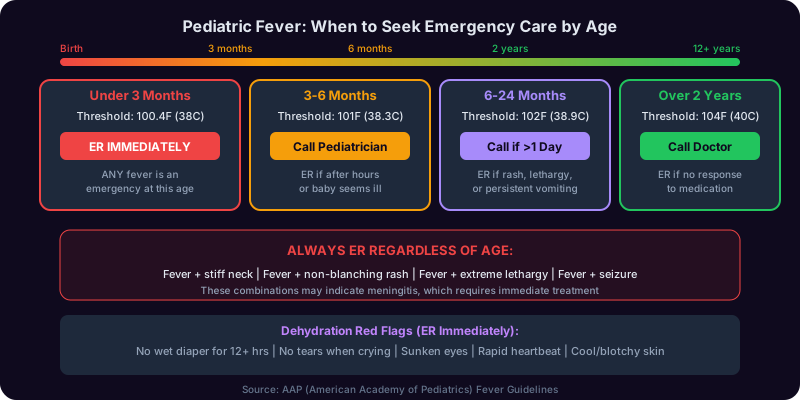
Fever is the number one reason parents take children to the ER, and it is also the area where unnecessary ER visits are most common. Use these evidence-based guidelines from the American Academy of Pediatrics:
| Age | Temperature | Action |
|---|---|---|
| Under 3 months | 100.4F (38C) or higher | ER immediately - any fever in a newborn is an emergency |
| 3-6 months | 101F (38.3C) or higher | Call pediatrician; ER if after hours or baby seems ill |
| 6-24 months | 102F (38.9C) lasting more than 1 day | Call pediatrician; ER if accompanied by rash, lethargy, or persistent vomiting |
| Over 2 years | 104F (40C) or higher | Call pediatrician; ER if fever does not respond to medication or child is lethargic |
| Any age | Any fever with stiff neck, severe headache, rash that does not blanch, or extreme lethargy | ER immediately - these are signs of meningitis |
Critical point for newborns: For babies under 3 months, a fever of 100.4F or higher is ALWAYS an emergency, even if the baby seems otherwise fine. At this age, a fever could indicate a serious bacterial infection (sepsis, meningitis, urinary tract infection) that can deteriorate rapidly. Do not give fever-reducing medication and wait - go to the ER.
Breathing Difficulty in Children
Children's airways are smaller and more vulnerable to swelling. Go to the ER if you observe:
- Retractions: Skin pulling in between the ribs, above the collarbone, or below the rib cage with each breath
- Nasal flaring: Nostrils widening with each breath
- Grunting: A sound at the end of each exhale
- Breathing rate above normal: Newborns: >60 breaths/min. Infants: >50. Toddlers: >40. School age: >30.
- Blue or gray color around the lips, fingernails, or skin
- Inability to drink or feed due to breathing effort
- Stridor: A high-pitched sound when breathing in (could indicate croup or airway obstruction)
Dehydration Markers in Children
Children dehydrate faster than adults, especially with vomiting or diarrhea. Watch for these signs:
- Mild dehydration (manage at home with fluids): Slightly dry mouth, slightly decreased urine output, mild thirst
- Moderate dehydration (call pediatrician, consider urgent care): Fewer than 3 wet diapers in 24 hours (infants), no urination for 8+ hours (older children), no tears when crying, sunken soft spot on infant's head, dry mouth and lips
- Severe dehydration (ER immediately): No urination for 12+ hours, very sunken eyes, extremely dry mouth, rapid heartbeat, cool/blotchy extremities, lethargy or difficulty waking, sunken fontanelle (soft spot) in infants
Head Injuries in Children
Children fall constantly, and most bumps are harmless. But because children's skulls are thinner and their brains are still developing, the threshold for concern is lower. Go to the ER if:
- The child lost consciousness, even briefly
- The child is under 2 years old and the fall was from more than 3 feet (or more than 5 feet for children over 2)
- There is vomiting more than once after the injury
- The child is unusually sleepy or difficult to wake
- There is a visible dent or significant swelling on the skull
- The child has a seizure
- Clear fluid is draining from the nose or ears
- Behavior changes - more irritable, confused, or not acting like themselves
For minor bumps with no danger signs: apply ice, give appropriate pain relief, and observe closely for 24 hours. Wake the child once during the night to check for responsiveness if the injury occurred before bedtime.
Pediatric Urgent Care vs Regular Urgent Care
If your area has a pediatric urgent care center, it offers advantages over standard urgent care for children: staff experienced in pediatric assessment, child-sized equipment, weight-appropriate medication dosing, and a less frightening environment. For non-emergency pediatric issues, pediatric urgent care is the ideal middle ground between the ER and waiting for a doctor's appointment.
For general guidance on childhood symptoms, the Pediatric Copilot can help you assess the situation - though it will always recommend in-person care for any concerning symptoms in young children.
What Actually Happens at the ER (And Why You Wait)
Understanding the ER process can reduce anxiety and help you navigate the experience more effectively - whether you are there for yourself, a family member, or a child.
The Triage Process: ESI Levels 1-5
When you arrive at the ER, a triage nurse assesses you and assigns an Emergency Severity Index (ESI) level. This determines your priority - not the order you arrived. A patient who walks in an hour after you with a more severe condition will be seen first. This is by design.
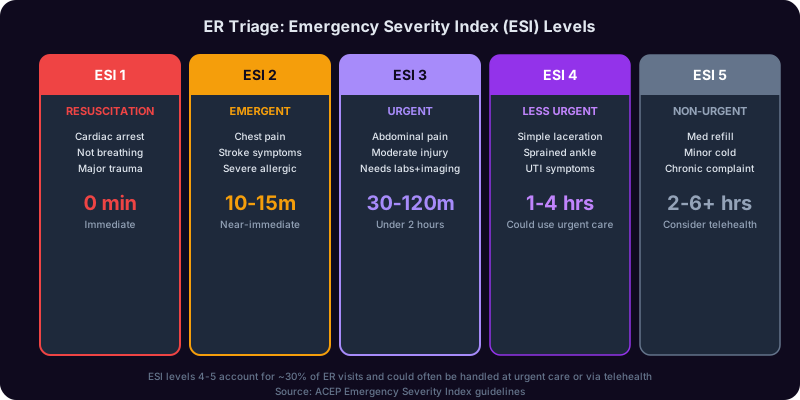
| ESI Level | Description | Examples | Typical Wait |
|---|---|---|---|
| 1 - Resuscitation | Immediate life-saving intervention | Cardiac arrest, major trauma, not breathing | Immediate (0 min) |
| 2 - Emergent | High risk, confused, severe pain, distress | Chest pain, stroke symptoms, severe allergic reaction | 10-15 minutes |
| 3 - Urgent | Multiple resources needed, stable vital signs | Abdominal pain needing labs/imaging, moderate injury | 30-120 minutes |
| 4 - Less urgent | One resource expected (X-ray OR lab, not both) | Simple laceration, sprained ankle, UTI | 1-4 hours |
| 5 - Non-urgent | No resources expected beyond exam | Medication refill, minor cold symptoms, chronic complaint | 2-6+ hours |
This is why you wait. If you are in the waiting room for two hours, it means the ER team has assessed that your condition is stable enough to wait while they treat people who may be dying. It does not mean they forgot about you or do not care. Complaining at the front desk will not change your ESI level - but informing the triage nurse if your symptoms worsen will trigger a reassessment.
What to Bring to the ER
- Photo ID and insurance card (but you will be treated regardless - see EMTALA below)
- List of all medications - names, dosages, and frequency. A photo of your pill bottles works.
- List of allergies - medications, foods, latex
- Brief description of symptoms - when they started, what makes them better/worse, what you have already tried
- Phone charger - this is practical, not trivial. ER visits can last 4-12+ hours
- For children: Comfort items, diapers/wipes, a change of clothes, and a record of recent medications given (especially fever reducers - note the time and dose)
Your Rights Under EMTALA
The Emergency Medical Treatment and Labor Act (EMTALA) is a federal law that requires every hospital with an emergency department to:
- Provide a medical screening examination to anyone who comes to the ER, regardless of ability to pay, insurance status, citizenship, or any other factor
- Stabilize any emergency medical condition before discharge or transfer
- Not transfer a patient with an unstabilized emergency condition unless the patient requests the transfer or the medical benefits of transfer outweigh the risks
In plain English: no ER can turn you away because you cannot pay. You may receive a bill later, but they must treat your emergency. If you believe an ER has refused to evaluate or stabilize you, file a complaint with the Centers for Medicare & Medicaid Services (CMS) - EMTALA violations carry penalties of up to $104,826 per violation.
What to Expect Cost-Wise
ER bills have several components that add up quickly:
| Component | Typical Cost Range |
|---|---|
| Facility fee (just for walking in) | $500-$1,500 |
| Physician fee | $200-$800 |
| Lab work (blood tests, urinalysis) | $100-$500 per panel |
| X-ray | $150-$600 |
| CT scan | $500-$3,000 |
| MRI | $1,000-$5,000 |
| IV fluids and medications | $50-$500 |
| Stitches/wound repair | $200-$1,000 |
| Ambulance transport | $400-$2,500 |
A "simple" ER visit for something like a sprained ankle (facility fee + physician + X-ray) can easily reach $1,500-$2,500. A complex visit requiring labs, imaging, and IV medications can exceed $10,000. This is not to discourage you from going to the ER when you need it - it is to reinforce why understanding the alternatives matters for non-emergencies.
How to Reduce Your ER Bill After the Fact
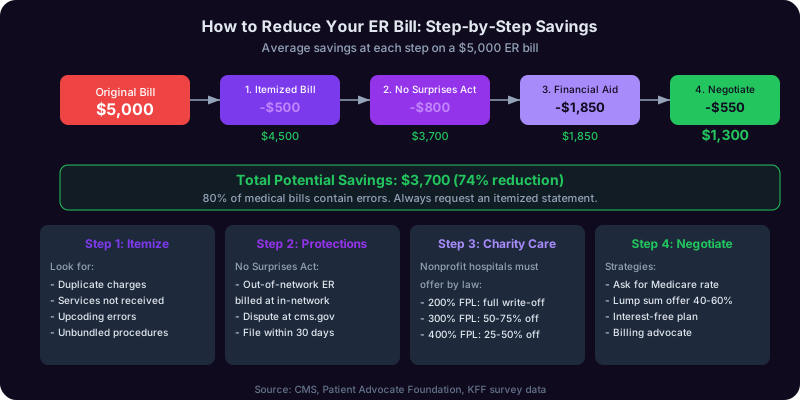
If you have received a large ER bill, you have more options than you might think. Hospitals expect a significant percentage of ER bills to be negotiated, reduced, or written off - it is built into their financial model.
Step 1: Request an Itemized Bill
You are entitled to an itemized bill showing every charge. Request it. Then look for these common billing errors:
- Duplicate charges: The same test or medication listed twice
- Charges for services you did not receive: Medications not administered, tests not performed
- Incorrect coding: Being billed for a higher-level service than what was provided (upcoding)
- Facility fee discrepancies: Being charged the highest facility fee tier for a lower-acuity visit
- Unbundling: Procedures that should be billed as a package being billed as separate line items
Studies suggest that up to 80% of medical bills contain errors. Requesting the itemized bill and reviewing it is the single most effective cost-reduction step.
Step 2: Check for No Surprises Act Protections
The No Surprises Act (effective since January 2022) protects you from surprise bills when you receive emergency care at an out-of-network facility. If you went to an in-network hospital but were treated by an out-of-network physician (which is common - ER doctors are often independent contractors), you cannot be billed more than the in-network rate. If you received a bill that appears to violate this protection, file a dispute at cms.gov/nosurprises.
Step 3: Ask About Financial Assistance
Nonprofit hospitals (the majority of hospitals in the US) are required by law to have a financial assistance policy, also called charity care. Eligibility varies, but many programs cover patients earning up to 200-400% of the federal poverty level:
| Family Size | 200% FPL (many qualify) | 300% FPL (some qualify) | 400% FPL (fewer qualify) |
|---|---|---|---|
| 1 person | $31,300 | $46,950 | $62,600 |
| 2 people | $42,400 | $63,600 | $84,800 |
| 3 people | $53,500 | $80,250 | $107,000 |
| 4 people | $64,600 | $96,900 | $129,200 |
If you qualify, the hospital may reduce your bill by 50-100%. Even for-profit hospitals often have discount programs for uninsured or underinsured patients. You will not know unless you ask.
Step 4: Negotiate the Amount
If you do not qualify for financial assistance, you can still negotiate:
- Ask for the Medicare rate: Medicare typically pays 40-60% of the billed amount. Ask the hospital to accept the Medicare rate as payment in full. Many will accept 50-70% of the original bill.
- Offer a lump sum: Hospitals prefer a smaller amount now over the full amount in installments (or never). Offering to pay 40-60% immediately often works.
- Cite fair pricing: Look up what Medicare pays for the same procedure codes (available at cms.gov) and use this as your negotiation baseline.
Step 5: Set Up a Payment Plan
Most hospitals offer interest-free payment plans. By law, the payment plan must be interest-free in many states. Ask for a monthly payment that fits your budget - $50/month on a $3,000 bill is $50/month, and the hospital cannot send you to collections while you are making agreed-upon payments.
Step 6: Dispute If Necessary
If the bill is incorrect, you believe you were overcharged, or the hospital will not work with you on the amount:
- File a complaint with your state's attorney general consumer protection division
- Contact your state's health department or insurance commissioner
- File a dispute through your insurance company's appeals process
- Consider a medical billing advocate - they typically charge 25-35% of the savings they negotiate, only if successful
For a detailed walkthrough of disputing medical charges, see our guide on what to do when you cannot afford medical care. The Finance Copilot can also help you draft negotiation letters and identify billing errors in your itemized statement.
Using AI for Quick Health Triage
AI health tools have become increasingly useful for helping you gather information and think through your symptoms before deciding where to seek care. Here is how they can help - and where their limitations lie.
What AI Health Triage Can Do Well
- Help you organize your symptoms: When you are in pain or anxious, it is hard to think clearly. Describing your symptoms to an AI helps you create the structured description that medical professionals need - what hurts, when it started, what makes it better or worse, and what else you are experiencing.
- Provide context on common conditions: If you are wondering whether your symptoms match a UTI, strep throat, or a sprained versus broken finger, AI can provide general information about these conditions that helps you make a more informed decision about where to go.
- Suggest the right level of care: Based on your described symptoms, AI can help you think through whether the ER, urgent care, telehealth, or a scheduled doctor's visit is most appropriate - similar to what this guide does, but personalized to your specific situation.
- Prepare you for your visit: AI can help you compile your medication list, describe your symptoms concisely, and identify the questions you should ask your healthcare provider.
- Help with post-visit follow-up: Understanding your diagnosis, discharge instructions, or medication directions - the Medication Copilot can explain drug interactions, side effects, and dosing schedules in plain language.
What AI Health Triage Cannot and Should Not Do
This matters enough to be explicit:
- AI cannot diagnose you. It can suggest possibilities, but only a licensed healthcare provider with the ability to examine you, run tests, and review your full medical history can make a diagnosis.
- AI cannot replace the ER decision. If you are experiencing any symptom from the "True Emergencies" section of this guide, go to the ER. Do not spend time consulting AI. Do not wait for a chatbot response. Call 911 or go now.
- AI can miss nuance. Symptoms interact in complex ways. A headache is usually nothing; a headache with a stiff neck and fever could be meningitis. AI is improving at recognizing these patterns, but it is not at the level of a trained emergency physician.
- AI does not know your full history. Your doctor knows that you had a blood clot two years ago, which makes your current leg swelling much more concerning. AI only knows what you tell it in the moment.
How to Use Copilotly's Health Tools Responsibly
The Health Copilot is designed to be a first step in your decision-making, not the final word. Here is the recommended approach:
- Describe your symptoms - be specific about onset, severity, location, and anything that makes them better or worse
- Get an initial assessment - the copilot will help you categorize the urgency of your situation
- Follow the recommendation - if it says go to the ER, go. If it suggests urgent care or telehealth, consider that guidance alongside your own judgment
- Prepare for your visit - use the copilot to organize your symptoms, medications, and questions before you see a provider
For ongoing health management, the Mental Health Copilot can provide support for anxiety, stress, and emotional well-being - particularly the health anxiety that often accompanies trying to figure out whether symptoms are serious. And if cost is a factor in your healthcare decisions, our guide on what to do when you cannot afford a doctor covers every option from community health centers to prescription discount programs.
Additional resources for understanding your health:
- Is This Rash Serious? A Complete Visual Guide - for skin-related concerns
- Why Does My Stomach Hurt? 12 Common Causes - for abdominal pain
- Flu vs Cold vs COVID: How to Tell the Difference - for respiratory symptoms
Remember: When in doubt, seek care. No guide, no app, and no AI tool should be the reason you delay emergency treatment. The cost of an unnecessary ER visit is money. The cost of a missed emergency can be everything. Always err on the side of going.
Frequently Asked Questions
Recommended Copilots
Recommended Copilots
Get an initial assessment of your symptoms and guidance on the right level of care
Try Free →Evaluate your child's symptoms with age-specific guidance for fevers, injuries, and illness
Try Free →Understand drug interactions, side effects, and dosing schedules for prescribed medications
Try Free →Manage health anxiety and stress that comes with medical decision-making
Try Free →Navigate ER billing, negotiate medical bills, and find financial assistance programs
Try Free →Related Articles
Get Answers From the Health Copilot
Describe your symptoms and get an instant assessment of urgency level, recommended care setting, and what to bring to your visit - plus help understanding your diagnosis afterward.