
You Have More Options Than You Think
If you are putting off a doctor visit because of money, you are not alone, and you are not out of options. Roughly 27.6 million Americans were uninsured in 2025, according to the U.S. Census Bureau. But the number of people who avoid medical care because of cost is far larger. A Gallup survey found that 38% of Americans delayed or skipped medical treatment due to cost concerns, including people who technically have insurance but face deductibles of $3,000, $5,000, or even $8,000 before coverage kicks in.
The consequences of avoiding care are real and expensive. A condition that costs $150 to treat at a clinic can easily become a $15,000 emergency room visit six months later. The CDC estimates that $4.5 billion in preventable emergency department visits occur every year because people wait too long to address treatable conditions.
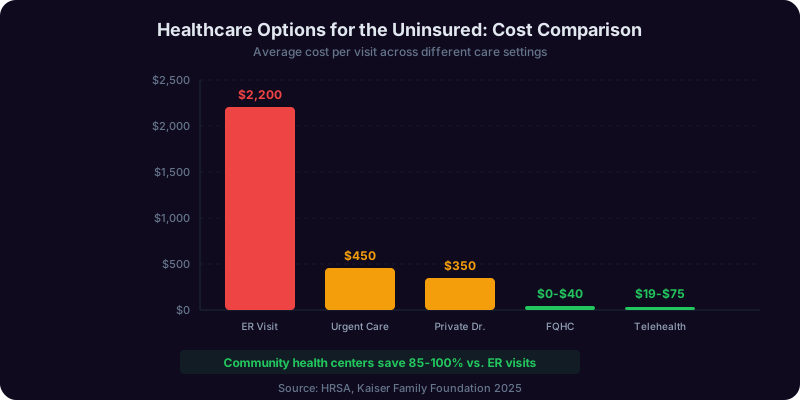
Here is the reality that most people do not know: there is an entire parallel healthcare system in the United States designed specifically for people who cannot afford standard medical care. Federally Qualified Health Centers, free clinics, charitable care programs, telehealth platforms, prescription discount programs, and hospital financial assistance programs exist in every state. Many of these resources serve patients for free or for less than the cost of a restaurant meal. Try our AI meal planning tool for step-by-step help.
This guide covers all of them. It is organized from the most accessible options (community health centers you can walk into this week) to strategies for dealing with bills you have already received. Every resource listed is real, currently operating, and available to uninsured and underinsured Americans.
Important disclaimer: This guide provides general health information and resources, not medical advice. Always seek professional medical help for emergencies or serious health concerns. If you are experiencing a medical emergency, call 911 immediately.
Community Health Centers: $0-$40 Visits on a Sliding Scale
Federally Qualified Health Centers (FQHCs) are the single most important resource for affordable healthcare in the United States, and most people have never heard of them. These are not charity clinics. They are fully staffed medical facilities that receive federal funding to provide care to anyone, regardless of ability to pay.
What FQHCs Are
There are over 1,400 FQHCs operating more than 15,000 delivery sites across all 50 states, the District of Columbia, and U.S. territories. They serve approximately 30 million patients per year. These centers are required by law to see every patient, regardless of insurance status or ability to pay, and to charge on a sliding fee scale based on income. Learn more at the Health Resources and Services Administration (HRSA).
How the Sliding Scale Works
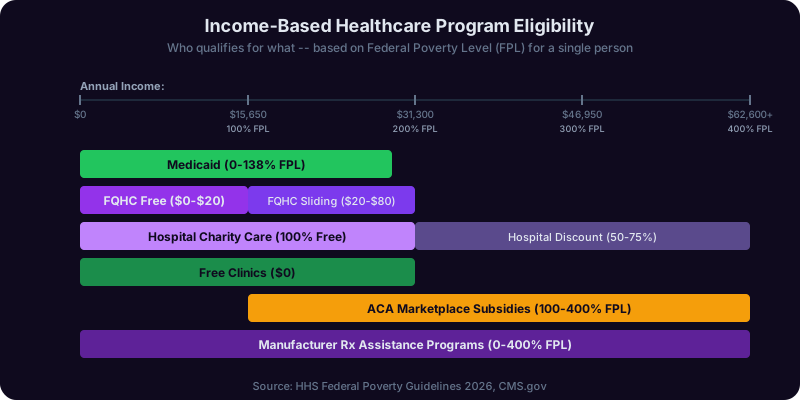
The sliding scale is based on the Federal Poverty Level (FPL). For 2026, the FPL for a single person is approximately $15,650 and for a family of four is approximately $32,150. Here is how the typical fee schedule breaks down:
| Income Level | Percentage of FPL | Typical Visit Cost |
| Below $15,650 (single) | At or below 100% FPL | $0 - $20 |
| $15,651 - $23,475 | 101% - 150% FPL | $20 - $40 |
| $23,476 - $31,300 | 151% - 200% FPL | $40 - $80 |
| Above 200% FPL | Above 200% FPL | Full fee (still below market rate) |
Even at the highest tier, FQHC fees are typically 40-60% less than private practice rates. A standard office visit that costs $250 at a private doctor might cost $80-$120 at a community health center for patients above 200% FPL.
Services Available
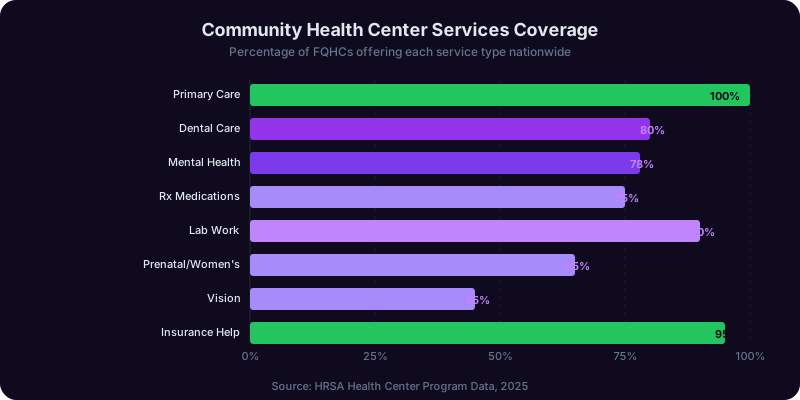
FQHCs are not limited to basic checkups. Most offer:
- Primary care for adults and children
- Dental care (roughly 80% of centers have dental services)
- Mental health and substance abuse treatment
- Prescription medications at 340B discounted pricing (often 25-50% below retail)
- Lab work and diagnostic testing
- Prenatal and women's health services
- Vision screening
- Chronic disease management (diabetes, hypertension, asthma)
- Immunizations
- Help enrolling in insurance programs (Medicaid, marketplace plans)
How to Find One
Visit findahealthcenter.hrsa.gov, the official locator run by the Health Resources and Services Administration. Enter your address, and it will show every FQHC near you with contact information, hours, and services offered. You can also call 1-800-ASK-HRSA (1-800-275-4772).
Walk-ins are accepted at many centers, but calling ahead for an appointment is recommended. Bring proof of income (a pay stub, tax return, or self-declaration if you have no documentation) and a photo ID. If you have no income documentation, most centers will accept a signed self-declaration.
The Health Copilot can help you prepare a list of symptoms and questions before your visit, so you can make the most of your appointment time.
Free and Low-Cost Clinics in Every State
Beyond FQHCs, there is a network of free clinics, charitable organizations, and special programs that provide healthcare at no cost. These operate differently from community health centers and often serve people who fall through every other crack in the system.
Free Clinics
The National Association of Free and Charitable Clinics (NAFC) lists over 1,400 free and charitable clinics across the country. These are typically nonprofit organizations staffed by volunteer physicians, nurses, and other healthcare professionals. To find one near you, visit nafcclinics.org and use their clinic finder.
Free clinics generally serve patients who are uninsured and have incomes below 200% of the Federal Poverty Level. Unlike FQHCs, they may not offer a full range of services, but many provide:
- Primary care visits
- Chronic disease management
- Prescription medications from on-site pharmacies
- Lab work and basic diagnostics
- Mental health counseling
- Referrals to specialists who volunteer their time
Remote Area Medical (RAM) Events
Remote Area Medical hosts free pop-up clinics throughout the year, primarily in rural and underserved areas. These multi-day events provide free medical, dental, and vision care on a first-come, first-served basis. Services that would cost thousands of dollars, including dental extractions, fillings, eyeglasses, and comprehensive medical exams, are provided completely free.
RAM events are held across the country. Check ramusa.org for the schedule. People regularly drive hours and camp overnight to be first in line. If one is happening within driving distance, it is worth the trip. A single RAM event typically provides $1-2 million in free care over a weekend.
Dental Schools and Teaching Hospitals
If dental care is your most pressing need, dental schools are one of the best-kept secrets in affordable healthcare. There are over 70 accredited dental schools in the United States, and every one of them operates a clinic where dental students provide care under the direct supervision of licensed faculty dentists. Costs are typically 50-70% less than private practice rates.
- A cleaning that costs $150-$300 privately might cost $50-$75 at a dental school
- A filling that costs $200-$500 might cost $75-$150
- Root canals, crowns, and other complex procedures are also available at deep discounts
The tradeoff is time. Appointments take longer because students work more carefully and have their work checked by supervisors. A one-hour cleaning might take two hours. But the quality of care is excellent because every step is supervised.
Teaching hospitals operate on a similar model for medical care. Major academic medical centers like those affiliated with universities often have resident clinics where you see physicians in training under attending supervision. These visits are typically 30-50% cheaper than the hospital's standard rates.
Planned Parenthood and Women's Health
For reproductive health, STI testing, breast exams, pap smears, and contraception, Planned Parenthood operates over 600 health centers nationwide. They serve patients regardless of insurance status and use a sliding fee scale. Many services are available for $0-$50 depending on income. STI testing, which can cost $150-$400 at a private lab, is often available for free or under $25.
The Women's Health Copilot can help you understand screening recommendations and prepare for preventive care appointments.
State and Local Health Departments
Your county or city health department likely offers free or low-cost services including immunizations, STI testing and treatment, tuberculosis screening, family planning, and prenatal care. Some also provide primary care visits and chronic disease management. Search "[your county] health department" for local options.

Get Answers From the Health Copilot
Copilotly's Health Copilot helps you understand symptoms, prepare for doctor visits, interpret lab results, and manage chronic conditions between appointments. It is not a replacement for medical care, but it makes every interaction with the healthcare system more effective.
Telehealth for Under $50: When You Do Not Need to Leave Your Couch
Telehealth has permanently changed the economics of seeing a doctor. For many common conditions, you can consult a licensed physician via video or phone for a fraction of the cost of an in-person visit, without insurance, and often within hours.
When Telehealth Works Well
Telehealth is appropriate for a wide range of non-emergency conditions:
- Respiratory infections (cold, flu, sinus infections, bronchitis)
- Urinary tract infections (UTIs)
- Skin conditions (rashes, acne, minor infections) via photo evaluation
- Allergies (seasonal, food, medication adjustments)
- Mental health (therapy, psychiatric medication management)
- Chronic disease check-ins (diabetes, hypertension, thyroid)
- Prescription refills and medication adjustments
- Birth control prescriptions and consultations
- Eye infections (pink eye, styes)
- Minor injuries (sprains, minor cuts assessment)
Telehealth Platforms and Costs Without Insurance
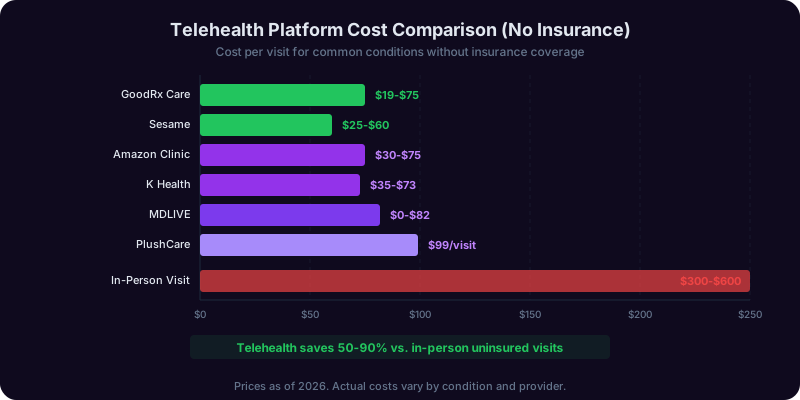
| Platform | Cost Per Visit (No Insurance) | Wait Time | Notes |
| Amazon Clinic | $30 - $75 | Hours (async) | Message-based for common conditions |
| GoodRx Care | $19 - $75 | Same day | Includes some prescriptions |
| Sesame | $25 - $60 | Same day | Choose your own doctor, transparent pricing |
| PlushCare | $99/visit or $199/year | Within 24 hours | Can order labs, referrals |
| MDLIVE | $0 - $82 | Under 15 min (urgent) | Wide network, therapy available |
| K Health | $35 - $73 | Minutes (AI triage + doctor) | AI-assisted symptom assessment |
| Cerebral | $85 - $325/month | Within days | Mental health focus, includes meds |
Compare this to the average cost of an in-person doctor visit without insurance: $300-$600 for a primary care visit and $800-$2,000+ for an urgent care visit. Even the most expensive telehealth platforms represent savings of 50-90%.
When Telehealth Does NOT Work
Do not use telehealth when you need:
- Physical examination (abdominal palpation, joint manipulation, heart/lung auscultation)
- Diagnostic imaging (X-rays, MRI, CT scans)
- Lab work that requires a blood draw
- Procedures (stitches, casts, biopsies)
- Emergency care (chest pain, difficulty breathing, severe bleeding, stroke symptoms)
Prescription Delivery Integration
Many telehealth platforms can send prescriptions directly to your pharmacy or to discount delivery services. Cost Plus Drugs (Mark Cuban's pharmacy) and Amazon Pharmacy both accept electronic prescriptions from telehealth visits and offer significant discounts on common medications. This creates an end-to-end affordable care experience: $35 for the telehealth visit plus $5-$20 for the medication, compared to $400+ through traditional channels.
For ongoing health questions between visits, the Health Copilot can help you understand symptoms, prepare questions for your telehealth appointment, and make sense of any advice or prescriptions you receive. If your condition involves medication, the Medication Copilot can explain drug interactions, side effects, and proper usage.
How to Negotiate Medical Bills You Already Have
If you have already received a medical bill you cannot afford, you have far more negotiating power than you think. Medical billing is one of the most negotiable expenses in American life, and hospitals and providers expect a significant percentage of bills to be reduced or written off.
The 80% Error Rate
Medical billing advocacy groups estimate that up to 80% of medical bills contain errors. A 2024 study by the Consumer Financial Protection Bureau found that $88 billion in medical debt appears on American credit reports, and a significant portion of that is disputed, erroneous, or eligible for financial assistance. Before you pay anything, verify the bill is correct.
Step 1: Request an Itemized Bill
Never pay a summary bill. Call the billing department and request a fully itemized bill that lists every individual charge with CPT (Current Procedural Terminology) codes. You are legally entitled to this. Common errors to look for:
- Duplicate charges: Being billed twice for the same test, medication, or service
- Upcoding: Being billed for a more expensive procedure than what was performed (e.g., charged for a Level 5 ER visit when you had a Level 3)
- Unbundling: Charges that should be grouped into a single procedure code being split into multiple separate charges
- Incorrect quantities: Being billed for 10 pills when you received 5
- Room charges after discharge: Being billed for a room on the day you were discharged
- Operating room time overcharges: Being billed for 3 hours of OR time when the surgery took 45 minutes
Step 2: Compare Fair Prices
Use Healthcare Bluebook (healthcarebluebook.com) or FAIR Health Consumer (fairhealthconsumer.org) to look up the fair price for each procedure in your geographic area. If your bill is significantly above the fair market rate, you have leverage. For example, if an MRI in your area averages $800 and you were billed $2,400, that is a strong negotiating position.
Step 3: Apply for Hospital Financial Assistance
This is the most underused tool in medical billing. Under the Affordable Care Act, all nonprofit hospitals (which represent about 57% of all U.S. hospitals) are required to have a Financial Assistance Policy (FAP), also called charity care. These programs can reduce your bill by 50-100% depending on your income.
Typical eligibility thresholds for hospital financial assistance:
| Income Level (% of FPL) | Typical Discount | Example: Single Person Income |
| Below 200% FPL | 100% (free care) | Below ~$31,300 |
| 200-300% FPL | 75-90% discount | $31,300 - $46,950 |
| 300-400% FPL | 50-75% discount | $46,950 - $62,600 |
| 400%+ FPL | May still qualify for some discount | Above $62,600 |
Ask the billing department for the financial assistance application. You will need to provide proof of income (pay stubs, tax return, or a hardship letter if you are unemployed). Many hospitals approve applications retroactively, so even if you received care months ago, you can still apply.
Step 4: Negotiate Directly
If you do not qualify for financial assistance, negotiate. Here is a script that works:
"I received an itemized bill totaling $[amount]. I do not have insurance and I am unable to pay this amount. I would like to discuss a reduction. I have checked fair market rates for these services in our area, and the fair price appears to be approximately $[lower amount]. Would you be able to adjust the bill to reflect the uninsured/self-pay rate?"
Key negotiation facts:
- Hospitals typically have a self-pay discount of 30-70% that they will apply if you ask
- Offering to pay a lump sum immediately gives you additional leverage (providers prefer $500 today over $2,000 in 12 monthly installments)
- If you cannot pay even the reduced amount, ask for a zero-interest payment plan. Most hospitals offer them for 12-24 months
- Medical debt under $500 was removed from credit reports starting in 2023. Debts that have been paid off no longer appear on credit reports either
Step 5: Consider a Medical Billing Advocate
If your bill is over $5,000 and you are not making progress, a medical billing advocate can negotiate on your behalf. They typically charge 25-35% of the savings they achieve. For a $20,000 bill reduced to $5,000, you would pay the advocate roughly $3,750-$5,250. Organizations like the Patient Advocate Foundation (patientadvocate.org) offer free assistance for patients with chronic or life-threatening conditions.
See our real-world walkthrough: negotiating a raise.
Prescription Drugs Without Insurance: Cutting Costs by 50-90%
Prescription medication costs stop many Americans from filling prescriptions they need. One in four adults reports difficulty affording medications, and 29% of adults have skipped doses, cut pills in half, or not filled a prescription because of cost. The good news is that the actual cost of most generic medications is a fraction of what pharmacies charge, and several programs can get you close to that real cost.
GoodRx and Prescription Discount Cards
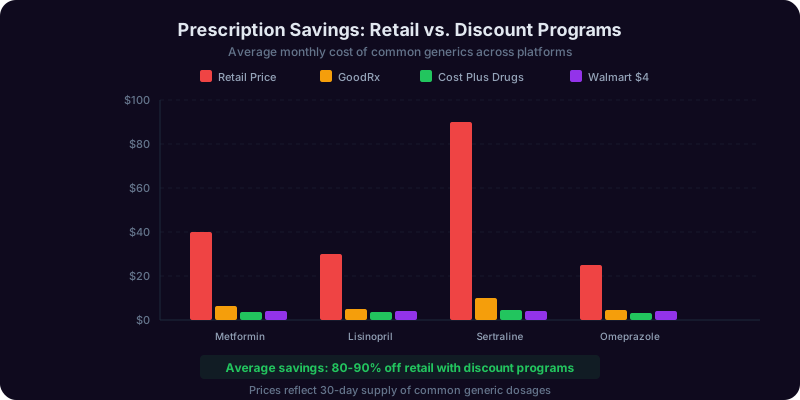
GoodRx is not insurance. It is a coupon aggregator that compares prices across pharmacies and provides discount codes. It is free to use and works at over 70,000 pharmacies. The savings are real and often dramatic:
| Medication (Generic) | Retail Price | GoodRx Price | Savings |
| Amoxicillin (antibiotic) | $25 - $65 | $4 - $10 | Up to 85% |
| Lisinopril (blood pressure) | $20 - $55 | $3 - $8 | Up to 85% |
| Metformin (diabetes) | $15 - $80 | $4 - $10 | Up to 88% |
| Sertraline/Zoloft (antidepressant) | $30 - $90 | $4 - $12 | Up to 87% |
| Omeprazole (acid reflux) | $20 - $50 | $3 - $9 | Up to 82% |
| Albuterol inhaler (asthma) | $50 - $90 | $15 - $35 | Up to 61% |
| Atorvastatin (cholesterol) | $25 - $100 | $4 - $10 | Up to 90% |
Just show the GoodRx coupon on your phone at the pharmacy counter. It works even if you have insurance, and sometimes the GoodRx price is lower than your insurance copay.
Mark Cuban's Cost Plus Drugs
Cost Plus Drugs (costplusdrugs.com) takes a fundamentally different approach. They buy generic medications directly from manufacturers and add a transparent markup: cost plus 15% plus a $5 pharmacist fee plus $5 shipping. That is it. No hidden fees, no pharmacy benefit manager markups.
Examples of their pricing:
- Imatinib (cancer drug): Retail price ~$2,500/month. Cost Plus price: ~$47/month
- Metformin 500mg (90 tablets): $3.90
- Rosuvastatin 20mg (90 tablets): $5.10
- Finasteride 5mg (90 tablets): $4.50
The limitation is that Cost Plus Drugs is a mail-order pharmacy, so you need to plan ahead. Orders take 3-5 business days. They also do not carry every medication, though their formulary continues to expand.
$4 Generic Programs at Major Pharmacies
Several major pharmacy chains offer generic medications at deeply discounted flat rates:
- Walmart: $4 for a 30-day supply, $10 for a 90-day supply on hundreds of generics
- Kroger: Free antibiotics program plus low-cost generics
- Publix: Free 14-day supply of certain antibiotics, free metformin and lisinopril
- Costco: No membership required for pharmacy. Their generic prices are consistently among the lowest
Manufacturer Patient Assistance Programs (PAPs)
If you take a brand-name medication that does not have a generic equivalent, the manufacturer almost certainly has a Patient Assistance Program. These programs provide free or deeply discounted medications to qualifying patients, typically those without insurance or with inadequate prescription coverage and incomes below 300-400% of the Federal Poverty Level.
The easiest way to find PAPs is through NeedyMeds.org or RxAssist.org, which maintain databases of every manufacturer program. You can also call the number on your medication packaging and ask about their patient assistance program directly.
For patients taking insulin, the major manufacturers (Eli Lilly, Novo Nordisk, Sanofi) all cap out-of-pocket costs at $35 per month through their patient assistance programs, regardless of insurance status. This is separate from the Inflation Reduction Act cap that applies to Medicare patients.
The Medication Copilot can help you understand your prescriptions, check for generic alternatives, and identify potential savings programs for specific medications.
Emergency Situations: Your Rights at the ER
If you are experiencing a medical emergency, go to the emergency room. Do not let cost concerns stop you. Federal law protects you, and there are ways to deal with the bill afterward.
EMTALA: The Law That Protects You
The Emergency Medical Treatment and Labor Act (EMTALA) is a federal law that requires every hospital with an emergency department that participates in Medicare (which is virtually all of them) to:
- Screen every patient who arrives at the emergency department, regardless of ability to pay, insurance status, citizenship, or any other factor
- Stabilize any emergency medical condition before discharge or transfer
- Not transfer a patient to another facility unless the patient is stabilized or the transfer is medically necessary and appropriate
This means:
- The hospital cannot ask about insurance or ability to pay before screening and treating you
- The hospital cannot turn you away for being uninsured
- The hospital cannot make you pay upfront as a condition of being seen
- The hospital cannot transfer you to a different facility simply because you cannot pay
EMTALA violations can result in fines of $50,000 or more per violation for the hospital, so they take this law seriously. If anyone at an emergency room suggests you leave because you cannot pay, that is a federal violation. For more on when ER visits are truly necessary, read our guide on when to go to the emergency room.
What Counts as an Emergency
EMTALA uses a broad definition. An emergency medical condition is any condition that, without immediate treatment, could:
- Place your health in serious jeopardy
- Cause serious impairment to bodily functions
- Cause serious dysfunction of any body organ or part
- For pregnant women, threaten the health of the mother or unborn child
You do not need to be having a heart attack or bleeding profusely. Severe pain, high fever, difficulty breathing, severe vomiting, psychiatric emergencies, and any condition you reasonably believe is an emergency are all covered. Try our AI symptom checker for step-by-step help.
Dealing with the ER Bill Afterward
The average ER visit costs $2,200 without insurance, and complex visits can exceed $10,000-$20,000. But here is what to do:
- Apply for the hospital's financial assistance program immediately. As covered in the bill negotiation section, nonprofit hospitals are required to have these programs. Many will write off the entire bill for patients below 200% FPL.
- Request an itemized bill and check for errors. ER bills are particularly prone to upcoding and duplicate charges.
- Ask about retroactive Medicaid. In most states, Medicaid can be applied retroactively for up to 3 months before the date of application. If you had an ER visit and subsequently qualify for Medicaid, the program can cover that previous bill.
- Negotiate using the strategies in this guide. ER self-pay rates are typically negotiable by 40-70%.
- Set up a payment plan. Hospitals are generally willing to set up interest-free payment plans. Even $25/month demonstrates good faith and keeps your account out of collections.
One important protection: as of 2023, medical debts under $500 no longer appear on credit reports, and paid medical debts are removed entirely. Additionally, the three major credit bureaus no longer include medical debt in collections that was less than one year old, giving you a window to resolve bills before they affect your credit.
Using AI to Make Every Medical Visit Count
When you have limited access to healthcare, every appointment matters. The average primary care visit lasts just 18 minutes. If you are paying out of pocket or using a sliding-scale clinic, you want to extract maximum value from that time. This is where preparation makes the difference between a visit that solves your problem and one that leaves you with more questions than answers.
Before Your Appointment
The Health Copilot can help you prepare for a medical visit by:
- Organizing your symptoms into a clear timeline: when they started, how they have changed, what makes them better or worse, and which ones concern you most
- Suggesting relevant questions to ask your doctor based on your symptoms, so you do not walk out thinking "I forgot to ask about..."
- Explaining medical terminology you have encountered in previous results or online research, so you can communicate more effectively with your provider
- Identifying what information to bring: previous lab results, a list of current medications and dosages, family medical history, and a record of any allergies
Understanding Your Results
After a visit, you may leave with lab orders, a new prescription, or a diagnosis you do not fully understand. The Lab Results Copilot can help you interpret blood work and other test results in plain English. If you want a deeper understanding of blood test markers and what they mean, our guide on how to read blood test results covers every common panel in detail.
For skin concerns, our guide on whether a rash is serious can help you understand when home care is appropriate versus when you need professional evaluation. If you are navigating health insurance for the first time, our guide on understanding health insurance explains deductibles, copays, and how to choose the right plan.
Managing Chronic Conditions Between Visits
If you are managing a chronic condition like diabetes, hypertension, or thyroid disease with limited doctor access, the Chronic Health Copilot can help you:
- Understand your condition and how different factors (diet, exercise, stress, sleep) affect it
- Track symptoms and identify patterns to discuss at your next appointment
- Make sense of your home monitoring data (blood pressure readings, blood sugar logs)
- Understand medication instructions and what to do if you miss a dose
Mental Health Support
Mental health care is often the hardest type of care to access affordably. Therapy sessions typically cost $100-$250 per session without insurance, and psychiatric appointments can be $200-$400. While AI is not a replacement for professional mental health treatment, the Mental Health Copilot can provide general information about coping strategies, help you understand different treatment approaches, and help you prepare for appointments with mental health professionals.
If you are struggling with sleep, which compounds virtually every health condition, our guide on melatonin vs. magnesium for insomnia compares evidence-based approaches to better sleep.
Important Reminder
AI health tools, including Copilotly, are designed to help you prepare for and understand medical care. They are not a substitute for professional medical diagnosis or treatment. If something feels wrong, if a symptom is getting worse, or if you are in pain, use the resources in this guide to see a real healthcare provider. The community health centers, free clinics, and telehealth platforms covered in this guide make that more accessible than most people realize.
This guide provides general health information and resources, not medical advice. Always seek professional medical help for emergencies or serious health concerns.
Frequently Asked Questions
Recommended Copilots
Recommended Copilots
Get help understanding symptoms, preparing for doctor visits, and making sense of health information
Try Free →Understand your prescriptions, check for generic alternatives, and find savings programs
Try Free →Interpret blood work and test results in plain English
Try Free →Manage ongoing conditions between doctor visits with informed guidance
Try Free →Access general mental health information and prepare for therapy appointments
Try Free →Related Articles
Get Answers From the Health Copilot
Copilotly's Health Copilot helps you understand symptoms, prepare for doctor visits, interpret lab results, and manage chronic conditions between appointments. It is not a replacement for medical care, but it makes every interaction with the healthcare system more effective.