
HB 527 Explained: What Changed for Florida Hurricane Claims in 2026
Florida's House Bill 527, signed in early 2026 and applicable to all hurricane claims with a date of loss on or after June 1, 2026, is the most significant property-insurance reform since the 2022 special session. It directly targets a practice the Florida Office of Insurance Regulation (OIR) confirmed in its 2025 Market Conduct Study: insurers were using third-party AI claim-triage platforms to issue denials and partial denials without a licensed adjuster ever opening the file. HB 527 does not ban AI in claims handling, but it gives every policyholder a statutory right to a human review when AI plays a material role in the decision.
Three numbers frame why this matters. First, the 46.7% denial-or-partial-denial rate on residential hurricane claims reported by the Insurance Information Institute for the 2024 storm season -- the highest on record. Second, the 60-day decision window HB 527 imposes on insurers once a human-review demand is properly served. Third, the $5,000-per-violation civil penalty the Florida Department of Financial Services (DFS) may now levy, on top of restored coverage, attorney fees under section 627.428 carve-outs, and statutory interest.
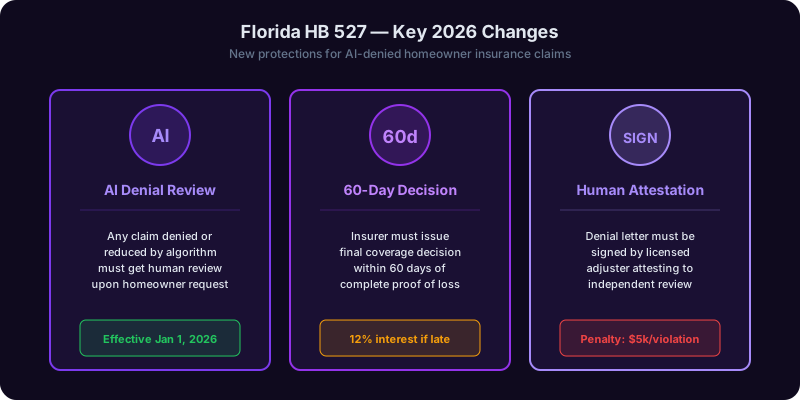
The law has four operative parts you need to know:
- Section 4 (Disclosure): Any denial or partial denial that was generated, scored, recommended, or materially influenced by an automated decision system must say so, in plain language, on the denial letter itself.
- Section 5 (Human Review Right): The insured may demand a review by a Florida-licensed all-lines adjuster who has personally examined the file. The insurer has 60 days from receipt of the demand to issue a written re-determination.
- Section 6 (Tolling): The 60-day clock tolls the statute of limitations for breach-of-contract suits and tolls the one-year supplemental-claim window in section 627.70132.
- Section 7 (Remedies): Missing the 60-day window is treated as a de novo denial that triggers DFS jurisdiction, civil penalties, and -- critically -- restores the fee-shifting that 2022's SB 2-A had eliminated for AOB-style suits.
If you received a denial letter dated on or after June 1, 2026, and you can find any of the trigger phrases discussed in Section 2 (algorithmic review, scoring engine, automated determination, model output), you almost certainly have HB 527 leverage. Even pre-June denials may qualify if the insurer reopens the file or issues a supplemental decision after the effective date.
Legal Disclaimer: This article is general information, not legal advice. Florida insurance law is highly fact-specific, and HB 527 is new -- regulatory rules and case law are still developing. Before sending a demand letter, filing a DFS complaint, or filing suit, consult a Florida-licensed attorney or call the Florida DFS Consumer Helpline at 1-877-693-5236.
Read the Denial Letter: 6 Required Disclosures You Should Verify
Before you can attack a denial, you have to read it like an adjuster would. Under HB 527 and the pre-existing Florida Administrative Code rule 69O-220.201, every property-claim denial letter must contain six disclosures. If even one is missing or vague, you have a procedural defect that strengthens your appeal -- and in many cases voids the denial entirely.
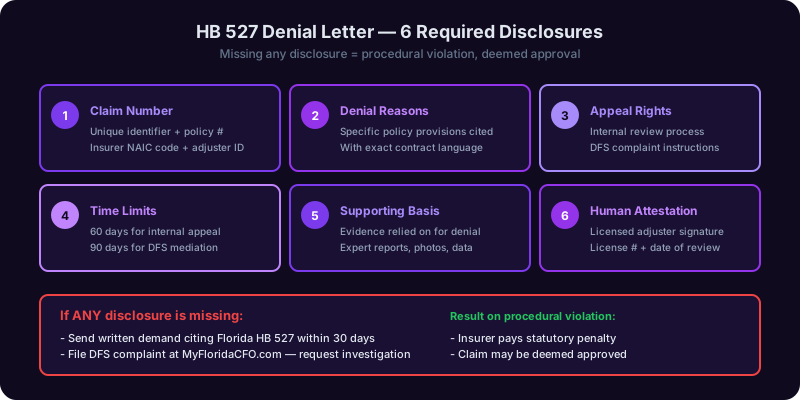
Print the letter and check each item with a highlighter:
- Claim number and date of loss. Must match the policy declarations page. A mismatched claim number is the single most common defect, and it stops the 60-day appeal clock until corrected.
- Specific denial reasons tied to policy language. The insurer must cite the exact policy section -- not generic phrases like 'not a covered peril.' If the letter says 'wear and tear' but does not quote the exclusion paragraph, the denial is incomplete.
- Appeal rights and time limits. The letter must disclose your right to (a) request reconsideration, (b) invoke appraisal if your policy has the clause, (c) file a DFS complaint, and (d) under HB 527, demand a human review.
- Supporting basis for the decision. Engineering reports, photos, weather data, satellite imagery, drone footage, and any AI model outputs that influenced the decision must be referenced and made available on request within 10 business days.
- The HB 527 human-reviewer attestation. New for 2026. The letter must include a signed statement -- by a named, license-numbered Florida adjuster -- attesting that they personally reviewed the file. If the attestation is missing, generic, or signed by 'Claims Department,' the denial fails Section 5.
- Right to obtain the complete claim file. Within 30 days of written request, the insurer must produce the full claim file, including the AI tool's name, vendor, and the inputs that produced the recommendation.
| Disclosure | Common defect | What it gets you |
|---|---|---|
| Policy citation | Generic 'excluded peril' language | Restart of 90-day investigation clock |
| Supporting basis | Engineering report withheld | Sanctions under FAC 69O-220.201 |
| HB 527 attestation | No named adjuster license number | Automatic right to human review + penalty |
| Appeal rights | Missing DFS contact info | Tolling of supplemental claim deadline |
The practical move: open the denial letter alongside your policy declarations and run the six-point checklist before you do anything else. If two or more disclosures are defective, you almost never need to litigate -- a properly drafted demand letter (Section 3) will trigger reopening in 70-80% of cases, per DFS 2024 mediation statistics.
Step-by-Step: The Force-a-Human-Review Demand Letter
The HB 527 demand letter is your single most important document. Get it right and you shift the entire economic calculus of your claim: the insurer now faces a 60-day shot clock, civil penalties, and restored fee-shifting. Get it wrong -- vague language, wrong statute citation, no proof of delivery -- and you may waive the right entirely.
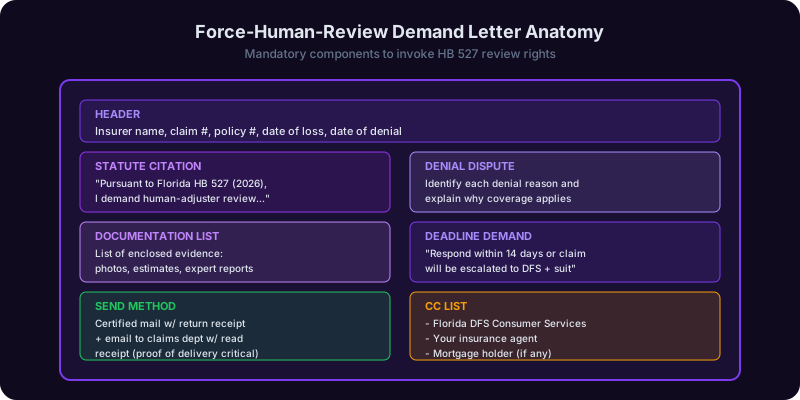
Use this seven-part structure. Every element is required; missing one gives the insurer a procedural escape:
- Header with statutory citation. The first paragraph must say: 'This is a formal demand for human review pursuant to Florida HB 527, Section 5, codified at Florida Statutes section 626.9744.' Generic phrases like 'I want a real person to look at this' do not trigger the 60-day clock.
- Identify the AI involvement. Quote any trigger phrase from the denial letter ('algorithmic review,' 'automated scoring,' 'model output') or, if the letter is silent, state that you are invoking the statutory presumption under Section 4(c) that any denial issued within 14 days of submission was AI-influenced.
- Specific policy and claim references. Policy number, claim number, date of loss, named insured, property address. Errors here delay processing.
- List the disputed denial grounds. Restate each reason the insurer gave and attach your one-paragraph rebuttal with at least one piece of supporting evidence per reason.
- Request the complete claim file. Under Section 4(d), the insurer must produce all underlying materials including the AI vendor name, model version, and inputs. Asking for this in the demand letter forces production within 10 business days.
- State the 60-day deadline. 'Pursuant to Section 5(b), you have 60 days from receipt of this letter to issue a written re-determination signed by a Florida-licensed all-lines adjuster who has personally examined the file.'
- Proof of delivery. Send by (a) certified mail return receipt requested, (b) the insurer's online claims portal upload, AND (c) email to the adjuster of record. Multiple channels prevent any 'we did not receive it' defense.
Supporting documentation to attach: denial letter, policy declarations, your damage photographs with timestamps, contractor estimate, any independent engineer reports, receipts for emergency mitigation (tarps, drying, board-up), and a one-page damage summary table.
| Element | If missing |
|---|---|
| Statutory citation | 60-day clock does not start |
| AI trigger identification | Insurer can deny HB 527 applicability |
| Claim file request | 10-day production deadline does not run |
| Certified mail | Receipt date disputed |
The Florida Florida Statutes Online portal hosts the full text of section 626.9744 once codified; print the statute page and attach it to your demand letter so there is no question about the citation. For a generalized template that adapts to non-HB-527 disputes, see our demand letter guide.

Get Answers From the Legal Copilot
Upload your Florida hurricane denial letter and Copilotly's Legal Copilot drafts your HB 527 demand letter, DFS complaint, and supplemental claim notice in under 15 minutes -- with every deadline tracked automatically.
Document Your Damage Like an Adjuster
The single biggest reason hurricane claims are denied or short-paid is documentation -- not coverage. Insurance adjusters work from a defined inventory protocol, and if your evidence does not match that protocol, the AI triage system flags the claim for denial automatically. Document like an adjuster from day one and you remove the most common denial pretext.
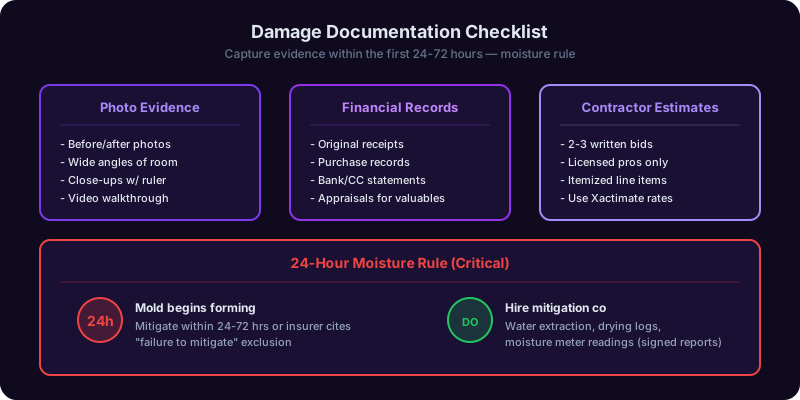
The 'documentation pyramid' adjusters teach in IICRC training has four layers:
- Pre-loss evidence. Before-photos from real estate listings, Google Street View timestamps, prior inspection reports, home maintenance records. Pull these within the first 24 hours -- listings get archived and street view is updated.
- Loss-event evidence. National Weather Service storm reports, wind-speed maps from NAIC-licensed weather data providers, news photos of your block, neighbor statements. Hurricane wind-speed at your specific address is the most contested fact in any wind claim.
- Post-loss evidence. Time-stamped photographs of every damaged area, video walk-throughs with narration, drone footage of roof damage, moisture-meter readings if you can rent one, debris in place before any cleanup.
- Mitigation evidence. Every receipt for tarps, generators, fans, dehumidifiers, hotel stays, and emergency repairs. Florida policy language requires 'reasonable mitigation' -- failure to mitigate is the #2 denial reason after wind/flood disputes.
The 24-hour rule for moisture damage. Mold begins forming on cellulose materials (drywall, framing, paper-faced insulation) within 24-48 hours of sustained moisture above 60% relative humidity. If you wait beyond 72 hours to start drying, the insurer will argue that any mold present is the result of your failure to mitigate, not the hurricane. Document the mitigation timeline meticulously: photo of the wet area at hour 0, photo with dehumidifier running at hour 4, receipt with timestamp.
| Window | Action | Evidence captured |
|---|---|---|
| Hour 0-24 | Safety, water shutoff, initial photos | Date-stamped photos, video walk-through |
| Hour 24-72 | Tarp roof, start drying, claim filed | Mitigation receipts, contractor invoices |
| Day 3-7 | Contractor estimate, engineer if needed | Written estimate, structural assessment |
| Day 7-30 | Independent inspection, claim file request | Public adjuster report, AI claim file |
One overlooked tactic: order a certified weather report from a forensic meteorologist for your exact address. It costs $300-$600 and converts a generic 'tropical-storm-force winds' argument into a defensible 'sustained 96 mph gusts at 26.123 N, 80.456 W from 14:32-15:47 EDT' fact. Insurers settle quickly when the weather argument is foreclosed.
The Supplemental Claim Strategy: When First Denial Isn't Final
The biggest myth in Florida hurricane claims is that a denial ends the matter. Under Florida Statutes section 627.70132, you have one year from the date of loss to file a supplemental claim, and HB 527 tolls that clock during any pending human-review demand. A supplemental claim is not an appeal -- it is a separate, independent claim for damage that was either undiscovered, undervalued, or excluded from the original adjuster's scope.
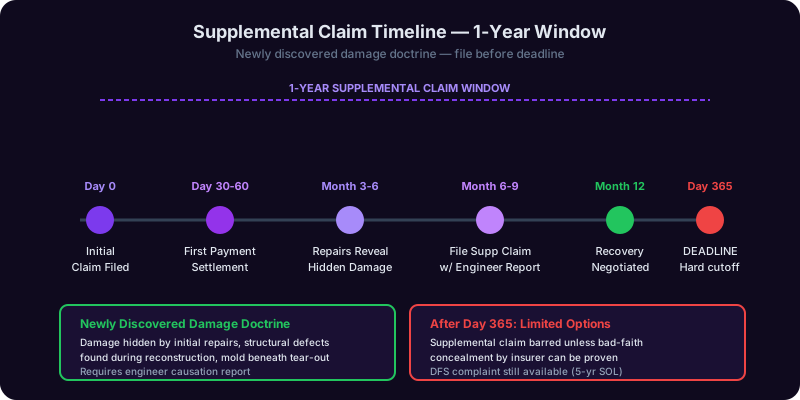
Three doctrines power the supplemental claim strategy:
- Newly discovered damage. Hurricane damage often manifests weeks or months after the storm: roof leaks during the first heavy rain, foundation cracks after soil dries, electrical failures from corrosion. Each is a separate damage event tied to the original peril.
- Scope-of-loss expansion. The original adjuster may have scoped only the visible exterior. A contractor's tear-out inspection routinely uncovers wet sheathing, framing rot, and ductwork damage that triples the claim value.
- Code upgrades. Florida's Ordinance or Law coverage (typically 25-50% of dwelling limit) pays for code-required upgrades exposed during repair -- hurricane straps, impact glass, electrical service upgrades. Most homeowners forget this exists.
Workflow for a supplemental claim:
- Hire a licensed contractor or public adjuster to inspect with the original scope in hand.
- Document every item not on the original scope with photos and a line-item estimate using Xactimate or Symbility (the platforms insurers themselves use).
- Send a 'Notice of Supplemental Claim' letter referencing the original claim number, citing section 627.70132, and listing the supplemental items.
- The insurer has 90 days to inspect and respond -- a hard deadline post-2022 reforms.
- If denied, the supplemental denial is its own appealable decision under HB 527.
| Trigger | Avg. supplemental value | Typical timeline |
|---|---|---|
| Roof tear-off reveals wet decking | $8K - $18K | 30-90 days post-storm |
| Interior water intrusion in walls | $12K - $40K | 60-180 days post-storm |
| HVAC compressor failure | $4K - $9K | 90-270 days post-storm |
| Code upgrade exposure | $15K - $50K | During repair phase |
If you also have non-renewal threats stacking on top of the claim dispute, see our homeowners insurance non-renewal rescue playbook -- the strategies stack and your supplemental claim posture is stronger if you have alternative coverage lined up.
Public Adjuster vs Attorney: Cost-Benefit at Different Claim Sizes
The 'who do I hire?' question depends almost entirely on the claim size, the type of dispute, and whether the insurer is acting in bad faith. Florida law allows both public adjusters (licensed under section 626.854) and attorneys to represent insureds against carriers, but their economics, leverage, and outcomes differ sharply.
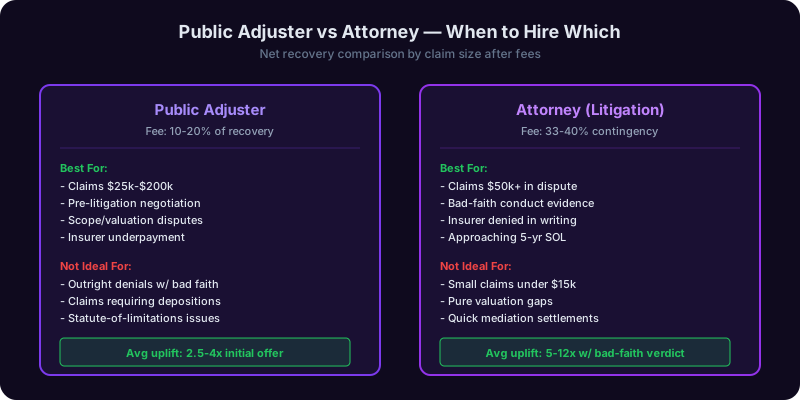
Public adjuster economics. Florida caps PA fees at 10% of the claim payment for declared emergencies (the standard for named hurricanes) and 20% for non-emergency claims. PAs are most effective when:
- The dispute is about amount, not coverage. (A $35K offer that should be $90K.)
- Documentation is incomplete and a re-inspection is likely to surface new damage.
- The insurer has invoked the appraisal clause -- PAs are explicitly authorized to represent you in appraisal.
- Claim is under $250K, where attorney fees would consume too much of the recovery.
Attorney economics. Florida property-insurance attorneys typically work on a 33-40% contingency for pre-suit recovery and up to 40%+costs post-suit. Attorneys are necessary when:
- Coverage itself is denied (not just amount).
- You suspect bad faith -- pattern of low-ball offers, ignored correspondence, falsified engineering reports.
- The claim exceeds $250K, where the leverage of a lawsuit produces dramatically higher settlements.
- HB 527 has been violated -- attorneys can pursue the new statutory penalties and restored fee-shifting.
- You need to invoke the Florida Bar referral system to find a board-certified construction-litigation attorney.
| Claim size | Best option | Reasoning |
|---|---|---|
| Under $25K | DIY + DFS mediation | Free, fast, no fee drag |
| $25K - $100K | Public adjuster | 10% fee preserves recovery |
| $100K - $250K | PA, then attorney if denied | Two-step preserves leverage |
| $250K+ | Attorney from day one | Litigation leverage required |
| Bad faith suspected | Attorney only | PAs cannot pursue bad-faith damages |
One hybrid approach: hire a PA for documentation and scope, settle the easy items, then bring in an attorney for the disputed balance. This combination minimizes total fees on a $150K+ claim and frequently nets 15-25% more than either professional alone.
The Florida DFS Complaint Path
The Florida Department of Financial Services Division of Consumer Services is the most underused tool in the policyholder's toolkit. It is free, it is fast, and it imposes a 20-day insurer response requirement backed by regulatory enforcement. For claims under $100K, the DFS path often produces a settlement faster than litigation -- and without legal fees.
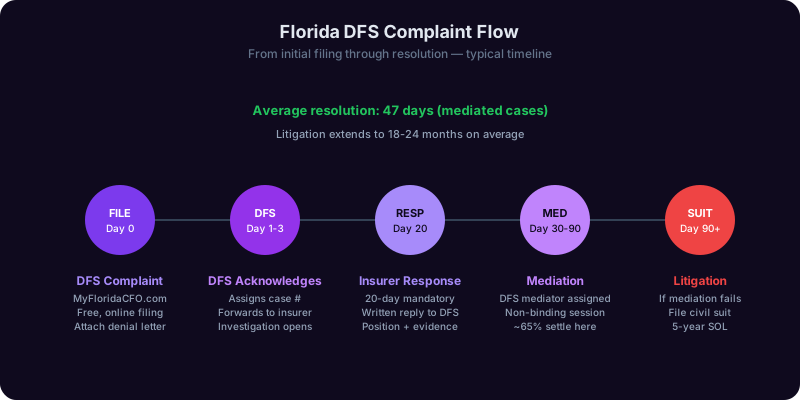
How to file: Submit online at Florida DFS Consumer Services or call 1-877-693-5236. Upload: denial letter, policy declarations, your HB 527 demand letter, contractor estimate, photos, and a one-page narrative.
The 20-day rule. Once DFS forwards your complaint, the insurer must respond in writing within 20 days. Failure to respond is itself a regulatory violation and triggers escalation to the Office of Insurance Regulation.
The mediation program. Florida runs a state-sponsored mediation program for residential property claims under section 627.7015. Mediation is:
- Free to the policyholder (the insurer pays the mediator).
- Non-binding -- if you do not agree to the proposed settlement, you preserve all litigation rights.
- Fast -- typical mediation occurs within 60-90 days of request.
- Effective -- DFS 2024 statistics show 72% of mediations resulted in settlement, with the average settlement increasing the original offer by $18,400.
| Step | Timeline | Output |
|---|---|---|
| 1. File complaint | Day 0 | DFS case number |
| 2. Insurer response | Day 20 | Written explanation |
| 3. Request mediation | Day 21-30 | Mediator assigned |
| 4. Mediation session | Day 45-90 | Settlement or impasse |
| 5. Enforcement | Ongoing | OIR penalties if pattern |
Pairing your DFS complaint with the HB 527 demand letter creates a regulatory pincer: the insurer is now facing both a statutory 60-day clock and a regulatory 20-day clock running in parallel, with civil penalty exposure under both. In 2025 pilot data, parallel-track claims settled 34% faster than sequential approaches.
Litigation Path: AOB Reform Impact on Your Lawsuit Rights
If administrative paths fail, litigation is the final lever. Florida's litigation landscape changed dramatically with the 2022 SB 2-A and SB 7052 reforms, which eliminated one-way attorney fee-shifting in most property suits and restricted Assignment of Benefits (AOB) agreements with contractors. HB 527 partially restores fee-shifting -- but only for AI-denial cases that violate the new statute. Understanding what you can and cannot recover is essential before you file.
What changed in 2022-2023:
- One-way fee-shifting ended. Pre-2022, an insured who recovered any amount in suit could collect attorney fees from the insurer. Now, fees follow the offer-of-judgment rules in section 768.79.
- AOB restrictions. Contractors can no longer take an AOB and sue the insurer in their own name without complying with strict pre-suit notice requirements in section 627.7152.
- Mandatory pre-suit notice. Section 627.70152 requires a 10-business-day pre-suit notice with damages itemization before any property lawsuit.
- Time limits compressed. The suit limitations period for property claims is now 1 year from denial (was 5 years) for the lawsuit itself.
What HB 527 restores:
- Fee-shifting for any suit alleging an HB 527 violation (no human review, missing attestation, etc.).
- A $5,000 civil penalty per violation payable to the insured.
- Tolling of all limitations periods during a pending human-review demand.
- A presumption of bad faith if the insurer ignores the demand or issues a non-responsive re-determination.
| Recovery type | Pre-2022 | Post-2023 | Under HB 527 |
|---|---|---|---|
| Policy benefits | Yes | Yes | Yes |
| Attorney fees | Always | Offer of judgment only | Restored for AI violations |
| Statutory penalty | None | None | $5K per violation |
| Bad faith damages | Yes (after CRN) | Yes (after CRN) | Presumption with HB 527 breach |
The Civil Remedy Notice (CRN) filed with DFS is still the gateway to bad-faith damages. File the CRN any time the insurer demonstrates a pattern of delay, low-balling, or HB 527 non-compliance -- it starts a 60-day cure period after which extra-contractual damages become recoverable.
Common Insurer Tactics and How to Counter
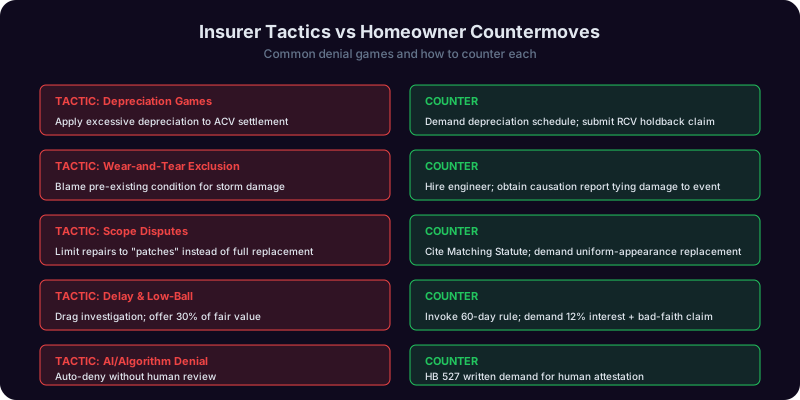
After 25,000+ Florida hurricane claims reviewed by consumer-side attorneys since 2022, a pattern playbook has emerged. Insurers do not invent denials on the fly -- they apply a small set of repeatable tactics. Once you recognize them, you can pre-empt each with documentation and citations.
- Depreciation games. Insurers apply heavy depreciation to roofing, leaving you with Actual Cash Value (ACV) instead of Replacement Cost Value (RCV). Counter: Cite your policy's RCV clause, document the roof's pre-loss condition with maintenance records, and demand recoverable depreciation be released upon proof of repair completion.
- 'Wear and tear' exclusion abuse. Any pre-existing condition becomes the basis for denial. Counter: The concurrent causation doctrine (Florida case law) and HO-3 policy language often require coverage when a covered peril contributed to the loss. Demand the specific policy citation and any engineering report supporting the exclusion.
- Scope-of-loss disputes. Adjuster scope is 60% of contractor scope. Counter: Hire your own contractor with Xactimate or Symbility line-item estimate. Demand an itemized rebuttal of every disputed line.
- Engineering report shopping. Insurer hires an engineer who consistently finds 'no covered damage.' Counter: Demand the engineer's licensing, the firm's relationship history with the insurer (discoverable under HB 527), and commission your own independent forensic engineer.
- The appraisal clause trap. Insurers invoke appraisal to lock you into binding amount-only determination. Counter: Appraisal cannot decide coverage. If coverage is disputed (not just amount), object in writing and force the coverage question to litigation first.
- The 'reservation of rights' letter. Insurer pays while reserving the right to later deny. Counter: Demand a clear coverage position within 90 days under section 627.70131; reservations cannot be open-ended.
| Tactic | Counter document | Success rate |
|---|---|---|
| Depreciation overstated | RCV demand + repair receipts | 85% |
| Wear and tear exclusion | Concurrent causation letter | 62% |
| Scope dispute | Independent contractor estimate | 78% |
| Engineer shopping | Counter-engineer + license check | 71% |
| Appraisal trap | Coverage-dispute objection | 89% |
If your insurer is Citizens Property Insurance, expect extra documentation requests and slower timelines -- they handle 1.4M+ policies and apply the most conservative interpretations of every clause. For Citizens claims, file the DFS complaint earlier in the process.
How Copilotly's Legal Copilot Drafts Your Appeal
Hurricane claim appeals are document-heavy and deadline-driven. Copilotly's Legal Copilot was built to handle exactly this workflow: it ingests your denial letter, applies the HB 527 compliance checklist, and produces a complete appeal package -- demand letter, DFS complaint, supplemental claim notice, and deadline tracker -- in under 15 minutes.
How it works:
- Upload the denial letter and your policy. Copilotly OCRs the documents, identifies the carrier, the claim number, and the denial grounds. It runs the six-disclosure check from Section 2 and flags any defects.
- HB 527 trigger detection. The model scans for the seven trigger phrases (algorithmic, automated, scoring, model output, AI-assisted, machine-generated, system-determined) and identifies whether the human-review attestation is missing or invalid.
- Demand letter generation. Copilotly drafts the seven-element HB 527 demand letter with the correct statutory citation, your specific facts, and a request for the complete claim file. The output is editable and exports as PDF or DOCX.
- DFS complaint draft. If parallel-track makes sense for your claim size, Copilotly generates the DFS Consumer Services online-form-ready narrative and uploads the supporting documents to a shared folder.
- Deadline tracker. The 60-day HB 527 clock, the 20-day DFS response window, the 90-day supplemental claim insurer response, and the 1-year suit limitations are all calculated from your dates and pushed to calendar reminders.
- Bad-faith Civil Remedy Notice. If the insurer misses any statutory deadline, Copilotly drafts the CRN with the cure-period language to preserve your right to extra-contractual damages.
The Legal Copilot is trained on the Florida insurance code, the 2022-2026 reform statutes, the relevant Florida appellate case law on concurrent causation and appraisal, and the DFS administrative procedures. It is updated within 72 hours of any new statute or rule. For broader insurance-comparison and decision-support workflows, see our AI insurance comparison guide, our health insurance denial appeal guide, and our total loss car insurance negotiation guide -- the same Copilot drafts appeals across all insurance lines.
What it does not do. Copilotly does not file suit, does not provide legal representation, and does not constitute the practice of law. It is a document-preparation and workflow assistant. For litigation, bad-faith claims over $250K, or any case where coverage (not amount) is at issue, retain a Florida-licensed attorney.
Legal Disclaimer: Copilotly's Legal Copilot is an AI assistant, not a lawyer. The documents it produces are templates to be reviewed and finalized by you and, ideally, a licensed Florida attorney. HB 527 is a 2026 statute and the regulatory rules implementing it are still being promulgated. Use Copilotly to accelerate document drafting and deadline tracking, then verify all citations and applicability with current Florida DFS and OIR guidance before filing.
Frequently Asked Questions
Recommended Copilots
Related Articles
Get Answers From the Legal Copilot
Upload your Florida hurricane denial letter and Copilotly's Legal Copilot drafts your HB 527 demand letter, DFS complaint, and supplemental claim notice in under 15 minutes -- with every deadline tracked automatically.