
Health & Wellness
Insurance Denied Your Claim? Internal Appeals, External Reviews, and How to Win
Fewer than 1% of patients appeal denied health claims, yet 40-60% of appeals succeed. Learn the difference between an internal appeal and an external review, the deadlines for each, and how to write an appeal letter that wins.
The Scale of Health Insurance Denials: Why This Affects Nearly Every Patient
Health insurance claim denials are not an edge case or a rare inconvenience. They are a systemic feature of the American healthcare system that affects tens of millions of people every year. According to a KFF analysis of ACA marketplace claims data, insurers deny an average of 17% of in-network claims. When you factor in employer-sponsored plans, Medicare Advantage, and Medicaid managed care, the total number of denied claims in the United States exceeds 73 million per year. Some insurers deny more than one in four claims.
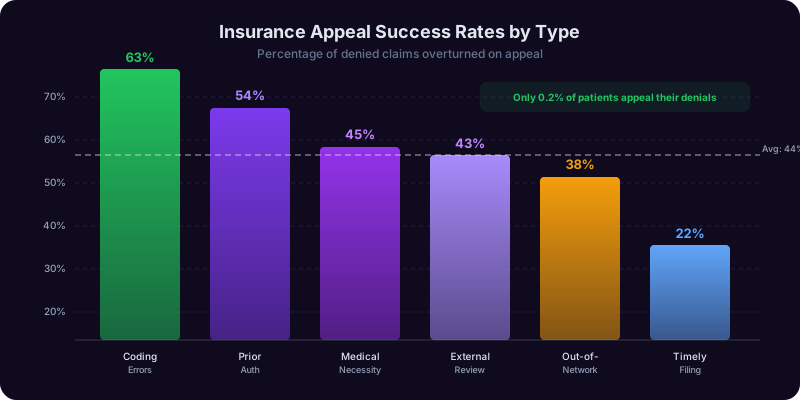
The most striking aspect of this system is the gap between denial volume and patient response. Fewer than 1% of patients who receive a denial ever file an appeal. The reasons are predictable: the process is deliberately complex, the language is confusing, the deadlines are tight, and most people assume that a denial from a large insurance company is final. It is not. Federal and state law guarantees your right to appeal, and the data overwhelmingly shows that appealing is worth the effort.
Among patients who do appeal, the success rate ranges from 40% to 60%, depending on the type of denial, the strength of supporting documentation, and whether the appeal reaches external review. A 2024 analysis by the American Medical Association (AMA) found that prior authorization denials are overturned on appeal at even higher rates when accompanied by a physician letter of medical necessity and supporting clinical evidence.
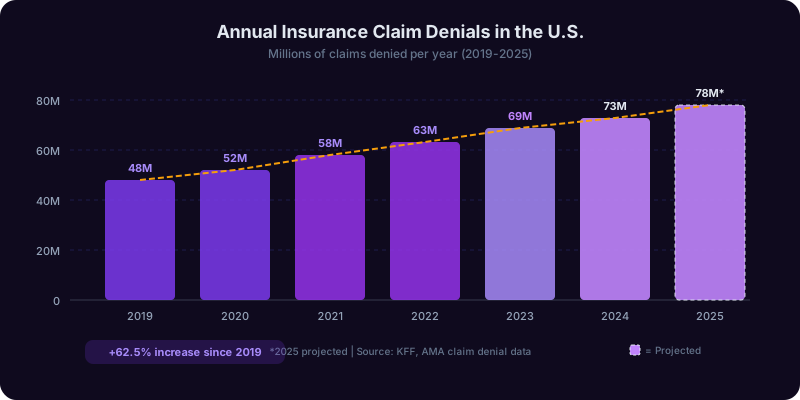
These numbers represent real financial harm. The average denied claim involves $1,000 to $5,000 in patient responsibility for routine services, and significantly more for hospitalizations, surgeries, and specialty treatments. A denied surgery claim can leave a patient holding a bill of $20,000 to $100,000 or more. When patients do not appeal, they either pay these amounts out of pocket, negotiate reduced payments, or allow the bills to go to collections, damaging their credit and financial stability.
Understanding the scope of this problem is the first step. The insurance industry processes billions of claims annually through automated systems that flag claims for denial based on algorithmic rules, coding patterns, and utilization management criteria. Many denials are not the result of careful clinical review but of automated screening that catches claims based on technicalities. This means that a significant portion of denials can be overturned simply by providing the correct information, correcting a coding error, or documenting the medical necessity that was already present in the patient's chart.
If you have ever received a denial and simply paid the bill or wrote off the expense, you are in the overwhelming majority. But the data tells a clear story: the system is designed to discourage appeals, and the patients who push back win far more often than they lose. This guide will walk you through exactly how to do that, step by step, including how new AI-powered tools are making the process faster and more accessible than ever before.
Disclaimer: This guide provides general educational information about the health insurance appeal process in the United States as of 2026. It is not legal, medical, or insurance advice. Laws vary by state, and individual plan terms differ significantly. Always consult your specific plan documents and consider seeking guidance from a licensed insurance professional, patient advocate, or attorney for complex cases.
Types of Health Insurance Denials: Understanding Why Your Claim Was Rejected
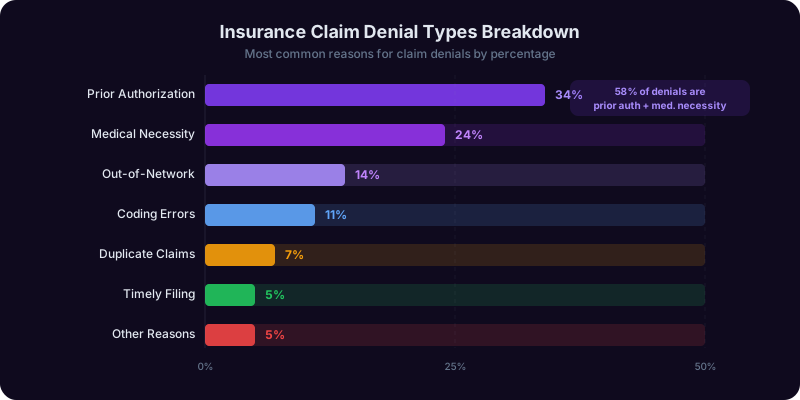
Not all denials are created equal, and understanding the type of denial you have received determines your appeal strategy. Insurance companies categorize denials into several distinct types, each with different causes, different documentation requirements for appeal, and different overturn rates. Knowing which category your denial falls into is the single most important step before you begin the appeal process.
Administrative or Technical Denials
These denials occur because of a procedural or clerical issue rather than a clinical judgment about your care. They are the most common type and often the easiest to resolve. Examples include:
- Coding errors: The provider submitted an incorrect CPT (procedure) code, ICD-10 (diagnosis) code, or modifier. A single wrong digit can change a covered service into a non-covered one. For example, a diagnostic colonoscopy (CPT 45378) is covered differently than a screening colonoscopy (CPT 45381).
- Missing information: The claim was submitted without required supporting documentation such as medical records, referral forms, or prior authorization numbers.
- Timely filing violations: The provider submitted the claim after the insurer's deadline, which is typically 90 to 180 days from the date of service.
- Duplicate claims: The same service was billed twice, often because of electronic submission errors.
- Coordination of benefits issues: If you have two insurance plans, the claim was sent to the wrong insurer first or without the required coordination of benefits information.
Administrative denials often do not require a formal appeal. A phone call to your provider's billing office asking them to correct the code or resubmit with the missing information can resolve the issue. However, if the provider refuses to correct the error or if the resubmission is denied again, escalate to a formal appeal.
Prior Authorization Denials
Prior authorization (also called pre-authorization or pre-certification) is the insurer's requirement that certain services be approved before they are performed. When a provider fails to obtain prior authorization or the authorization is denied, the resulting claim is denied. The AMA reports that physicians spend an average of 14 hours per week dealing with prior authorization requirements, and 94% of physicians say prior authorization delays necessary care.
Common prior authorization denial scenarios include:
- The provider did not request authorization before performing the service.
- The insurer denied the authorization request, determining the service was not medically necessary based on their clinical guidelines.
- The authorization was obtained but expired before the service was performed (authorizations typically have a 30 to 90 day validity window).
- The service performed differed from what was authorized (for example, a more extensive surgery than originally approved).
Prior authorization denials are among the most frequently overturned on appeal, especially when your physician provides a detailed letter explaining why the specific treatment was necessary and why alternatives were inappropriate for your clinical situation.
Medical Necessity Denials
A medical necessity denial means the insurer's medical reviewer determined that the service, treatment, or medication was not required based on your diagnosis, clinical presentation, or established clinical guidelines. These are the most substantive denials because they involve a clinical judgment rather than a procedural error. However, they are also frequently overturned because the insurer's reviewer may not have had access to your complete medical history, may have applied overly rigid criteria, or may have used outdated clinical guidelines.
Medical necessity denials commonly affect:
- Advanced imaging (MRI, CT scans, PET scans)
- Specialty medications, especially biologics and specialty pharmacy drugs
- Mental health and substance abuse treatment, including residential programs
- Rehabilitative therapy beyond a set number of sessions
- Surgeries that the insurer considers elective or experimental
Out-of-Network Denials
These occur when you receive care from a provider who is not in your plan's network. Under certain circumstances, particularly those covered by the No Surprises Act, you may have grounds to appeal. If you received emergency care at an out-of-network facility, or if an out-of-network provider treated you at an in-network facility without your knowledge, federal law limits your financial responsibility to in-network cost-sharing amounts. For more details on how insurance networks work, see our comprehensive health insurance guide.
Benefit Exclusion Denials
These denials state that the service is simply not covered under your plan. Benefit exclusions are listed in your plan's Evidence of Coverage (EOC) or Summary Plan Description (SPD). Common exclusions include cosmetic procedures, experimental treatments, and certain fertility services. These are the hardest denials to overturn because they are based on the contract terms rather than clinical judgment. However, you may have grounds to appeal if the service was incorrectly classified as cosmetic (for example, breast reconstruction after mastectomy, which is federally mandated to be covered), if your state has a coverage mandate that overrides the exclusion, or if the treatment has moved from experimental to standard of care since your plan document was last updated.
The Complete Appeal Process: A Step-by-Step Walkthrough
Once you understand why your claim was denied, the next step is to build and file your appeal. This process has clearly defined stages governed by federal law under the Affordable Care Act (ACA) and the Employee Retirement Income Security Act (ERISA). Following these steps in order maximizes your chances of a successful outcome.
Step 1: Read and Decode Your Denial Letter
Every denial must include a written explanation. This document, whether it arrives as a letter or appears on your Explanation of Benefits (EOB), must contain the specific reason for denial, the clinical basis if the denial involves medical judgment, the plan provision or guideline the insurer relied on, and instructions for how to appeal including deadlines. Read this letter carefully and highlight the specific denial reason and the appeal deadline. If the language is unclear, call the insurer's member services number and ask for a plain-language explanation. Record the date, time, representative name, and reference number for every call. The Insurance Copilot can help you interpret denial language and identify the specific denial code and its meaning.
Step 2: Gather Your Evidence
The strength of your appeal depends almost entirely on the evidence you submit. Before writing a single word of your appeal letter, assemble the following:
- Your complete medical records related to the denied service, including physician notes, test results, imaging reports, and treatment history.
- A letter of medical necessity from your treating physician. This is the single most powerful piece of evidence in any appeal. Ask your doctor to write a detailed letter explaining the diagnosis, why the specific treatment is necessary, what alternatives were considered and why they are inappropriate, and what clinical evidence supports the treatment.
- Clinical guidelines and peer-reviewed research that support the treatment. Guidelines from organizations like the AMA, the National Comprehensive Cancer Network (NCCN), specialty medical societies, and the National Institutes of Health (NIH) carry significant weight.
- Your plan documents (Evidence of Coverage or Summary Plan Description) with the relevant coverage provisions highlighted.
- Any prior authorization documentation, including approval numbers, correspondence, and records of authorization requests.
Step 3: File Your Internal Appeal
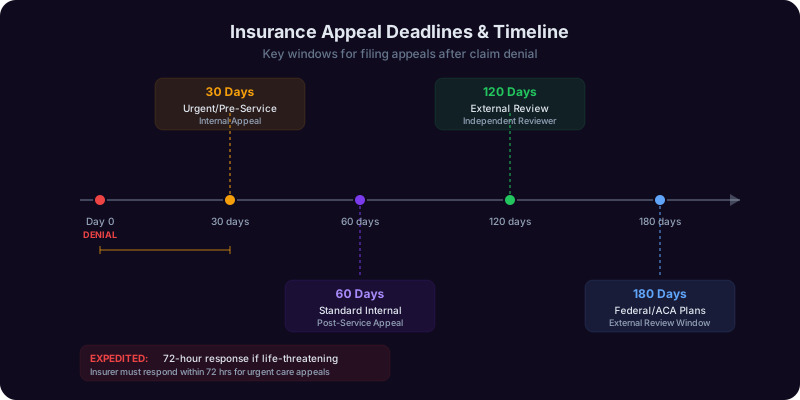
Under the ACA, you have the right to file at least one internal appeal within 180 days of receiving your denial. The internal appeal must be reviewed by someone at the insurance company who was not involved in the original denial decision. For group health plans governed by ERISA, the plan must provide at least one level of internal appeal. Some plans offer two levels of internal review.
Submit your appeal in writing, even if the insurer offers a phone-based appeal option. Written appeals create a documented record and allow you to present evidence in an organized manner. Include your appeal letter, all supporting documentation, and a cover sheet listing every document you are submitting. Send the appeal by certified mail with return receipt requested, or use the insurer's secure online portal if one exists and keep screenshots of your submission confirmation.
Step 4: Track Response Deadlines
The insurer is legally required to respond within specific timeframes:
| Type of Denial | Response Deadline |
| Pre-service (not yet received the service) | 30 days |
| Post-service (already received the service) | 60 days |
| Urgent care situation | 72 hours |
If the insurer does not respond within these deadlines, the denial is considered to have been decided in your favor in many states. Document the date you submitted your appeal and follow up if you do not receive a response within the required timeframe.
Step 5: Escalate If the Internal Appeal Is Denied
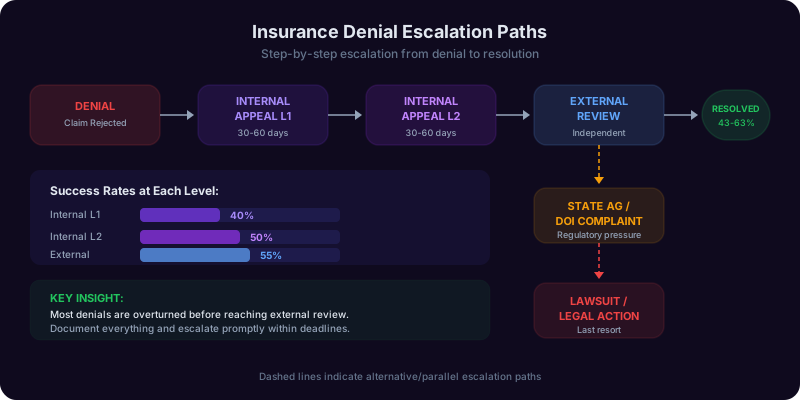
If your internal appeal is denied, you are not finished. You have the right to request an external review (covered in detail in the next section) and to file complaints with your state Department of Insurance. Many patients stop after an internal appeal denial, but the external review stage is where a substantial percentage of additional denials are overturned. For a broader understanding of how to challenge medical charges, see our guide on how to dispute a medical bill.
Internal vs. External Appeals: How Each Works and When to Escalate
The appeal process has two distinct phases, each governed by different rules and decided by different people. Understanding the difference between internal and external appeals, and knowing when to move from one to the other, is critical to maximizing your chances of overturning a denial.
Internal Appeals: Your First Line of Challenge
An internal appeal is reviewed by the insurance company itself. The ACA requires that the reviewer be someone who was not involved in the original denial and who has no direct financial interest in the outcome. In practice, this means a different medical director or clinical reviewer at the same company examines your case. The internal appeal is your opportunity to present new evidence, correct misunderstandings, and make the case that the original denial was wrong.
The most effective internal appeals share these characteristics:
- They directly address the specific reason for denial cited in the denial letter.
- They include a physician letter of medical necessity that responds point by point to the insurer's stated concerns.
- They cite the plan's own coverage language showing that the service should be covered.
- They reference current clinical guidelines from recognized medical authorities.
- They are organized, concise, and free of emotional language (though it is natural to feel frustrated, clinical and factual appeals are more effective).
Internal appeal overturn rates vary by insurer and type of denial but generally range from 30% to 50%. Medical necessity denials have higher overturn rates than benefit exclusion denials. Prior authorization denials that were originally denied due to insufficient documentation often have the highest overturn rates because the appeal is an opportunity to provide the documentation that was missing.
External Reviews: Independent Third-Party Decisions
If your internal appeal is denied, you have the right under the ACA to request an external review by an Independent Review Organization (IRO) that has no affiliation with your insurance company. This is one of the most powerful consumer protections in health insurance, and it is underused because most patients do not know it exists.
Key facts about external review:
- The IRO's decision is binding on the insurer. If the external reviewer determines your claim should be covered, the insurance company must pay it. The insurer cannot appeal the IRO's decision (though in some states, patients can appeal an adverse IRO decision).
- There is no cost to you. The insurance company pays for the external review process.
- You typically have 4 months after your internal appeal denial to request external review (some states allow longer).
- External reviewers are licensed physicians who specialize in the relevant medical area. A denial of a cardiac procedure will be reviewed by a cardiologist, not a general practitioner.
- Overturn rates at external review are approximately 40% to 50%. When combined with internal appeal overturn rates, the cumulative probability of overturning a denial through the full appeal process is significantly higher than most patients realize.
To request external review, contact your insurance company and ask for the external review request form, or check your state Department of Insurance website. Some states handle external review requests directly through the state insurance department rather than through the insurer.
Expedited Appeals for Urgent Situations
If your denial involves a service that is urgently needed and delay could seriously jeopardize your life, health, or ability to regain maximum function, you can request an expedited internal appeal. The insurer must respond within 72 hours. You can also request an expedited external review simultaneously with the internal appeal in urgent situations. Some states allow same-day external review decisions for life-threatening cases.
State-Level Protections
Many states provide additional appeal rights beyond federal minimums. Some states require insurers to provide two levels of internal appeal. Others mandate that the external reviewer consider a broader set of evidence, including off-label drug uses supported by recognized compendia. Several states (including California, New York, Illinois, and Texas) have independent consumer assistance programs that help patients navigate the appeal process at no cost. Check with your state Department of Insurance to understand the specific protections available in your state.
The Insurance Copilot can help you determine which type of appeal is appropriate for your denial, identify state-specific protections that apply to your case, and draft the language for both internal and external appeal requests.
AI-Powered Tools for Insurance Appeals: How Technology Is Changing the Game
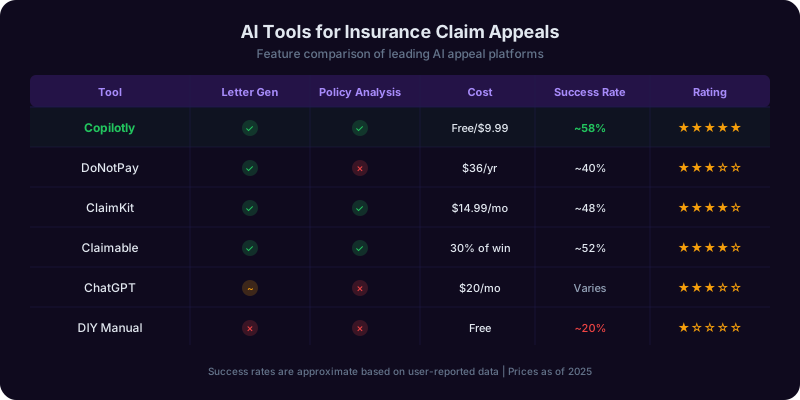
The insurance appeal process has historically been inaccessible to most patients because of its complexity, documentation requirements, and the specialized knowledge needed to build a strong case. In 2026, a new generation of AI-powered tools is dramatically lowering these barriers. These tools can analyze denial letters, draft appeal language, identify relevant clinical guidelines, and guide patients through state-specific procedures in a fraction of the time it would take to do manually.
How AI Is Used in Insurance Appeals Today
AI tools for insurance appeals generally fall into several categories, each addressing a different pain point in the process:
- Denial letter analysis: AI can read your denial letter or EOB, identify the specific denial code and reason, explain what it means in plain language, and recommend the most effective appeal strategy for that type of denial.
- Appeal letter drafting: Based on the denial reason, your diagnosis, and the treatment in question, AI can generate a structured appeal letter that addresses the insurer's specific objections, cites relevant clinical guidelines, references your plan's coverage language, and follows the formal requirements for appeal submissions.
- Clinical evidence gathering: AI can search medical literature databases to find peer-reviewed studies, clinical guidelines, and medical society position statements that support the medical necessity of your treatment.
- Regulatory guidance: AI can identify which federal and state laws apply to your specific situation, including protections under the ACA, the No Surprises Act, ERISA, state insurance mandates, and mental health parity laws.
Counterforce Health and the AI Appeal Movement
One notable entrant in this space is Counterforce Health, which launched in 2026 as one of the first dedicated AI platforms specifically designed to help patients fight insurance denials. The platform analyzes denial letters using natural language processing, matches the denial reason against a database of appeal strategies and success patterns, generates customized appeal letters with appropriate medical and legal citations, and tracks deadlines and filing requirements. While services like Counterforce Health represent an important step forward in consumer advocacy, it is essential to understand their limitations. AI-generated appeal letters should be reviewed by your treating physician before submission, especially for medical necessity denials where the physician's personal attestation carries significant weight.
Using Copilotly for Insurance Appeal Support
The Insurance Copilot on Copilotly provides comprehensive support throughout the appeal process. It can help you decode denial letters and explain in plain language what the insurer is saying and why, identify the strongest grounds for your appeal based on the denial type, draft appeal letter language tailored to your specific situation, explain your rights under federal and state law, outline deadlines and procedural requirements so you do not miss critical filing windows, and suggest what supporting documentation to gather from your healthcare providers.
Unlike general-purpose AI assistants that may provide generic or outdated insurance information, the Insurance Copilot is designed specifically for domain-specific guidance on insurance questions. For patients dealing with complex medical situations alongside their insurance disputes, the Health Copilot can help you understand your diagnosis, treatment options, and the clinical evidence that supports your care, which becomes valuable input for your appeal documentation. For advice on getting professional second opinions on both your medical situation and your appeal strategy, see our guide on when and how to get a professional second opinion.
Important Limitations of AI in Appeals
AI tools are powerful accelerators, but they are not substitutes for professional judgment in every case. Complex appeals involving experimental treatments, large dollar amounts ($50,000 or more), bad faith insurer behavior, or potential litigation should involve a patient advocate or health insurance attorney. AI cannot replace your physician's clinical judgment or personal attestation. And while AI can draft appeal language, the most successful appeals combine AI-generated structure with personalized details about your specific medical history, symptoms, and treatment outcomes that only you and your doctor can provide.
How to Write an Insurance Appeal Letter: Structure, Sample Language, and Key Elements
The appeal letter is the centerpiece of your case. A well-structured letter that directly addresses the denial reason, cites relevant evidence, and follows proper formatting significantly increases your chances of overturn. Below is a detailed breakdown of what to include in each section of your appeal letter, along with sample language you can adapt to your situation.
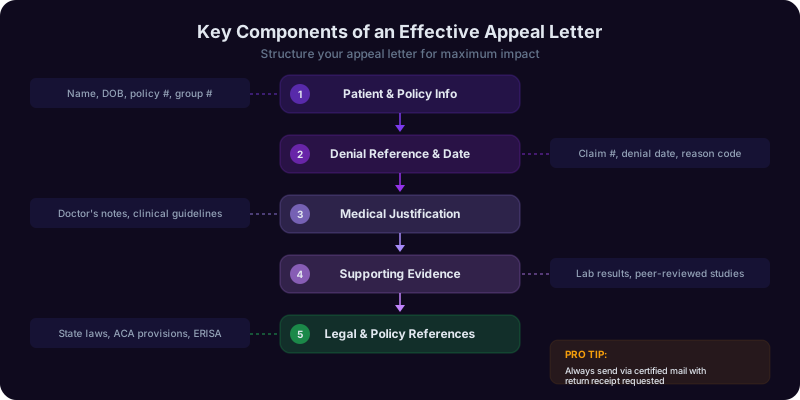
Essential Components of an Effective Appeal Letter
Every appeal letter should contain the following elements in this order:
- Header and identification information: Your full name, date of birth, policy number, group number (if applicable), claim number, date of service, and the provider's name and NPI number. Include the date of the denial letter and any reference numbers.
- Statement of purpose: A clear, one-sentence statement that you are formally appealing the denial of a specific claim. Example: "I am writing to formally appeal the denial of claim number [CLAIM-NUMBER] for [SERVICE DESCRIPTION] performed on [DATE] by [PROVIDER NAME], as detailed in your denial letter dated [DENIAL DATE]."
- Summary of the denial reason: Restate the insurer's reason for denial in your own words to demonstrate that you understand their position and are responding directly to it.
- Your argument for why the denial should be overturned: This is the core of your letter. Address the denial reason directly and present your counter-argument with supporting evidence.
- Supporting evidence list: A numbered list of every document you are including with the appeal (physician letter, medical records, clinical guidelines, etc.).
- Requested action: A clear statement of what you want the insurer to do: reverse the denial and process the claim for payment.
- Contact information and deadline awareness: Your phone number, email, and mailing address, along with a statement acknowledging the appeal deadline.
Sample Language for Common Denial Types
For medical necessity denials:
"The denial states that [SERVICE] is not medically necessary for my condition. I respectfully disagree. My treating physician, Dr. [NAME], has determined that this treatment is medically necessary based on my diagnosis of [DIAGNOSIS], my clinical presentation including [SPECIFIC SYMPTOMS/FINDINGS], and the failure of alternative treatments including [LIST ALTERNATIVES TRIED]. Enclosed is a detailed letter of medical necessity from Dr. [NAME] explaining the clinical rationale. Additionally, current clinical guidelines from [ORGANIZATION, e.g., the American College of Cardiology] recommend [SERVICE] for patients with [CONDITION] who meet the following criteria: [CITE SPECIFIC GUIDELINE CRITERIA]. I meet these criteria as documented in the enclosed medical records."
For prior authorization denials:
"The denial indicates that prior authorization was not obtained for [SERVICE]. I would like to note that [CHOOSE APPLICABLE]: (a) my provider submitted a prior authorization request on [DATE], reference number [NUMBER], which was not processed within the required timeframe; (b) the service was performed on an emergent basis where delay would have posed a serious risk to my health; (c) I am requesting retroactive authorization based on the documented medical necessity of the service as explained in the enclosed physician letter."
For coding error denials:
"Upon review of the denial, I have identified that the claim was submitted with CPT code [INCORRECT CODE] when the service actually performed corresponds to CPT code [CORRECT CODE]. I have contacted my provider's billing office and they have confirmed this error. Enclosed is a corrected claim form from [PROVIDER]. I request that the claim be reprocessed using the correct coding."
Formatting and Submission Tips
- Keep the letter to two pages maximum for the main argument. Attach supporting documents separately.
- Use professional, factual language. Avoid emotional appeals, threats, or hostile tone. Phrases like "I am disappointed" or "this is unfair" weaken your letter.
- Reference specific plan provisions by section number from your Evidence of Coverage.
- Send by certified mail with return receipt, or submit through the insurer's secure portal with confirmation.
- Keep copies of everything you send.
- If your plan has multiple levels of internal appeal, tailor each subsequent letter to address any new reasons the insurer provides for upholding the denial.
The Insurance Copilot can help you draft your appeal letter, suggest the most effective language for your specific denial type, and identify which plan provisions and clinical guidelines to cite. For understanding the blood test results or lab work that may be relevant to your medical necessity argument, see our guide to reading blood test results.
State-Specific Appeal Rights: Protections That Vary by Where You Live
While federal law under the ACA establishes minimum appeal rights that apply nationwide, many states have enacted additional protections that give their residents stronger tools to fight insurance denials. Understanding the specific laws in your state can provide leverage that many patients overlook. These protections can include additional levels of internal review, expanded external review criteria, consumer assistance programs, and stronger enforcement mechanisms.
States With Enhanced Consumer Protections
California: The California Department of Managed Health Care (DMHC) operates one of the most active insurance oversight programs in the country. Patients with HMO or PPO plans regulated by the DMHC can file an Independent Medical Review (IMR) request, which is California's version of external review. The DMHC reports that approximately 60% of IMR decisions favor the patient. California also requires insurers to respond to urgent appeals within 72 hours and provides a toll-free help line for consumers navigating the process.
New York: New York has a robust external appeal process through the state Department of Financial Services. The state provides a standardized external appeal application form and assigns cases to certified external appeal agents. New York law also requires insurers to cover experimental or investigational treatments for life-threatening conditions if the treatment is supported by credible scientific evidence, a broader standard than many other states.
Texas: Texas offers an independent review organization (IRO) process for both internal and external appeals. The Texas Department of Insurance assigns IRO cases and monitors compliance. Texas also has specific protections for patients in managed care plans, including the right to request that the IRO review consider treatments that are standard of care in the medical community even if not explicitly listed in plan guidelines.
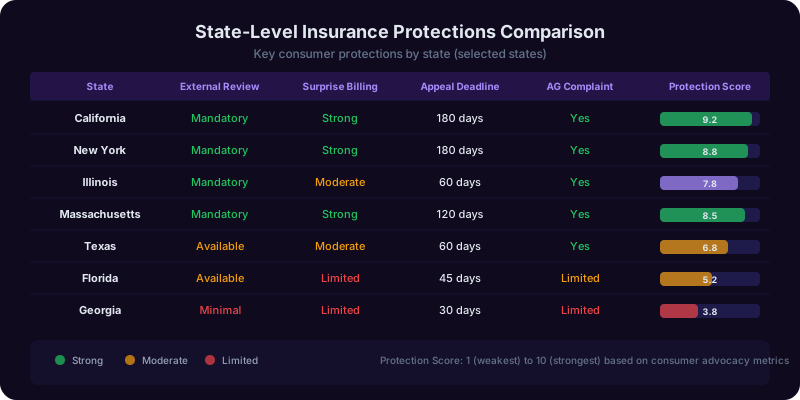
Illinois: Illinois provides a consumer-friendly external review process and has enacted laws requiring insurers to comply with clinical review criteria from recognized medical specialty societies. The state also mandates that insurers provide denial notices in languages other than English when the enrollee's primary language is known.
Federal vs. State Jurisdiction: Which Rules Apply to You?
A critical distinction that affects your appeal rights is whether your plan is fully insured (regulated by state law) or self-funded (regulated by federal ERISA law). This matters because:
- Fully insured plans are purchased from an insurance company and are subject to both federal and state insurance regulations. Most small employer plans and all individual/marketplace plans are fully insured. State-specific protections, including state external review processes, apply to these plans.
- Self-funded plans (also called self-insured plans) are funded directly by the employer, which bears the financial risk. Large employers commonly use self-funded plans. These plans are regulated by ERISA at the federal level and are generally exempt from state insurance regulations. This means state-specific appeal protections, consumer assistance programs, and external review processes may not apply. However, the ACA's federal external review requirement still applies to non-grandfathered self-funded plans.
To determine whether your plan is fully insured or self-funded, check your Summary Plan Description or call your employer's HR department. This information directly affects which appeal procedures and protections are available to you.
How to File a State Insurance Department Complaint
Filing a complaint with your state Department of Insurance is a powerful escalation tool that operates separately from the appeal process. A complaint triggers a regulatory investigation, which can pressure the insurer to reconsider. To file a complaint:
- Visit your state Department of Insurance website (find yours through the National Association of Insurance Commissioners directory).
- Complete the complaint form, which typically asks for your policy information, a description of the issue, what resolution you are seeking, and copies of relevant correspondence.
- Submit the complaint online, by mail, or by phone.
- The department will assign an investigator who contacts the insurer on your behalf. Most states require insurers to respond to regulatory complaints within 15 to 30 days.
State insurance department complaints are most effective for fully insured plans. For self-funded ERISA plans, the U.S. Department of Labor's Employee Benefits Security Administration (EBSA) handles complaints. You can reach EBSA at dol.gov/agencies/ebsa or by calling 1-866-444-3272.
Mental Health Parity Protections
The Mental Health Parity and Addiction Equity Act (MHPAEA) requires that insurance coverage for mental health and substance use disorder treatment be no more restrictive than coverage for medical and surgical treatment. If your denial involves mental health or substance abuse services, the insurer must apply the same criteria for medical necessity, prior authorization, visit limits, and cost-sharing as it applies to comparable medical services. Parity violations are a common basis for successful appeals, and your state insurance department can investigate potential parity violations.
When to Escalate: Patient Advocates, Attorneys, and Regulatory Complaints
While many denials can be overturned through the standard appeal process, some situations require additional help. Knowing when to bring in professional support, and who to contact, can make the difference between a successful outcome and a financial catastrophe. Escalation is not an admission of failure; it is a strategic decision that reflects the complexity or financial magnitude of your case.
When to Contact a Patient Advocate
Patient advocates are professionals who specialize in navigating the healthcare and insurance systems on behalf of patients. They understand the technical aspects of billing, coding, clinical documentation, and the appeal process. Consider a patient advocate when:
- Your denial involves a complex medical situation with multiple providers and services.
- You have been denied coverage for ongoing treatment (such as cancer care or transplant services) where interruption could have serious health consequences.
- You have filed an internal appeal and external review without success and need someone who can identify additional strategies.
- You are dealing with multiple denials simultaneously and cannot manage the paperwork and deadlines on your own.
- You feel overwhelmed by the process and need someone to manage it for you.
Several organizations provide free or low-cost patient advocacy services. The Patient Advocate Foundation (patientadvocate.org) offers free case management services for patients with chronic, life-threatening, or debilitating conditions. The National Patient Advocate Foundation provides policy-level advocacy and maintains a directory of state-specific resources. Many hospitals also have patient advocates or financial counselors on staff who can assist with insurance disputes related to care received at their facility.
When to Hire a Health Insurance Attorney
Legal representation becomes appropriate when the financial stakes are high or when the insurer's behavior suggests bad faith. Consider an attorney when:
- The denied claim exceeds $10,000 to $15,000 and you have exhausted internal and external appeals.
- You suspect the insurer is acting in bad faith, which means unreasonably denying or delaying a valid claim. Bad faith indicators include repeated denials with shifting rationales, failure to respond within required timeframes, ignoring your appeal submissions, and denying claims that clearly meet the plan's own coverage criteria.
- Your case involves a self-funded ERISA plan and you need to pursue legal remedies through federal court, since ERISA limits the types of damages you can recover and requires specific procedural steps.
- The denial involves a life-threatening or time-sensitive situation where legal intervention can compel emergency coverage.
Many health insurance attorneys work on a contingency basis for large cases, meaning they take a percentage of the recovered amount rather than charging upfront fees. Others offer initial consultations for free or at reduced rates. Your state bar association can refer you to attorneys who specialize in insurance and ERISA law.
Filing Regulatory Complaints
Beyond your state Department of Insurance, you have several other regulatory complaint options:
- Centers for Medicare and Medicaid Services (CMS): If your denial involves a potential violation of the No Surprises Act, file a complaint at cms.gov/nosurprises or call 1-800-985-3059.
- U.S. Department of Health and Human Services (HHS): For violations of ACA requirements, including the failure to provide adequate appeal processes or comply with external review requirements.
- Your employer's HR department: For employer-sponsored plans, HR has a direct relationship with the insurer and can escalate issues from a position of leverage. A single employee complaint may not move the needle, but if HR is aware of a pattern of improper denials affecting employees, they can pressure the insurer to change its practices.
- Your state attorney general: Some state AG offices have consumer protection divisions that handle insurance complaints, particularly those involving patterns of deceptive practices.
Documenting Everything: Your Paper Trail Is Your Leverage
Throughout the entire process, from the first denial to the final resolution, maintain meticulous records of every interaction:
- Save every letter, EOB, and email in a dedicated folder (physical and digital).
- For every phone call, record the date, time, duration, the representative's name and ID number, and a summary of what was discussed and promised.
- Keep copies of every document you submit, along with proof of delivery (certified mail receipts, portal submission confirmations).
- Track all deadlines on a calendar and set reminders at least one week before each deadline.
If your case eventually reaches an attorney, a regulatory body, or external review, this documentation demonstrates both the merits of your case and the insurer's handling of it. Incomplete records are one of the most common reasons patients lose appeals they should have won. For broader guidance on managing healthcare costs and knowing your options when the financial burden feels unmanageable, see our guide on what to do when you cannot afford healthcare.
Frequently asked questions
How long do I have to file an appeal after a health insurance claim denial?
What is the difference between an internal appeal and an external review?
Can I appeal a health insurance denial if I missed the prior authorization requirement?
How much does it cost to file an insurance appeal or external review?
What percentage of health insurance appeals are successful?
Can AI tools really help me win an insurance appeal?
What should I do if my employer's insurance plan denies a claim and my employer has a self-funded plan?
Is there a time limit for the insurance company to respond to my appeal?
Get help with this from the Health & Medical Copilot
Use the Insurance Copilot to decode your denial letter, identify the strongest grounds for appeal, and draft a compelling appeal letter. The Health Copilot can help you understand the clinical evidence supporting your treatment.
- Health & Medical CopilotUnderstand your diagnosis, treatment options, and the clinical evidence that supports your care to strengthen your appeal documentation.
- Finance & Money CopilotEvaluate the financial impact of a denied claim on your budget and determine when hiring a patient advocate or attorney is cost-effective.
Free plan, no card. Pro from $4.99/week for every copilot across all 20 domains - about what one hour with any single professional costs per year.
Not a medical providerThis is health information, not medical advice. Always consult your healthcare provider.