

Why AI Is Changing How People Prepare for Divorce in 2026
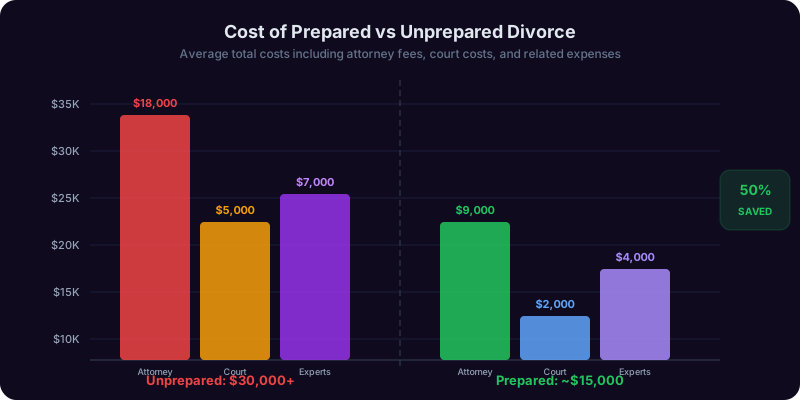
Divorce is one of the most financially and emotionally complex legal events most people will ever face. According to the American Bar Association's Family Law Section, the average contested divorce in the United States costs $15,000 to $30,000 per spouse in attorney fees alone, with high-conflict custody cases pushing that figure past $50,000. Even uncontested divorces average $4,100 when attorneys are involved. The financial burden creates a cruel paradox: the people who most need legal guidance often cannot afford it at the moment their lives are in the greatest upheaval.
AI tools are fundamentally changing this equation. Not by replacing attorneys -- that would be irresponsible for a process with such high stakes -- but by helping people prepare thoroughly before they spend a single dollar on legal fees. The difference between walking into an attorney consultation with nothing versus walking in with an organized financial inventory, a clear understanding of your state's custody framework, and a draft parenting plan is the difference between a 3-hour initial meeting and a 45-minute one. At $300 to $500 per hour, that preparation can save $700 to $1,100 on the first consultation alone.
What AI Can Do for Divorce Preparation Today
Modern AI tools bring measurable capabilities to divorce preparation:
- Financial document organization. AI walks you through a comprehensive asset and debt inventory, catching categories people routinely miss -- unvested stock options, frequent flyer miles with cash value, cryptocurrency holdings, and pension benefits from a job you left years ago.
- Legal research by state. AI identifies your state's specific rules on grounds for divorce, mandatory waiting periods, custody presumptions, property division frameworks, and support calculation formulas -- information that would otherwise require hours of reading statutes or a paid attorney consultation.
- Parenting plan drafting. AI helps you create detailed custody proposals covering schedules, holidays, decision-making authority, communication protocols, and relocation provisions. Courts increasingly require comprehensive parenting plans, and a well-drafted one demonstrates to the judge that you are focused on your children's stability.
- Support calculations. AI can walk you through child support guidelines and alimony factors for your state, helping you understand what a court is likely to order before you negotiate.
- Scenario modeling. AI lets you explore different outcomes: What does a 50/50 custody split look like practically? How does keeping the house versus selling it affect your monthly budget? What is the tax impact of different alimony structures?
What AI Cannot and Should Not Do
AI provides legal information, not legal advice. It cannot represent you in court. It cannot file documents on your behalf. It cannot negotiate with your spouse's attorney. And it cannot account for the judge assigned to your case, local court culture, or the specific dynamics of your relationship with your spouse. These limitations matter, and ignoring them can harm your case.
Think of AI as the most thorough, tireless paralegal you have ever worked with: it organizes, researches, drafts, and prepares. But the strategic decisions -- what to ask for, what to concede, when to fight and when to settle -- those require human judgment, ideally from a licensed family law attorney who knows your jurisdiction.
Important disclaimer: This guide provides general legal information about divorce and custody preparation in the United States. It is not legal advice and does not create an attorney-client relationship. Divorce and custody laws vary significantly by state and county. If you are considering divorce, especially when children, domestic violence, significant assets, or complex custody issues are involved, consult a licensed family law attorney in your state. If you are in immediate danger, contact the National Domestic Violence Hotline at 1-800-799-7233.
Building a Complete Financial Asset Inventory With AI
The foundation of every divorce case is the financial picture. Courts require both spouses to provide complete financial disclosures, and the spouse who understands the marital estate better is in a significantly stronger negotiating position. A 2025 survey by the Institute for Divorce Financial Analysts found that financial issues are the leading cause of divorce in 33 percent of cases and the primary source of post-divorce conflict in 62 percent of cases. Getting your financial house in order before you file is not optional -- it is the single most impactful preparation step.
What to Inventory (The Complete List)
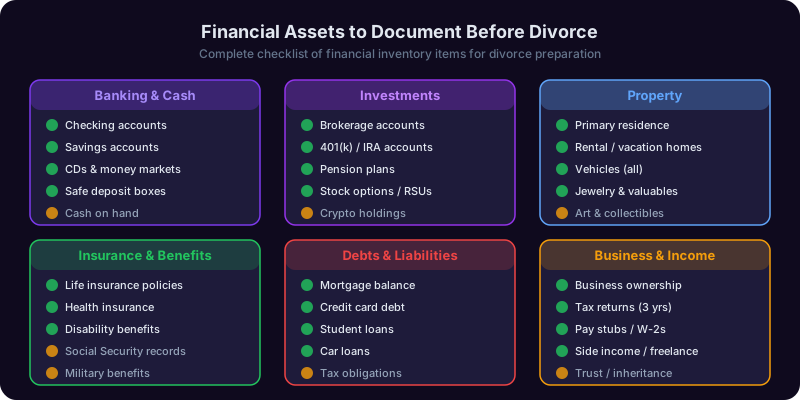
AI tools excel at guiding you through a comprehensive financial inventory because they prompt you through categories systematically. Here is the complete inventory your AI-assisted preparation should produce:
| Category | What to Document | Why It Matters |
|---|---|---|
| Income | Salary, bonuses, commissions, self-employment income, rental income, dividends, interest, trust distributions, Social Security benefits | Determines child support and alimony calculations |
| Bank accounts | Checking, savings, money market, CDs -- all accounts in your name, spouse's name, or jointly held; include 12 months of statements | Courts require full disclosure; missing accounts suggest hidden assets |
| Retirement accounts | 401(k), 403(b), IRA, Roth IRA, pension plans, deferred compensation -- include current balances and beneficiary designations | Often the largest marital asset after the home; requires a QDRO to divide |
| Real property | Primary residence, vacation homes, rental properties, vacant land -- include current market value, mortgage balance, and how title is held | Property division is typically the most contested issue |
| Investments | Brokerage accounts, stocks, bonds, mutual funds, ETFs, cryptocurrency, NFTs | Must be valued as of the date of separation or filing (varies by state) |
| Business interests | Ownership stakes, partnership interests, LLC membership, intellectual property, patents, royalties | Requires formal valuation; hiding business income is common |
| Vehicles | Cars, boats, motorcycles, RVs, ATVs -- include year, make, model, loan balance, and KBB value | Often divided informally, but loan responsibility must be allocated |
| Insurance | Life insurance (cash value and death benefit), health, auto, homeowner's, umbrella policies | Life insurance cash value is a marital asset; health coverage changes post-divorce |
| Debts | Mortgages, auto loans, student loans, credit cards, medical debt, personal loans, tax liabilities | Debts are divided alongside assets; joint debts remain your responsibility even if the decree assigns them to your spouse |
| Personal property | Jewelry, art, antiques, collectibles, electronics, furniture of significant value | Often overlooked but can represent meaningful value |
How AI Helps Build the Inventory
A general-purpose financial review is good. An AI-guided divorce-specific inventory is better. Here is why: AI tools trained on family law data know which assets people forget. The top five overlooked assets in divorce proceedings are:
- Employer stock options and RSUs -- unvested stock options granted during the marriage are marital property in most states
- Frequent flyer miles and credit card rewards -- these have quantifiable cash value and are technically marital property
- Tax refunds -- a pending tax refund is a marital asset
- Prepaid expenses -- country club memberships, prepaid tuition, season tickets
- Loans to family members -- money lent to relatives during the marriage is a marital asset (the right to repayment)
The Finance Copilot can walk you through each category, prompt you to check for commonly missed items, and help you estimate values when formal appraisals are not yet available. For a deeper dive into managing your overall financial picture, our guide on how to file for divorce covers the full financial disclosure process courts require.
Securing Your Documentation
Once you have assembled your inventory, secure it. Make digital copies of all financial statements, tax returns (last 3 to 5 years), pay stubs, property deeds, vehicle titles, and insurance policies. Store them somewhere your spouse cannot access -- a secure cloud account with a new password, a trusted friend or family member's home, or a safe deposit box in your name only. Do not remove original documents from the home if doing so would raise suspicion or violate any court orders. You are making copies for your own protection, not hiding evidence.
Pull your credit report from all three bureaus at AnnualCreditReport.com to identify any debts or accounts you may not know about. Your spouse may have opened credit lines during the marriage that create joint liability. Discovering these before filing gives you time to address them strategically rather than reactively.
Custody Types Explained: Sole, Joint, Split, and How Courts Decide
If you have children, custody is almost certainly the issue that matters most to you -- and it is the area where preparation has the greatest impact on outcomes. According to the U.S. Census Bureau, approximately 13.4 million parents are custodial parents in the United States. Understanding the custody framework before you enter negotiations or a courtroom is not just helpful; it shapes every decision from parenting plan proposals to where you choose to live after separation.
The Four Types of Custody
Courts distinguish between legal and physical custody, and each can be sole or joint. These are decided independently, creating four possible combinations:
Legal custody is the authority to make major decisions about your child's life: which school they attend, what medical treatments they receive, what religious upbringing they have, and what extracurricular activities they participate in.
- Joint legal custody: Both parents share decision-making authority and must consult each other on major decisions. This is the default in the vast majority of states and is awarded in roughly 80 percent of custody cases nationally. Courts strongly prefer joint legal custody unless one parent has demonstrated unfitness, abuse, or a pattern of undermining the other parent's relationship with the child.
- Sole legal custody: One parent has exclusive decision-making authority. Courts award this when the other parent is incarcerated, has a severe substance abuse problem, has been absent from the child's life for an extended period, or when domestic violence makes cooperative decision-making impossible.
Physical custody determines where the child lives on a day-to-day basis and how time is divided between households.
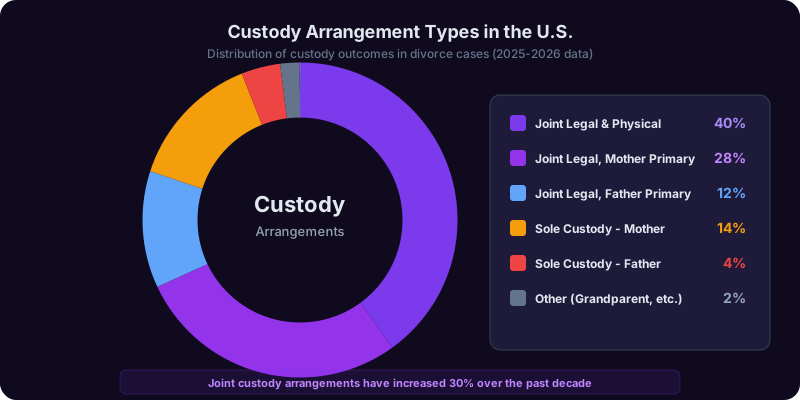
- Joint physical custody: The child splits time between both parents' homes. This does not require a perfect 50/50 split -- arrangements ranging from 60/40 to 50/50 qualify. Joint physical custody has increased significantly over the past decade. A 2024 study published in the Journal of Family Psychology found that joint physical custody is now awarded in approximately 34 percent of divorce cases, up from 19 percent in 2010.
- Primary physical custody: The child lives primarily with one parent, and the other parent has a visitation schedule (commonly every other weekend plus one weeknight). The primary custodial parent handles day-to-day decisions while the non-custodial parent retains involvement through their legal custody rights.
Split custody is a less common arrangement where each parent has primary physical custody of at least one child. For example, the older child lives primarily with the father and the younger child lives primarily with the mother. Courts generally disfavor split custody because it separates siblings, but they may order it when it genuinely serves the children's individual best interests -- for instance, when a teenager strongly prefers one parent and a younger child is more bonded to the other.
The Best Interest of the Child Standard
Every state uses the best interest of the child standard to determine custody. The Child Welfare Information Gateway catalogs each state's specific factors, but the most universally weighted considerations are:
- Continuity of care: Which parent has been the primary caregiver? Who handles school pickups, doctor's appointments, homework help, bedtime routines, and meal preparation?
- Stability: Which parent can provide a stable home environment, consistent routine, and continuity in schooling and community?
- Parental cooperation: Which parent is more likely to support the child's relationship with the other parent? The "friendly parent" factor is heavily weighted -- judges look very unfavorably on parents who interfere with the other parent's time or relationship.
- Child's wishes: In most states, children age 12 to 14 and older can express a preference, though judges give it varying weight depending on the child's maturity and whether the preference appears to be influenced by one parent.
- Domestic violence history: Any documented history of domestic violence, child abuse, or neglect is heavily weighted and can be disqualifying for custody.
- Mental and physical health: Each parent's capacity to care for the child, including mental health conditions and substance abuse issues.
- Proximity: How close the parents live to each other and to the child's school, affecting the practicality of shared custody schedules.
How AI Helps With Custody Preparation
AI tools can research your specific state's custody factors, identify which ones are most relevant to your situation, and help you document evidence that supports your position on each factor. If you have been the primary caregiver, AI can help you compile a log of caregiving activities with dates and specifics. If your spouse has a history of problematic behavior, AI can help you organize documentation chronologically. This preparation transforms vague claims into concrete evidence that attorneys and judges can evaluate.
The Legal Copilot can walk you through your state's specific best interest factors and help you understand how courts in your jurisdiction tend to weigh them. For comprehensive information about the legal process, see our guide on filing for divorce, which covers contested versus uncontested proceedings in detail.

Get Answers From the Legal Copilot
Copilotly's Legal and Finance Copilots help you organize financial documents, research your state's divorce and custody laws, draft parenting plans, and model support calculations -- so you walk into your attorney consultation prepared and informed.
Creating a Comprehensive Parenting Plan With AI Assistance
A parenting plan is the single most important document in any custody case. It is not a suggestion or a wish list -- once approved by the court, it becomes a binding court order that governs every aspect of how you and your co-parent share time with and make decisions about your children. Courts in all 50 states now require or strongly encourage detailed parenting plans as part of custody proceedings, and the quality of your plan directly influences the judge's perception of your commitment to your children's well-being.
Essential Components of a Parenting Plan
A comprehensive parenting plan addresses far more than the weekly schedule. AI tools help you think through every component so nothing is left to chance -- or to future arguments. Here is what your plan should cover:
1. Regular custody schedule. Define the day-to-day arrangement with specificity. Rather than stating "shared custody," specify: "Child resides with Parent A from Monday 8:00 AM through Thursday 8:00 AM, and with Parent B from Thursday 8:00 AM through Monday 8:00 AM, alternating weekly." Common schedules include:
| Schedule | Time Split | Best For |
|---|---|---|
| Alternating weeks (7/7) | 50/50 | School-age children; parents living close together |
| 2-2-3 rotation | 50/50 | Young children who struggle with long separations |
| 3-4-4-3 rotation | 50/50 | Parents wanting near-equal time with shorter stretches |
| Every other weekend + Wednesday dinner | ~80/20 | When one parent works long hours or lives farther away |
| 5-2-2-5 rotation | 50/50 | Parents with consistent work schedules; reduces transitions |
2. Holiday and vacation schedule. This is where most parenting plans fail. Without explicit holiday provisions, every Thanksgiving, Christmas, spring break, and summer vacation becomes a negotiation. Specify exactly who has the children for each holiday, whether holidays alternate by even/odd years, what time transitions occur, and how vacation time is allocated. Include: Thanksgiving, Christmas Eve, Christmas Day, New Year's Eve, New Year's Day, Easter or Passover, Memorial Day, Fourth of July, Labor Day, Halloween, each parent's birthday, each child's birthday, Mother's Day, Father's Day, school spring break, and summer vacation (typically 2 to 4 weeks for each parent).
3. Transportation and exchange logistics. Specify where exchanges happen (school is ideal because it avoids direct parent-to-parent contact during high-conflict periods), who is responsible for transportation in each direction, and what happens if a parent is late for pickup.
4. Decision-making authority. Address how major decisions are made in education, healthcare, religion, and extracurricular activities. For joint legal custody, define a process: both parents discuss, attempt to reach agreement, and if they cannot agree, specify a tiebreaker mechanism (mediator, parenting coordinator, or one parent has final authority in specific domains).
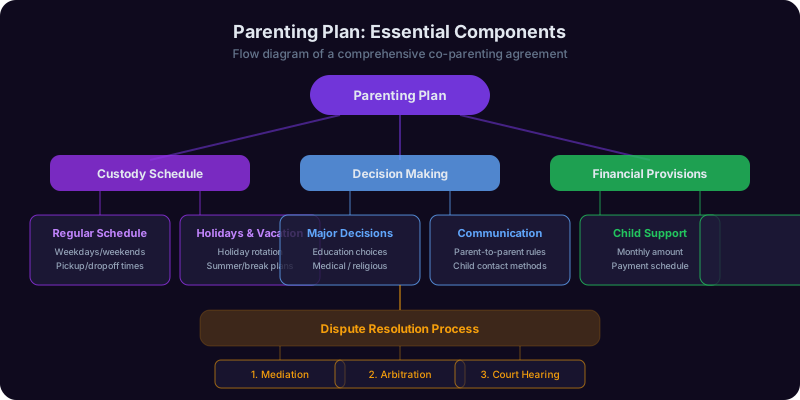
5. Communication protocols. Define how parents communicate with each other (email, co-parenting app like OurFamilyWizard or TalkingParents, text), minimum response times for non-emergency communications (24 to 48 hours is standard), how each parent can contact the child during the other parent's time (phone calls, video calls, with reasonable time restrictions), and rules about discussing the divorce or legal proceedings with the children (universally discouraged).
6. Relocation provisions. What happens if one parent wants to move? Most states require 30 to 90 days written notice before a custodial parent can relocate beyond a certain distance (commonly 50 to 100 miles). Your plan should address the notice requirement, how relocation affects the custody schedule, and who bears the additional transportation costs.
7. Right of first refusal. If the custodial parent needs childcare during their parenting time (beyond a specified duration, commonly 4 to 8 hours), the other parent gets first right to care for the child before a babysitter or other caregiver is used.
8. Dispute resolution. Before either parent can return to court over a parenting dispute, require mediation first. This saves both parents thousands of dollars and keeps minor disagreements from escalating into full-blown litigation.
How AI Drafts Your Initial Plan
AI tools can generate a detailed first draft of your parenting plan based on your children's ages, your work schedules, your proximity to each other, and your state's requirements. You provide the inputs -- AI structures them into a legally organized document that covers every component courts expect to see. This draft becomes your starting point for negotiation with your co-parent or for review by your attorney. The Legal Copilot can help you build this framework step by step, ensuring nothing critical is omitted.
Alimony and Child Support Calculations: What AI Can Model for You
Support obligations -- both alimony (spousal support) and child support -- are among the most financially significant outcomes of divorce. Understanding how they are calculated before you negotiate gives you a realistic baseline and prevents you from agreeing to terms that are significantly above or below what a court would order. AI tools can model these calculations with surprising accuracy because most states use formula-based or guideline-based approaches.
Child Support: How the Numbers Work
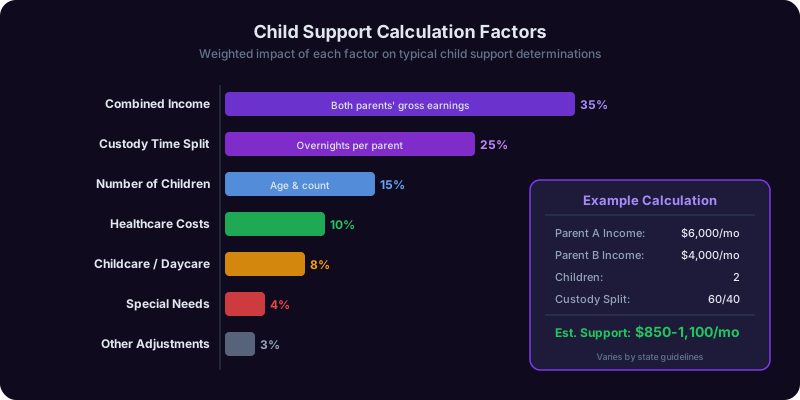
Approximately 40 states use the income shares model, which estimates what both parents would have spent on the child if the family were intact and divides that amount proportionally based on each parent's income. The remaining states use the percentage of income model, which sets support as a percentage of the non-custodial parent's income.
| Factor | How It Affects the Calculation |
|---|---|
| Combined gross income | Higher combined income generally means higher support, but the percentage decreases as income rises |
| Number of children | Typical guideline: 17-20% for one child, 25-28% for two, 29-33% for three (varies by state) |
| Custody arrangement | More overnights with the paying parent reduces the obligation; 50/50 arrangements may result in no support if incomes are similar |
| Healthcare costs | Insurance premiums and out-of-pocket medical costs are typically shared proportionally |
| Childcare costs | Daycare, after-school care, and summer camps are added to the base support figure and shared proportionally |
| Special needs | Children with disabilities or extraordinary educational needs may warrant above-guideline support |
The national average child support payment in 2025 was approximately $5,760 per year ($480/month) per the U.S. Census Bureau, but this average masks enormous variation. In high-income families, monthly child support can exceed $3,000 per child. In lower-income families, it may be $200 or less.
AI can model your specific scenario by taking your income, your spouse's income, the number of children, the proposed custody arrangement, and your state's formula, then calculating the likely support amount. This is not a binding determination -- only a court can set the final number -- but it gives you a data-driven starting point for negotiation.
Alimony: Factors That Drive the Amount and Duration
Unlike child support, alimony does not follow a uniform national formula. Some states (like Massachusetts and Texas) have statutory guidelines; others leave it almost entirely to judicial discretion. However, courts universally consider these factors:
- Length of marriage: Marriages under 5 years rarely result in significant alimony. Marriages of 10 to 20 years typically warrant alimony lasting roughly half the marriage duration. Marriages exceeding 20 years may result in long-term or permanent alimony.
- Income disparity: The greater the gap, the more likely alimony is awarded and the higher it will be. If both spouses earn similar incomes, alimony is unlikely regardless of marriage length.
- Standard of living: Courts aim to allow both spouses to maintain a standard of living reasonably comparable to what existed during the marriage.
- Career sacrifice: A spouse who left the workforce to raise children or support the other spouse's career has a strong case for rehabilitative alimony.
- Age and health: Older or ill spouses with limited earning capacity receive more generous awards.
Under the Tax Cuts and Jobs Act (for divorces finalized after December 31, 2018), alimony is not tax-deductible for the payer and not taxable income for the recipient. This eliminated a planning strategy that was historically used in negotiations. The IRS Tax Topic 452 provides the official guidance on how alimony is treated for federal tax purposes.
How AI Models Your Scenario
The Finance Copilot can help you model multiple support scenarios: What is your monthly budget if you pay $1,200 in child support and $800 in alimony? What if the custody arrangement changes from 70/30 to 50/50? How does keeping the house versus selling it affect your ability to meet support obligations? These models do not replace a financial advisor, but they give you clarity before you enter negotiations. For a deeper analysis of alimony types and durations, our complete divorce filing guide covers rehabilitative, permanent, reimbursement, and lump-sum support structures in detail.
State-by-State Differences That Change Everything in Divorce and Custody
Divorce law is state law, and the differences between states are not trivial -- they can change the outcome of your case by tens of thousands of dollars and fundamentally alter your custody arrangement. AI tools are particularly valuable here because they can quickly identify the specific rules that apply in your jurisdiction, saving you from generic advice that may not reflect your state's approach.
Property Division: Community Property vs. Equitable Distribution
The most consequential state-level difference is how marital property is divided:
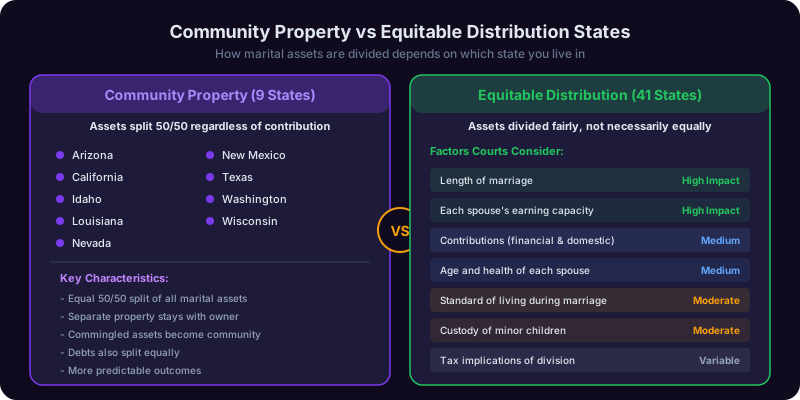
Community property states (Arizona, California, Idaho, Louisiana, Nevada, New Mexico, Texas, Washington, Wisconsin, plus Alaska as opt-in) generally divide marital assets 50/50. Everything earned or acquired during the marriage is presumed to be equally owned by both spouses, regardless of who earned it.
Equitable distribution states (the remaining 41 states) divide property fairly but not necessarily equally. Judges consider the length of marriage, each spouse's income and earning capacity, contributions to the marriage (including homemaking and childcare), and other factors. In practice, equitable distribution typically results in splits between 50/50 and 60/40.
Custody Presumptions
States increasingly differ on whether they presume joint custody is in the child's best interest or take a neutral approach:
| Approach | States (Examples) | What It Means |
|---|---|---|
| Presumption of joint physical custody | Arizona, Kentucky, Missouri, Arkansas, West Virginia | Courts start from the assumption that equal or near-equal time with both parents is best; the parent opposing joint custody must prove otherwise |
| No presumption (neutral) | California, New York, Texas, Florida, Illinois | Courts evaluate each case individually using best-interest factors without a default starting point |
| Preference for primary caregiver | West Virginia (historical), some states in practice | The parent who has been the primary caregiver has an advantage, though this is a factor rather than a presumption |
Mandatory Waiting Periods and Separation Requirements
Some states require you to wait or live apart before your divorce is final:
- No waiting period: Georgia, Montana, South Dakota (divorce can be finalized immediately after filing and service)
- Short waiting period (30-90 days): California (6 months from service), Kansas (60 days), Alabama (30 days for uncontested)
- Mandatory separation: North Carolina (1 year), Virginia (6 months with children, 1 year without), Maryland (varied by ground), South Carolina (1 year)
Child Support Duration
Child support generally ends when the child turns 18, but significant exceptions exist. In New York, support continues until 21. In Missouri, it ends at 18 unless the child is still in high school (then 21). In Massachusetts, support can continue through college if the child is a full-time student. Some states allow extension for children with disabilities regardless of age.
Alimony Caps and Formulas
A few states have statutory limits on alimony that can significantly affect your outcome:
- Texas: Alimony (called spousal maintenance) is capped at the lesser of $5,000/month or 20 percent of the paying spouse's gross income, and maximum duration is generally 5 to 10 years depending on marriage length.
- Massachusetts: Durational limits tied to marriage length -- for marriages of 5 years or less, alimony cannot exceed 50 percent of the marriage duration.
- Utah: Alimony generally cannot last longer than the length of the marriage.
- California: For marriages under 10 years, the court expects the supported spouse to become self-supporting within a "reasonable period" (generally half the length of the marriage). For marriages 10 years or longer, the court retains jurisdiction indefinitely.
How AI Navigates State-Specific Rules
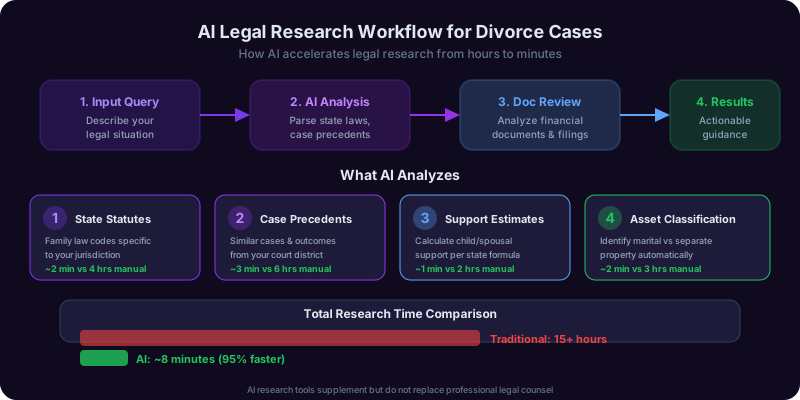
AI tools can identify your state's specific framework in minutes rather than hours. Ask questions like: "What are the grounds for divorce in [state]?" or "Does [state] have a presumption of joint custody?" or "How does [state] calculate child support?" The Legal Copilot can research your state's statutes and help you understand how local rules affect your specific situation. For state-by-state filing procedures and court information, the U.S. Courts family law overview provides links to each state's judicial branch. Our prenuptial agreement guide covers how pre-existing agreements interact with state divorce law.
Using AI for Divorce Legal Research: What to Ask and How to Verify
One of AI's greatest strengths in divorce preparation is legal research -- quickly identifying statutes, procedures, deadlines, and court requirements that would otherwise require hours of reading or a paid attorney consultation. But AI research has a critical caveat: it must be verified. Courts do not accept "an AI told me" as a legal citation, and AI tools can occasionally generate plausible-sounding but inaccurate legal information. Here is how to use AI for legal research effectively and responsibly.
What to Research With AI Before Meeting an Attorney
Walking into your first attorney consultation informed saves time and money. Use AI to research these topics before your meeting:
- Your state's residency requirements for filing. Most states require 3 to 12 months of residency before you can file. If you recently moved, this affects where you file.
- Grounds for divorce in your state. Every state offers no-fault divorce (irreconcilable differences or irretrievable breakdown). Some states also allow fault-based grounds (adultery, cruelty, abandonment) that can affect asset division or alimony.
- Mandatory disclosures. What financial documents does your state require you to file with the court? In California, it is a Preliminary Declaration of Disclosure that includes an income and expense declaration and a schedule of assets and debts. Other states have different forms and deadlines.
- Temporary orders. Can you request temporary child support, spousal support, or exclusive use of the marital home while the divorce is pending? In most states, yes -- and these temporary orders set a baseline that often influences the final outcome.
- Mediation requirements. Many states and counties require parents to attempt mediation before a custody trial. Knowing this in advance helps you prepare.
- Filing fees and fee waivers. Court filing fees range from $100 to $450. Most states offer fee waivers for parties who demonstrate financial hardship.
How to Verify AI Legal Research
AI research is a starting point, not a final authority. Verify anything critical through these channels:
- Your state's judicial branch website. Every state maintains a website with self-help resources, form packets, filing instructions, and procedure guides. These are the primary source for procedural information.
- State bar association resources. The ABA lawyer referral directory can connect you with your state bar, which often publishes plain-language legal guides on divorce and custody.
- Court self-help centers. Many county courthouses have self-help centers where staff can confirm procedural requirements (though they cannot give legal advice).
- Legal aid organizations. If your income qualifies, local legal aid organizations provide free or low-cost legal assistance and can verify information at no charge.
Sample AI Research Prompts for Divorce Preparation
The quality of AI output depends heavily on the quality of your prompts. Here are specific prompts that produce actionable results:
- "What are the specific requirements to file for divorce in [state]? Include residency period, grounds, filing fees, and mandatory waiting periods."
- "Explain [state]'s child support calculation formula. Include the model used (income shares or percentage of income), how overnight parenting time affects the calculation, and how healthcare and childcare costs are allocated."
- "What factors does [state] consider when awarding spousal support? Are there statutory duration limits based on marriage length?"
- "Does [state] require mediation before a custody hearing? If so, what are the requirements and exceptions?"
- "What is the process for getting a temporary support order in [state] while the divorce is pending?"
- "How does [state] handle retirement account division in divorce? Is a QDRO required?"
Building Your Case Preparation Folder
As you conduct AI research, organize your findings into a preparation folder with these sections: (1) State-specific rules and deadlines, (2) Financial inventory and documentation, (3) Custody proposal and parenting plan draft, (4) Support calculations and scenarios, (5) Questions for your attorney. This folder becomes the foundation of your first attorney meeting. The Legal Copilot can help you research each section and organize the information in a format your attorney can quickly review. For understanding legal documents you may encounter during this process, our guide on reading and negotiating contracts covers the skills needed to parse settlement agreements and court filings.
Emotional Preparation, Timeline Planning, and What to Expect at Each Stage
Divorce preparation is not purely a legal and financial exercise. The emotional dimension affects every decision you make, from what you ask for in custody negotiations to whether you accept a settlement that is less than fair because you are exhausted and want it to be over. Understanding the emotional trajectory and building a realistic timeline helps you make decisions from a position of clarity rather than crisis.
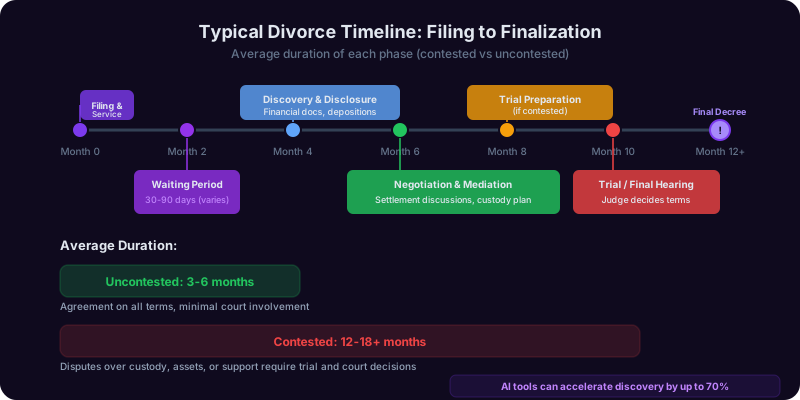
The Divorce Timeline: What Takes How Long
One of the most common questions is: how long will this take? The honest answer depends on your path:
| Divorce Type | Typical Duration | Average Total Cost (Both Parties) |
|---|---|---|
| Uncontested, no children | 1-3 months | $500-$2,500 |
| Uncontested, with children | 2-4 months | $2,000-$5,000 |
| Mediated | 3-6 months | $5,000-$15,000 |
| Collaborative | 4-9 months | $15,000-$50,000 |
| Contested, moderate conflict | 9-18 months | $30,000-$80,000 |
| Contested, high conflict with custody dispute | 18-36 months | $50,000-$200,000+ |
These timelines are in addition to any mandatory waiting period your state requires (ranging from none to 12 months of separation). The preparation phase -- the stage you are in right now if you are reading this guide -- typically takes 2 to 8 weeks and is the most valuable investment of time in the entire process.
Emotional Stages and Decision-Making
Research on the emotional impact of divorce identifies stages that most people experience, though not always linearly: denial and shock, anger and blame, bargaining and guilt, depression and grief, and acceptance and rebuilding. The critical insight for legal preparation is this: do not make permanent financial or custody decisions during the anger or depression stages. These are the periods when people agree to unfavorable settlements to "get it over with," refuse reasonable compromises out of spite, or make custody demands that are about punishing their spouse rather than serving their children.
AI tools help here by providing an emotionally neutral sounding board. When you ask an AI to evaluate a settlement offer, it does not care about your feelings toward your spouse. It analyzes the financial implications objectively. When you draft a parenting plan with AI, it focuses on logistics and the child's needs rather than your anger about the situation. This neutrality is a feature, not a limitation.
Building Your Support Team
Effective divorce preparation involves assembling the right professionals, each doing what they do best:
- Family law attorney ($200-$500/hour): Legal strategy, court representation, negotiation. The attorney makes the strategic decisions.
- Therapist or counselor ($100-$200/session): Emotional processing, coping strategies, parenting through transition. Do not use your attorney for emotional support at three times the hourly rate.
- Financial advisor or CDFA ($150-$300/hour): A Certified Divorce Financial Analyst specializes in modeling the long-term financial impact of different settlement scenarios. Particularly valuable for complex asset division.
- AI tools ($0-$50/month): Research, document preparation, scenario modeling, organization. AI does the groundwork that reduces the time (and cost) of the human professionals.
Practical Steps You Can Take This Week
Regardless of where you are in the process, these steps can be completed in the next 7 days with AI assistance:
- Day 1-2: Financial inventory. Use the Finance Copilot to build a complete asset and debt inventory. Pull credit reports. Locate all financial account statements.
- Day 3: State research. Use the Legal Copilot to identify your state's specific divorce rules, custody framework, and support calculation methods.
- Day 4-5: Parenting plan draft. If you have children, create a preliminary parenting plan covering schedules, holidays, decision-making, and communication protocols.
- Day 6: Support calculations. Model child support and potential alimony scenarios based on your income, your spouse's income, and proposed custody arrangement.
- Day 7: Attorney consultation prep. Compile your research, questions, and documents into a folder and schedule a consultation with a family law attorney in your area.
This one-week preparation process costs nothing (or minimal AI subscription fees) and typically saves $2,000 to $5,000 in attorney fees by reducing the time needed for your lawyer to get up to speed on your situation. For additional legal preparation strategies, our guide on AI contract review covers how to analyze legal documents independently, and our AI estate planning guide addresses the estate documents you should update after your divorce is finalized.
Disclaimer: This guide provides general legal and financial information about divorce and custody preparation. It does not constitute legal advice, financial advice, or therapeutic guidance. Divorce and custody outcomes depend on the specific facts of each case and the laws of your state. For matters involving domestic violence, child abuse, substantial assets, complex custody disputes, or any situation where your safety is at risk, consult a licensed family law attorney and, if applicable, law enforcement immediately. If you are experiencing domestic violence, contact the National Domestic Violence Hotline at 1-800-799-7233 or text START to 88788.
Frequently Asked Questions
Recommended Copilots
Recommended Copilots
Research state-specific divorce laws, custody presumptions, filing requirements, and support calculation methods
Try Free →Build comprehensive asset inventories, model support scenarios, and plan post-divorce budgets
Try Free →Related Articles
Get Answers From the Legal Copilot
Copilotly's Legal and Finance Copilots help you organize financial documents, research your state's divorce and custody laws, draft parenting plans, and model support calculations -- so you walk into your attorney consultation prepared and informed.