
The State of AI Wedding Planning in 2026: Why More Couples Are Making the Switch
Wedding planning has always been project management disguised as romance. The average American wedding involves coordinating 12-18 vendors, managing a $35,000 budget across dozens of line items, tracking RSVPs from 100-250 guests, and executing a day-of timeline with military precision -- all while the couple works full-time jobs. Until recently, the options were limited: hire a professional planner at $2,000-$10,000, rely on spreadsheets and wedding websites, or muddle through with notebooks.
AI has introduced a fourth option. According to Zola's 2026 Wedding Trends Report, 54% of engaged couples now use AI tools during their planning process -- a 150% increase from 2025. AI does not replace the personal decisions that make a wedding meaningful. It handles the operational burden that makes planning stressful: budget math, vendor research, timeline logistics, wording decisions, and the hundreds of coordination tasks that consume evenings and weekends for 12-18 months.
What couples are using AI for:
- Budget creation and tracking: Building realistic budgets based on local market data, then monitoring spend in real time
- Vendor discovery and comparison: Filtering thousands of options down to shortlists based on style, budget, and reviews
- Timeline management: Generating month-by-month planning timelines customized to the wedding date and complexity
- Guest list logistics: Managing RSVPs, dietary restrictions, seating arrangements, and plus-one decisions
- Written communications: Drafting invitation wording, thank-you notes, vendor emails, and ceremony scripts
- Contract review: Analyzing vendor contracts for red flags and negotiation opportunities
- Day-of coordination: Creating minute-by-minute timelines for vendors and the wedding party
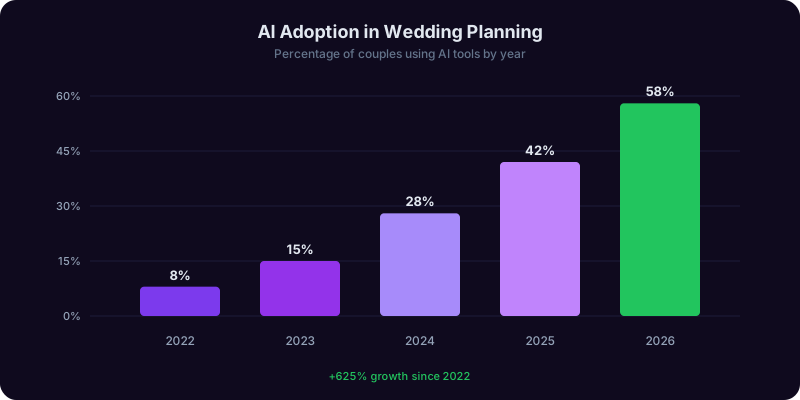
The Knot's 2026 Real Weddings Study found that couples who used AI planning tools spent an average of $4,800 less than those who planned without assistance, primarily through better vendor negotiation, more accurate budgeting, and identification of cost-saving alternatives. The time savings are equally dramatic: AI-assisted couples reported spending 30-40% fewer hours on logistics.
What AI does not replace. AI cannot tell you whether your mother-in-law's feelings will be hurt by a seating arrangement. It cannot feel the energy of a venue when you walk through it. The couples who report the highest satisfaction use AI to eliminate operational noise so they can focus on the moments that make a wedding personally meaningful.
Building a Realistic Wedding Budget with AI: From First Number to Final Invoice
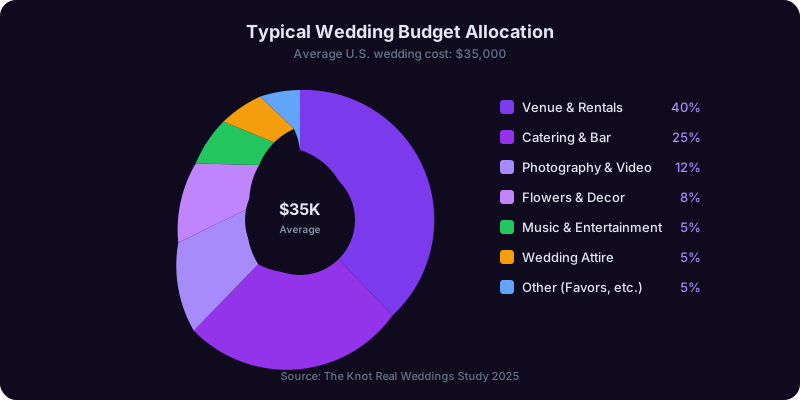
The number one source of wedding stress is money -- not because couples lack funds, but because they do not know how much things cost in their specific market until they are emotionally committed to choices they cannot afford. The average couple underestimates total wedding cost by 30-45% at the start of planning, according to WeddingWire's budget analysis. That gap between expectation and reality is where budget blow-ups and planning regret originate.
AI changes this by building budgets grounded in actual market data. When you tell an AI copilot you want a 150-person wedding in Austin, Texas, it pulls from current vendor pricing in the Austin market, seasonal variations (an October wedding costs 15-20% more than January due to demand), and venue-specific cost structures.
The AI budget-building workflow:
- Define parameters: Total budget ceiling, guest count, date or season, geographic area, and your top three priorities (food quality, photography, venue aesthetic, etc.). The AI allocates larger percentages to categories you care most about.
- Generate baseline allocation: The AI produces a line-item budget: venue (30-40%), catering (25-30%), photography (10-12%), florals (8-10%), music (5-8%), attire (5-7%), stationery (2-3%), transportation (2-3%), favors (1-2%), and contingency (5-8%).
- Reality check: The AI compares allocations to actual vendor pricing in your market. If your catering allocation assumes $85 per plate where minimums are $120, it flags the shortfall early.
- Scenario modeling: Ask what changes if you reduce the guest list by 25, switch to Friday, move off-peak, or eliminate a category. Each scenario produces a revised budget in seconds.
Tracking spend against plan. As you book vendors and make deposits, you update the AI with actual costs. It compares actuals to projected spend and flags categories running over budget. If your photographer costs $1,000 more than allocated, the AI identifies which other categories have slack to absorb the overage.
Hidden costs AI catches. Wedding budgets suffer from death-by-a-thousand-cuts overruns: service charges (18-22% on catering, often in addition to per-plate pricing), sales tax, overtime fees, cake-cutting fees, corkage fees, gratuities, alteration costs, and postage. An AI copilot adds these automatically because it has processed thousands of wedding budgets. The typical spreadsheet misses $2,000-$4,000 in hidden costs. AI catches them upfront. For more on how AI handles complex financial planning, see our guide on AI-assisted financial negotiations.
AI-Powered Vendor Comparison: Finding the Right Fit Without Drowning in Options
The average metropolitan wedding market has 200-400 photographers, 100-300 caterers, 50-150 florists, and dozens of DJs, bands, and planners. Reviewing even a fraction manually takes weeks. Most couples default to the first page of Google or Instagram popularity -- neither of which reliably predicts fit. AI transforms vendor selection from an overwhelming search into a structured comparison that considers budget, style, availability, and reputation simultaneously.
How AI vendor comparison works:
- Define criteria: Budget range, wedding date and location, style preferences (documentary vs. editorial photography, garden-style vs. modern florals), must-haves (bilingual officiant, specific cuisine), and deal-breakers (high travel fees, no backup equipment).
- Generate a filtered shortlist: The AI narrows the market to 5-10 matches per category with pricing summaries, portfolio style notes, review sentiment analysis (not just star ratings, but patterns in praise and criticism), and notable contract terms.
- Side-by-side comparison: The AI structures information from multiple sources -- The Knot, WeddingWire, Google Reviews -- into a consistent matrix so you compare vendors on the same dimensions.
What AI reveals beyond portfolios. A photographer's portfolio shows their best 50 images from their best 20 weddings. AI analyzes review text across platforms to surface patterns: if 8 of 40 reviews mention slow delivery, the AI flags turnaround time even with a 4.8-star rating. If a caterer's reviews praise food but mention disorganized service staff, you know exactly what to ask during your tasting.
The vendor question generator. AI generates vendor-specific question lists based on category, priorities, and common review issues. For a venue consultation: noise restrictions, weather backup plans, exclusive vendor lists vs. open policies, setup time included vs. additional fees, parking capacity, insurance requirements, and decor restrictions. These are questions experienced planners know to ask. AI transfers that knowledge to first-time planners.
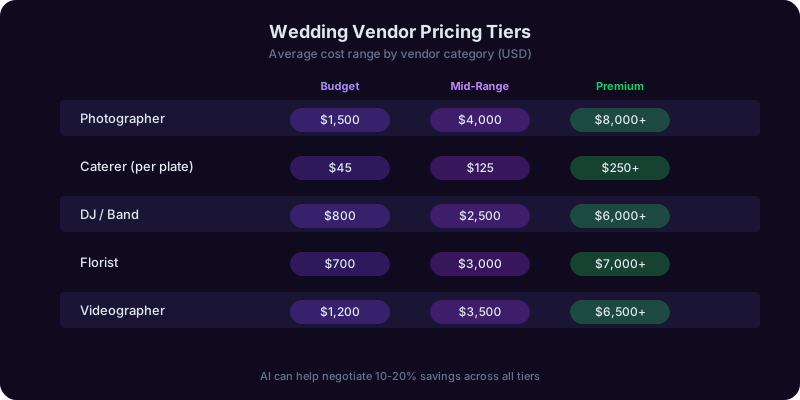
Negotiation intelligence. AI identifies which categories have pricing flexibility (florists and DJs typically have 10-20% room, while established venues have less), suggests strategies (off-peak discounts, package customization, value-adds), and flags when a quote significantly exceeds market average. Couples using AI-assisted negotiation save $2,000-$3,500 across all vendor categories.
Red flag detection. AI flags vendors to avoid: no written contract, full payment upfront with no milestones, no recent portfolio work, negative reliability patterns in reviews, and pricing significantly below market (often indicating hidden fees or quality issues).

Get Answers From the Career Copilot
From building a realistic budget to reviewing vendor contracts and creating your day-of timeline, Copilotly's AI copilots give you professional wedding planning intelligence at a fraction of the cost. Get personalized guidance for every decision.
AI-Assisted Venue Selection: Matching Your Vision to the Right Space
The venue is the first major decision and the largest single expense, consuming 30-40% of the total budget. It constrains almost everything else: catering options, guest count limits, available dates, decor possibilities, and vendor access. AI manages the balance between aesthetic preference and practical requirements by processing dozens of variables simultaneously.
The AI venue matching process:
- Non-negotiables: Guest capacity (with 10% buffer), budget ceiling including required vendor minimums, geographic radius, indoor/outdoor preference, date availability, and accessibility requirements.
- Preferences: Architectural style, natural light quality, on-site preparation spaces, guest accommodations, same-location ceremony and reception vs. separate, and parking logistics.
- AI evaluation: The copilot scores venues against non-negotiables (pass/fail) and preferences (weighted scoring), producing a ranked shortlist with explanations for each ranking.
The hidden cost analysis. A venue quoting $5,000 for rental may require its $150-per-plate caterer (adding $22,500 for 150 guests), charge $2,500 for mandatory coordination, require insurance ($500-$800), and include only 6 hours with $500/hour overtime. The "$5,000 venue" actually costs $31,000-$33,000. AI calculates true all-in cost by factoring in required vendors, minimums, and fees. This total-cost comparison frequently reshuffles rankings -- a higher-rental venue with open vendor policy often costs less total.
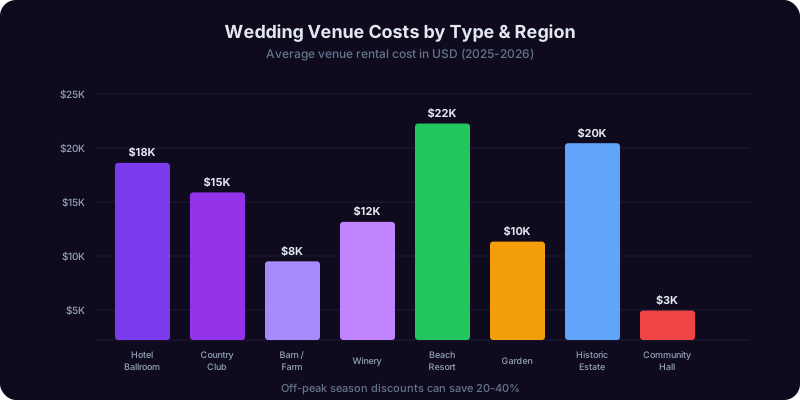
Seasonal and day-of-week optimization. AI identifies cost differences between Saturday and Friday or Sunday at preferred venues, shoulder-season dates (March-April, November) offering 20-30% lower pricing, and venues with unadvertised off-peak incentives. Couples shifting from peak Saturday to Friday or Sunday in shoulder season save $4,000-$8,000 on venue costs alone.
Logistics scoring. AI evaluates dimensions couples overlook: distance from nearest hotel block, cell reception for coordination and ride-sharing, load-in access for equipment, weather contingency plans, noise ordinances affecting music and end time, and bathroom-to-guest ratios (industry standard: one per 35 guests).
Virtual narrowing before in-person visits. AI helps narrow the field to 3-5 venues before physical visits by analyzing portfolios, virtual tours, floor plans, review data, and pricing. This saves 2-3 hours per eliminated venue visit -- typically 20-30 hours when couples would otherwise visit 10-15 venues.
Creating a Foolproof Wedding Timeline with AI: 18 Months to the Day Of
Wedding planning involves hundreds of tasks across 8-18 months, with dependencies most couples do not recognize until a missed deadline creates cascading problems. Booking a florist before selecting a venue wastes time if the venue requires an exclusive florist. Ordering invitations before finalizing the guest list leads to reprints. AI generates planning timelines that account for dependencies, local vendor lead times, and the specific wedding date.
AI generates a customized timeline from: wedding date, engagement date, guest count, venue status, geographic area (metro vendors book 12-18 months out; smaller markets may have 6-9 month availability), and complexity level. The output is a month-by-month task list with deadlines, dependency flags, and priority rankings that adjusts when plans change.
Sample 12-month timeline (150-person wedding):
Months 12-10: Set budget and identify funding sources. Research and book venue. Begin guest list draft. Purchase wedding insurance. Research photographers and videographers. Select wedding party.
Months 9-7: Book photographer, videographer, caterer, and officiant. Begin attire shopping (alterations need 2-3 months). Book DJ or band. Set up wedding website. Research hotel blocks.
Months 6-4: Send save-the-dates. Book florist, hair and makeup, and transportation. Finalize guest list. Plan ceremony details. Register for gifts. Book rehearsal dinner venue.
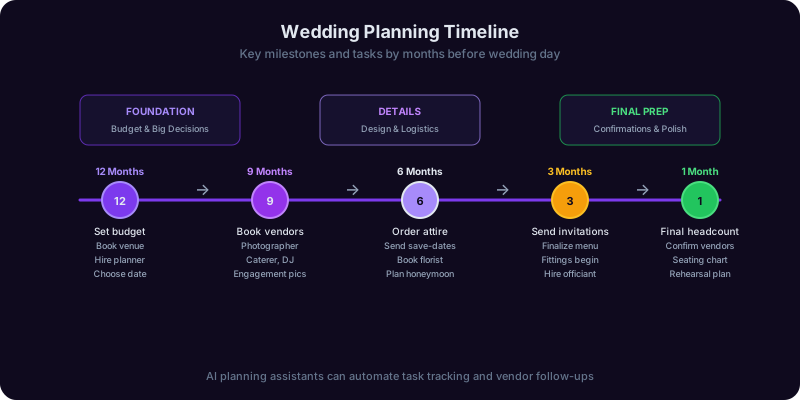
Months 3-1: Send invitations (6-8 weeks before). Schedule fittings and alterations. Confirm all vendor details. Apply for marriage license. Write vows. Create day-of timeline. Final menu tasting.
Final month: Confirm final guest count. Create seating chart. Prepare vendor payments and tips. Confirm delivery and setup times. Delegate day-of tasks. Prepare emergency kit (sewing kit, stain remover, phone charger, snacks).
Dependency management -- the real value. A generic checklist says "book a caterer 9 months out." An AI timeline says "book a caterer after confirming your venue, because 40% of venues require specific caterers, and booking independently before knowing the policy wastes time and may incur cancellation fees." These dependencies exist across almost every vendor category, and missing them is why planning feels chaotic.
Adaptive rescheduling. Plans rarely follow the original timeline. When something changes -- a venue books later than planned, a vendor becomes unavailable -- the AI recalculates every downstream deadline, compresses timelines, flags tasks with insufficient lead time, and suggests which tasks can run in parallel. This adaptive capability is something static spreadsheets cannot provide, and it drives the 30-40% time savings couples report. For more on AI-powered multi-step planning, see our guide to AI-assisted professional decision-making.
Guest List Management and Invitation Wording: Where AI Eliminates Social Anxiety
Guest list management is the most emotionally fraught dimension of wedding planning. Every name represents a relationship, an obligation, and a budget impact. Adding a coworker means adding a plus-one -- two more meals at $120-$180 each. Cutting a distant cousin risks a conflict lasting decades. AI provides the analytical framework that strips away emotional fog and reveals the actual trade-offs.
AI-powered guest list optimization:
- Tiered list creation: Build an A-list (must-invite), B-list (invite if space allows), and C-list (would be nice) with clear criteria for each tier, removing the pretense that all guests are equally essential.
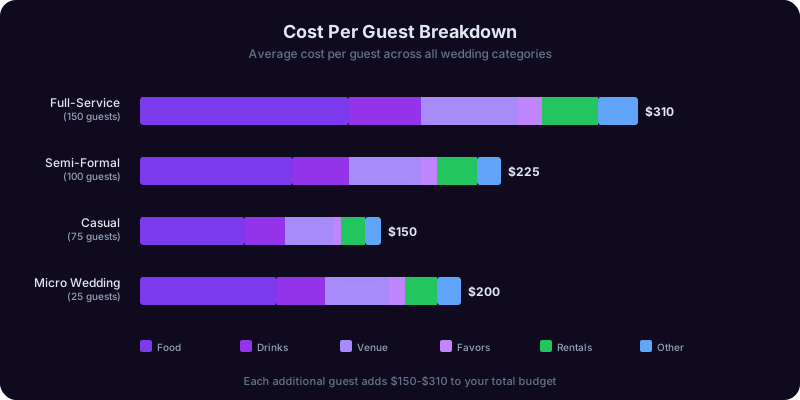
- Budget impact modeling: For every guest added or removed, the AI calculates total cost impact -- not just per-plate cost, but cascading effects on venue capacity, table rentals, favor count, and staffing. The true marginal cost per guest is typically 1.5-2x the per-plate food cost.
- Plus-one policy modeling: Model scenarios: all guests get plus-ones (adds 30-40% to headcount), only relationships over six months, only married and engaged, or a tiered approach. Each scenario produces revised counts and budget impact.
RSVP tracking. The AI tracks responses, identifies non-responders as deadlines approach, and drafts personalized follow-ups. It aggregates meal selections, dietary restrictions, accessibility needs, and accommodation requirements into reports for your caterer, venue, and transportation provider -- replacing 8-12 hours of manual work in the final two months.
Seating chart assistance. The AI provides structural optimization -- table sizes for conversation (rounds of 8-10), balanced compositions mixing couples with singles and friend groups, head table configurations, and proximity-based seating for mobility needs. You provide the relationship intelligence; AI provides the spatial logic.
Invitation wording. Wedding invitation etiquette confuses most couples. Should the bride's parents be listed first? How do you handle divorced and remarried parents? What about same-sex couples where gendered wording does not apply? The AI generates wording options that respect etiquette while matching your tone -- formal, casual, humorous, or sentimental. It also drafts save-the-dates, ceremony programs, rehearsal dinner invitations, thank-you notes personalized to each gift, ceremony scripts for friend officiants, and wedding website content. Each piece maintains consistent style while adapting to purpose and audience. For guidance on how AI copilots craft professional communications, see our guide on starting a side hustle with AI tools.
Vendor Contract Review with AI: Catching Red Flags Before You Sign
Wedding vendor contracts are legal documents most couples sign without fully understanding. The excitement of booking combined with availability pressure ("we only have three Saturdays left in October") leads to quick signatures with only a surface read. AI copilots analyze these contracts in minutes, flagging issues that would require a lawyer to catch.
What AI contract review catches:
- Cancellation and force majeure clauses: Many contracts allow the vendor to cancel without penalty while requiring the couple to forfeit their deposit. AI flags asymmetric cancellation terms and suggests balanced language.
- Payment schedules: A fair structure is 25-30% deposit, second payment at 60-90 days, final balance 2-4 weeks before the wedding. Contracts requiring 50-100% upfront with no refund shift all risk to the couple.
- Substitution clauses: Some contracts allow substituting a different photographer or DJ without consent. If you booked for a specific person's portfolio, a substitution clause means you might get someone else entirely.
- Liability limitations: Many contracts cap liability at the contract price. If a photographer loses every wedding photo, their maximum liability is the $5,000 you paid -- not the $35,000 wedding they documented.
- IP and image usage: Photography contracts often grant unlimited rights to use your images for marketing, portfolios, and even stock licensing. AI flags broad clauses and suggests limited usage rights protecting privacy.
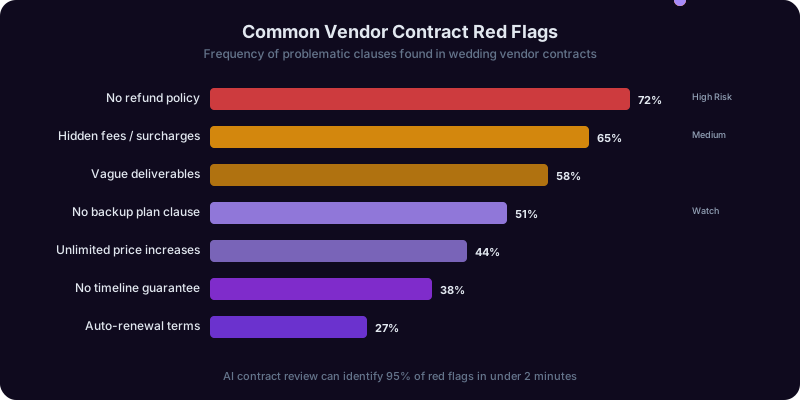
The review workflow. Upload or paste a contract and ask for review focused on: risk allocation, payment and refund protections, cancellation scenarios, unusual clauses, and comparison to industry standards. The AI produces clause-by-clause analysis with risk ratings and specific modification language. Most vendors modify concerning clauses when couples raise informed objections -- unfavorable terms persist only when nobody asks.
When to involve a real lawyer. AI review is sufficient for standard vendor agreements. However, certain situations warrant professional review: venue contracts with complex liability and insurance requirements, prenuptial agreements negotiated alongside wedding planning, destination wedding contracts governed by different jurisdictions, and any single-vendor contract over $10,000. The AI prepares you for a lawyer consultation by isolating specific clauses needing attention, reducing billable hours by 50-70%. For a detailed look at AI contract analysis, see our guide on AI contract review without a lawyer.
Day-of Coordination and Cost-Saving Strategies: Making AI Work Through the Finish Line
The wedding day is a logistics exercise rivaling a small theatrical production. Multiple vendors arrive at different times, the wedding party needs specific locations for photos, meals must be served on schedule to avoid overtime charges, and the couple must transition smoothly between ceremony, cocktail hour, reception, and departure. A professional coordinator charges $1,500-$3,000. AI cannot replace the physical presence, but it creates the detailed plans that make the day run smoothly.
Building the day-of timeline:
- Vendor arrival schedule: The AI sequences every vendor's arrival based on setup requirements and venue access. The florist arrives before the photographer if you want floral detail shots. The DJ needs sound check before guests arrive. The caterer needs kitchen access 3-4 hours before service.
- Photo timeline: A schedule accounting for first look vs. traditional reveal, family formal combinations, wedding party photos, couple portraits, detail shots, and golden hour based on actual sunset time for your date and venue location.
- Reception flow: Introductions, first dance, toasts, dinner, cake cutting, open dancing, and last dance sequenced with buffers, working backward from the venue's hard end time.
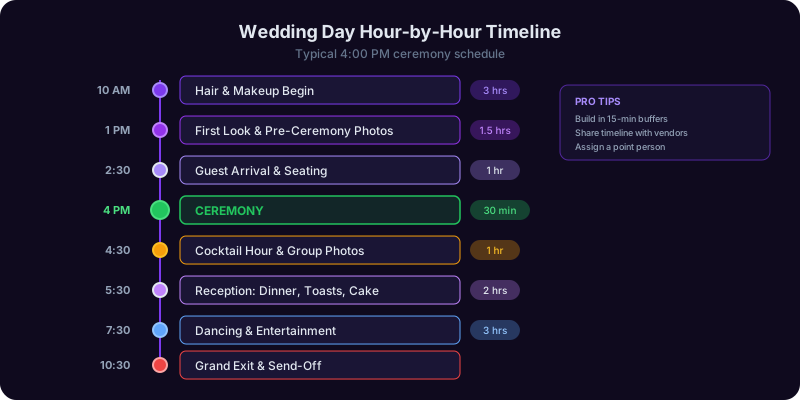
Contingency planning. AI generates protocols for weather changes (outdoor backup with specific decision trigger time), vendor no-shows (emergency backup contacts), timeline delays (which activities can be shortened if ceremony runs late), and transportation failures. Having documented plans eliminates panic when minor disruptions occur.
Where the $5,000 in savings comes from. The savings are not one dramatic cut but smarter decisions across every category. Venue optimization saves $800-$2,000 through off-peak dates and total-cost comparison. Vendor negotiation saves $1,000-$1,500 through market-data-informed bargaining. Guest list optimization saves $500-$1,000 by quantifying true marginal costs. DIY-AI hybrid approaches save $400-$800 on wedding website design, ceremony scripts, and timeline creation. Contract review prevents $300-$600 in hidden fees. Seasonal timing saves $300-$500 through optimal booking windows.
What not to cut. AI optimization is about spending intentionally, not minimally. Categories where couples most regret cutting: photography (you live with these images forever), food quality (guests remember bad food), and music (this determines whether people dance or leave early). AI protects priority spending while finding savings where quality differences between tiers are minimal -- stationery, favors, transportation, and non-centerpiece florals. For a broader framework on AI-assisted financial decision-making, see our guide on AI-powered financial negotiation.
Frequently Asked Questions
Recommended Copilots
Recommended Copilots
Build and track your wedding budget with real-time spend monitoring, vendor cost comparisons, and scenario modeling for guest count and date changes
Try Free →Review vendor contracts clause by clause, flag one-sided cancellation terms, and generate negotiation language for concerning provisions
Try Free →Draft polished wedding communications including invitation wording, vendor correspondence, thank-you notes, and ceremony scripts
Try Free →Related Articles
Get Answers From the Career Copilot
From building a realistic budget to reviewing vendor contracts and creating your day-of timeline, Copilotly's AI copilots give you professional wedding planning intelligence at a fraction of the cost. Get personalized guidance for every decision.