
Before You Even View the Apartment
Preparation before the walkthrough is what separates renters who get great apartments from those who end up stuck in a bad lease. Do this homework first. Try our AI lease review tool for step-by-step help.
Research the Landlord and Building
- Search the address online. Look for reviews on Google, Yelp, ApartmentRatings, and Reddit. Previous tenants often share honest experiences about maintenance responsiveness, pest issues, and landlord behavior.
- Check code violations. Most cities maintain a public database of building code violations and complaints. Search your city's housing department or building inspection website. A building with repeated violations for plumbing, electrical, or pest issues is a red flag. You can look up housing codes through resources like the Cornell Law Institute landlord-tenant overview.
- Verify the landlord. Confirm the person showing you the apartment is the actual owner or authorized property manager. Rental scams - where someone lists an apartment they do not own - are increasingly common. Check the county property records (usually available online) to verify ownership. The FTC's guide to rental scams covers the most common warning signs.
Know Your Budget
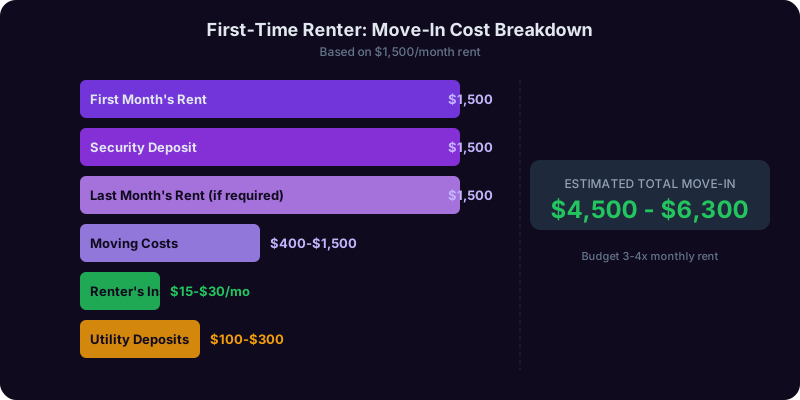
The standard rule is that rent should not exceed 30% of your gross monthly income. But do not forget to budget for:
- Security deposit: Usually one month's rent, sometimes more
- First and last month's rent: Some landlords require both upfront
- Utilities: Ask what is included. Electric, gas, water, trash, internet - these can add $150-$400/month if not included
- Renter's insurance: Typically $15-$30/month and often required by the lease
- Moving costs: Truck rental, movers, supplies
Prepare Your Questions
Write down your must-haves and deal-breakers before viewing. Laundry access? Parking? Pet policy? Noise levels? It is easy to fall in love with a space and forget to ask about practical concerns until after you have signed.
The Budgeting Copilot can help you calculate your total move-in costs and monthly budget based on your income and the apartments you are considering.
Disclaimer: This is general information, not legal advice. Rental laws vary by state and municipality.
See our real-world walkthrough: landlord keeping security deposit.
During the Walkthrough: Room-by-Room Inspection
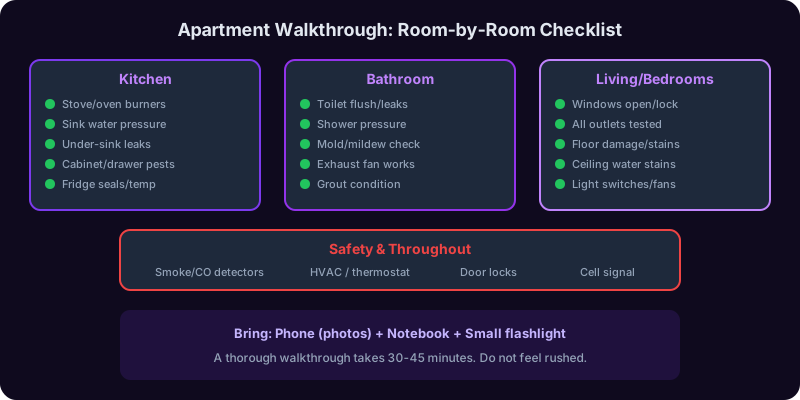
Bring your phone (for photos), a notebook, and a small flashlight. Check every item on this list during your walkthrough. Do not feel rushed - a thorough inspection takes 30-45 minutes.
Kitchen
- Turn on every burner on the stove. Do they all ignite? Are they level?
- Open the oven and check inside for cleanliness and that it heats
- Run the dishwasher if there is one - check for leaks underneath
- Turn on the garbage disposal if present
- Run the sink - check water pressure, hot water response time, and check under the sink for leaks or water damage
- Open and close all cabinets and drawers - check for pests, droppings, or damage
- Check the refrigerator temperature and inspect seals
- Look at the condition of countertops, flooring, and backsplash
Bathroom
- Flush every toilet - does it run continuously or flush weakly?
- Run the shower and check water pressure and hot water
- Look for mold or mildew around the tub, shower, and sink - especially at caulk lines
- Check the exhaust fan - turn it on and hold a piece of tissue near it to confirm it actually draws air
- Open the vanity and look for water damage or leaks
- Check tile grout for cracks or discoloration
Bedrooms and Living Areas
- Check every window - do they open, close, and lock? Are there screens?
- Test every electrical outlet with a phone charger
- Turn on every light switch and ceiling fan
- Check the floors for damage, stains, or unevenness
- Open and close all closet doors
- Look at the walls and ceiling for cracks, water stains, or fresh paint patches (which may be covering damage)
Throughout the Apartment
- Check all doors - do they close fully and lock properly?
- Test the thermostat and HVAC system
- Look for smoke detectors and carbon monoxide detectors in required locations
- Check for signs of pests: droppings, egg casings, dead insects in corners or under sinks
- Note the cell phone signal strength in different rooms
If you find issues during your walkthrough that you want addressed before signing, knowing how to negotiate contract terms will help you get repairs written into your lease agreement.
Red Flags That Should Make You Walk Away
Some issues are fixable. Others signal deeper problems that will make your life miserable. Watch for these warning signs.
Structural and Safety Red Flags
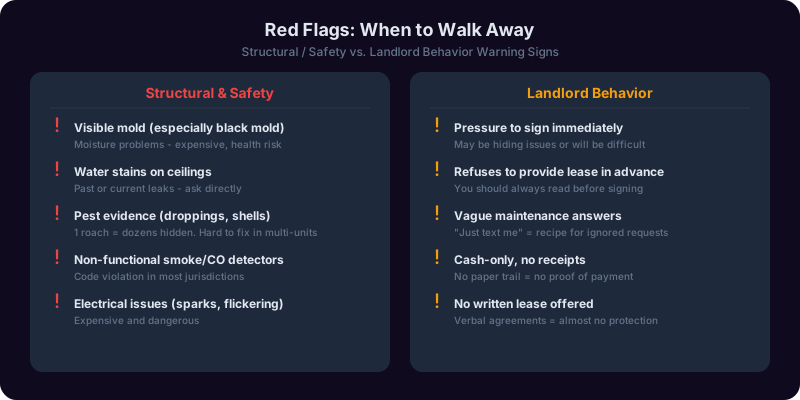
- Mold: Visible mold - especially black mold - in the bathroom, around windows, or on ceilings indicates a moisture problem that is expensive to fix and dangerous to your health. Minor surface mildew is normal in bathrooms; black spots on walls or ceilings are not.
- Water stains on ceilings: Brown or yellow stains indicate past or current leaks. Ask the landlord directly what caused them and whether the underlying issue was fixed. If they deflect, assume it was not.
- Pest evidence: Cockroach droppings (small dark specks), mouse droppings (small dark pellets), bed bug stains (small rust-colored spots on mattress seams or baseboards). A single cockroach sighting means dozens more you cannot see. Pest problems in multi-unit buildings are extremely difficult to eliminate.
- Non-functional smoke or CO detectors: This is a safety hazard and, in most jurisdictions, a code violation. If the landlord has not maintained basic safety equipment, expect similar neglect elsewhere.
- Electrical issues: Outlets that spark, lights that flicker, breaker panels with exposed wiring, or two-prong outlets throughout (indicating outdated, ungrounded wiring). Electrical problems are expensive and dangerous.
Landlord Behavior Red Flags
- Pressure to sign immediately: "I have five other people looking at it today" may be true, but a landlord who refuses to give you 24-48 hours to decide is either hiding something or will be difficult to deal with throughout your tenancy.
- Refusing to provide a lease in advance: You should read the entire lease before signing. If the landlord will not give you a copy to review, something is wrong. Our guide on how to read a lease agreement explains exactly what to look for.
- Vague answers about maintenance: Ask how maintenance requests are handled. "Just text me" is not a system - it is a recipe for ignored requests. Professional landlords have a process.
- Cash-only payments with no receipts: This suggests the landlord is avoiding a paper trail, which makes it nearly impossible to prove you paid rent if a dispute arises.
- No written lease: A verbal rental agreement offers you almost no protection. Never rent without a written lease.

Get Answers From the Contract Review Copilot
Upload your lease to the Contract Review Copilot and get an instant breakdown of every clause - red flags highlighted, negotiable terms identified, and plain-English explanations.
Lease Terms to Check Before You Sign
The lease is a legally binding contract. Every clause matters. Read the entire document and pay special attention to these terms. Try our AI contract review tool for step-by-step help. For a deeper understanding of lease clauses and tenant protections, Nolo's renters' rights library is an excellent resource.
Rent and Payment Terms
- Exact monthly rent amount and due date
- Accepted payment methods (check, bank transfer, online portal)
- Late fee amount and when it kicks in (is there a grace period?)
- What happens if your rent check bounces
Lease Duration and Renewal
- Start and end dates
- Does it automatically convert to month-to-month after the initial term?
- How much notice is required to terminate (30 days? 60 days?)
- Rent increase provisions - can the landlord raise rent during the lease term? By how much upon renewal?
Security Deposit
- Exact deposit amount
- Conditions for deductions (this is critical - get this in writing)
- Return timeline (should match your state's law)
- Whether the deposit is held in a separate account
Maintenance and Repairs
- Who is responsible for what repairs (landlord vs. tenant)
- How to submit maintenance requests
- Response time expectations
- Who pays for pest control
Rules and Restrictions
- Pet policy (and pet deposit/fee amounts)
- Guest policies and overnight guest limits
- Noise provisions
- Subletting rules
- Modification restrictions (can you hang shelves? paint?)
Termination and Penalties
- Early termination clause - what does it cost to break the lease? Our guide on how to get out of a lease early covers every option.
- Eviction provisions
- What constitutes a lease violation
Do not sign anything you do not understand. If a clause seems unusual or overly restrictive, ask about it. If the landlord cannot explain it clearly, that is a red flag. The Contract Review Copilot can analyze your lease and flag unusual or problematic terms before you sign.
Negotiation Tips Most First-Time Renters Miss
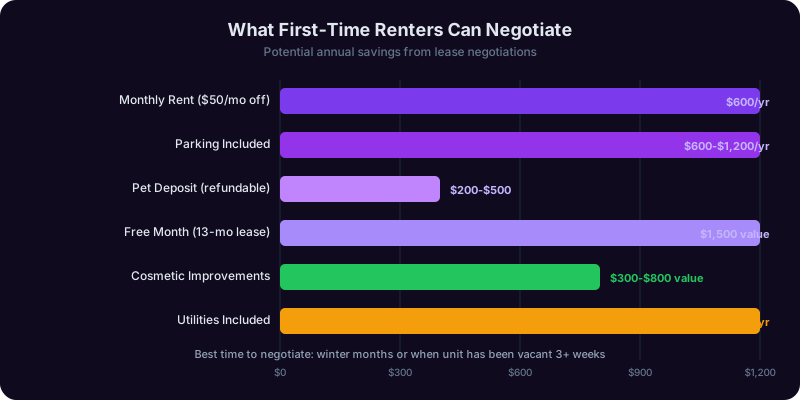
Most first-time renters do not realize that lease terms are negotiable. You will not always succeed, but you will never get a better deal if you do not ask. For a detailed guide to negotiating any contract, see our complete contract negotiation guide. If you want to negotiate your rent specifically, our complete rent negotiation guide covers scripts, timing strategies, and leverage tactics that work.
What You Can Negotiate
- Rent price: Especially in a soft market, during winter months, or if the unit has been vacant for a while. Even $25-$50/month off saves $300-$600 over a year.
- Move-in date: If you need a few extra days or want to align with your current lease end date, most landlords will accommodate reasonable requests.
- Lease length: If you want a shorter or longer term than offered, ask. Landlords prefer longer leases (less turnover), so offering to sign an 18-month lease instead of 12 may get you a rent reduction.
- Included utilities: If utilities are not included, ask if the landlord would include water or trash for a slightly higher rent. It simplifies your budgeting.
- Parking: If parking costs extra, negotiate it into the rent or ask for a discount.
- Pet deposit: If you have a pet, negotiate the pet deposit amount or ask for it to be a one-time fee rather than monthly pet rent.
- Cosmetic improvements: Ask if the landlord will repaint before you move in, replace stained carpet, or fix cosmetic issues. This costs them relatively little and saves you from living with someone else's wear.
How to Negotiate Effectively
- Be polite and professional. You are starting a relationship, not winning an argument.
- Reference comparable listings. "I noticed similar units in the area are renting for $50-$100 less" is persuasive because it is factual. You can check market rates on sites like the CFPB's housing resources.
- Offer something in return. A longer lease term, prompt payment commitment, or willingness to handle minor maintenance yourself gives the landlord a reason to make concessions.
- Get everything in writing. Any negotiated changes must be reflected in the lease or in a written addendum signed by both parties. Verbal agreements are nearly impossible to enforce.
The worst they can say is no. And if the market is competitive, they probably will. But in many markets - especially for units that have been vacant more than a few weeks - landlords are more flexible than first-time renters realize.
Move-In Documentation: Protect Yourself from Day One
This is the single most important thing you can do as a renter, and most people skip it. Thorough move-in documentation protects your security deposit and gives you evidence if disputes arise later.
The Move-In Inspection
On the day you get the keys (before moving anything in), do a complete walkthrough and document everything:
- Photograph every room from multiple angles. Include wide shots and close-ups of any existing damage.
- Video walkthrough: Record a slow, narrated video of the entire apartment. "This is the kitchen on May 19, 2026. Noting a scratch on the countertop near the sink and a chip in the tile by the refrigerator."
- Document specific damage: Scratches on floors, marks on walls, stains on carpet, chips in countertops, damaged blinds, cracked tiles - everything. It does not matter how small.
- Test everything again: Appliances, plumbing, electrical, HVAC. Document anything that does not work.
The Written Condition Report
Many landlords provide a move-in condition checklist. If yours does, fill it out meticulously. If they do not provide one, create your own. For each room, list:
- Condition of walls (marks, holes, paint condition)
- Condition of floors (scratches, stains, damage)
- Condition of fixtures (lights, switches, outlets)
- Condition of appliances
- Any damage or issues noted
Sign and date the checklist. Have the landlord sign it too. If they refuse to sign, send them a copy by email or certified mail with a note: "Attached is my move-in condition report dated [date]. Please review and notify me of any disagreements within 7 days." Their silence constitutes acceptance in most situations.
Keep Everything
Store your move-in photos, video, and condition report somewhere safe and backed up - cloud storage, email to yourself, or both. You will need these when you move out, which may be years from now. Do not rely on them staying on your phone.
This documentation directly protects your security deposit. When you move out and the landlord claims you caused damage, your move-in records prove what was already there. Without this evidence, it becomes your word against theirs - and landlords have more experience in these disputes. Learn more about protecting your deposit in our complete security deposit guide, or get personalized help from the Tenant Rights Copilot.
Security Deposit Protection Strategies
Your security deposit is your money. Protecting it starts on day one and continues through your entire tenancy.
Know Your State's Rules
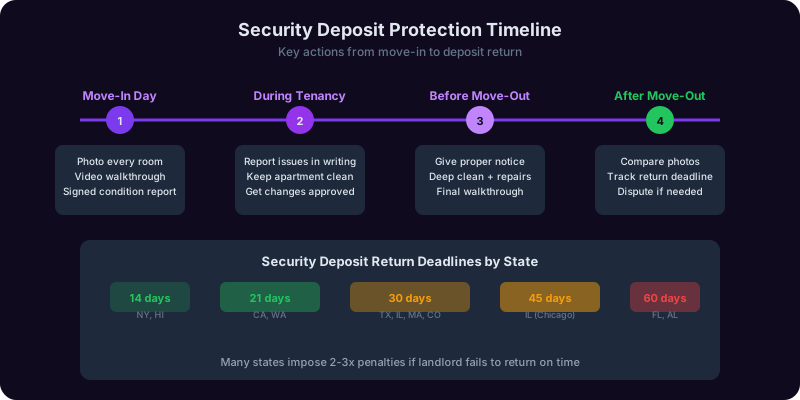
Before handing over a security deposit, understand your state's protections. The Nolo security deposit guide provides a state-by-state breakdown of limits and deadlines:
- Maximum deposit amount: Many states cap deposits at 1-2 months' rent. If your landlord is charging more, check whether it is legal.
- Deposit holding requirements: Some states require deposits be held in a separate, interest-bearing account. The landlord must disclose the bank and account details in some jurisdictions.
- Return deadline: Know exactly how many days your landlord has to return the deposit after you move out (14-60 days depending on state).
- Itemized deduction requirements: Most states require an itemized list of deductions with receipts. If your landlord just keeps the deposit without itemizing, they may owe you penalties.
During Your Tenancy
- Report maintenance issues in writing. Email is ideal because it creates a timestamped record. If the landlord does not fix a problem and it causes damage (like a leaky faucet causing water stains), your written request proves the damage was the landlord's responsibility, not yours.
- Keep your apartment clean and maintained. Regular cleaning prevents the buildup of grime and damage that landlords deduct for at move-out.
- Get permission in writing before making changes. Want to paint a wall, install a shelf, or hang heavy art? Get written approval. Without it, any modification can be charged against your deposit.
- Document any landlord-approved changes. If the landlord says you can paint, get it in email and confirm whether you need to repaint before moving out.
Before Moving Out
- Give proper notice. Follow your lease's notice requirements exactly. Failing to give adequate notice can result in forfeiting your deposit.
- Clean thoroughly. The apartment should be as clean as when you moved in. Professional cleaning of carpets and appliances is worth the $100-$200 if it prevents a $500 deduction.
- Repair minor damage. Small nail holes can be filled with spackle and touched up with matching paint for a few dollars. Replace any light bulbs that are out. Tighten loose handles.
- Do a final walkthrough with the landlord if possible. This gives you an opportunity to address concerns on the spot and get real-time agreement on the apartment's condition.
If your landlord improperly withholds your deposit, you may need to take action. Our small claims court guide walks you through the process of recovering your money, and our demand letter guide can help you draft a formal request before going to court.
Renter's Insurance: What It Covers and Why You Need It
Renter's insurance is one of the most underrated protections available to tenants. At $15-$30 per month, it covers far more than most people realize.
What Renter's Insurance Covers
- Personal property: If your belongings are damaged or destroyed by fire, theft, vandalism, water damage (from burst pipes, not floods), or other covered events, renter's insurance replaces them. This includes furniture, electronics, clothing, and valuables. A typical policy covers $20,000-$50,000 in personal property.
- Liability: If someone is injured in your apartment (a guest trips on a rug, your dog bites a visitor), liability coverage pays for their medical bills and legal costs if they sue. Standard coverage is $100,000-$300,000.
- Additional living expenses: If your apartment becomes uninhabitable (fire, major water damage), renter's insurance covers hotel costs, restaurant meals, and other temporary living expenses while your apartment is repaired.
- Off-premises theft: Your belongings are covered even when they are not in your apartment - your laptop stolen from a coffee shop, your bike stolen from a rack downtown, luggage stolen while traveling.
What Renter's Insurance Does NOT Cover
- Floods: Standard renter's insurance excludes flood damage. If you are in a flood-prone area, you need separate flood insurance through FEMA's National Flood Insurance Program.
- Earthquakes: Typically excluded. Separate earthquake coverage is available as an add-on in seismically active areas.
- Your car: Items stolen from your car may be covered, but damage to the car itself requires auto insurance.
- Your roommate's belongings: Unless they are named on the policy, their possessions are not covered.
- Intentional damage: If you cause the damage intentionally, it is not covered.
How to Get Renter's Insurance
Shop around. Get quotes from at least three insurers. Most major auto insurance companies also offer renter's insurance, and bundling them often provides a discount. Key factors affecting your premium: location, coverage amount, deductible, and whether you choose actual cash value (depreciated) or replacement cost (what it costs to buy new) coverage. Always choose replacement cost coverage - the premium difference is small, but the payout difference when you file a claim is significant.
Many landlords now require renter's insurance as a lease condition. Even if yours does not, the cost-to-benefit ratio makes it one of the smartest monthly expenses you can have as a renter.
For more on this topic, read our guide on How to Write a Demand Letter That Gets Results.
Frequently Asked Questions
Recommended Copilots
Recommended Copilots
Understand your rights as a renter before signing any lease
Try Free →Have AI review your lease agreement for hidden clauses and red flags
Try Free →Get a thorough inspection checklist customized for your apartment
Try Free →Continue Exploring
Related Scenarios
For You
How It Works
Related Articles
Get Answers From the Contract Review Copilot
Upload your lease to the Contract Review Copilot and get an instant breakdown of every clause - red flags highlighted, negotiable terms identified, and plain-English explanations.