

The Plateau Problem: Why Ozempic Stops Working Around Month 6-12
Medical disclaimer: This article is educational only. Do not change, stop, or start any prescription medication without consulting your prescriber. GLP-1 receptor agonists are powerful drugs with real risks, including pancreatitis, gallbladder disease, and rare thyroid concerns.
If you started semaglutide (Ozempic for diabetes, Wegovy for weight loss) in late 2024 or 2025, there is a good chance the scale has stopped moving sometime between month 6 and month 12. You are not failing the drug - the drug is doing exactly what physiology predicts.
Three converging mechanisms create the plateau:
- GLP-1 receptor downregulation. Chronic agonism of any G-protein coupled receptor - including GLP-1R in the hypothalamus, pancreas, and gut - leads to partial internalization and reduced signaling efficiency over time. Animal models show meaningful downregulation by week 16-24 of continuous exposure.
- Adaptive thermogenesis. The body defends a higher set-point. As fat mass falls, resting energy expenditure drops more than the loss of lean mass alone would predict. A 220 lb person who drops to 185 lb burns roughly 250-350 fewer calories per day than a person who was always 185 lb.
- Compensatory hunger hormones. Ghrelin rises, leptin falls, PYY blunts. Semaglutide partially suppresses these, but not infinitely.
The pivotal SURMOUNT-1 trial and the STEP program both show the classic curve: rapid loss for the first 16-20 weeks, slower loss through week 40-52, then a long flat tail. The 68-week endpoint exists precisely because most patients have stopped losing by then.
Where most plateaus land
Pooled real-world data from 2025 suggest typical plateau points for semaglutide:
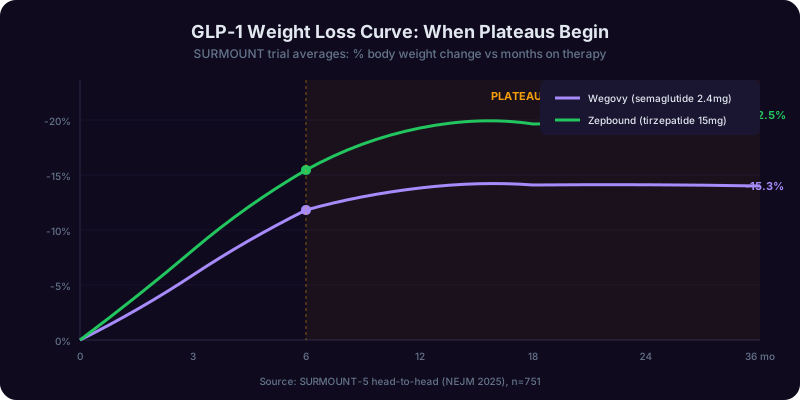
The median Wegovy patient on 2.4 mg loses about 14.9% of starting body weight by week 68 (STEP-1). But the median hides huge variance: about 32% of patients lose less than 10%, and roughly 14% lose less than 5% - the FDA's threshold for clinically meaningful response.
The downregulation timeline
Here is the rough pharmacodynamic picture researchers now use to explain why escalating dose alone often fails after month 9:
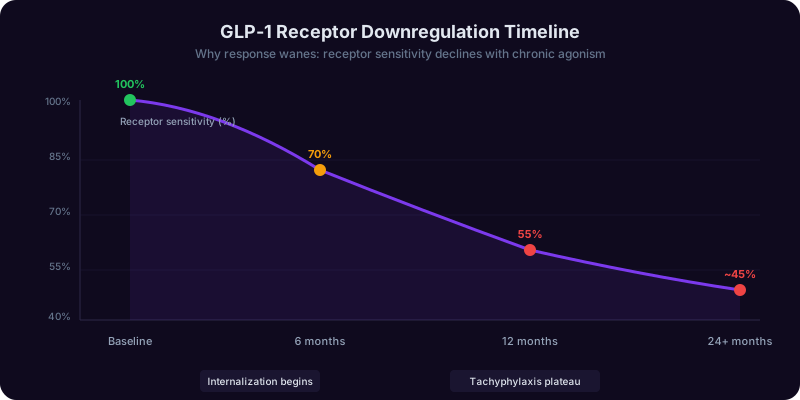
This is the central insight of 2026: a plateau is rarely a willpower failure. It is a predictable biological adaptation. The question is not whether to act, but what to do - and that is exactly what the next nine sections will help you decide.
Is It Really a Plateau? 5 Things to Rule Out First
Before switching medications, rule out five common reasons the scale stalls that have nothing to do with the drug failing.
1. Incomplete dose titration
Many patients stop escalating early because of GI side effects. The Wegovy label allows escalation to 2.4 mg weekly; Ozempic to 2.0 mg (off-label for weight, but common). If you stalled at 1.0 mg or 1.7 mg, you may simply be undertreated. A 2025 JAMA analysis found roughly 40% of commercially insured Wegovy users never reached the 2.4 mg dose - and 60% of those undertitrated patients hit early plateaus.
2. Sleep and cortisol disruption
Less than 6 hours of sleep per night raises evening cortisol by 15-25%, increases insulin resistance, and blunts the appetite-suppressing effects of GLP-1 agonism. If you have started waking at 3 am, gained a stressful job, or developed sleep apnea (common in higher-BMI patients), no amount of dose-escalation will overpower the endocrine headwind. A sleep study is cheaper than a new prescription.
3. Protein deficiency
GLP-1 agonists suppress appetite indiscriminately. Many patients end up eating 40-60 g of protein per day instead of the 1.6-2.2 g per kg of lean body mass that preserves muscle. Muscle loss tanks resting metabolic rate. A typical 5'7", 200 lb woman should be targeting ~120-140 g of protein daily on a GLP-1.
4. NEAT decline
Non-exercise activity thermogenesis (NEAT) - fidgeting, walking, standing, posture - falls dramatically during weight loss. The famous Levine studies showed NEAT can drop 300-500 calories per day in dieters. GLP-1 patients often report "feeling lazy" - that is NEAT decline. A step tracker comparing your daily step count now to six months ago is diagnostic.
5. Perimenopause, andropause, and thyroid drift
If you are a woman age 40-55, perimenopausal hormonal shifts can completely mask GLP-1 efficacy. Falling estradiol drives visceral fat redistribution and worsens insulin sensitivity. Similarly, men with declining testosterone (free T below ~250 ng/dL) lose muscle and gain fat regardless of caloric intake. Many plateaus resolve simply by adding HRT - see our perimenopause GLP-1 + HRT guide. Also pull a TSH, free T3, and free T4. A drifting thyroid (TSH > 3.5 mIU/L with symptoms) can stall any weight-loss protocol - see the thyroid lab interpretation guide.
The 4-week audit
Before requesting a switch, give yourself a 28-day structured audit:
- Log protein in grams, not just calories - aim for 1.6 g per kg lean mass minimum (see our macros calculator guide).
- Track sleep duration and morning HRV.
- Track daily steps (target +15% over current baseline).
- Pull a basic metabolic panel plus TSH, free T3, free T4, fasting insulin, and HbA1c.
- If perimenopausal: request estradiol, FSH, and progesterone.
If after 4 weeks of clean execution the scale is still flat, you have a true pharmacologic plateau - and the rest of this guide applies.
GLP-1 vs GIP/GLP-1: The Mechanism Difference That Matters
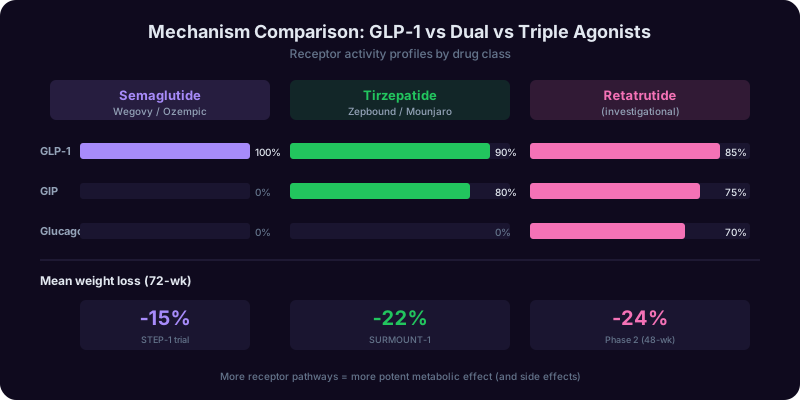
To understand why tirzepatide outperforms semaglutide on average, you need to know what these molecules actually do at the receptor level.
Semaglutide: a single-agonist GLP-1 mimetic
Semaglutide is a long-acting analog of glucagon-like peptide 1 (GLP-1), an incretin hormone naturally released from L-cells in the distal small intestine after meals. It binds the GLP-1 receptor in:
- Pancreatic beta cells (glucose-dependent insulin release)
- Hypothalamic arcuate nucleus (appetite suppression)
- Gastric smooth muscle (delayed gastric emptying)
- Reward pathways in the mesolimbic system (reduced "food noise")
It is a clean, single-receptor drug. That is also its ceiling.
Tirzepatide: dual GIP + GLP-1 agonism
Tirzepatide (Mounjaro for diabetes, Zepbound for weight) binds two receptors: GLP-1R and GIPR (glucose-dependent insulinotropic polypeptide receptor). GIP is the other major incretin hormone, secreted from K-cells in the proximal small intestine.
The GIP arm adds three things semaglutide cannot:
- Enhanced adipocyte lipid handling and improved insulin sensitivity in adipose tissue
- Apparently better preservation of lean mass during weight loss (post-hoc analyses)
- A different appetite circuit (central GIPR neurons), which seems to add to the GLP-1 appetite signal rather than redundantly overlap it
Retatrutide: the triple agonist on the horizon
Retatrutide (Eli Lilly, currently in TRIUMPH phase 3 trials) adds glucagon receptor agonism to the GIP + GLP-1 cocktail. Phase 2 data showed 24.2% mean weight loss at 48 weeks - the largest ever recorded for a pharmacologic agent. FDA approval is anticipated in late 2026 or 2027. If you are deciding today, retatrutide is the future third option to keep on your radar, but it is not yet available outside clinical trials.
Why the mechanism matters for plateau patients
If your plateau is partly driven by GLP-1R downregulation, then escalating semaglutide further is a diminishing returns game. Adding a second, undesensitized receptor (GIPR) is mechanistically more attractive - it is not just "more drug," it is a different drug. This is why endocrinologists in 2026 increasingly recommend a clean switch rather than dose-stacking when a true plateau hits after 9-12 months on semaglutide.
What does not change
Both drugs require the same lifestyle scaffolding: high protein, resistance training, sleep, hydration, and reasonable caloric deficit. No GLP-1 - single, dual, or triple agonist - replaces the muscle-preserving, metabolism-preserving work you have to do yourself.

Get Answers From the Health Copilot
Copilotly's Health Copilot analyzes your weight loss curve, generates a prescriber talking-points sheet, and drafts your prior auth appeal letter. Save hours of research and walk into your next visit fully prepared.
Head-to-Head Trial Data: Ozempic/Wegovy vs Mounjaro/Zepbound
The most important trial of the decade for this question is SURMOUNT-5 - the first direct head-to-head between tirzepatide and semaglutide in non-diabetic patients with obesity. Published in late 2024 with extended 47-month follow-up data released in 2026, the trial is the cleanest comparison we have.
The headline numbers
At the 72-week primary endpoint, mean percentage weight loss from baseline:
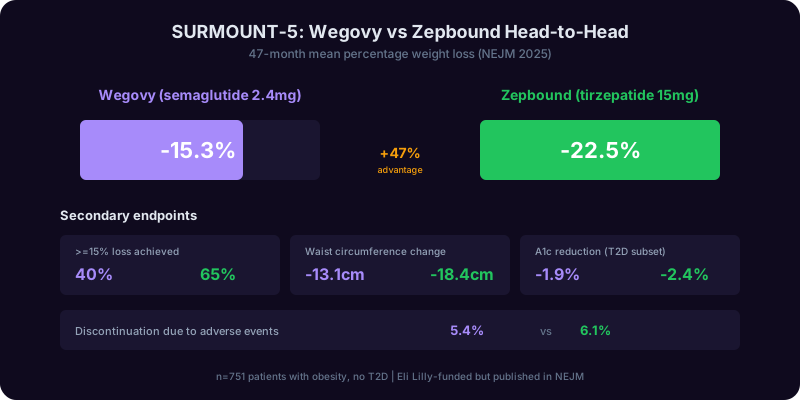
| Metric (72 weeks) | Tirzepatide max dose | Semaglutide 2.4 mg |
|---|---|---|
| Mean % weight loss | 22.5% | 15.3% |
| Lost ≥15% body weight | 64.6% | 40.1% |
| Lost ≥20% body weight | 48.2% | 27.1% |
| Waist circumference change | -7.2 inches | -5.0 inches |
| Discontinuation for AEs | 6.1% | 8.0% |
The 47-month follow-up
The extension data - analyzed and published by the Obesity Society in early 2026 - answered the critical durability question. Among patients who stayed on therapy:
- Tirzepatide cohort maintained ~19.8% loss at 47 months
- Semaglutide cohort maintained ~13.1% loss at 47 months
- Crossover patients (switched semaglutide to tirzepatide at month 18) recovered an additional 8.4% loss over the following 12 months - strong evidence the switch "works" mechanistically
Side effect profile
Notably, tirzepatide had fewer discontinuations despite higher efficacy. GI adverse events (nausea, diarrhea, constipation) were similar in frequency but tended to be milder and resolve faster in the tirzepatide arm, possibly because of the slower default titration.
What the data does not say
SURMOUNT-5 enrolled patients without diabetes, ages 18-75, BMI ≥27 with weight-related comorbidity or BMI ≥30. It excluded patients with prior bariatric surgery, current GLP-1 use within 90 days, and serious psychiatric history. If you do not match this profile - particularly if you have type 2 diabetes or have been on GLP-1s for >2 years - your expected benefit from switching may be different. Real-world crossover data is messier than trial crossover data.
The bottom line: in head-to-head comparison, tirzepatide produces meaningfully more weight loss than semaglutide. That is the evidence base for considering a switch. For a deeper dive on day-to-day side effect navigation on either drug, see our Ozempic side effects guide.
The Switch Math: Dosing Equivalence and Titration Schedule
There is no FDA-approved equivalence chart for switching from semaglutide to tirzepatide. The guidance below reflects the consensus from the 2025 Obesity Medicine Association practice statement and what most endocrinologists are doing in 2026 - it is not a prescription.
Approximate dose mapping
| Current Semaglutide | Suggested Tirzepatide Start | Titration Plan |
|---|---|---|
| 0.25-0.5 mg | 2.5 mg | Standard 2.5 mg q4w escalation |
| 1.0 mg | 5 mg | 5 → 7.5 → 10 → 12.5 → 15 mg q4w |
| 1.7 mg | 5-7.5 mg | q4w escalation, hold at tolerated dose |
| 2.0-2.4 mg | 7.5 mg | q4w escalation to maintenance |

The 1-week washout question
Semaglutide has a half-life of ~7 days; tirzepatide ~5 days. In practice, prescribers usually have patients take their last semaglutide dose on the regular weekly schedule, skip the next week, then begin tirzepatide 7 days after the last semaglutide injection. This avoids overlapping peak levels (which would amplify nausea) while keeping a continuous appetite-suppression effect.
Maximum maintenance dose
Semaglutide max: 2.4 mg weekly (Wegovy label).
Tirzepatide max: 15 mg weekly (Zepbound label).
Most patients in SURMOUNT-5 reached and stayed at 15 mg. Some respond well at 10 mg and tolerate that dose better long-term. There is no clinical urgency to push to maximum - the curve flattens above 10 mg for many people, and side effects rise.
Why the titration matters
Going too fast is the #1 reason patients quit. The 4-week interval is not arbitrary: it allows GI motility to adapt and reduces nausea by ~60% compared to 2-week jumps in early trial data. If your prescriber wants to compress the schedule, ask why - there is rarely a good reason in a non-diabetic weight-management patient.
Injection technique reminders
- Rotate sites: abdomen (preferred), thigh, upper arm. Use a different quadrant each week.
- Inject the same day of the week. Tirzepatide tolerates a ±3 day window; do not stack two doses inside 72 hours.
- Store unused pens refrigerated at 36-46°F. In use, room temperature for up to 21 days for tirzepatide.
What to expect in the first 8 weeks
Weeks 1-2 on 5 mg often feel like the first 2 weeks of semaglutide all over again: hunger drops further, GI rumblings, occasional nausea. Most patients see a 3-5 lb "recovery" loss in the first month even without further dose escalation, simply because the dual-agonist effect overcomes the prior receptor desensitization.
Side Effect Profile Comparison: What Changes
Switching is not free. Tirzepatide brings a different - though largely overlapping - side effect profile.
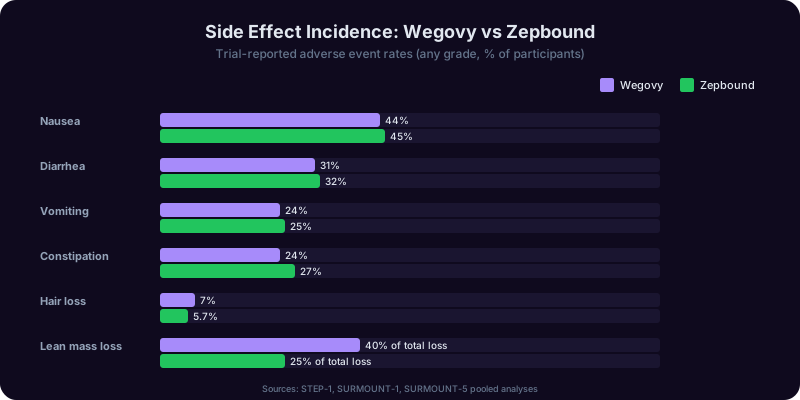
GI symptoms
From STEP and SURMOUNT pooled data:
| Adverse Event | Semaglutide 2.4 mg | Tirzepatide 15 mg |
|---|---|---|
| Nausea | 44% | 40% |
| Diarrhea | 30% | 27% |
| Constipation | 24% | 17% |
| Vomiting | 24% | 19% |
| Injection site reaction | 5% | 6% |
Hair loss
Hair shedding (telogen effluvium) is reported in ~7% of Wegovy users and ~5% of Zepbound users - almost certainly driven by rapid weight loss itself rather than the molecule. Most cases resolve by month 9-12 with adequate protein, ferritin >70 ng/mL, and zinc sufficiency.
Muscle preservation
Body composition substudies in SURMOUNT-1 showed tirzepatide patients lost about 33% of total weight as lean mass at week 72 - a number that is concerning but slightly better than the 39% lean mass loss seen in STEP-1 semaglutide patients. The difference is mechanistically attributed to GIP's effects on adipose tissue insulin sensitivity. Resistance training and 1.6-2.2 g/kg protein remain non-negotiable on either drug.
"Ozempic face" vs "Zepbound face"
The hollow, gaunt facial appearance attributed to rapid GLP-1-driven weight loss is fundamentally a function of how fast and how much fat you lose, not which drug you take. Because tirzepatide drives greater total loss, patients sometimes report more pronounced facial changes - but per-pound-lost the effect is similar. Slowing the rate of loss (smaller deficit, longer hold at intermediate doses) helps facial fat redistribute more gracefully.
Rare but serious events
- Pancreatitis: ~0.2-0.5% incidence on either drug. Severe upper abdominal pain radiating to the back is the red flag - go to the ER.
- Gallbladder disease: Cholecystitis and cholelithiasis are 2-3x more common on either GLP-1 vs placebo. Rapid weight loss is the primary driver.
- Medullary thyroid carcinoma risk: Boxed warning on both drugs based on rodent studies. Personal or family history of MTC or MEN-2 is a contraindication.
- Suicidal ideation: The 2024 EMA and 2025 FDA reviews found no causal link between GLP-1 use and suicidal ideation, but report any new mood changes to your prescriber.
Per the FDA's ongoing post-marketing surveillance, both drugs remain in the safe-and-effective category for chronic weight management.
Insurance Coverage After Switch: The Prior Auth Battle
The harsh reality of 2026: insurance still treats GLP-1s as the most expensive single line item in most commercial formularies. Switching mid-treatment triggers a new prior authorization in nearly every case.
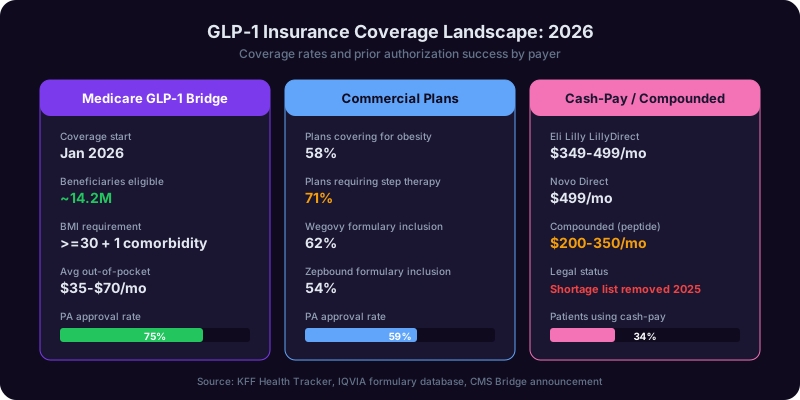
Medicare GLP-1 Bridge program (2026 update)
The Medicare GLP-1 Bridge program - finalized in late 2025 under the Inflation Reduction Act's negotiated-pricing framework - covers semaglutide and tirzepatide for beneficiaries meeting all three criteria:
- Documented cardiovascular disease, prediabetes, OR moderate-to-severe sleep apnea
- BMI ≥30 (or ≥27 with comorbidity)
- Failed 6 months of documented lifestyle intervention
Importantly, the Bridge program does cover switches between agents if the prior agent failed to produce ≥5% weight loss at month 6 or the patient experienced intolerable side effects. Document everything.
Commercial insurer formularies
| Insurer | Wegovy | Zepbound | Switch Allowed? |
|---|---|---|---|
| UnitedHealthcare | Preferred | Preferred | Yes, with PA |
| Aetna/CVS Caremark | Preferred | Non-preferred | Yes, step therapy |
| BCBS (varies) | Preferred | Preferred | Yes, with PA |
| Cigna/Express Scripts | Preferred | Preferred | Yes, with PA |
What to tell your prescriber for PA approval
The strongest prior auth letters include four elements. Bring this to your appointment:
- Documented inadequate response: Specific weight at start of semaglutide, weight at month 6, percentage loss. If <5%, that is your clinical justification.
- Intolerable side effects (if applicable): Specific GI events, severity, duration, any ER visits or hospitalizations.
- Comorbidity worsening or persisting: Latest HbA1c, blood pressure, ALT/AST, sleep study results.
- Reference to SURMOUNT-5 data: Many PA reviewers respond to specific trial citations showing tirzepatide's superiority in non-responders.
If you are denied
The appeal process is largely the same as any other denial. Our health insurance appeal guide walks through the templates. Key tactic: request a peer-to-peer review with a medical director - this bypasses the algorithmic first-pass denial that catches most GLP-1 requests.
Manufacturer savings programs
Eli Lilly's Zepbound SelfPay program offers vials (not pens) at $349-$549/month depending on dose for cash-pay patients without insurance. Novo Nordisk's Wegovy savings card has tightened in 2026 - commercial patients with coverage but high co-pays may save $225/month for up to 12 fills. Government insurance is always excluded. For broader affordability options, see our affordable GLP-1 access guide.
Compounded Tirzepatide: Cost, FDA Status, Safety in 2026
The compounding landscape changed dramatically in late 2024 when Eli Lilly's tirzepatide came off the FDA shortage list. As of 2026, the situation is nuanced.
Current FDA status
Tirzepatide was officially removed from the FDA shortage list on October 2, 2024. Under section 503A and 503B of the Food, Drug, and Cosmetic Act, large-scale compounding of an FDA-approved drug that is not on the shortage list is generally not permitted - with narrow patient-specific exceptions.
However, several legal maneuvers in 2025-2026 have kept compounded tirzepatide available through specific channels:
- Personalized compounding: Many telehealth platforms now obtain prescriptions for tirzepatide combined with B12, glycine, or other additives - technically a different formulation that may fall under 503A patient-specific compounding.
- Outsourcing facilities (503B): A handful of FDA-registered outsourcing facilities continue limited production under specific clinical justification.
- Ongoing litigation: The Outsourcing Facilities Association vs FDA case has gone through multiple rounds; some injunctive relief has periodically allowed wider compounding.
Telehealth platforms in 2026
| Platform | Monthly Price Range | Formulation |
|---|---|---|
| Hims/Hers | $199-$299 | Compounded + B12 |
| Ro | $229-$349 | Brand Zepbound preferred; compounded fallback |
| Found | $179-$299 | Compounded + glycine |
| Mochi Health | $249-$399 | Compounded personalized formulation |
Safety verification checklist
Compounded products vary wildly in quality. Before using any compounded GLP-1:
- Verify the pharmacy: Look up the dispensing pharmacy on the NABP database. Reputable compounders are typically PCAB-accredited.
- Ask about active pharmaceutical ingredient (API) source: US-sourced API from FDA-registered facilities is safer. Avoid platforms that cannot or will not disclose API origin.
- Confirm sterile compounding (USP 797): Injectable preparations require sterile compounding. Non-compliant facilities have historically been linked to fungal and bacterial contamination outbreaks.
- Beware "research peptide" sellers: Bodybuilding-forum suppliers selling "semaglutide for research only" are unregulated, often contain incorrect peptide, and have been associated with serious adverse events.
Realistic cost math
Brand Zepbound through SelfPay vials: ~$349-$549/month at typical doses. Reputable compounded tirzepatide: ~$200-$400/month. The price gap is real but smaller than in 2023-2024. For many patients, the regulatory and quality certainty of brand Zepbound vials now outweighs the modest savings on compounded versions.
The 'Bridge' Period: Managing the Switch Week-by-Week
The first 4-8 weeks after switching are the make-or-break period. Here is what to expect and how to manage it.
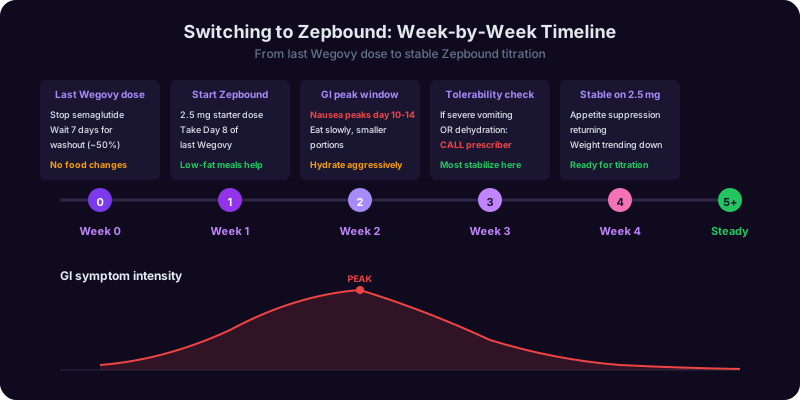
Days 0-7: the washout week
You took your last semaglutide dose seven days before starting tirzepatide. Hunger will start creeping back as semaglutide levels fall - this is normal. Plasma half-life of semaglutide is ~7 days, so at day 7 you have approximately 50% of your last dose still active. Hold the line: eat your protein, keep your training, and do not stack a new dose early.
Week 1-2 on 5 mg tirzepatide
The first injection often hits harder than the equivalent semaglutide dose for two reasons: the GIP arm adds appetite suppression in a new pathway, and your gut is briefly re-sensitized after the falling semaglutide tail. Expect:
- Mild-moderate nausea, especially day 2-3 post-injection
- Reduced appetite that may feel "deeper" than what you were used to
- Possible loose stools or constipation
- Mild fatigue (often from reduced intake, not the drug)
Management: eat smaller, more frequent protein-forward meals. Skip the spicy/fatty trigger foods you may have reintroduced during your plateau. Hydrate aggressively - 80-100 oz daily.
Week 3-4: assessment point
By the end of week 4, you should have a clear sense of:
- Whether GI side effects are improving (they usually peak day 2-4 post-dose and improve)
- Whether you are losing again (3-5 lb is typical for the first month)
- Whether you can tolerate the next dose escalation
If side effects are still rough, stay at 5 mg for another month. The titration is not a race.
Weeks 5-8: first escalation to 7.5 mg
The 5 → 7.5 mg jump is usually well-tolerated. Expect a similar but milder version of weeks 1-2: a small uptick in appetite suppression, occasional nausea for 24-48 hours post-dose.
When to call your prescriber
- Severe persistent vomiting (cannot keep liquids down for >24 hours)
- Severe upper abdominal pain radiating to back (rule out pancreatitis)
- Right upper quadrant pain with fever (rule out cholecystitis)
- Resting heart rate consistently >100 bpm (rule out dehydration)
- Any new mood changes, including suicidal ideation
Maintain your guardrails
The switch is not magic. Patients who lose the most do all of these:
- Protein at 1.6-2.2 g per kg lean mass
- Resistance training 3x weekly minimum
- 7+ hours sleep
- Step count baseline +20%
- Weekly weight and waist measurements (more reliable than daily)
When to expect new plateau
Realistically, even on tirzepatide, you will hit another plateau eventually - usually around month 12-18 of tirzepatide therapy. That is the right time to revisit the audit checklist from Section 2 and, possibly, consider retatrutide if it has launched by then.
How Copilotly's Health Copilot Helps the Switch Decision
Medical disclaimer: Copilotly's Health Copilot is an information tool. It does not diagnose, treat, or prescribe. Always consult your licensed prescriber before changing medications. The Copilot helps you prepare for that conversation - it does not replace it.
The switch from semaglutide to tirzepatide is one of the most common - and most poorly supported - decisions in chronic weight management. A typical patient gets 15 minutes with a prescriber every 3 months. That is not enough time to analyze a plateau, build a PA-ready case file, and review trial evidence together.
Copilotly's Health Copilot fills that gap. Here is what it does specifically for the GLP-1 switch decision.
1. Weight loss curve analysis
Upload your weekly weights (CSV, screenshot of a tracking app, or just type them in). The Copilot:
- Fits your data to expected SURMOUNT/STEP trajectory curves
- Identifies the inflection point where your loss diverged from expected
- Calculates your true 6-month and 12-month percentage loss
- Flags whether your data crosses the FDA's 5% clinical-response threshold
2. Pre-visit talking-points sheet
Based on your loss curve, current dose, side effects, and stated goals, the Copilot generates a one-page document for your next prescriber visit covering:
- Current medication and dose history
- Documented weight loss trajectory with chart
- Specific side effect log with severity
- Comorbidity status (you fill in latest labs)
- Specific request (e.g., "switch to Zepbound 5 mg") with cited evidence
- Question list for the prescriber
3. PA appeal letter draft
If your initial prior auth is denied, the Copilot generates a customized appeal letter citing SURMOUNT-5 data, your individual failure-to-respond evidence, and your insurer's specific formulary language. You review and edit it, your prescriber signs and submits.
4. Switch-period symptom tracker
Once you are on the new drug, the Copilot prompts daily for symptom check-ins, weight, and protein intake. It flags patterns - like "nausea persisting beyond expected window" or "weight loss stalled at week 6, consider audit checklist" - and surfaces them when relevant.
5. Evidence library
Ask any question - "What was the lean mass loss in SURMOUNT-5?" or "Is there evidence for off-label combinations?" - and the Copilot pulls the relevant cited evidence in plain language, with links to PubMed.
What it will not do
- Prescribe medication
- Tell you definitively to switch
- Override your prescriber's clinical judgment
- Source compounded drugs or bypass insurance
It is a preparation tool. It saves you hours of research, makes your appointments more productive, and gives you the structured case that PA reviewers actually respond to. For complementary tools, see our protein and macros calculator guide.
The honest bottom line on switching
The mean tirzepatide patient outperforms the mean semaglutide patient - but means hide individuals. Some semaglutide non-responders become tirzepatide super-responders. Some respond similarly to both. The only way to know which you are is to make an evidence-based switch decision with your prescriber, execute the protocol with discipline, and re-evaluate at month 6.
Whatever you decide, decide it with full information. That is what the Health Copilot exists to make easy.
Frequently Asked Questions
Recommended Copilots
Related Articles
Get Answers From the Health Copilot
Copilotly's Health Copilot analyzes your weight loss curve, generates a prescriber talking-points sheet, and drafts your prior auth appeal letter. Save hours of research and walk into your next visit fully prepared.