

How GLP-1 Drugs Work and Why Side Effects Happen
GLP-1 receptor agonists are a class of medications that mimic a natural hormone called glucagon-like peptide-1. Your gut produces GLP-1 after you eat. It signals your pancreas to release insulin, tells your liver to stop dumping glucose into your bloodstream, and communicates with your brain to say "you are full, stop eating." The natural hormone lasts only about 2 minutes before enzymes break it down. The pharmaceutical versions are engineered to resist that breakdown, lasting days or even weeks in your body.
That persistence is both why these drugs work so well and why they cause side effects. You are flooding receptors with a signal that your body normally delivers in brief, carefully timed pulses. Every organ system with GLP-1 receptors -- your stomach, intestines, pancreas, brain, and even your heart -- gets a sustained signal it was not designed to receive continuously.
Here are the major GLP-1 medications currently on the market and how they differ:
- Semaglutide (Ozempic) -- FDA-approved for type 2 diabetes. Injected weekly. Doses range from 0.25 mg to 2.0 mg. The most widely prescribed GLP-1 globally.
- Semaglutide (Wegovy) -- The same molecule as Ozempic but FDA-approved specifically for chronic weight management. Higher maximum dose of 2.4 mg weekly.
- Tirzepatide (Mounjaro/Zepbound) -- A dual GIP/GLP-1 receptor agonist. By activating two incretin pathways instead of one, tirzepatide has shown greater average weight loss in head-to-head trials. The SURMOUNT-1 trial published in the New England Journal of Medicine demonstrated up to 22.5% body weight reduction at the highest dose.
- Liraglutide (Saxenda/Victoza) -- An older daily injection. Less effective for weight loss than semaglutide but still used, particularly when insurance does not cover newer options.
- Oral semaglutide (Rybelsus) -- A daily pill form of semaglutide approved for type 2 diabetes. Lower bioavailability than the injection, and more gastrointestinal side effects due to direct contact with the stomach lining.
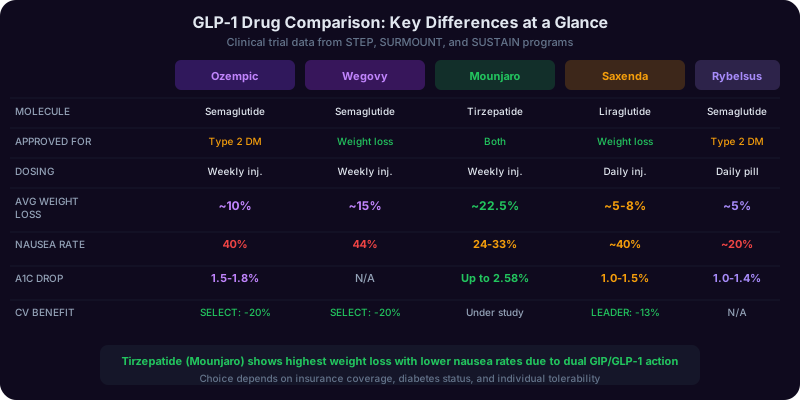
The side effects you experience depend heavily on which drug you take, your dose, and how quickly you titrate up. Tirzepatide tends to cause slightly less nausea than semaglutide at equivalent weight-loss doses, possibly because the GIP component has a buffering effect on gastric motility. Oral semaglutide causes more stomach-specific complaints because the pill itself must dissolve in an acidic environment.
Understanding the mechanism helps explain the side effects: your stomach empties more slowly (causing nausea, fullness, and sometimes vomiting), your appetite signals change dramatically (leading to food aversions and reduced caloric intake), and your metabolic rate shifts (which, without intervention, can mean losing muscle alongside fat). For a comprehensive understanding of how these medications affect blood sugar, see our complete A1C levels guide. The Medication Copilot can help you understand how your specific GLP-1 medication interacts with other drugs you take and what side effects to watch for at each dose level.
This article is for informational purposes only and does not constitute medical advice. Always consult your prescribing physician or a qualified healthcare professional before starting, stopping, or changing any medication.
Common Side Effects and When to Expect Them
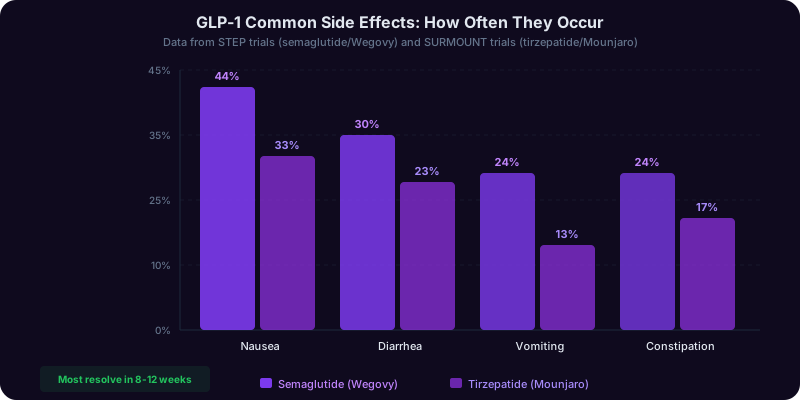
The most frequently reported side effects of GLP-1 medications are gastrointestinal. Clinical trial data from the STEP trials (semaglutide) and SURMOUNT trials (tirzepatide) show remarkably consistent patterns in terms of what happens, when it starts, and when it typically resolves.
Nausea
Nausea is the single most common side effect, affecting 40-44% of patients on semaglutide (Wegovy) and about 24-33% on tirzepatide (Mounjaro), depending on dose. It typically begins within the first 1-3 days after your initial injection or after each dose increase. For most patients, nausea peaks during weeks 1-4 of each new dose level and then gradually fades as your body acclimates. By the time patients reach their maintenance dose and have been on it for 8-12 weeks, the majority report that nausea is minimal or gone entirely.
Vomiting
Vomiting affects roughly 24% of Wegovy patients and 9-13% of Mounjaro patients across clinical trials. It follows the same pattern as nausea -- worst during dose escalation, improving with time. Persistent vomiting (more than a few days) after your body should have adjusted warrants a call to your doctor. It can also signal that you are titrating too quickly or that a lower maintenance dose may be more appropriate.
Diarrhea
About 30% of patients on semaglutide and 17-23% on tirzepatide experience diarrhea at some point during treatment. Counterintuitively, this can alternate with constipation. GLP-1 medications slow gastric emptying but affect different segments of the GI tract in different ways. Diarrhea tends to be more episodic than the constant nausea, often triggered by eating high-fat meals or eating too much at once.
Constipation
Constipation affects about 24% of Wegovy patients and 11-17% on Mounjaro. Because GLP-1 drugs slow the entire digestive tract, food moves more slowly through your intestines, and more water is absorbed. Combined with the fact that patients eat significantly less food (and therefore less fiber), constipation is predictable and manageable. Increasing water intake to at least 64 ounces daily and adding a fiber supplement helps most patients.
Timeline Summary
| Phase | Timeline | What to Expect |
| Initial dose | Weeks 1-4 | Nausea in 40%+ of patients, mild to moderate, usually worst in the first 48 hours after injection |
| Each dose increase | 1-2 weeks after increase | Nausea returns temporarily, usually milder than the first time |
| Stabilization | 8-12 weeks on maintenance dose | GI side effects resolve for most patients; about 5-10% have persistent issues |
| Long-term | 6+ months | Side effect profile stabilizes; GI issues rare unless dose is changed |
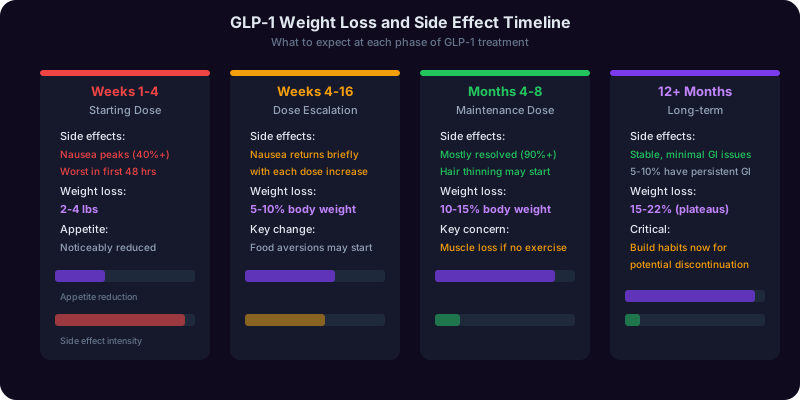
The key insight from clinical data is that most patients who discontinue due to side effects do so in the first 8 weeks, before their body has had time to adjust. Doctors who specialize in obesity medicine emphasize the importance of slow titration and patient education about this timeline. If you can tolerate the first two months, the odds are strongly in your favor that side effects will become manageable.
For help tracking your side effects over time and identifying patterns, the Health Copilot can log your symptoms day by day and help you communicate trends to your prescriber.

Get Answers From the Medication Copilot
Use the Medication Copilot to check drug interactions, the Health Copilot to assess symptoms, and the Lab Results Copilot to monitor your bloodwork while on GLP-1 therapy.
Serious Risks: Gastroparesis, Pancreatitis, Thyroid, and Gallbladder
While most GLP-1 side effects are uncomfortable but manageable, there are serious risks that every patient and prescriber should understand. These are rare in absolute terms but significant enough that the FDA has issued specific warnings.
Gastroparesis (Stomach Paralysis)
GLP-1 medications work by slowing gastric emptying. In some patients, this slowing becomes severe enough to constitute gastroparesis -- a condition where the stomach cannot empty itself normally. A large-scale study published in JAMA in October 2023, analyzing records from over 16 million patients, found that GLP-1 users had a 3.5 to 4.2 times higher risk of developing gastroparesis compared to patients taking other weight-loss medications.
Symptoms include severe nausea, vomiting, bloating, early satiety (feeling full after a few bites), and abdominal pain. In the most severe cases, food remains in the stomach for hours or even days, increasing the risk of bezoar formation (solid masses of undigested food). The risk appears to be dose-dependent, meaning higher doses carry greater risk. Gastroparesis is also a concern for patients undergoing anesthesia -- the American Society of Anesthesiologists (ASA) issued guidance in 2023 recommending that patients stop GLP-1 medications at least 7 days before elective surgery involving anesthesia, due to aspiration risk from retained gastric contents.
Pancreatitis
The same JAMA study found that GLP-1 users had a 9.09 times higher risk of pancreatitis compared to users of bupropion-naltrexone (Contrave). This is the most elevated risk ratio in the study and the one that draws the most concern from gastroenterologists. Pancreatitis is inflammation of the pancreas and can range from mild and self-limiting to severe, necrotizing, and life-threatening.
Symptoms of pancreatitis include sudden, severe abdominal pain that radiates to the back, nausea, vomiting, fever, and a rapid pulse. If you experience severe abdominal pain that does not resolve within a few hours, seek emergency medical care immediately. The FDA requires all GLP-1 medications to carry a warning about pancreatitis risk. Patients with a history of pancreatitis should generally not take GLP-1 medications.
Thyroid C-Cell Tumors
All semaglutide and tirzepatide products carry a boxed warning -- the FDA's most serious warning category -- regarding thyroid C-cell tumors. In rodent studies, semaglutide caused dose-dependent increases in thyroid C-cell tumors, including medullary thyroid carcinoma (MTC). Whether this translates to humans is unclear. Human thyroid cells have far fewer GLP-1 receptors than rodent thyroid cells, and no causal link has been established in clinical trials or post-market surveillance to date.
However, the precautionary principle applies. GLP-1 medications are contraindicated in patients with a personal or family history of medullary thyroid carcinoma or Multiple Endocrine Neoplasia syndrome type 2 (MEN 2). Patients should be alert to symptoms of thyroid tumors: a lump or swelling in the neck, hoarseness, difficulty swallowing, or shortness of breath. If you notice any of these, contact your healthcare provider promptly.
Gallbladder Disease
Rapid weight loss from any cause increases the risk of gallstones, and GLP-1 medications are no exception. The STEP trials reported cholelithiasis (gallstones) in 1.6% of semaglutide patients versus 0.7% on placebo. A subsequent real-world analysis found that the risk of gallbladder-related events was approximately 2.0 to 2.8 times higher in GLP-1 users. Symptoms of gallbladder problems include pain in the upper right abdomen (especially after eating fatty meals), nausea, and vomiting. In severe cases, a blocked bile duct can cause jaundice and require emergency surgery.
Intestinal Obstruction
Post-market surveillance has identified cases of bowel obstruction in GLP-1 users, which the FDA added to the prescribing information for semaglutide products in 2023. While rare, this is a surgical emergency. Symptoms include severe abdominal pain, inability to pass gas or stool, abdominal distension, and vomiting. The mechanism likely relates to severely slowed intestinal motility in susceptible individuals. Try our AI symptom checker for step-by-step help.
The Medication Copilot can help you understand which risk factors apply to your situation and what monitoring your doctor should be performing. If you are tracking bloodwork while on a GLP-1, the Lab Results Copilot can help you interpret your lab panels, including amylase and lipase levels that may signal early pancreatic inflammation.
"Ozempic Face" and Muscle Loss: What Is Really Happening
"Ozempic face" became a pop culture term in 2023 to describe the gaunt, aged facial appearance that some patients develop after significant weight loss on GLP-1 medications. While the name suggests a unique drug side effect, what is actually happening is straightforward: rapid loss of facial fat combined with skin that cannot contract fast enough to match the reduced volume underneath.
The face is one of the first places where fat loss becomes visible because the facial fat pads are relatively small. Losing 15-20% of your body weight in a year -- which is typical on semaglutide or tirzepatide -- means losing a significant portion of the fat that provides facial fullness, particularly in the cheeks, temples, and around the eyes. In older patients or those with less skin elasticity, the result is sagging, hollowing, and an appearance of premature aging.
This is not unique to Ozempic. The same facial changes occur with rapid weight loss from bariatric surgery, extreme dieting, or any other cause. But because GLP-1 medications have become so culturally visible, the phenomenon has a name now that it did not before.
The Muscle Loss Problem
A more medically significant concern is the loss of lean muscle mass. In the STEP 1 trial, patients who lost an average of 14.9% of their body weight on semaglutide lost approximately 40% of that weight as lean mass (primarily muscle) rather than fat. This is consistent with weight loss from calorie restriction in general, but it is concerning at the scale and speed that GLP-1s produce.
Muscle mass matters far beyond aesthetics. It is the primary driver of your resting metabolic rate, your insulin sensitivity, your bone density maintenance, your functional independence as you age, and your overall longevity. A 2025 meta-analysis in The Lancet Diabetes & Endocrinology confirmed that the proportion of lean mass lost on GLP-1 medications is comparable to that seen with calorie restriction alone -- roughly 25-40% of total weight lost -- but emphasized that the absolute amount of lean mass lost is greater because total weight loss is greater.
What You Can Do About It
Protein intake is non-negotiable. The American Society for Metabolic and Bariatric Surgery recommends that patients on GLP-1 medications consume at least 1.0 to 1.5 grams of protein per kilogram of ideal body weight per day. For a person targeting a body weight of 150 pounds (68 kg), that means 68-102 grams of protein daily. When your appetite is suppressed and you are eating 800-1,200 calories per day, hitting that protein target requires deliberate planning. Prioritize protein at every meal. Use protein shakes or bars to supplement if whole food intake is insufficient. The Nutrition Copilot can help you build meal plans that maximize protein within your reduced calorie budget.
Resistance training is the other essential intervention. A study published in Obesity in 2024 found that patients on semaglutide who performed structured resistance training 2-3 times per week preserved 90% more lean mass compared to those who did not exercise. The training does not need to be extreme. Compound movements like squats, deadlifts, rows, and presses performed with moderate weights for 2-4 sets of 8-12 repetitions, twice per week, is sufficient to send the signal your body needs to preserve muscle. The Fitness Copilot can design a resistance training program appropriate for your experience level and physical capabilities.
For patients concerned about facial volume loss specifically, dermatologists offer treatments such as hyaluronic acid fillers and biostimulatory agents (like Sculptra) that can restore facial volume. These are cosmetic interventions and typically not covered by insurance.
Drug Interactions and Who Should Not Take GLP-1 Medications
GLP-1 medications interact with other drugs primarily through two mechanisms: by slowing gastric emptying (which changes how quickly oral medications are absorbed) and by lowering blood sugar (which can compound the effect of other glucose-lowering drugs). Understanding these interactions is critical for safe use.
Medications That Interact with GLP-1 Drugs
- Insulin and sulfonylureas (glipizide, glyburide, glimepiride): Combining GLP-1 agonists with insulin or sulfonylureas significantly increases the risk of hypoglycemia (dangerously low blood sugar). Symptoms include shakiness, sweating, confusion, rapid heartbeat, and in severe cases, seizures or loss of consciousness. When starting a GLP-1, your doctor should typically reduce your insulin dose by 20% and may discontinue sulfonylureas entirely.
- Oral contraceptives: Because GLP-1 drugs slow gastric emptying, the absorption of birth control pills may be altered. The FDA labeling for semaglutide notes that oral contraceptive absorption could be reduced. Patients should use a backup contraceptive method (such as condoms) for at least 4 weeks after starting a GLP-1 or increasing the dose. Alternatively, switch to a non-oral contraceptive (IUD, implant, patch, or injection).
- Warfarin and other oral anticoagulants: Delayed gastric emptying can alter warfarin absorption, leading to unpredictable INR levels. Patients on warfarin who start a GLP-1 should have more frequent INR monitoring during dose titration.
- Thyroid medications (levothyroxine): Levothyroxine absorption depends on an empty stomach and normal gastric pH. GLP-1s can alter both. Monitor thyroid levels more frequently and consider separating levothyroxine dosing from meals by at least 60 minutes.
- Oral antibiotics and other time-sensitive medications: Any medication where peak absorption timing matters could be affected. Discuss the timing of all oral medications with your pharmacist.
Who Should Not Take GLP-1 Medications
The following conditions are contraindications (absolute or relative) for GLP-1 receptor agonists:
- Personal or family history of medullary thyroid carcinoma (MTC) -- Contraindicated due to the boxed warning on thyroid C-cell tumors.
- Multiple Endocrine Neoplasia syndrome type 2 (MEN 2) -- Same thyroid concern.
- History of pancreatitis -- Given the elevated pancreatitis risk, most guidelines advise against GLP-1 use in patients with a history of acute or chronic pancreatitis.
- Severe gastroparesis -- Adding a drug that further slows gastric emptying to a stomach that already cannot empty is dangerous.
- Type 1 diabetes -- GLP-1 agonists are not approved for type 1 diabetes and could increase the risk of diabetic ketoacidosis if used as an insulin replacement.
- Pregnancy and breastfeeding -- Semaglutide should be stopped at least 2 months before a planned pregnancy due to its long half-life. Animal studies showed embryotoxicity. Tirzepatide should be stopped at least 1 month before conception.
- Severe kidney disease (eGFR below 15) -- Limited safety data. GLP-1s are generally not recommended for patients on dialysis.
- History of severe allergic reaction to any GLP-1 receptor agonist.
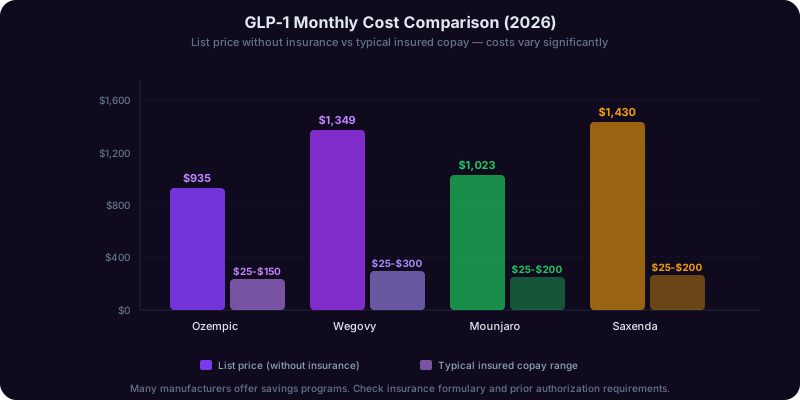
Even if you do not have a formal contraindication, certain conditions require extra caution: a history of eating disorders (GLP-1s may reinforce restrictive patterns), diabetic retinopathy (rapid blood sugar improvement can paradoxically worsen retinopathy), and significant mental health conditions. The Medication Copilot can cross-reference your current medications against known GLP-1 interactions, and the Health Copilot can help you evaluate whether specific symptoms. If you are navigating insurance coverage for GLP-1 medications, our health insurance guide explains prior authorization and formulary coverage warrant a call to your prescriber.
Managing Side Effects: Practical Strategies That Work
The difference between patients who tolerate GLP-1 medications well and those who discontinue often comes down to preparation, titration speed, and practical management strategies. Here is what the evidence and clinical experience support.
Slow Titration Is the Single Most Important Factor
Every GLP-1 medication has a recommended titration schedule. For Ozempic, the standard is: 0.25 mg for 4 weeks, then 0.5 mg for 4 weeks, then 1.0 mg, and potentially up to 2.0 mg. For Wegovy, the escalation is even more gradual: 0.25, 0.5, 1.0, 1.7, and finally 2.4 mg, with 4 weeks at each step. For Mounjaro, doses start at 2.5 mg and increase every 4 weeks through 5, 7.5, 10, 12.5, and up to 15 mg.
Many clinicians who specialize in obesity medicine extend these intervals further. Staying at each dose for 6-8 weeks instead of 4 before escalating can dramatically reduce GI side effects with minimal impact on long-term efficacy. If you are tolerating your current dose and losing weight, there is no clinical urgency to increase. Discuss this approach with your prescriber.
Dietary Strategies
- Eat smaller, more frequent meals. Your stomach empties more slowly on GLP-1s. A large meal that your pre-medication stomach could handle may now sit like a rock for hours. Aim for 4-5 small meals rather than 2-3 large ones.
- Reduce fat content per meal. High-fat meals cause the most nausea and delayed gastric emptying. This does not mean zero fat -- it means spreading your fat intake throughout the day rather than concentrating it.
- Avoid lying down after eating. With slowed gastric emptying, lying down increases reflux risk. Stay upright for at least 30-45 minutes after meals.
- Stay hydrated. Dehydration worsens nausea and constipation. Aim for at least 64 ounces of water daily. Sip throughout the day rather than drinking large amounts at once, which can worsen fullness and nausea. Adding electrolytes (sodium, potassium, magnesium) to your water can help, especially if you experience diarrhea.
- Prioritize protein first. When your total food intake drops to 800-1,200 calories per day, every bite matters. Eat protein before carbohydrates and fat at each meal. This preserves lean mass and also tends to be better tolerated than greasy or starchy foods. The Nutrition Copilot can help you plan meals that hit your protein targets within your reduced appetite.
For additional clinical guidance on managing GLP-1 side effects, the Cleveland Clinic's GLP-1 resource page provides detailed information.
Anti-Nausea Strategies
- Ginger -- Ginger has evidence-backed anti-nausea properties. Ginger tea, ginger chews, or ginger capsules (250 mg four times daily) can help with mild to moderate nausea. A Cochrane Review confirmed ginger's efficacy for nausea in various settings.
- Peppermint -- Peppermint tea or peppermint oil capsules can reduce nausea and bloating by relaxing the smooth muscle in your GI tract.
- Injection timing -- Some patients find that injecting in the evening (so the initial peak nausea occurs during sleep) reduces daytime symptoms. Others prefer morning injections. Experiment to find what works for you.
- Prescription anti-nausea medication -- If dietary strategies are not enough, your doctor can prescribe ondansetron (Zofran), which blocks serotonin-mediated nausea. This is appropriate for temporary use during dose escalation, not as a permanent addition.
When to Call Your Doctor
Contact your prescriber if you experience any of the following:
- Vomiting that persists for more than 48 hours or prevents you from keeping down fluids
- Severe abdominal pain, especially if it radiates to your back (possible pancreatitis)
- Signs of dehydration: dark urine, dizziness upon standing, rapid heartbeat
- Symptoms of hypoglycemia if you also take insulin or sulfonylureas: shakiness, sweating, confusion
- A lump or swelling in your neck (thyroid concern)
- Severe constipation with no bowel movement for 5+ days
- Signs of an allergic reaction: rash, swelling, difficulty breathing
- Significant mood changes, including persistent sadness, anxiety, or suicidal thoughts
Go to the emergency room if you have severe abdominal pain that does not improve, cannot keep any fluids down for 24+ hours, or experience symptoms of bowel obstruction (inability to pass gas, severe bloating, vomiting). Our guide on when to seek care can help you decide the right level of medical attention for your symptoms.
Stopping GLP-1 Medications: Weight Regain, Tapering, and Life After
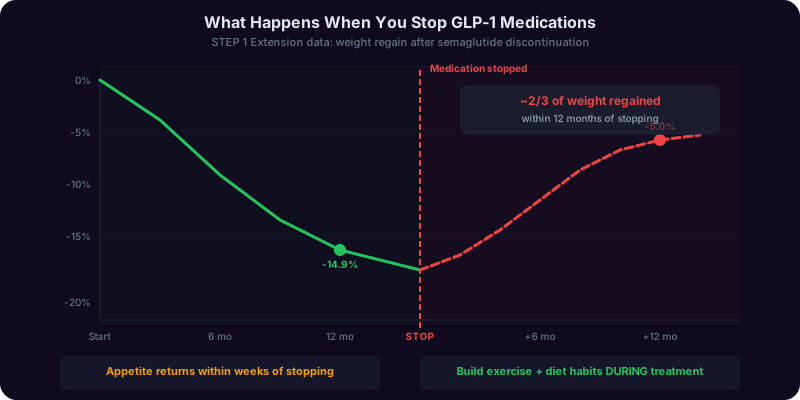
One of the most important conversations in GLP-1 therapy is what happens when you stop. The data is clear, and it is sobering: most patients regain a significant portion of their lost weight within 1-2 years of discontinuation. Understanding why this happens and what you can do about it is essential for anyone considering GLP-1 therapy.
The Weight Regain Data
The STEP 1 Extension trial, published in Diabetes, Obesity and Metabolism in 2022, followed patients for one year after stopping semaglutide. On average, participants regained two-thirds of the weight they had lost within 12 months. A subsequent analysis showed that appetite returned to pre-treatment levels within weeks of the last injection, and metabolic rate did not "reset" -- it remained suppressed, creating a perfect storm for regain.
The SURMOUNT-1 extension data for tirzepatide told a similar story: patients regained approximately 50% of lost weight within 72 weeks of stopping treatment. Importantly, metabolic parameters (blood sugar, blood pressure, cholesterol) also deteriorated as weight returned.
This does not mean GLP-1 therapy is pointless. It means that obesity is a chronic condition for most people, just like hypertension or diabetes. You would not expect blood pressure to stay controlled after stopping blood pressure medication. The same logic applies to weight management medications. Many endocrinologists and obesity medicine specialists now view GLP-1 therapy as long-term or indefinite treatment for appropriate patients.
Why Regain Happens
GLP-1 medications work by suppressing appetite through brain signaling, slowing gastric emptying, and improving insulin sensitivity. When you remove the medication, all three mechanisms revert. Your hunger returns -- often with a vengeance, as your body interprets the sustained calorie deficit as a threat. Ghrelin (your hunger hormone) spikes. Leptin (your satiety hormone) drops. Your metabolic rate has already decreased because you now weigh less and have potentially lost muscle mass. The result is a body that is hungry, efficient at storing energy, and no longer receiving the chemical signal that was keeping everything in check.
Tapering Strategies
If you and your doctor decide to stop GLP-1 therapy, a gradual taper is strongly preferred over abrupt discontinuation. While there are no official tapering protocols in the FDA labeling, experienced prescribers typically recommend:
- Step down through the dose levels in reverse order. If you are on Wegovy 2.4 mg, drop to 1.7 mg for 4 weeks, then 1.0 mg, then 0.5 mg, then 0.25 mg before stopping.
- Extend each step. Some clinicians keep patients at each lower dose for 6-8 weeks rather than 4, allowing the body more time to adjust.
- Monitor weight and hunger closely during the taper. If regain accelerates at a particular dose reduction, discuss whether pausing the taper or maintaining a low maintenance dose is appropriate.
Building a Life After GLP-1
The patients with the best long-term outcomes after stopping GLP-1 therapy are those who used the treatment window to build habits that persist. While the drug was suppressing appetite and making it easier to eat less, they simultaneously:
- Established a consistent resistance training routine (preserving and building muscle that sustains metabolic rate)
- Developed protein-forward eating habits that they maintained after the drug was withdrawn
- Built behavioral strategies for managing hunger and emotional eating
- Addressed underlying factors like poor sleep, chronic stress, and food environment
Think of GLP-1 therapy as a window of opportunity, not a permanent crutch. The medication gives you the breathing room to change your relationship with food and exercise while your appetite is quiet. If you waste that window by not changing any underlying behaviors, regain is almost guaranteed. The Fitness Copilot can help you build a sustainable exercise routine, and the Nutrition Copilot can help you develop eating patterns. For overlapping metabolic benefits, our cholesterol management guide covers dietary strategies that complement GLP-1 therapy. The Nutrition Copilot can also help you develop eating patterns that support weight maintenance with or without medication.
For some patients, the right answer is long-term, low-dose GLP-1 maintenance therapy. A growing body of evidence supports this approach, and the cost barrier is decreasing as generic semaglutide becomes available in some markets and compounding pharmacies produce alternatives (though the quality and safety of compounded versions remains controversial). Discuss the full range of options with your healthcare provider.
This article is for informational purposes only and does not constitute medical advice. Never start, stop, or change medications without consulting your prescribing physician. If you experience any concerning symptoms while on GLP-1 therapy, contact your healthcare provider immediately.
Frequently Asked Questions
Recommended Copilots
Recommended Copilots
Check GLP-1 drug interactions and track side effects across your full medication list
Try Free →Assess symptoms that may be GLP-1 side effects and decide when to contact your doctor
Try Free →Monitor bloodwork while on GLP-1 therapy including pancreatic enzymes and thyroid markers
Try Free →Build high-protein meal plans that work within your reduced appetite on GLP-1 medications
Try Free →Design a resistance training program to prevent muscle loss while losing weight on GLP-1s
Try Free →Continue Exploring
Related Articles
Get Answers From the Medication Copilot
Use the Medication Copilot to check drug interactions, the Health Copilot to assess symptoms, and the Lab Results Copilot to monitor your bloodwork while on GLP-1 therapy.