
What ADHD Actually Looks Like in Adults: Beyond the Stereotypes
Adult ADHD looks very different from the hyperactive child bouncing off the walls in a classroom. In adults, the symptoms are often internalized, subtle, and easily mistaken for personality traits, laziness, or other mental health conditions. This is a major reason why 75-80% of adults with ADHD are undiagnosed, according to estimates from the American Psychiatric Association.
ADHD in adults typically manifests in three categories, though most adults show a combination:
Inattentive symptoms (formerly called ADD):
- Difficulty sustaining attention on tasks that are not inherently stimulating, even when you know they are important
- Frequently losing things: keys, wallet, phone, important documents
- Trouble following through on tasks, especially multi-step processes at work
- Appearing to not listen when spoken to directly (zoning out during conversations)
- Difficulty organizing tasks, managing time, and meeting deadlines
- Avoiding or procrastinating on tasks that require sustained mental effort (taxes, paperwork, long emails)
- Being easily distracted by unrelated thoughts or environmental stimuli
Hyperactive-impulsive symptoms:
- Internal restlessness or a constant feeling of being "driven by a motor" rather than visible physical hyperactivity
- Difficulty sitting still in meetings, movies, or long conversations
- Talking excessively or interrupting others
- Making impulsive decisions (impulse purchases, blurting things out, risky driving)
- Difficulty waiting (in lines, for your turn to speak, for results)
- Feeling impatient or irritable when things move slowly
Emotional dysregulation (increasingly recognized as a core ADHD feature):
- Intense emotional reactions that seem disproportionate to the situation
- Quick frustration and a low tolerance for boredom
- Difficulty recovering from emotional setbacks
- Rejection sensitivity: an extreme emotional response to perceived criticism or rejection
- Mood swings throughout the day, often tied to external events or task demands
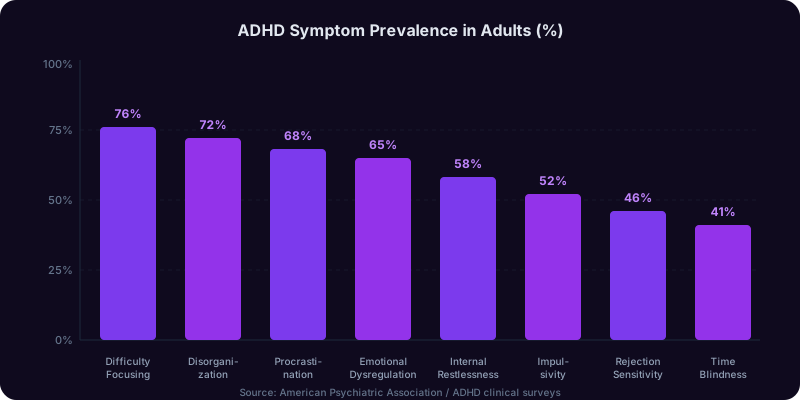
One of the hallmarks of adult ADHD is inconsistency. You might be able to hyperfocus on a video game or a hobby project for 6 hours straight but cannot force yourself to spend 20 minutes on a tax form. This is not a willpower problem. It is a neurological difference in how your brain regulates attention based on interest and novelty rather than importance.
If these patterns sound familiar and have been present since childhood (even if they were not recognized at the time), it may be worth pursuing a formal evaluation. The Mental Health Copilot can help you explore whether your experiences align with ADHD patterns and guide you toward appropriate next steps.
This is general health information, not medical advice. Only a qualified healthcare professional can diagnose ADHD.
ADHD in Women: Why It Is Massively Underdiagnosed
Women with ADHD are diagnosed on average 5-10 years later than men, and many are not diagnosed until their 30s, 40s, or even later. Research from the National Institute of Mental Health estimates that women are significantly less likely to receive an ADHD diagnosis despite having the condition at similar rates to men.
The gap exists for several reasons:
Symptom presentation differs. Women with ADHD are more likely to present with the inattentive subtype rather than the hyperactive-impulsive subtype. They are more likely to daydream than to disrupt class. They are more likely to be internally disorganized than externally disruptive. Because the diagnostic criteria and public image of ADHD were built around hyperactive boys, the quieter presentation in girls and women was historically overlooked.
Compensatory strategies mask the condition. Many women with ADHD develop elaborate systems and coping mechanisms to manage their symptoms. They may create detailed to-do lists, set multiple alarms, spend extra hours on work to compensate for difficulty focusing, and put immense effort into appearing organized. From the outside, they look like they have it together. Internally, they are exhausted. This masking is sometimes called the "ADHD tax" -- the extra time and energy spent just to function at a baseline level.
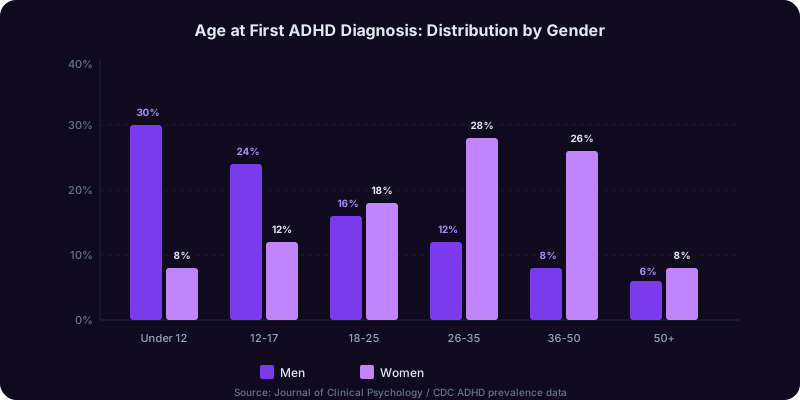
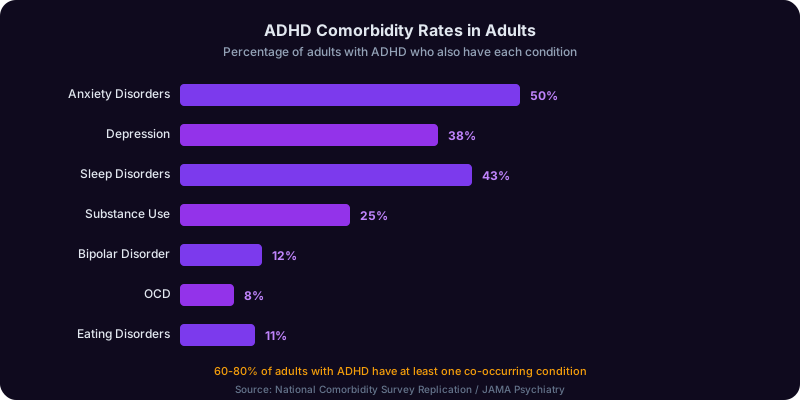
Symptoms are misattributed. Women with undiagnosed ADHD are frequently diagnosed with depression, anxiety, or bipolar disorder instead. While these conditions can co-occur with ADHD (and often do), treating them without addressing the underlying ADHD often produces limited results. A key question for women experiencing treatment-resistant anxiety or depression is whether undiagnosed ADHD might be a contributing factor.
Hormonal influences complicate the picture. Estrogen affects dopamine levels in the brain, and dopamine is the neurotransmitter most directly involved in ADHD. Many women report that their ADHD symptoms worsen during specific phases of their menstrual cycle (particularly the luteal phase), during pregnancy, postpartum, and during perimenopause. A woman who was managing her ADHD adequately in her 20s may find her symptoms becoming unmanageable in her 40s as estrogen levels decline.
Common signs of ADHD in women that are frequently overlooked:
- Chronic feelings of being overwhelmed by daily tasks that others seem to handle easily
- Difficulty maintaining friendships due to forgetting to respond to messages or follow through on plans
- A cluttered home or workspace despite repeated attempts to organize
- Emotional sensitivity, especially to criticism or perceived rejection
- A pattern of starting projects, hobbies, or routines with enthusiasm and abandoning them
- Difficulty with time perception (consistently running late, underestimating how long tasks take)
If you are a woman who has struggled with these patterns throughout your life, the Mental Health Copilot can help you explore whether ADHD might be a factor and guide you toward finding a clinician who specializes in adult ADHD diagnosis in women.
How to Get Diagnosed: The Evaluation Process Step by Step
Getting an ADHD diagnosis as an adult involves a structured evaluation process. There is no single blood test or brain scan that can diagnose ADHD. Instead, diagnosis is based on a comprehensive clinical assessment. Here is what to expect:
Step 1: Find the right clinician. ADHD can be diagnosed by psychiatrists, psychologists, neuropsychologists, and some primary care physicians. However, not all clinicians are equally experienced with adult ADHD. Look for someone who specifically lists adult ADHD as an area of practice. Neuropsychologists tend to provide the most thorough evaluations, though they are also the most expensive. Psychiatrists can diagnose and prescribe medication. Psychologists can diagnose and provide therapy but cannot prescribe in most states.
Step 2: The clinical interview. This is the core of the evaluation. The clinician will ask detailed questions about your current symptoms, your childhood behavior and academic history, your work performance, relationships, and daily functioning. They are looking for evidence that symptoms have been present since before age 12 (per DSM-5 criteria) and that they cause significant impairment in at least two areas of life (work, relationships, self-care, finances, etc.).
Step 3: Standardized rating scales. You will likely complete several questionnaires, such as the Adult ADHD Self-Report Scale (ASRS), the Conners Adult ADHD Rating Scale (CAARS), or the Brown Attention-Deficit Disorder Scale. These help quantify your symptoms and compare them to population norms. Some clinicians also ask a family member or partner to complete a collateral rating scale to provide an outside perspective.
Step 4: Rule out other conditions. The clinician must determine that your symptoms are not better explained by another condition. Anxiety, depression, bipolar disorder, sleep disorders, thyroid dysfunction, and substance use can all produce ADHD-like symptoms. A thorough evaluation includes screening for these conditions. Co-occurring conditions are common with ADHD: approximately 60-80% of adults with ADHD have at least one additional mental health condition.
Step 5: Optional neuropsychological testing. Some evaluations include computerized attention tests (like the CPT-3 or TOVA) or broader neuropsychological test batteries that measure working memory, processing speed, and executive function. These are not required for diagnosis but can provide useful data, especially in complex cases or when accommodations documentation is needed for school or work.
Cost and access: A comprehensive ADHD evaluation typically costs $500-$3,000 depending on the provider and depth of testing. Some insurance plans cover psychiatric evaluations but not full neuropsychological testing. Wait times for specialists can be 2-6 months in many areas. Telehealth ADHD evaluation services have become widely available since 2020, with companies like Done, Cerebral, and others offering evaluations, though quality varies. Be cautious of services that diagnose everyone and immediately prescribe stimulants without a thorough assessment.
If the cost of evaluation is a barrier, see our guide on what to do when you can't afford a doctor for options including community mental health centers and sliding-scale clinics.
The Mental Health Copilot can help you prepare for your evaluation by organizing your symptom history, identifying patterns, and generating questions to ask your clinician. The Insurance Copilot can help you understand your coverage for mental health evaluations.

Get Answers From the Mental Health Copilot
Use the Mental Health Copilot to explore your symptoms and find specialist clinicians. The Productivity Copilot can help you build daily systems that work with your ADHD brain, and the Medication Copilot can explain treatment options.
ADHD Medication: Types, Effectiveness, and What to Expect
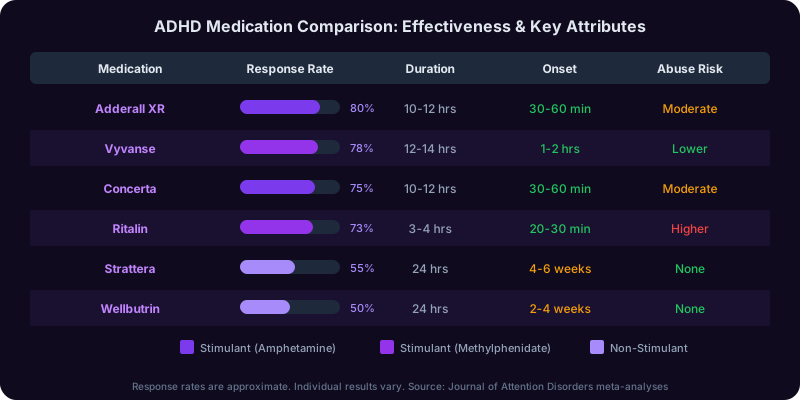
Medication is the most effective single treatment for ADHD symptoms, with response rates of 70-80% for stimulant medications and 50-60% for non-stimulants. Medication does not cure ADHD, but it significantly reduces core symptoms and improves daily functioning in most people who take it. Here is an overview of the major options:
Stimulant Medications
Stimulants are the first-line treatment for ADHD. Despite the name, they do not make you "hyper." In people with ADHD, stimulants increase dopamine and norepinephrine levels in the prefrontal cortex, improving focus, impulse control, and executive function. The two main categories are:
Methylphenidate-based: Ritalin, Concerta, Focalin, Daytrana (patch). Available in immediate-release (lasts 3-4 hours), extended-release (8-12 hours), and long-acting formulations. Concerta uses an osmotic pump delivery system that provides smooth, consistent coverage for about 12 hours.
Amphetamine-based: Adderall, Vyvanse, Dexedrine, Mydayis. Also available in short and long-acting forms. Vyvanse is a prodrug (converted to active form in the body), which provides smoother onset, reduced crash, and lower abuse potential. Mydayis is designed to last up to 16 hours.
Common side effects include decreased appetite (most common, affecting 30-40% of users), insomnia (especially with afternoon doses), dry mouth, increased heart rate (typically 5-10 bpm), and anxiety or jitteriness (especially at higher doses or in people with pre-existing anxiety). Most side effects diminish within the first 2-4 weeks as your body adjusts.
Non-Stimulant Medications
Non-stimulants are used when stimulants are not tolerated, cause unacceptable side effects, or are contraindicated (e.g., in people with certain heart conditions, substance use disorders, or severe anxiety worsened by stimulants).
Atomoxetine (Strattera): A selective norepinephrine reuptake inhibitor. Takes 4-6 weeks to reach full effectiveness (unlike stimulants, which work the same day). Side effects include nausea, fatigue, and decreased appetite. It provides 24-hour coverage and has no abuse potential.
Guanfacine ER (Intuniv): Originally a blood pressure medication, it helps with impulse control, emotional regulation, and hyperactivity. Often used as an add-on to stimulants rather than a standalone treatment.
Viloxazine ER (Qelbree): Approved for adults in 2022. A norepinephrine reuptake inhibitor with serotonin-modulating activity. May be particularly useful for adults with co-occurring anxiety.
Finding the right medication often requires trial and error. Your clinician will typically start with a low dose and titrate upward over several weeks, monitoring for both effectiveness and side effects. If the first medication does not work well, switching to a different one often produces better results. An estimated 90% of people with ADHD respond well to at least one of the available medications.
The Medication Copilot can help you understand your specific medication, track side effects, check for drug interactions, and prepare informed questions for your prescribing clinician.
This is general health information, not medical advice. Medication decisions should always be made with a qualified healthcare professional.
Therapy and ADHD Coaching: Non-Medication Approaches That Work
Medication addresses the neurological symptoms of ADHD, but it does not automatically teach you the skills you may have missed while struggling undiagnosed for years. Therapy and coaching fill this gap. The most effective approach for most adults with ADHD combines medication with structured behavioral support.
Cognitive Behavioral Therapy (CBT) for ADHD: CBT adapted specifically for ADHD is the most evidence-backed therapeutic approach. A 2023 meta-analysis in Journal of Attention Disorders found that CBT produced significant improvements in ADHD symptoms, organization, time management, and self-esteem. ADHD-specific CBT focuses on:
- Building organizational systems (calendars, task lists, routines) that work with your ADHD brain rather than against it
- Breaking large, overwhelming tasks into small, concrete steps
- Addressing procrastination through behavioral activation techniques
- Challenging negative self-talk and shame patterns that develop from years of struggling
- Developing strategies for managing emotional dysregulation
A typical course of ADHD-focused CBT involves 12-16 sessions. Two well-researched protocols are the Safren model (developed at Massachusetts General Hospital) and the Solanto model (developed at Mt. Sinai). Ask potential therapists if they use a structured, ADHD-specific CBT protocol.
ADHD Coaching: ADHD coaches are not therapists. They focus on practical strategies for managing daily life with ADHD: goal setting, time management, accountability, organizing physical spaces, and building routines. Coaching is particularly useful for adults who know what they need to do but struggle with consistent follow-through. Sessions are typically weekly and can be conducted in person or virtually. ADHD coaching is not covered by insurance. Expect to pay $100-$300 per session. Look for coaches certified by the Professional Association of ADHD Coaches (PAAC) or trained through an ICF-accredited program.
Mindfulness and meditation: A growing body of research supports mindfulness training for ADHD. A 2023 randomized trial in JAMA Psychiatry found that an 8-week mindfulness program reduced ADHD symptoms comparably to medication in adults with mild to moderate ADHD. Mindfulness helps by strengthening the brain's ability to sustain attention, notice when attention has wandered, and redirect it. Even 10 minutes of daily practice shows measurable benefits after 8 weeks. For more on natural approaches to managing mental health, see our guide on how to reduce anxiety naturally.
The Mental Health Copilot can help you explore therapy options, find ADHD-specialist therapists in your area, and develop daily mindfulness habits. The Productivity Copilot provides practical organizational and task management support that complements formal coaching.
Daily Coping Strategies: Practical Systems for Managing ADHD
Beyond medication and therapy, day-to-day life with ADHD requires practical systems and environmental modifications. These strategies come from ADHD research, coaching best practices, and the lived experience of adults managing ADHD successfully.
Externalize your memory. ADHD impairs working memory, the ability to hold information in your mind while using it. Stop relying on your brain to remember things. Use a single, centralized system for all tasks, appointments, and notes. Whether it is a paper planner, a digital app like Todoist, or a combination, the key is that everything goes in one place. If it is not written down, it does not exist.
Use time-blocking, not to-do lists. A to-do list tells you what needs to be done but not when. For people with ADHD, this leads to decision paralysis and procrastination. Instead, assign each task a specific time slot on your calendar. Block time for focused work, email, administrative tasks, and even breaks. This removes the need to decide "what should I do now?" because your calendar tells you.
The body doubling technique. Many people with ADHD find it much easier to focus when another person is present, even if that person is not helping with the task. This is called body doubling. It can be a coworker sitting nearby, a friend on a video call, or even a virtual co-working session online. Multiple platforms now offer virtual body doubling specifically for the ADHD community.
Reduce friction for important tasks. ADHD makes starting tasks the hardest part. Remove every possible barrier between you and the task. If you need to exercise in the morning, sleep in your workout clothes. If you need to take medication, keep it next to your toothbrush. If you need to work on a project, open the document the night before and leave it on your screen. The fewer steps between you and the action, the more likely you are to do it.
Build in transition time. ADHD makes it hard to switch between tasks (task switching or context switching). If you schedule meetings back to back, you will likely arrive late to the second one because your brain is still processing the first. Build 10-15 minute buffer periods between activities.
Use the "2-minute rule." If a task will take less than 2 minutes, do it immediately rather than adding it to your list. This prevents small tasks from accumulating into an overwhelming backlog. Responding to a quick email, filing a document, or putting something away falls into this category.
Manage your environment. Noise-canceling headphones, a clean desk, website blockers (like Freedom or Cold Turkey), and phone-in-another-room policies can dramatically improve focus. The ADHD brain is highly susceptible to environmental distractions, and controlling your environment is often more effective than trying to build willpower.
The Productivity Copilot can help you implement these strategies, break down complex projects into manageable steps, and build daily routines that work with your ADHD brain. Think of it as an always-available accountability partner.
ADHD and Relationships: Communication, Conflict, and Partnership
ADHD does not just affect the person who has it. It affects every relationship in their life. Understanding how ADHD shows up in relationships is essential for both the person with ADHD and their partners, family members, and friends.
Common relationship patterns in ADHD:
The hyperfocus-to-neglect cycle: In the early stages of a romantic relationship, the ADHD brain often hyperfocuses on the new partner. The novelty and excitement provide massive dopamine hits, making the person attentive, engaged, and seemingly tireless in their pursuit. Once the relationship becomes routine, the ADHD brain may shift focus to new stimulating things, and the partner may feel suddenly neglected or unimportant. This is not loss of love. It is a neurological shift from novelty-driven attention to routine, which is where ADHD struggles most.
The parent-child dynamic: When one partner has unmanaged ADHD, the non-ADHD partner often takes on a disproportionate share of household management: tracking bills, scheduling appointments, remembering groceries, and organizing family logistics. Over time, this creates a parent-child dynamic that breeds resentment on both sides. The non-ADHD partner feels overwhelmed and unappreciated. The ADHD partner feels controlled and criticized.
Emotional volatility: ADHD-related emotional dysregulation can make conflicts more intense. The ADHD partner may react with disproportionate frustration, say things impulsively during arguments, or shut down completely when overwhelmed. Learning to recognize the ADHD component of these patterns is the first step toward managing them.
Strategies for healthier relationships with ADHD:
- Have the ADHD conversation. Both partners need to understand what ADHD is and how it specifically manifests in their relationship. Books like "Is It You, Me, or Adult A.D.D.?" by Gina Pera and "The ADHD Effect on Marriage" by Melissa Orlov are excellent resources.
- Separate ADHD behavior from character. Forgetting an anniversary is not evidence that your partner does not love you. It is evidence that their working memory is impaired. This does not excuse the behavior, but it changes the conversation from blame to problem-solving.
- Create shared systems. A shared digital calendar, a visible chore chart, and regular weekly "admin meetings" to discuss upcoming logistics can distribute the mental load more equitably.
- Consider couples therapy. A therapist who understands ADHD can help both partners communicate more effectively, set realistic expectations, and develop strategies specific to their situation.
The Mental Health Copilot can help you process relationship challenges related to ADHD and develop communication strategies. If you are looking for a couples therapist who specializes in ADHD, it can also help you know what questions to ask during your search.
ADHD at Work: Accommodations, Disclosure, and Career Strategies
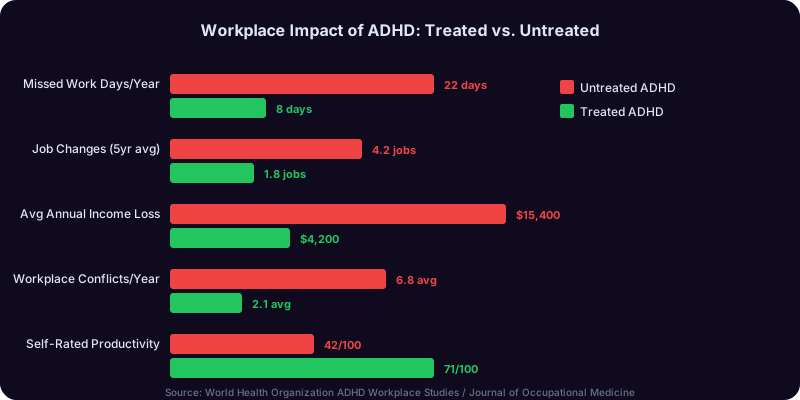
ADHD significantly impacts work performance, career trajectory, and job satisfaction. Adults with ADHD are more likely to experience job loss, underemployment, and workplace conflict. However, with the right strategies and accommodations, many people with ADHD become highly successful, particularly in roles that align with their neurological strengths.
Workplace accommodations: Under the Americans with Disabilities Act (ADA), ADHD is a recognized disability, and employers with 15 or more employees are required to provide reasonable accommodations. Common accommodations include:
- Written instructions for multi-step tasks rather than verbal-only directions
- Flexible deadlines or breaking projects into smaller milestones with check-ins
- Permission to use noise-canceling headphones or work in a quieter area
- A modified work schedule (some people with ADHD are significantly more productive at non-traditional hours)
- Extended time for tasks that require sustained concentration
- Use of task management tools, timers, or other organizational aids
- Regular check-ins with a supervisor rather than infrequent performance reviews
Should you disclose your ADHD at work? This is a deeply personal decision with no universally right answer. Disclosing allows you to request formal accommodations and helps your manager understand your working style. However, stigma around ADHD and mental health persists in many workplaces. You are not required to disclose your specific diagnosis to request accommodations. You can simply state that you have a medical condition that affects concentration and request specific accommodations. HR is legally prohibited from asking for your diagnosis; they can only request documentation from your clinician confirming that you have a condition requiring accommodation.
Career strategies for ADHD:
- Choose roles that leverage ADHD strengths. Many people with ADHD thrive in roles that involve novelty, variety, crisis response, creativity, or high-stimulation environments. Fields like emergency medicine, entrepreneurship, sales, journalism, creative work, and technology often play to ADHD strengths.
- Avoid roles that emphasize ADHD weaknesses. Repetitive, detail-heavy, routine-driven roles with minimal variety (data entry, certain accounting tasks, assembly line work) are typically where ADHD causes the most difficulty.
- Front-load your day. Medication effectiveness, willpower, and focus tend to be highest in the morning for most people with ADHD. Schedule your most challenging cognitive work for the first few hours of the day.
- Use artificial deadlines. The ADHD brain responds to urgency. If a project is due in 3 weeks, your brain may not engage until the night before. Creating intermediate deadlines (share a draft by Friday, complete section 2 by Wednesday) generates the urgency needed to start working.
The Productivity Copilot can help you structure your workday, break down projects, and build systems that keep you on track. If you need guidance on requesting workplace accommodations, the Employment Law Copilot can walk you through your rights and the process.
Frequently Asked Questions
Recommended Copilots
Recommended Copilots
Explore whether your experiences align with ADHD patterns and get guidance on next steps
Try Free →Understand ADHD medications, compare options, and track side effects
Try Free →Build ADHD-friendly organizational systems, routines, and task management strategies
Try Free →Continue Exploring
How It Works
Related Articles
Get Answers From the Mental Health Copilot
Use the Mental Health Copilot to explore your symptoms and find specialist clinicians. The Productivity Copilot can help you build daily systems that work with your ADHD brain, and the Medication Copilot can explain treatment options.