
Why AI Is Transforming Meal Planning and Nutrition
The average American spends 37 minutes per day deciding what to eat, according to research from the International Food Information Council. Over a year, that adds up to more than 225 hours spent on meal decisions alone. Meanwhile, the USDA reports that the average American household spends $1,054 per month on food (as of 2025), with roughly 30% of purchased food going to waste. AI meal planning addresses both problems simultaneously: it eliminates decision fatigue and reduces waste by generating precise grocery lists matched to planned meals.
But the real value of AI in nutrition goes far beyond convenience. Traditional meal planning treats everyone the same. A generic "2,000 calorie diet" ignores the fact that a 140-pound sedentary office worker and a 200-pound construction worker have wildly different nutritional needs. AI can calculate your specific caloric requirements based on your age, weight, height, activity level, and goals, then generate meal plans that hit those targets while respecting your food preferences, allergies, budget, and cooking skill level.
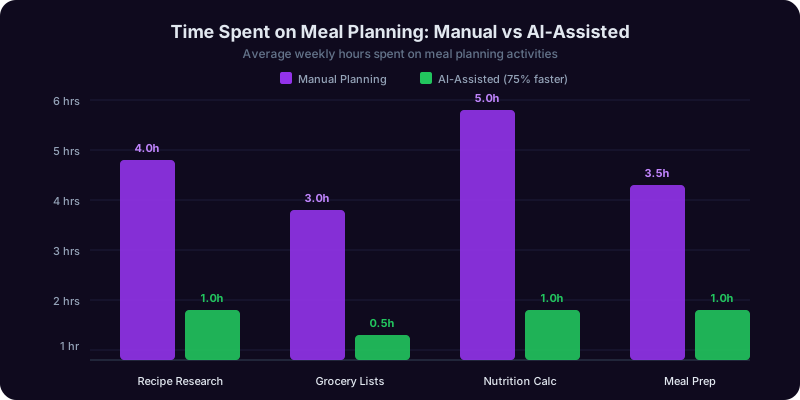
The World Health Organization identifies poor diet as a leading risk factor for chronic disease globally, contributing to 11 million deaths per year. The problem is not a lack of nutritional knowledge. Most people know they should eat more vegetables and fewer processed foods. The problem is execution: translating general nutrition guidelines into specific, daily, actionable meal plans that fit real lives. This is precisely where AI excels. It can take complex constraints (budget, time, allergies, nutritional targets, taste preferences) and produce concrete plans in seconds.
AI nutrition tools have evolved rapidly since 2024. Early tools were essentially calorie calculators with recipe databases. Current tools use large language models to understand natural language requests ("I want high-protein lunches under $4 that I can meal prep on Sunday"), integrate with grocery delivery APIs, adjust plans based on what is on sale at your local store, and learn from your feedback over time. For anyone managing a chronic condition like diabetes, where diet directly affects health outcomes, AI meal planning is not just convenient but medically valuable. Our guide to early diabetes symptoms explains why dietary management is the first line of defense.
AI-Powered Macro Tracking and Calorie Management
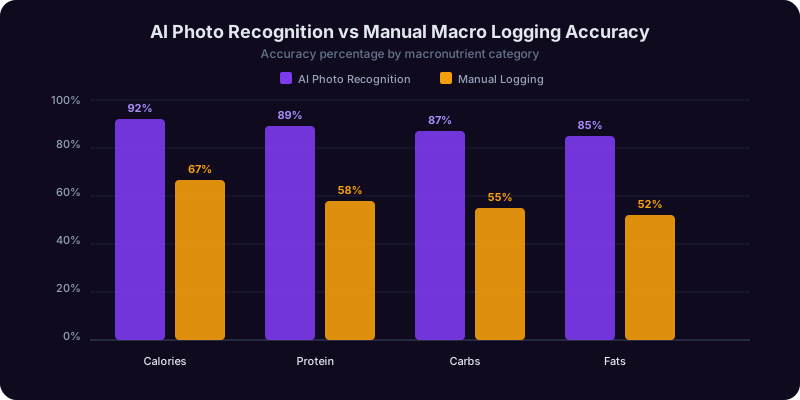
Macro tracking, the practice of monitoring your daily intake of protein, carbohydrates, and fat, has traditionally been tedious and error-prone. Manual food logging requires looking up every ingredient, estimating portion sizes, and doing arithmetic. Studies show that people who manually log food underestimate their calorie intake by 30-50% on average. AI eliminates most of this friction.
Modern AI nutrition tools can identify foods from photos with roughly 85-90% accuracy, estimate portion sizes using visual references, and automatically calculate macros from natural language descriptions. Instead of searching a database for "chicken breast, grilled, 6 oz," you can say "I had grilled chicken with rice and broccoli for dinner" and the AI will estimate quantities based on typical serving sizes, then let you adjust if needed.
The key macro ratios depend on your goals. For general health, the NIH recommends that adults get 45-65% of calories from carbohydrates, 20-35% from fat, and 10-35% from protein. But these ranges are broad. AI tools can narrow them based on your specific situation:
- Weight loss: AI typically recommends a moderate caloric deficit (300-500 calories below maintenance) with protein set at 0.7-1.0 g per pound of body weight to preserve muscle mass, and the remaining calories split between carbs and fat based on preference.
- Muscle gain: A caloric surplus of 200-400 calories with protein at 0.8-1.2 g per pound of body weight. AI tools can time carbohydrate intake around workouts for optimal performance and recovery.
- Endurance training: Higher carbohydrate ratios (50-65% of calories) to fuel sustained activity, with moderate protein (0.6-0.8 g per pound) and adequate fat for hormone function.
- Blood sugar management: Lower carbohydrate ratios (30-40% of calories) with an emphasis on low-glycemic carb sources, paired with protein and fat at each meal to slow glucose absorption.
What makes AI particularly valuable for macro tracking is adaptive adjustment. If you consistently fall short of your protein target, AI can suggest protein-dense snacks or modify upcoming meals to compensate. If you are over on calories by Tuesday, it can redistribute the remaining weekly budget across Wednesday through Sunday. This flexible, forgiving approach leads to better long-term adherence than rigid daily targets. For those combining diet changes with exercise, our beginner strength training guide covers how to align your nutrition with a workout program.
Managing Food Allergies and Dietary Restrictions With AI
Food allergies and intolerances affect an estimated 32 million Americans, including 5.6 million children under 18, according to Food Allergy Research and Education (FARE). For these individuals, meal planning is not just about nutrition. It is about safety. A single exposure to an allergen can trigger reactions ranging from hives and digestive distress to life-threatening anaphylaxis. AI meal planning tools provide a critical safety layer by systematically excluding allergens and cross-reactive ingredients from every recipe suggestion.
Traditional allergy management relies on the individual to read every label and mentally cross-reference ingredients. This is manageable for a single allergy but becomes exponentially harder with multiple restrictions. Consider someone who is allergic to tree nuts, intolerant to dairy, and following a gluten-free diet. The number of foods and recipes they must evaluate and reject makes manual meal planning exhausting. AI handles these intersecting constraints effortlessly, filtering thousands of recipes in milliseconds.
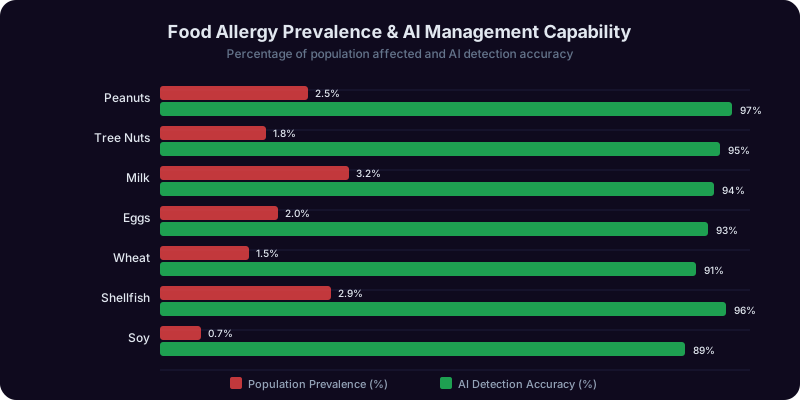
AI nutrition tools go beyond simple ingredient exclusion. Advanced systems can identify hidden allergens in processed foods (like casein in "non-dairy" creamers, or wheat in soy sauce), flag cross-contamination risks, and suggest safe substitutions that maintain nutritional balance. If you eliminate dairy, the AI knows to increase other calcium sources like fortified plant milks, leafy greens, canned fish with bones, and fortified cereals to prevent deficiency.
Common dietary patterns that AI tools handle well include:
- Celiac disease / gluten-free: Excludes wheat, barley, rye, and cross-contaminated oats while ensuring adequate fiber and B vitamins from alternative grains like quinoa, rice, and buckwheat.
- Vegetarian and vegan: Ensures complete protein through complementary plant sources, monitors B12, iron, zinc, omega-3, and calcium intake, and flags recipes that are accidentally incomplete in essential amino acids.
- Low-FODMAP: For IBS management, AI can navigate the complex elimination and reintroduction phases of the low-FODMAP diet, tracking which foods trigger symptoms and gradually expanding the safe list. For more on digestive issues, see our guide to stomach pain causes.
- Ketogenic: Maintains strict carbohydrate limits (typically 20-50g net carbs daily) while ensuring adequate electrolytes (sodium, potassium, magnesium) that are commonly depleted on keto diets.
- Religious dietary laws: Halal, kosher, and other religion-based restrictions with proper ingredient verification.
The Nutrition Copilot can help you build a meal plan around any combination of allergies and dietary restrictions, flagging potential nutritional gaps and suggesting specific foods to fill them. This is especially valuable for parents managing children's food allergies, where nutritional completeness during growth years is critical.

Get Answers From the Nutrition Copilot
Tell the Nutrition Copilot your goals, allergies, budget, and preferences, and get a personalized meal plan with recipes, macros, and a grocery list in seconds.
AI-Optimized Budget Meal Planning
Food costs have risen sharply in recent years. The USDA's "thrifty" food plan, the basis for SNAP benefits, estimates that a family of four needs at least $1,039 per month for groceries (as of early 2026). The "moderate" plan runs $1,400+. For many households, food is the second-largest expense after housing. AI meal planning can reduce grocery spending by 20-30% through three mechanisms: waste reduction, strategic ingredient reuse, and price-aware recipe selection.
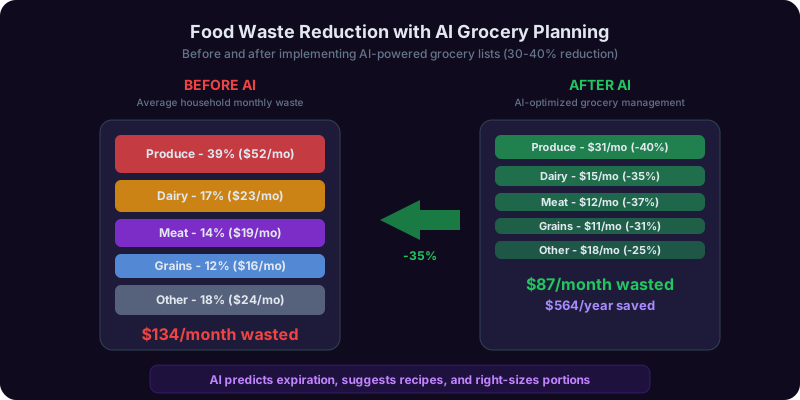
Waste reduction is the biggest opportunity. The USDA estimates that 30-40% of the US food supply is wasted, with the average American family throwing away approximately $1,500 worth of food per year. AI meal planners combat this by designing weekly menus that use overlapping ingredients. If Monday's dinner calls for half a bunch of cilantro, Wednesday's lunch will use the rest. If you buy a whole chicken for Sunday roast, Monday's plan uses the leftover meat in tacos and Tuesday's plan makes broth from the carcass. This kind of cross-meal optimization is something human planners struggle with but AI does naturally.
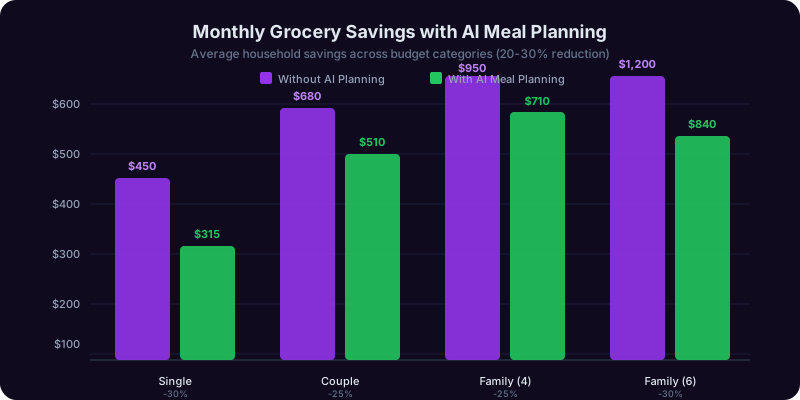
Strategic ingredient reuse means building multiple meals around a core set of affordable staples. AI can generate a week of meals using a base of rice, beans, eggs, seasonal vegetables, and one or two proteins, creating enough variety that you do not feel like you are eating the same thing every day. A 5-pound bag of rice ($4), two cans of black beans ($2), a dozen eggs ($3.50), a bag of frozen mixed vegetables ($3), and a package of chicken thighs ($7) provides the foundation for at least 8-10 meals totaling roughly $20, or about $2-2.50 per meal.
Price-aware recipe selection is where AI tools are advancing fastest. Some tools integrate with grocery store APIs to check current prices and sales at your local store, then adjust recipe suggestions accordingly. If chicken breast is $5.99/lb but thighs are $2.49/lb, the AI will generate thigh-based recipes instead. If bananas are $0.25 each but berries are $6 a pint, the AI will favor banana-based smoothies and snacks.
Budget-conscious meal planning strategies that AI implements well:
- Batch cooking: Cook large quantities of grains, proteins, and sauces on one day, then assemble different meals throughout the week. AI generates the batch cooking plan and the daily assembly instructions separately.
- Seasonal eating: In-season produce is 30-50% cheaper than out-of-season. AI tools can adjust plans monthly based on what is currently in season in your region.
- Pantry-first planning: Tell the AI what you already have on hand, and it builds meals around existing ingredients before adding new purchases.
- Unit price optimization: AI can calculate whether the 32 oz jar of peanut butter at $6.99 ($0.22/oz) is a better deal than the 16 oz jar at $4.29 ($0.27/oz) and factor that into recommendations.
For those managing food costs alongside medical expenses, our guide to disputing medical bills covers strategies to reduce healthcare spending so more of your budget goes toward quality nutrition.
AI Diet Optimization for Weight Loss and Muscle Gain
The obesity rate in the United States has reached 41.9% among adults, according to the CDC's National Health and Nutrition Examination Survey. An additional 30.7% are overweight. Diet is the primary lever for weight management: while exercise is essential for health, the principle that "you cannot outrun a bad diet" holds true. A 30-minute jog burns roughly 300 calories, which a single large muffin can replace in 90 seconds. AI meal planning makes sustainable weight management achievable by removing the cognitive burden that causes most diets to fail.
Research consistently shows that adherence, not diet type, is the strongest predictor of weight loss success. Low-carb, low-fat, Mediterranean, intermittent fasting, and other approaches all produce similar results when followed consistently. The diet that works is the one you can sustain. AI tools excel here because they can generate plans that match your actual food preferences rather than imposing a rigid template. If you hate salads but love stir-fries, the AI will build your meal plan around stir-fries. If you skip breakfast, it will redistribute those calories to lunch and dinner rather than insisting you eat at 7 AM.
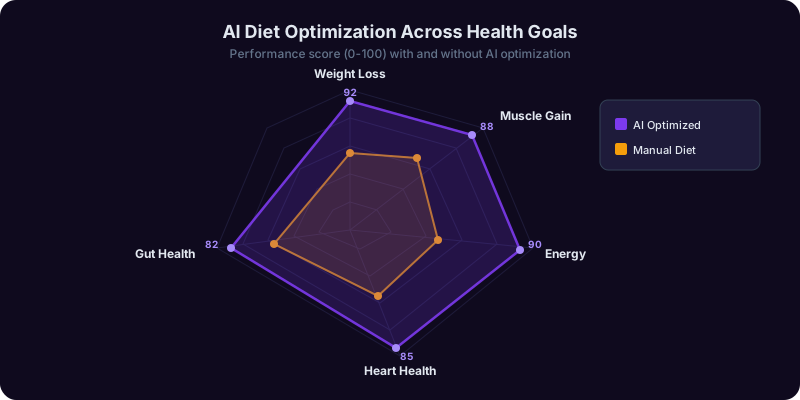
For weight loss, AI tools typically implement these evidence-based strategies:
- Protein prioritization: Setting protein at 0.7-1.0 g per pound of body weight preserves lean muscle during a caloric deficit. AI ensures every meal contains a protein source and that daily targets are met before allocating remaining calories to carbs and fat.
- Volume eating: AI can identify foods with high volume but low calorie density (vegetables, broth-based soups, air-popped popcorn) and incorporate them into meals to maintain satiety on fewer calories.
- Calorie cycling: Rather than eating the same calories every day, AI can set higher-calorie days on workout days and lower-calorie days on rest days, keeping the weekly average on target while providing more energy when you need it.
- Deficit progression: Starting with a modest 300-calorie deficit and gradually increasing to 500 as your body adapts, rather than immediately slashing calories and triggering metabolic adaptation.
For muscle gain, the AI approach differs significantly:
- Caloric surplus management: A lean bulk requires only 200-400 calories above maintenance. AI prevents the common mistake of overeating during bulk phases, which leads to unnecessary fat gain.
- Nutrient timing: Distributing protein across 4-5 meals (every 3-4 hours) rather than consuming it all at once maximizes muscle protein synthesis. AI structures meal timing around your schedule and workout window.
- Progressive calorie adjustment: As you gain weight, your maintenance calories increase. AI recalculates weekly, ensuring your surplus stays in the optimal range rather than shrinking as your body grows.
The Fitness Copilot can work alongside the Nutrition Copilot to align your meal plan with your training program. Whether your goal is fat loss, muscle gain, or body recomposition, having nutrition and exercise coordinated through AI eliminates the guesswork that derails most programs.
Automated Grocery Lists and Meal Prep Strategies
The most practical benefit of AI meal planning is the automated grocery list. Once an AI generates your weekly meal plan, it can produce a consolidated, organized shopping list that accounts for every ingredient across every meal, eliminates duplicates, calculates exact quantities, and even organizes items by store section (produce, dairy, meat, pantry). This alone saves the average shopper 45-60 minutes per week and reduces impulse purchases by keeping you focused on a specific list.
AI grocery list automation goes further than simple ingredient aggregation. Smart features include:
- Pantry integration: You tell the AI what you already have (or scan barcodes of items in your kitchen), and it removes those from the shopping list. No more buying a second jar of cumin because you forgot you had one.
- Quantity rounding: If your meal plan calls for 1.3 pounds of ground beef, the AI rounds to 1.5 pounds and adjusts a later meal to use the extra 0.2 pounds, since you cannot buy 1.3 pounds at most stores.
- Shelf-life awareness: The AI sequences your meal plan so that meals using fresh fish or leafy greens are scheduled for Monday and Tuesday (right after your Sunday shopping trip), while meals using frozen proteins, canned goods, and root vegetables appear later in the week.
- Store-specific formatting: Some AI tools can organize your list to match the layout of your preferred grocery store, minimizing backtracking through aisles.
Meal prep strategies are where AI can save you the most time during the week. The best approach is a two-tier system that AI can plan for you:
Tier 1: Sunday batch prep (2-3 hours)
- Cook 2-3 proteins in bulk (grilled chicken, baked salmon, hard-boiled eggs)
- Prepare 2-3 grains or starches (rice, quinoa, roasted sweet potatoes)
- Wash and chop vegetables for the week
- Make 1-2 sauces or dressings
Tier 2: Daily assembly (10-15 minutes per meal)
- Combine prepped components into different meals each day
- Add fresh elements (avocado, fresh herbs, raw vegetables) at assembly time
- Heat proteins and grains, add sauce, plate
AI meal planners can generate both the batch prep instructions (with timing so everything finishes efficiently) and the daily assembly guides. The same batch of grilled chicken becomes a grain bowl on Monday, a wrap on Tuesday, and a salad topper on Wednesday, each with different vegetables, sauces, and grains to prevent flavor fatigue. AI ensures nutritional targets are met across all variations while keeping prep time minimal. Combined with our strength training guide, you can have both your meals and workouts planned for the entire week in under 30 minutes.
Comparing the Top AI Nutrition and Meal Planning Tools (2026)
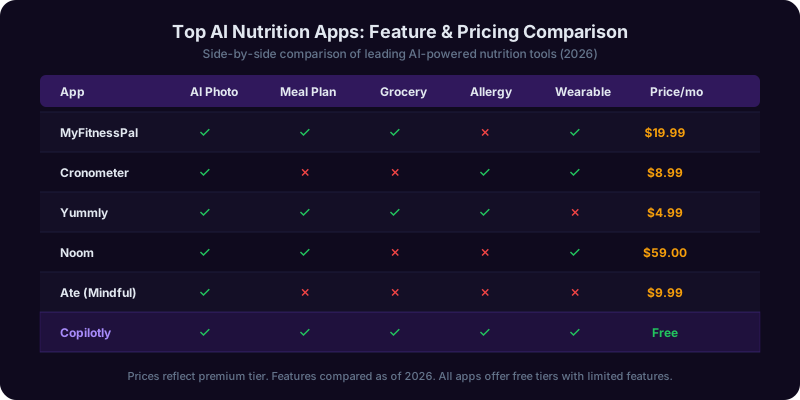
The AI nutrition tool landscape has matured significantly. Here is a practical comparison of the leading options across key criteria: personalization depth, allergy handling, budget features, ease of use, and cost.
1. AI-Powered Calorie and Macro Trackers
Tools like MyFitnessPal (with its AI upgrade), Cronometer, and MacroFactor use AI for food recognition, barcode scanning, and adaptive calorie recommendations. MacroFactor stands out for its algorithm-driven approach: it adjusts your calorie target weekly based on actual weight trends rather than theoretical formulas, which eliminates the guesswork that plagues most calorie-counting apps. These tools cost $5-$15/month and are best for people who want to track intake rather than generate meal plans.
2. AI Meal Plan Generators
Eat This Much, PlateJoy, and Mealime generate full weekly meal plans based on your preferences, restrictions, and calorie targets. Eat This Much is the most flexible for macro-specific planning. PlateJoy excels at family meal planning with kid-friendly options. Mealime is the simplest and best for beginners who want a grocery list and step-by-step recipes without complexity. Pricing ranges from $5-$12/month.
3. AI Nutrition Chatbots and Copilots
This category includes general-purpose AI assistants configured for nutrition advice. The advantage is flexibility: you can ask any question, request modifications to recipes, get explanations of nutritional concepts, and have a conversational experience rather than filling out forms. The Copilotly Nutrition Copilot falls in this category, offering personalized guidance without requiring a separate app. You can ask it to generate a meal plan, adjust macros, suggest substitutions, or explain why a particular food is beneficial or harmful, all within your browser.
4. Smart Kitchen and Recipe Platforms
Whisk, SideChef, and Yummly integrate AI recipe recommendations with smart kitchen device control and grocery delivery. These are best for people who want an end-to-end experience from meal planning through cooking, with step-by-step video instructions and IoT integration for connected ovens and thermometers. Most offer free tiers with premium features at $5-$10/month.
Choosing the right tool depends on your primary need:
| If you need... | Best option | Monthly cost |
| Accurate macro tracking | MacroFactor or Cronometer | $7-$12 |
| Full meal plan generation | Eat This Much or PlateJoy | $5-$12 |
| Flexible AI nutrition advice | Copilotly Nutrition Copilot | Free tier available |
| Family meal planning | PlateJoy or Mealime | $5-$10 |
| Cooking guidance + planning | SideChef or Yummly | Free-$10 |
Many people use a combination: an AI copilot for on-demand questions and strategic planning, plus a dedicated tracking app for daily food logging. The key is choosing tools that reduce friction rather than adding another app you have to maintain. If a tool requires more than 5 minutes of daily interaction, adherence drops significantly within the first month.
How Copilotly Helps With AI Meal Planning and Nutrition
Copilotly's browser-based AI copilots bring nutrition guidance directly into your workflow without requiring a separate app, subscription, or account setup. The Nutrition Copilot and Health Copilot work together to provide personalized meal planning, dietary advice, and health-aware nutrition strategies from any webpage.
What the Nutrition Copilot can do:
- Generate custom meal plans: Tell it your calorie target, macro preferences, allergies, budget, and cooking time constraints, and it produces a full weekly plan with recipes, quantities, and a consolidated grocery list.
- Analyze any recipe: Browse a recipe online and ask the Copilot to calculate its macros, estimate cost per serving, suggest healthier substitutions, or adapt it for your dietary restrictions.
- Answer nutrition questions: "Is 200g of protein too much for a 160-pound person?" "What are the best plant-based iron sources?" "How do I get enough omega-3 on a vegan diet?" Get evidence-based answers instantly.
- Build grocery lists: Describe what you want to eat this week in plain language and get a structured, organized shopping list with estimated costs.
- Meal prep planning: Get a step-by-step batch cooking schedule that tells you exactly what to prep, in what order, and how long each component takes.
What the Health Copilot adds:
- Diet and health condition alignment: If you are managing diabetes, high cholesterol, hypertension, or another condition, the Health Copilot can help you understand which dietary changes are most impactful. For example, it can explain why the DASH diet is recommended for blood pressure management and help you implement it practically. See our guide to lowering blood pressure naturally for more on dietary approaches to hypertension.
- Lab result context: If your blood test results show elevated cholesterol or blood sugar, the copilot can suggest specific dietary modifications supported by clinical evidence.
- Supplement guidance: Based on your diet type and any deficiencies flagged in blood work, get recommendations for supplements that may be beneficial (and which ones are unnecessary).
The advantage of a browser-based copilot over a standalone nutrition app is contextual integration. When you are reading an article about Mediterranean diets, you can ask the copilot to build you a Mediterranean meal plan on the spot. When you are browsing a grocery store's website, you can ask it to check prices against your meal plan. When you are reading about a new diet trend, you can ask whether it is evidence-based or marketing hype. The AI comes to you, wherever you are online, rather than requiring you to switch to a dedicated app.
Copilotly provides general nutrition information and meal planning assistance. It is not a substitute for advice from a registered dietitian or healthcare provider, especially for medical nutrition therapy.
Frequently Asked Questions
Recommended Copilots
Recommended Copilots
Get personalized health guidance that connects your diet to your overall wellness goals and medical conditions
Try Free →Align your meal plan with your workout program for optimal weight loss or muscle gain results
Try Free →Generate custom meal plans, analyze recipes, and get evidence-based answers to any nutrition question
Try Free →Continue Exploring
For You
Related Articles
Get Answers From the Nutrition Copilot
Tell the Nutrition Copilot your goals, allergies, budget, and preferences, and get a personalized meal plan with recipes, macros, and a grocery list in seconds.