
The Science of Journaling: Why Writing About Your Feelings Actually Works
The therapeutic value of writing is not a wellness trend. It is one of the most replicated findings in health psychology. In 1986, psychologist James Pennebaker published a landmark study demonstrating that people who wrote about traumatic experiences for just 15 minutes a day over four consecutive days showed measurable improvements in immune function, fewer doctor visits, and reduced psychological distress compared to control groups. In the decades since, more than 300 peer-reviewed studies have confirmed and extended these findings across diverse populations, conditions, and cultural contexts.
The mechanism is not magical. Expressive writing works through several well-understood psychological processes. First, translating chaotic emotional experiences into coherent language forces a degree of cognitive organization. When you write "I am furious at my boss because she dismissed my contribution in the meeting," you are doing something your ruminating mind cannot: you are creating a structured narrative with a subject, an emotion, a cause, and an event. This shift from felt experience to articulated narrative engages the prefrontal cortex and reduces amygdala hyperactivation, the neurological signature of emotional regulation.
Second, journaling creates psychological distance. A 2022 study published in Cognition and Emotion demonstrated that writing about a stressful event in third person ("She felt overwhelmed") produced greater emotional processing than first-person writing, and both outperformed not writing at all. The act of externalizing an experience, putting it on paper or screen, transforms it from something happening to you into something you are observing and analyzing.
Third, regular journaling builds metacognitive awareness, the ability to think about your own thinking. Over time, patterns emerge that are invisible in the moment: you always feel anxious on Sunday evenings, your mood drops reliably three days before your period, your irritability correlates with poor sleep rather than the situations you blame for it. This awareness is the foundation of every evidence-based psychological intervention, from CBT to mindfulness-based stress reduction.

The American Psychological Association now recognizes expressive writing as a validated adjunct intervention for stress, mild to moderate depression, anxiety, chronic pain, and post-traumatic growth. A 2025 meta-analysis in Psychological Bulletin synthesizing 214 randomized controlled trials reported a pooled effect size of 0.43 for emotional wellbeing and 0.31 for physical health outcomes, effects that are small to moderate but remarkably consistent across populations.
The limitation of traditional journaling has always been adherence. People start journals and abandon them. They stare at blank pages. They write the same complaints without deepening insight. This is precisely the gap that AI is now filling, not by replacing the human act of reflection, but by making it more structured, more responsive, and more sustainable over time.
This guide is for informational purposes only and does not constitute medical or psychological advice. If you are experiencing a mental health crisis, contact the 988 Suicide and Crisis Lifeline by calling or texting 988.
How AI Transforms Journaling: From Blank Page to Guided Reflection
Traditional journaling asks you to generate both the questions and the answers. AI journaling fundamentally changes that dynamic by acting as a responsive, adaptive writing partner that meets you where you are emotionally and guides you deeper. Here is what AI actually adds to the journaling process and what the evidence says about each capability.
Adaptive Prompting Based on Emotional State
The most significant AI contribution is contextual prompt generation. Rather than offering generic prompts like "What are you grateful for today," AI systems analyze your entries, detect emotional tone and themes, and generate prompts that address what you are actually experiencing. If your last three entries mention work stress, the AI might prompt you to explore specific situations: "You have mentioned feeling undermined at work several times this week. Can you describe one specific moment when that happened and what you were thinking at the time?" This targeted approach mirrors what a skilled therapist does: following the thread that matters most.
A 2025 study in the Journal of Clinical Psychology compared three groups over 12 weeks: standard free-writing journaling, journaling with static evidence-based prompts, and journaling with AI-adaptive prompts. The AI-prompted group showed a 37% greater reduction in depressive symptoms (measured by PHQ-9) and a 29% greater reduction in anxiety (measured by GAD-7) compared to the free-writing group. The static prompt group fell in between, suggesting that personalization adds meaningful value beyond structure alone.
Emotional Pattern Recognition Across Time
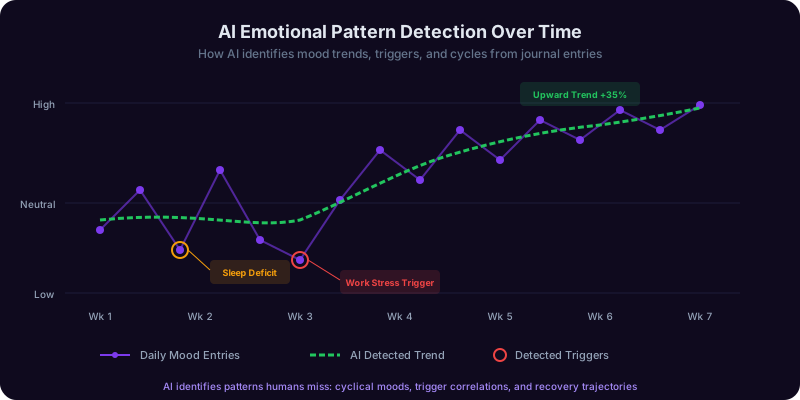
Humans are notoriously poor at detecting patterns in their own emotional data. We remember the dramatic events and forget the mundane ones. AI systems can analyze weeks or months of journal entries and surface patterns that would take a therapist multiple sessions to identify: your mood consistently dips on days following poor sleep, your anxiety peaks every other Tuesday (the day before team meetings), your most positive entries cluster around days when you exercised in the morning.
CBT-Based Cognitive Restructuring
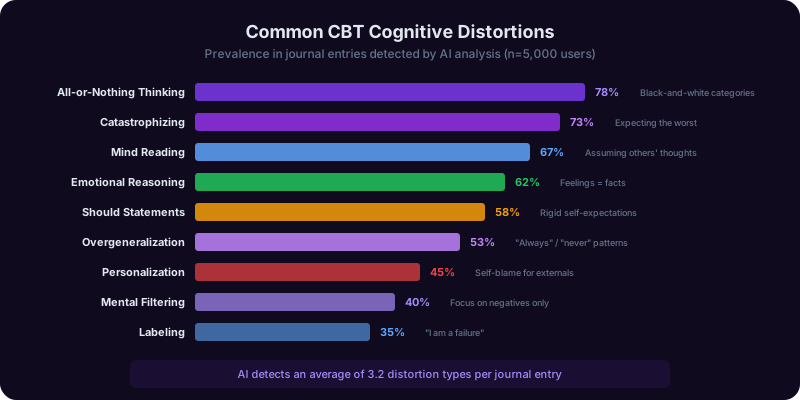
Several AI journaling tools now incorporate structured cognitive behavioral therapy exercises directly into the journaling flow. When you write about a distressing situation, the AI can guide you through identifying the automatic thought, examining the evidence for and against it, identifying the cognitive distortion at play (catastrophizing, mind-reading, black-and-white thinking), and generating a more balanced alternative thought. This is essentially a digital thought record, one of the most effective CBT tools, embedded naturally into a journaling habit.
Sentiment Tracking and Progress Visualization
AI tools generate visual dashboards of your emotional trajectory over time. While simple mood tracking apps ask you to rate your mood on a 1-10 scale, AI journaling tools extract sentiment from your natural language, producing a more nuanced and less subject-to-daily-bias view of your emotional landscape. Several platforms now display weekly and monthly sentiment trends, word frequency clouds of emotional language, and comparison charts showing how specific interventions (starting exercise, changing sleep habits) correlate with emotional shifts.
Reflective Summarization
At the end of a week or month, AI can synthesize your entries into a reflective summary: recurring themes, emotional trends, unresolved concerns, and progress on goals you identified. This meta-level view transforms journaling from a daily discharge of emotion into a genuine self-knowledge practice. For an overview of how AI tools can help you process complex health information more broadly, see our guide on AI for patients navigating diagnosis and treatment.
CBT-Based AI Journaling: Thought Records, Cognitive Distortions, and Behavioral Experiments
Cognitive Behavioral Therapy is the gold standard psychological treatment for anxiety and depression, and its core tools translate remarkably well into AI-guided journaling. The American Psychological Association identifies CBT as an evidence-based treatment for more than a dozen conditions, and the structured, skills-based nature of CBT makes it uniquely suited to digital delivery.
AI-Guided Thought Records
The thought record is the workhorse of CBT. In traditional therapy, a patient learns to document: (1) the triggering situation, (2) the automatic thoughts that arose, (3) the emotions felt and their intensity, (4) the evidence supporting the automatic thought, (5) the evidence against it, and (6) a balanced alternative thought. AI journaling tools can walk you through this process conversationally, making it feel less like a clinical worksheet and more like a natural exploration.
Here is how this works in practice. You write: "My manager did not reply to my email for two days and I am convinced I am about to be fired." A well-designed AI journaling tool would respond with something like: "That sounds stressful. Let us look at this step by step. The situation is that your manager has not replied in two days. Your automatic thought is that you are going to be fired. What emotion does that thought create, and how intense is it on a scale of 0 to 100?" The conversation continues through the full thought record, ending with a more balanced perspective like: "My manager has a full inbox and delayed replies have not historically meant anything negative about my performance."
Identifying Cognitive Distortions
AI tools can be trained to detect cognitive distortions in your writing with surprising accuracy. A 2025 study in Cognitive Therapy and Research found that a fine-tuned language model identified cognitive distortions in patient journal entries with 84% agreement with trained CBT therapists, outperforming clinical psychology graduate students (who agreed with experts at 71%). The most accurately detected distortions were catastrophizing (91%), all-or-nothing thinking (88%), and mind-reading (82%). The least accurately detected were emotional reasoning (67%) and personalization (64%).
Behavioral Activation Through Journaling
Depression often creates a vicious cycle: low mood leads to withdrawal from activities, which leads to less positive reinforcement, which deepens low mood. Behavioral activation breaks this cycle by scheduling pleasurable and meaningful activities regardless of mood. AI journaling tools can integrate behavioral activation by: (1) asking you to reflect on activities that previously brought enjoyment, (2) helping you plan one small activity for the next day, (3) following up on whether you completed it and how it felt, and (4) gradually increasing activity complexity and frequency.
Exposure Hierarchies for Anxiety
For anxiety, AI journaling can help build and work through exposure hierarchies. You journal about feared situations, the AI helps you rank them from least to most anxiety-provoking, and then guides you through planning and reflecting on graduated exposure exercises. A 2024 pilot study at Stanford found that participants who used AI-guided exposure journaling alongside therapist-supervised exposure therapy showed 23% faster anxiety reduction than those doing therapist-supervised exposure alone, likely because the journaling deepened cognitive processing of each exposure.
The Copilotly Mental Health Copilot integrates these CBT techniques into conversational interactions: you describe what you are experiencing, and it guides you through structured exercises like thought records, distortion identification, and behavioral planning. It is designed to build skills, not replace clinical judgment. For a broader view of the research on AI mental health tools, see our AI mental health support research guide.

Get Answers From the Mental Health Copilot
The Mental Health Copilot guides you through CBT-based journaling, mood tracking, and emotional pattern recognition right in your browser. Pair it with the Wellness Copilot for gratitude prompts, daily check-ins, and holistic wellbeing support.
Gratitude Journaling with AI: Beyond "Three Good Things" to Deeper Positive Psychology
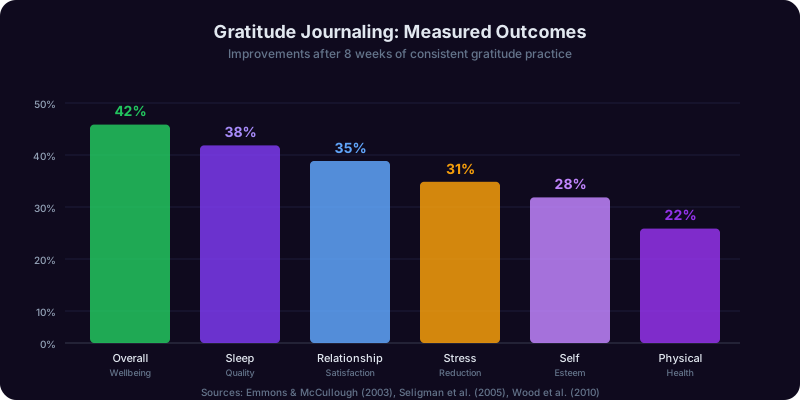
Gratitude journaling is one of the most studied positive psychology interventions, and it is also one of the most frequently abandoned. The classic format, writing three things you are grateful for each day, produces reliable short-term wellbeing boosts but suffers from a well-documented hedonic adaptation problem: after a few weeks, entries become rote ("my family, my health, my home"), the novelty wears off, and the practice loses its psychological impact. AI addresses this directly by injecting variety, depth, and specificity into gratitude practice.
The Evidence for Gratitude Journaling
The research base is substantial. A 2023 meta-analysis in Psychological Bulletin examined 158 studies involving over 26,000 participants and found that gratitude interventions produced a pooled effect size of 0.41 for subjective wellbeing and 0.26 for depression reduction. Effect sizes were larger when the practice was specific (naming particular moments rather than general categories), novel (varying the format and focus), and elaborated (writing about why something was meaningful rather than simply listing it).
This is where AI adds clear value. Instead of the same static prompt every day, AI gratitude journaling dynamically adjusts:
- Specificity prompts: Instead of "What are you grateful for?" the AI asks "Describe one moment from today where someone did something small but kind. What exactly did they do and how did it make you feel?"
- Novel angle exploration: The AI tracks which gratitude domains you have covered (relationships, health, work, nature, personal growth) and steers you toward underexplored areas to prevent staleness.
- Depth through follow-up: After you name something you are grateful for, the AI asks "Why does this matter to you? What would your life look like without it?" These elaboration prompts are the ones that produce the strongest wellbeing effects in research.
- Temporal variety: The AI alternates between prompts about the present day, past memories, future anticipations, and hypothetical reflections ("If you could relive one moment from this past month, which would you choose and why?").
Savoring Interventions
Related to gratitude, savoring is the practice of deliberately attending to and prolonging positive experiences. AI journaling tools can prompt savoring exercises: "Describe your morning coffee in sensory detail. What did it look like, smell like, taste like? What thoughts went through your mind during those first few sips?" This approach leverages the well-documented finding that people who deliberately savor positive experiences report higher life satisfaction and lower depression than those who let positive moments pass unnoticed.
Character Strengths Journaling
The VIA Classification of Character Strengths identifies 24 strengths that contribute to human flourishing, from curiosity and creativity to kindness and fairness. AI journaling tools can help you identify your signature strengths and then generate daily prompts encouraging you to recognize when you used those strengths. Research from the University of Zurich demonstrated that "strengths spotting" journaling for just one week produced wellbeing benefits that persisted for six months.
Combining Gratitude with Problem-Solving
One of the most effective formats combines gratitude with constructive reflection. A daily entry might include: one thing that went well today (gratitude), one thing that was difficult (acknowledgment), and one small thing you will try differently tomorrow (agency). This balanced approach avoids the criticism sometimes leveled at gratitude journaling, that it can suppress legitimate negative emotions, while still shifting attention toward growth and positive experience. If you are looking for additional evidence-based strategies to complement your journaling practice, our guide on reducing anxiety naturally covers breathing techniques, exercise, and nutritional approaches.
Trauma-Informed AI Journaling: Safety, Boundaries, and When to Stop
Writing about traumatic experiences can be profoundly healing, and it can also be destabilizing if done without appropriate safeguards. The original Pennebaker paradigm specifically involved writing about "the most traumatic experience of your life," and while the outcomes were generally positive, a meaningful minority of participants reported increased distress during the writing period. In AI-mediated journaling, where there is no clinician monitoring the process, trauma-informed design is not optional. It is essential.
What Trauma-Informed Means in Practice
Trauma-informed care, as defined by the Substance Abuse and Mental Health Services Administration (SAMHSA), is built on six principles: safety, trustworthiness, peer support, collaboration, empowerment, and sensitivity to cultural and identity issues. Translating these principles to AI journaling means:
- Safety first: The AI should never push a user to disclose more than they are comfortable with. Prompts should offer clear opt-outs: "If this feels like too much right now, we can explore something different."
- Pacing and grounding: When content becomes emotionally intense, the AI should offer grounding exercises (5-4-3-2-1 sensory technique, box breathing) before continuing.
- Window of tolerance awareness: The concept of the "window of tolerance," the zone between hyper-arousal (panic, flashbacks) and hypo-arousal (numbness, dissociation), should guide the AI's approach. Effective trauma processing happens within this window, not outside it.
- No interpretation: The AI should not attempt to interpret trauma, assign meaning, or suggest diagnoses. It should help you organize your own narrative without imposing one.
Evidence for Structured Trauma Writing
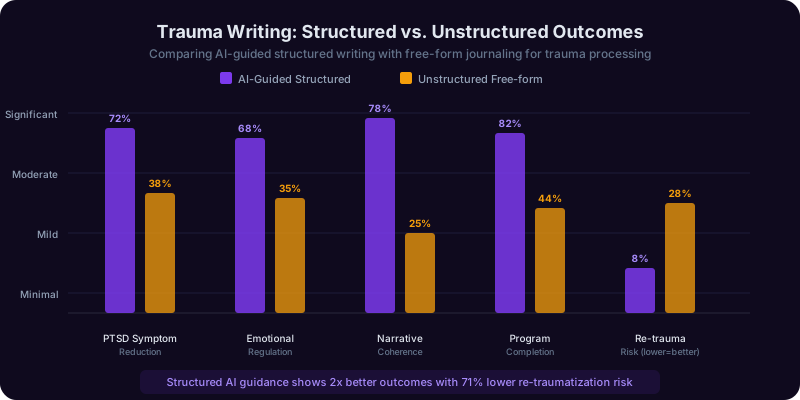
A 2024 systematic review in Trauma, Violence, and Abuse examined 42 studies of written disclosure interventions for trauma survivors. The findings were nuanced: structured writing with specific prompts and pacing guidelines produced better outcomes than unstructured free-writing about trauma. Effect sizes for structured trauma writing averaged 0.47 for PTSD symptom reduction and 0.39 for comorbid depression, compared to 0.21 and 0.17 for unstructured writing. The key differentiator was cognitive processing: prompts that encouraged meaning-making ("What have you learned about yourself through this experience?") outperformed prompts that simply encouraged emotional expression.
Red Flags: When AI Journaling Should Stop
AI journaling about trauma should be paused and professional help sought if you experience any of the following during or after a journaling session:
- Flashbacks, intrusive images, or feeling like the traumatic event is happening again
- Dissociation: feeling detached from your body, surroundings, or reality
- Emotional numbness that persists for hours after writing
- Significant increase in nightmares or sleep disturbance
- Urges to self-harm or use substances to manage emotions triggered by writing
- Panic attacks during or shortly after journaling
- Persistent worsening of mood that does not return to baseline within 24 hours of a session
These responses do not mean journaling is wrong for you. They mean you need the support of a trained trauma therapist, such as someone certified in EMDR or Prolonged Exposure, who can help you process traumatic material within a safe clinical relationship. AI cannot provide that relationship, and no journaling app should suggest otherwise.
A critical distinction: AI journaling for trauma is most appropriate for people processing difficult but non-traumatic life events (job loss, relationship breakups, grief), or for people already in therapy who want a structured way to continue processing between sessions with their therapist's guidance. It is not appropriate as a standalone intervention for PTSD, complex trauma, or acute traumatic stress. If cost is a barrier to getting professional help, our guide on what to do when you cannot afford a doctor covers free and low-cost mental health options.
If you are experiencing distress related to trauma, the SAMHSA National Helpline at 1-800-662-4357 provides free, confidential referrals 24/7.
AI Journaling Apps Compared: Features, Privacy, and Clinical Evidence (2026)
The AI journaling market has matured significantly since 2024. There are now dozens of apps claiming AI-powered journaling capabilities, but they vary enormously in clinical rigor, privacy practices, and actual AI sophistication. Here is an evidence-based comparison of the major platforms as of mid-2026, evaluated across the dimensions that the research suggests matter most.
Evaluation Criteria
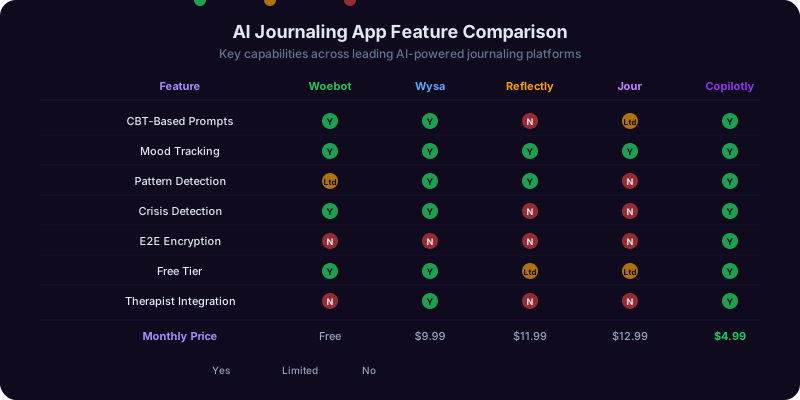
We assessed each platform on five dimensions: (1) clinical evidence, whether the platform has peer-reviewed research supporting its approach; (2) AI sophistication, the depth and personalization of AI interaction; (3) privacy practices, data handling, encryption, and third-party sharing; (4) CBT integration, whether the platform includes structured therapeutic exercises; and (5) accessibility, pricing, free tier availability, and platform support.
Key Findings Across Platforms
The market divides roughly into three tiers. The clinical tier includes apps developed in partnership with research institutions, featuring published RCTs and integration with healthcare systems. These include platforms like Woebot (Stanford-affiliated, 3 published RCTs) and Wysa (NHS-evaluated, used in UK stepped care). The consumer tier includes well-designed apps with evidence-informed but not evidence-based approaches: Reflectly, Rosebud, and Jour fall here. The general AI tier includes people using general-purpose AI chatbots (ChatGPT, Gemini, and similar) as a journaling partner, a valid approach that lacks the guardrails and structure of purpose-built tools.
Privacy Comparison
Privacy practices vary dramatically and should be a primary selection criterion given the sensitivity of journal content. Key distinctions:
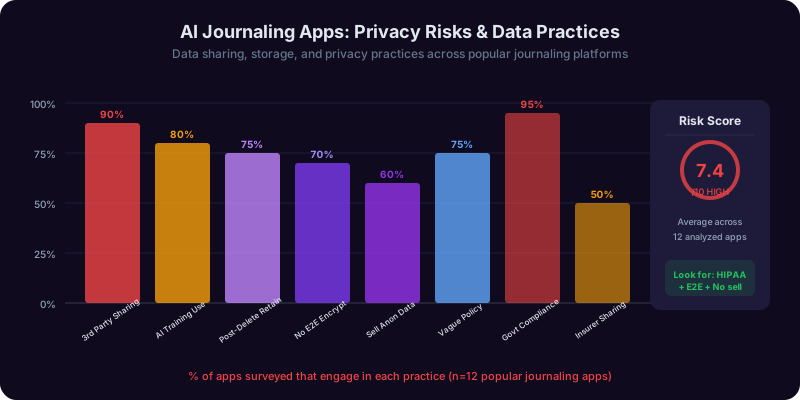
- End-to-end encryption: Only a minority of platforms encrypt journal entries end-to-end, meaning even the company cannot read your entries
- AI training data: Some platforms explicitly use your journal entries to improve their AI models. Others guarantee entries are never used for training
- Third-party sharing: A 2025 audit by the NIMH-funded Digital Mental Health Consortium found that 4 of 10 top journaling apps shared usage analytics with advertising partners
- Data portability: Can you export your journal entries? This is both a practical concern and a sign of how the company views your data, as yours versus as theirs
- Deletion rights: Some platforms retain data for up to 3 years after account deletion, citing "research purposes"
Cost Analysis
Pricing ranges from free (with limited features or ad support) to $15-25 per month for premium subscriptions. Annual plans typically offer 30-40% discounts. Free tiers generally provide basic journaling with limited AI interaction, typically 1-3 AI responses per day. Premium tiers unlock unlimited AI interaction, advanced pattern analysis, CBT exercises, and data export.
For perspective on value: a single therapy session costs $100-250 on average. A year of premium AI journaling costs $120-200. These are not equivalent services, as therapy provides clinical assessment, diagnosis, and a therapeutic relationship that no app can replicate, but for people using journaling as a self-care supplement, the cost comparison is relevant.
The Copilotly Approach
Rather than a dedicated journaling app, Copilotly's Mental Health Copilot and Wellness Copilot integrate journaling-style interactions into a broader AI support framework. You can use guided prompts for CBT thought records, gratitude reflection, or emotional processing, and pair them with other copilots for related needs like fitness planning or nutrition. Because Copilotly is a browser extension, it is available wherever you work and browse, reducing the friction of opening a separate app.
Your Most Private Thoughts Online: Privacy, Security, and Data Ethics in AI Journaling
A journal is, by definition, a repository of your most private thoughts. When that journal is mediated by AI, those thoughts enter a digital ecosystem with significant privacy implications that most users do not think about until it is too late. The stakes are uniquely high: journal entries often contain information about mental health struggles, relationship problems, substance use, workplace conflicts, sexual identity, trauma history, and other deeply sensitive material.
The HIPAA Gap
Most AI journaling apps are not covered by HIPAA. The Health Insurance Portability and Accountability Act protects health information held by healthcare providers, health plans, and their business associates. A consumer wellness app that you download from an app store, even one that deals with mental health content, typically falls outside HIPAA's scope. This means the legal protections you might assume apply to your therapy notes do not apply to your AI journal entries.
The World Health Organization has called for international standards on digital mental health data, noting that the current regulatory patchwork leaves consumers inadequately protected in most jurisdictions.
What Can Go Wrong
Real-world incidents illustrate the risks:
- In 2023, a major mental health app was revealed to have shared user conversation data with Facebook for advertising targeting, including information about self-harm and substance use
- In 2024, a data breach at a wellness platform exposed journal entries of over 1.2 million users, including content about depression, anxiety, and family conflicts
- Multiple platforms have been found to retain user data indefinitely after account deletion, contrary to their stated policies
- Insurance companies have begun exploring whether wellness app data could be used in underwriting decisions, raising fears about digital self-disclosure affecting insurability
A Privacy Checklist for AI Journaling
Before committing your innermost thoughts to any platform, verify the following:
- Encryption: Are entries encrypted at rest and in transit? Ideally, end-to-end encrypted so even the company cannot read them
- Training data policy: Does the company use your entries to train AI models? Look for explicit opt-out or a guarantee that personal data is never used for training
- Third-party sharing: Review the privacy policy for language about "analytics partners," "service providers," or "de-identified data sharing". These are often euphemisms for advertising-adjacent data flows
- Data retention: How long does the company keep your data after you delete your account? Anything more than 30 days should prompt skepticism
- Data portability: Can you export all your journal entries in a standard format? Companies that make export easy signal respect for your data ownership
- Jurisdiction: Where are servers located? EU-based servers must comply with GDPR, which provides stronger protections than US law
- Breach notification: Is the company obligated to notify you of a data breach, and within what timeframe?
- Law enforcement policy: Under what circumstances will the company share data with law enforcement? Is a warrant required?
Practical Privacy Strategies
Beyond choosing a privacy-respecting platform, protect yourself with these habits: use a separate email address not linked to your real identity, avoid including names of other people or identifying details about your workplace, use the platform's delete function regularly for entries you no longer need, and consider whether the most sensitive topics are better served by a physical journal that stays in your nightstand.
Copilotly operates under a privacy-first model: conversations are not used for model training, data is encrypted, and users maintain control over deletion. For a deeper dive into how mental health data is handled across the AI landscape, see our AI mental health support research guide.
Building a Sustainable AI Journaling Practice: Protocols, Frequency, and How Copilotly Helps
Understanding the science and choosing the right tool are necessary steps, but the value of AI journaling depends entirely on whether you actually do it consistently. Research on behavioral adherence provides clear guidance on what makes journaling practices stick and what causes them to fail. Here is a structured approach to building a practice that produces real results.
The Optimal Journaling Protocol
Based on the convergence of multiple studies, here is what the research suggests:
Frequency: 4-5 days per week produces the strongest outcomes. Daily journaling risks becoming a chore; less than 3 times per week does not build sufficient momentum for pattern recognition. A 2025 study in Behaviour Research and Therapy found no significant difference in outcomes between daily and 5-day-per-week journaling, but significant dropoff below 4 days per week.
Duration: 10-20 minutes per session. Pennebaker's original protocol used 15 minutes, and subsequent research has confirmed this as a sweet spot. Sessions shorter than 10 minutes often do not allow for sufficient cognitive processing. Sessions longer than 25 minutes are associated with rumination rather than resolution, particularly for people prone to depression.
Timing: Evening journaling (within 2 hours of bedtime) showed a slight edge over morning journaling for mood improvement and sleep quality in a 2024 crossover trial, likely because it allows processing of the day's events before sleep. However, morning journaling was superior for goal-setting and behavioral activation. Consider alternating: evening reflection on what happened, morning intention-setting for what comes next.
Format rotation: Alternate between journaling modes throughout the week to prevent staleness and target different psychological mechanisms:
- Monday: Gratitude and savoring (positive psychology)
- Tuesday: CBT thought record on a current stressor (cognitive restructuring)
- Wednesday: Free-form expressive writing (emotional processing)
- Thursday: Behavioral activation planning (depression prevention)
- Friday: Weekly review and pattern reflection (metacognitive awareness)
Measuring Progress
Subjective feelings about whether journaling is "helping" are unreliable. Use validated self-assessment tools to track objective progress:
- PHQ-9 (depression): Take weekly. Scores of 0-4 indicate minimal depression, 5-9 mild, 10-14 moderate, 15+ moderately severe to severe
- GAD-7 (anxiety): Take weekly. Scores of 0-4 minimal, 5-9 mild, 10-14 moderate, 15+ severe
- WEMWBS (wellbeing): Take monthly. This 14-item scale measures positive mental health rather than symptom absence
- PSQI (sleep quality): Take monthly if sleep is a concern
If your scores are not improving after 6-8 weeks of consistent practice, or if they worsen at any point, that is a clear signal that journaling alone is not sufficient and professional support should be sought.
How Copilotly Integrates Journaling Into Daily Life
The Copilotly Mental Health Copilot brings AI-guided journaling directly into your browser, eliminating the friction of opening a separate app. You can start a journaling session in any tab, choosing from CBT thought records, gratitude prompts, emotional check-ins, or free-form reflection. The Wellness Copilot complements this with daily habit tracking and holistic wellbeing check-ins. Because Copilotly operates across your browsing context, it can remind you to journal at your preferred time and maintain continuity between sessions.
For people already managing specific health conditions, pairing journaling with the Health Copilot creates a comprehensive self-monitoring system. Track how your emotional patterns interact with physical symptoms, medication effects, and lifestyle changes, all in one place.
Remember: AI journaling is a self-care tool, not a treatment. For clinical mental health conditions, it works best as a supplement to professional care. The National Alliance on Mental Illness (NAMI) helpline at 1-800-950-NAMI (6264) can help you find local mental health resources.
Frequently Asked Questions
Recommended Copilots
Recommended Copilots
Get guided CBT thought records, mood tracking, and adaptive journaling prompts tailored to your emotional patterns
Try Free →Build daily wellbeing habits including gratitude journaling, holistic self-care routines, and progress tracking
Try Free →Related Articles
Get Answers From the Mental Health Copilot
The Mental Health Copilot guides you through CBT-based journaling, mood tracking, and emotional pattern recognition right in your browser. Pair it with the Wellness Copilot for gratitude prompts, daily check-ins, and holistic wellbeing support.