
Your Security Deposit Rights: What the Law Actually Says
Every U.S. state has laws governing security deposits. These laws set limits on how much a landlord can charge, how long they have to return your deposit, and what they can deduct for. Landlords who violate these laws can face penalties - sometimes two or three times the deposit amount.
Here are the key protections that exist in most states:
- Return deadline: Landlords must return your deposit (or provide an itemized deduction list) within a specific number of days after you move out. This ranges from 14 to 60 days depending on the state.
- Itemized deductions: In most states, landlords cannot simply keep your deposit. They must provide a written, itemized list of deductions with receipts or cost estimates.
- Normal wear and tear: Landlords cannot charge you for normal wear and tear - faded paint, minor scuffs on hardwood floors, worn carpet in high-traffic areas. These are expected results of living in a home.
- Deposit limits: Many states cap security deposits at one or two months' rent.
- Separate accounts: Some states require landlords to hold security deposits in a separate bank account, sometimes interest-bearing, and disclose the account details to tenants.

The most common return deadlines by state:
| State | Return Deadline | Penalty for Violation |
|---|---|---|
| California | 21 days | Up to 2x deposit in bad faith |
| New York | 14 days | Full deposit + interest |
| Texas | 30 days | $100 + 3x wrongful deductions |
| Florida | 15-60 days (varies) | Full deposit if no notice given |
| Illinois | 30-45 days | 2x deposit in Chicago |
| Washington | 21 days | Up to 2x deposit |
| Colorado | 30 days (or per lease) | Up to 3x withheld amount |
If your landlord has missed the return deadline in your state, you may already have a winning case regardless of the condition of the apartment. Check your specific rights with the Tenant Rights Copilot.
For detailed state-by-state breakdowns, Nolo's security deposit guide provides a comprehensive reference updated for 2026.
Disclaimer: This is general information, not legal advice. State laws change frequently - verify current rules for your jurisdiction.
See our real-world walkthrough: landlord keeping security deposit.
Common Reasons Landlords Withhold Deposits (and Which Are Legitimate)
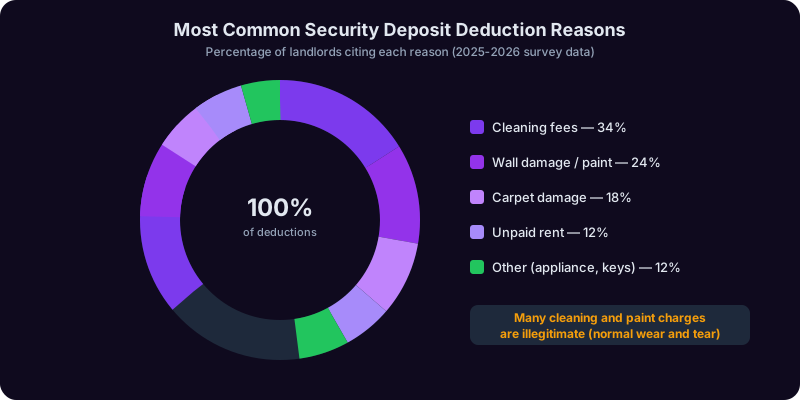
Not every deduction is illegal. Understanding what landlords can and cannot charge for helps you evaluate whether to fight back or accept the deduction.
Legitimate Deductions
- Unpaid rent: If you owe back rent, the landlord can deduct it from your deposit.
- Damage beyond normal wear and tear: Large holes in walls, broken windows, stained or burned carpet, broken appliances that you damaged, pet damage. These are valid deductions if documented.
- Cleaning costs (if truly excessive): If you left the apartment significantly dirtier than when you moved in - food residue in the oven, mold in the bathroom, trash left behind - a cleaning charge may be legitimate. However, routine cleaning between tenants is the landlord's cost, not yours.
- Missing items: If the apartment came furnished or included specific items (blinds, light fixtures) that are now missing.
Illegitimate Deductions
- Normal wear and tear: Faded paint, minor nail holes from hanging pictures, worn carpet, slightly scuffed floors, loose door handles from regular use. These are normal and cannot be charged to you.
- Pre-existing damage: Anything that was already damaged when you moved in - this is why move-in documentation is critical.
- Repainting for the next tenant: Unless you painted the walls an unauthorized color or caused unusual damage, repainting is the landlord's expense. Paint has an expected lifespan (typically 3-5 years), and if you lived there for several years, the landlord was going to repaint anyway.
- Carpet replacement after years of use: Carpet has a depreciated lifespan (typically 8-10 years). If you lived in the apartment for 7 years and the carpet needs replacing, that is depreciation, not damage.
- Upgrades disguised as repairs: Replacing a standard faucet with a premium one, upgrading appliances, or modernizing fixtures - these are improvements, not repairs, and cannot be charged to your deposit.
The key principle is depreciation. Everything in an apartment has a lifespan. If a carpet's expected life is 10 years and you lived there for 8, the landlord can only charge you for 2 years of remaining value, not the full replacement cost. The U.S. Department of Housing and Urban Development (HUD) provides additional guidance on tenant rights and landlord obligations.
Your Documentation Checklist: Building an Airtight Case
If you are going to dispute your landlord's deductions, documentation is everything. Judges in small claims court decide security deposit cases based on evidence, not stories. Here is exactly what you need.
Before You Move Out
- Photograph every room from multiple angles on the day you move out (after cleaning and removing all belongings). Use your phone's timestamp feature. Take at least 3-4 photos per room.
- Video walkthrough: Record a slow, narrated video walking through the entire apartment. State the date aloud at the beginning. Open cabinets, show appliances, show the condition of floors and walls.
- Clean thoroughly and photograph after cleaning. A clean apartment eliminates one of the most common deduction categories.
- Note the condition of everything: Walls, floors, carpet, appliances, fixtures, windows, doors, blinds, smoke detectors.
Documents to Gather
- Your original lease agreement - check the security deposit clause, move-out requirements, and any cleaning or notice provisions.
- Move-in inspection report or checklist - if you did one when you moved in, this is your strongest piece of evidence. It proves what was already damaged.
- Move-in photos - photos from the day you moved in showing pre-existing conditions.
- Rent payment records - bank statements, cancelled checks, or payment app records proving you paid all rent owed.
- Communication records - any emails, texts, or letters between you and the landlord about maintenance requests, repairs, or the security deposit.
- Your forwarding address notice - proof that you provided a forwarding address (required in most states for the landlord to send the deposit).
After Your Landlord Makes Deductions
- The landlord's itemized deduction list - required in most states. If they did not provide one, note that.
- Receipts or invoices - did the landlord include receipts for the repair or cleaning work? If not, request them in writing.
- Your dispute letter - a formal written response to the deductions (send by certified mail, just like a demand letter).
Organize all of this in a folder - physical or digital. If you end up in small claims court, walking in with an organized evidence folder dramatically increases your credibility with the judge. For a deeper dive into documentation best practices, our guide on writing a demand letter covers many of the same principles.

Get Answers From the Tenant Rights Copilot
The Tenant Rights Copilot knows your state's deposit laws, deadlines, and penalty amounts. Get a step-by-step recovery plan and a demand letter draft in minutes.
How to Dispute Unfair Security Deposit Deductions
If your landlord has withheld your deposit or made deductions you believe are unfair, follow this step-by-step process.

Step 1: Review the Deduction List Carefully
Read every line item. Compare each deduction against your move-out photos and your move-in condition report. Identify which deductions are legitimate, which are questionable, and which are clearly wrong.
Step 2: Research Your State's Rules
Look up your state's specific security deposit statute. Key questions: Did the landlord return the deposit within the legal deadline? Did they provide an itemized list as required? Are they charging for normal wear and tear? Did they hold the deposit in a proper account? Violations of any of these rules strengthen your case significantly. The LawHelp.org directory can connect you with free legal aid in your state.
Step 3: Write a Formal Dispute Letter
Send a written letter (certified mail, return receipt requested) to your landlord that:
- References your lease and move-out date
- Lists each deduction you are disputing and why
- Cites the specific state law the landlord is violating
- Includes or references your evidence (photos, move-in report)
- Demands return of the disputed amount within a specific deadline (14-30 days)
- States that you will file in small claims court if the matter is not resolved
Step 4: Give Them Time to Respond
Many landlords will negotiate or return the deposit at this stage, especially if you have cited the correct law and demonstrated that you have evidence. Property management companies in particular want to avoid court.
Step 5: Escalate If Necessary
If the landlord does not respond or refuses to return the deposit, your options are:
- File a complaint with your state or city's tenant protection agency or housing authority
- Contact a tenant rights organization - many offer free advice or mediation
- File in small claims court - this is the most common and effective escalation path
Need help writing your dispute letter or understanding your state's specific rules? The Tenant Rights Copilot can walk you through the process step by step, including generating a dispute letter tailored to your state's laws. If you are dealing with a particularly aggressive landlord or property manager, you may also want to review our guide on cease and desist letters.
Taking Your Landlord to Small Claims Court
Small claims court is designed for exactly this type of dispute. It is affordable, does not require a lawyer, and security deposit cases are among the most common claims filed. Here is what to expect.
Filing the Claim
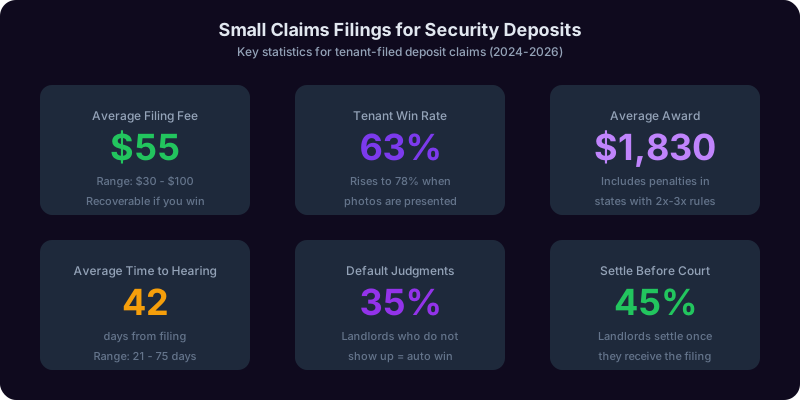
Go to your county's small claims court clerk (in person or online, depending on the jurisdiction). You will need the landlord's full legal name and address, a description of your claim, and the amount you are seeking. Filing fees typically range from $30 to $100, and you can request the court add this to your judgment if you win.
What to Claim
In many states, you can claim more than just the withheld deposit amount:
- The wrongfully withheld deposit amount
- Statutory penalties: Many states allow 2x or 3x the deposit amount if the landlord acted in bad faith
- Interest: If your state requires interest-bearing deposit accounts
- Court costs and filing fees
Preparing for Court
Organize your evidence folder with:
- Your lease agreement
- Move-in inspection report and photos
- Move-out photos and video
- The landlord's deduction list (or proof they never sent one)
- Your dispute letter and certified mail receipt
- Copies of relevant state statutes
- A clear, written summary of your timeline and claim
In the Courtroom
Small claims court is relatively informal. The judge will ask both sides to explain their position. Present your case chronologically: the lease, the condition at move-in, the condition at move-out, the landlord's deductions, and why they are wrong. Let your photos and documents do the heavy lifting. Be calm, factual, and organized. Try our AI lease review tool for step-by-step help.
Most security deposit cases in small claims court take 15-30 minutes. Judges see these cases frequently and can usually determine the outcome quickly when the evidence is clear. For a detailed walkthrough of the small claims process, try the Small Claims Copilot. Our comprehensive small claims court guide covers the full process in depth.
Timeline: From Move-Out to Getting Your Money Back
Understanding the typical timeline helps you plan and avoid missing deadlines.
Day 1: Move Out
Complete your move-out documentation (photos, video, cleaning). Return all keys. Provide your forwarding address in writing to the landlord. Request a move-out inspection if your state or lease allows it.
Days 1-30: Waiting Period
Your landlord has a state-specific deadline (14-60 days) to return your deposit or provide an itemized deduction list. Do not contact them repeatedly during this period - let the deadline pass.
Day 30-35: Evaluate What You Received
If the deadline has passed with no response, or you received deductions you disagree with, begin your dispute process. Research your state law and gather your evidence.
Day 35-45: Send Your Dispute Letter
Draft and send your formal dispute letter via certified mail. Give the landlord 14-21 days to respond.
Day 55-65: Evaluate the Response
If the landlord pays, you are done. If they offer a partial payment, decide whether to accept or escalate. If they ignore you or refuse, move to small claims court.
Day 65-75: File in Small Claims Court
File your claim. The court will schedule a hearing date, typically 30-60 days out.
Day 95-135: Court Hearing
Present your case. The judge may rule immediately or issue a decision within a few days.
Day 135+: Collect Your Judgment
If you win, the landlord has a set period to pay (usually 30 days). If they do not pay voluntarily, you can pursue wage garnishment, bank levy, or other collection methods available in your state.
Total realistic timeline: 3-5 months from move-out to resolution. It takes patience, but the process works. Most landlords settle before the court date once they realize you have a solid case and are willing to follow through.
State-Specific Rules You Need to Know
Security deposit laws vary significantly by state. Here are notable rules in the most populous states that tenants frequently overlook.

California
Landlords must return the deposit within 21 days. Deductions must include receipts or good-faith estimates. If estimates are used, actual receipts must follow within 14 days. Landlords cannot deduct for normal painting or carpet cleaning unless the tenant caused unusual damage. Bad faith retention can result in up to 2x the deposit in penalties. See the California Courts self-help guide for filing details.
New York
As of 2026, landlords must return deposits within 14 days with an itemized statement. Deposits must be held in interest-bearing accounts (for buildings with 6+ units). Landlords must notify tenants of the bank name and address. New York City tenants have additional protections under local housing laws.
Texas
Landlords have 30 days to return the deposit. If they wrongfully withhold, tenants can recover $100 plus 3x the wrongfully withheld portion, plus attorney's fees. Tenants must provide a forwarding address in writing - without it, the landlord's obligation is weaker.
Florida
The timeline depends on whether the landlord intends to make deductions. If no deductions: 15 days. If deductions: the landlord must send a written notice of intent within 30 days, and the tenant has 15 days to dispute. If the landlord does not send the notice, they forfeit the right to deduct.
Illinois (Chicago)
Chicago has some of the strongest tenant protections in the country. Landlords must pay interest on security deposits annually. Violations of the Chicago RLTO (Residential Landlord Tenant Ordinance) can result in 2x the deposit as a penalty. Many Chicago landlords have been successfully sued under this ordinance.
Washington State
Landlords must provide a written checklist at move-in and move-out. If they fail to provide the move-in checklist, they may lose the right to make deductions entirely. The deposit must be returned within 21 days with a full statement and receipts.
Not sure about your state's rules? The Tenant Rights Copilot covers all 50 states and can tell you exactly what applies to your situation.
When to Escalate: Lawyers, Agencies, and Other Options
Most security deposit disputes can be handled without a lawyer, but there are situations where additional help is warranted.
Contact a Tenant Rights Organization
Most cities and states have nonprofit tenant rights organizations that offer free or low-cost advice. They can review your case, help you write a dispute letter, and advise on local rules. Search for "[your city] tenant rights organization" or check with your state's housing authority.
File a Complaint with Your State Agency
Many states have a housing authority, consumer protection office, or attorney general's office that handles tenant complaints. Filing a complaint creates an official record and sometimes prompts the landlord to settle. This is especially effective against property management companies that handle many units and want to avoid regulatory attention. The Consumer Financial Protection Bureau (CFPB) can also help direct you to the right agency.
Consider a Lawyer When:
- The amount is large - if your deposit was $3,000+ and the landlord is withholding all of it, legal representation may be worth the cost
- Your landlord has a lawyer - if you receive a legal response, level the playing field
- The landlord is retaliating - if they are threatening to report you to collections, file an eviction on your record, or take other retaliatory actions
- You have a pattern claim - if you know the landlord does this to every tenant, an attorney may take the case on contingency or a tenant rights group may be interested in a broader action
Mediation
Some courts offer free or low-cost mediation services before a small claims hearing. Mediation puts both parties in a room with a neutral mediator who helps negotiate a resolution. It is faster than waiting for a court date and often produces results both parties can accept.
Collection After Judgment
Winning in court is one thing - collecting is another. If the landlord does not pay after a court judgment, you can:
- File for wage garnishment
- Request a bank levy
- Place a lien on the landlord's property
- Use a collection agency
These enforcement mechanisms vary by state. The court clerk can explain your options after you receive a judgment. Most landlords pay voluntarily once a judgment is entered, as unpaid judgments damage their credit and ability to obtain loans.
For more on this topic, read our guide on How to Write a Demand Letter That Gets Results. If you are also dealing with debt collectors related to disputed charges, our debt collector rights guide covers your protections under the FDCPA.
Frequently Asked Questions
Recommended Copilots
Recommended Copilots
Know your state-specific tenant rights and security deposit laws
Try Free →Draft a demand letter to your landlord or file a complaint
Try Free →Prepare your small claims court case to recover your deposit
Try Free →Continue Exploring
Related Scenarios
For You
How It Works
Related Articles
Get Answers From the Tenant Rights Copilot
The Tenant Rights Copilot knows your state's deposit laws, deadlines, and penalty amounts. Get a step-by-step recovery plan and a demand letter draft in minutes.