
When to Seek a Medical Second Opinion: The Data Behind the Decision
Getting a second opinion is not a sign of distrust. It is a standard, evidence-based practice that the medical profession itself recommends for complex or serious diagnoses. Yet most patients hesitate. A 2023 survey by the Mayo Clinic found that 88% of patients who sought a second opinion received a refined or entirely different diagnosis. In 21% of cases, the second opinion produced a distinctly different diagnosis from the first.
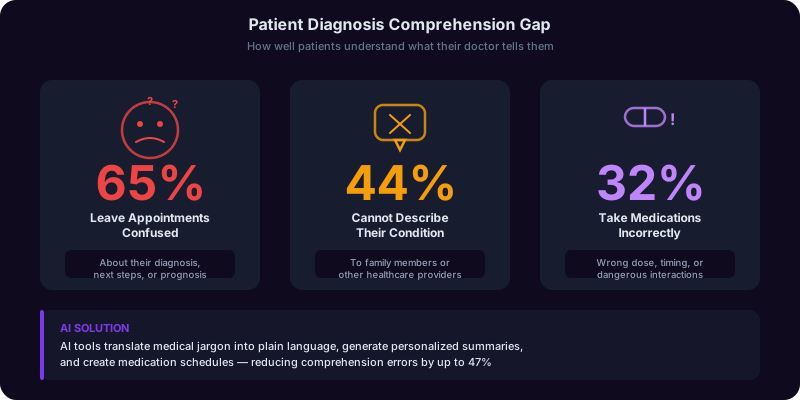
The stakes are higher than most people realize. According to research published by the National Institutes of Health, diagnostic errors affect approximately 12 million Americans annually in outpatient settings alone, roughly 1 in every 20 adults. The most commonly misdiagnosed conditions include cancer (particularly breast, colorectal, and lung), autoimmune disorders such as lupus and multiple sclerosis, cardiovascular conditions including heart failure and pulmonary embolism, and rare diseases where the average time to correct diagnosis exceeds four years.
When a second opinion is strongly recommended:
- You receive a diagnosis of cancer or another life-threatening condition
- Surgery is recommended, especially elective or irreversible procedures such as joint replacement, spinal fusion, or organ removal
- Your symptoms persist or worsen despite treatment that should be working
- You have been told nothing is wrong but your symptoms continue
- The proposed treatment carries significant risks or side effects
- You have a rare condition that your provider sees infrequently
- Multiple providers have given conflicting diagnoses
Treatment variation data reinforces why second opinions matter. Studies show that surgery recommendation rates for the same condition can vary by 30-60% between regions and providers. For example, spinal fusion surgery rates in some U.S. regions are five times higher than in others, despite similar patient populations. This variation suggests that provider preference and local practice patterns, not just clinical evidence, drive many treatment decisions.
The financial case for second opinions is equally compelling. The average cost of a second opinion consultation ranges from $200 to $600, while a misdiagnosed condition or unnecessary surgery can cost tens of thousands of dollars and months of recovery. Many insurance plans cover second opinions, and Medicare explicitly covers them for surgical recommendations.
Important: This guide provides general health information for educational purposes. AI tools are research assistants, not medical professionals. They do not diagnose conditions, prescribe treatments, or replace the clinical judgment of qualified physicians. Always make medical decisions in consultation with your healthcare provider.
How AI Helps You Research Medical Conditions and Diagnoses
The internet revolutionized patient access to medical information, but it also created an overwhelming landscape of unreliable sources, worst-case scenarios, and health anxiety spirals. AI tools in 2026 offer something fundamentally different: structured, contextual research that translates medical complexity into actionable understanding without the panic-inducing noise of a raw search engine.
What AI does well in medical research:
- Translating medical terminology. A diagnosis of "stage IIA invasive ductal carcinoma, ER-positive, HER2-negative" becomes understandable when AI explains each component: the cancer stage and what it means for prognosis, the specific type of breast cancer cell involved, and how hormone receptor status affects treatment options.
- Explaining disease mechanisms. Rather than memorizing treatment names, understanding why a disease progresses the way it does helps you make sense of the treatment rationale. AI can explain pathophysiology in accessible language, connecting the dots between symptoms, test results, and treatment approaches.
- Comparing published treatment protocols. For most common conditions, there are established clinical guidelines from organizations like the National Comprehensive Cancer Network or the American Heart Association. AI can summarize these guidelines and explain how they apply to your specific situation.
- Identifying questions you did not know to ask. This may be the most valuable capability. When you describe your diagnosis to an AI tool, it can surface relevant considerations you may not have encountered, such as genetic testing that might affect treatment choices, lifestyle modifications supported by evidence, or clinical staging details that affect prognosis.

A practical research workflow. When you receive a new diagnosis, follow this structured approach with AI:
- Ask for a plain-language explanation of the diagnosis, including what the condition is, what causes it, and how it typically progresses
- Ask about the standard treatment approaches and what clinical guidelines recommend
- Ask about the evidence behind each treatment option, including success rates and common side effects
- Ask what additional testing or specialist referrals are typical for your condition
- Ask the AI to generate a list of specific questions to bring to your next appointment
The Health Copilot is designed for exactly this workflow. It structures your research around your specific diagnosis, provides source-backed explanations, and helps you build a question list tailored to your situation. For a broader look at how AI supports the patient experience, see our guide on using AI for diagnosis, treatment, and bills.
AI-generated medical research is educational, not diagnostic. Use it to prepare for and enhance conversations with your healthcare provider, not to replace them.
Understanding Lab Results and Diagnostic Tests with AI
Lab results are the backbone of modern diagnosis, yet most patients receive them with little context beyond "normal" or "abnormal" flags. AI tools transform raw lab data into meaningful health intelligence by explaining what each marker measures, why your doctor ordered it, and what your specific values suggest in context.
Where AI adds the most value with lab results:
- Explaining what tests measure and why. An elevated CA-125 blood marker could indicate ovarian cancer, but it is also elevated in endometriosis, pelvic inflammatory disease, and even pregnancy. AI provides this context that a simple "high" flag does not.
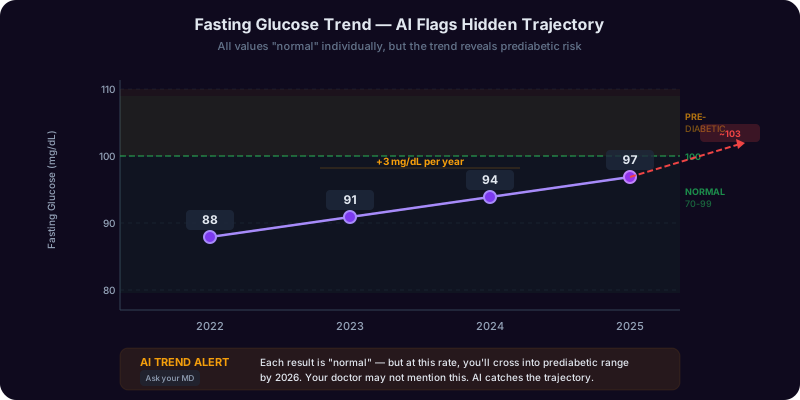
- Identifying trends across multiple tests. A single fasting glucose of 102 mg/dL is technically in the prediabetic range but might be a one-time fluctuation. Four readings over two years showing 88, 94, 98, and 102 reveal a clear trajectory toward diabetes that demands intervention. AI excels at spotting these patterns when you provide historical data.
- Explaining the relationship between multiple markers. An elevated TSH with a low Free T4 tells a different story than an elevated TSH alone. AI can explain how markers relate to each other and what combined patterns suggest.
Common diagnostic tests AI can help you understand:
| Test Category | Common Tests | What AI Can Explain |
| Blood panels | CBC, CMP, lipid panel, thyroid panel | Normal ranges, what deviations suggest, trends over time |
| Imaging | X-ray, CT, MRI, ultrasound | What the scan looks for, what findings like "lesion" or "opacity" mean |
| Pathology | Biopsy results, cytology | What grade and stage terminology means, how it affects treatment |
| Genetic | BRCA, pharmacogenomic panels | What mutations mean for risk and treatment selection |
| Cardiac | EKG, echocardiogram, stress test | What terms like "ejection fraction" and "sinus rhythm" mean |
For a deep dive into blood work interpretation, see our complete guide to reading blood test results.
Important limitations. AI interprets lab results based on general medical knowledge. It does not have access to your full medical history, current medications, or physical examination findings, all of which your doctor uses to interpret the same results. A slightly elevated white blood cell count might be meaningless in a healthy person or urgent in someone on immunosuppressive therapy. Always discuss results with the provider who ordered them.
The Health Copilot can walk you through specific lab values, explain what they mean in plain language, and help you prepare informed questions for your follow-up appointment.
Lab result interpretation requires clinical context that AI cannot fully replicate. Use AI explanations as preparation for, not a replacement for, your doctor's assessment.

Get Answers From the Health Copilot
Ask a specialist AI copilot the question you just read about. Your first conversation needs no signup and no card.
Comparing Treatment Options: Medications, Surgery, and Alternatives
One of the most consequential moments in healthcare is choosing between treatment options. Your doctor may recommend one path, but for most conditions, multiple valid approaches exist with different risk-benefit profiles. AI helps you understand these options so you can participate meaningfully in shared decision-making with your provider.
Medication comparison. When prescribed a medication, AI can help you understand how it works (mechanism of action), effectiveness rates from clinical trials, common side effects and their frequency, drug interactions with anything else you take, whether a generic or biosimilar alternative exists, and long-term safety data. For example, if you are prescribed a GLP-1 receptor agonist for type 2 diabetes, AI can explain that these medications reduce A1C by an average of 1.0-1.8%, promote weight loss of 5-15% of body weight depending on the specific drug, have gastrointestinal side effects in 20-40% of patients that typically improve over weeks, and that seven different GLP-1 medications exist with different dosing schedules and side effect profiles.
Surgical versus conservative treatment. For many musculoskeletal and orthopedic conditions, both surgical and conservative approaches have evidence behind them. AI can help you compare success rates, recovery timelines, and long-term outcomes. Consider these evidence-based examples:
| Condition | Surgical Option | Conservative Option | Key Evidence |
| Meniscal tear | Arthroscopic surgery | Physical therapy | Multiple RCTs show PT equals surgery for degenerative tears |
| Mild-moderate knee OA | Knee replacement | PT + weight management | Surgery recommended only when conservative measures fail |
| Lumbar disc herniation | Discectomy | PT + time | 80-90% resolve with conservative care within 6-12 weeks |
| Rotator cuff tear (partial) | Surgical repair | PT + injection | Similar outcomes at 1-2 years for partial tears |
Complementary and integrative approaches. For conditions where evidence supports integrative therapies, AI can help you evaluate the research. Acupuncture has strong evidence for chronic low back pain and osteoarthritis. Cognitive behavioral therapy is as effective as medication for mild-to-moderate depression and anxiety. Dietary interventions have robust evidence for inflammatory conditions. The key is distinguishing evidence-based complementary approaches from unproven alternative treatments.
The Second Opinion Copilot is specifically designed to help you evaluate treatment recommendations against published evidence, compare options side by side, and generate targeted questions for your provider about the rationale behind their recommendation.
Treatment comparisons are for educational purposes. The best treatment for your specific situation depends on factors only your healthcare provider can fully evaluate, including your medical history, anatomy, and personal preferences.
Finding and Understanding Clinical Trials with AI
Clinical trials offer access to cutting-edge treatments months or years before they reach the general market. For patients with serious, rare, or treatment-resistant conditions, a clinical trial may represent the best available option. Yet fewer than 5% of eligible patients participate, largely because they do not know trials exist, cannot understand the eligibility criteria, or feel overwhelmed by the process. AI tools are changing this equation.
How to use AI for clinical trial research. The FDA maintains guidance on what patients should know about clinical trials, and ClinicalTrials.gov lists over 470,000 studies worldwide. The challenge is not finding trials. It is finding the right ones. AI helps by translating complex eligibility criteria written in medical jargon into plain language, filtering trials by your specific condition, location, and treatment history, explaining what each trial phase means for both risk and potential benefit, and identifying what participation involves including time commitments, travel requirements, and potential side effects.
Understanding trial phases:
| Phase | Purpose | Typical Size | What It Means for You |
| Phase I | Safety and dosing | 20-80 participants | First human testing. Highest uncertainty. Usually for patients who have exhausted standard options. |
| Phase II | Effectiveness | 100-300 participants | Testing whether the treatment works. More data on side effects. Often has a control group. |
| Phase III | Comparison with standard care | 1,000-3,000 participants | Large-scale confirmation. Compares new treatment to current best practice. Randomized. |
| Phase IV | Post-market surveillance | Several thousand | Treatment is already approved. Monitoring long-term effects and rare side effects. |
Key questions AI can help you answer about any trial:
- What is the experimental treatment and how does it work?
- What phase is the trial in, and what does that mean for risk?
- Is there a placebo arm, and what is the randomization process?
- What are the eligibility criteria, and do I likely qualify based on my history?
- What does participation involve: how often do I need to visit, what tests are required, and are travel costs covered?
- What are the known risks based on earlier phase data?
- Will I still receive standard care if I am in the control group?
Important safeguards. Legitimate clinical trials are reviewed by an Institutional Review Board (IRB), never charge patients for the experimental treatment, clearly explain risks in an informed consent document, and allow you to withdraw at any time. Be cautious of any trial that charges fees, lacks IRB approval, or pressures you to enroll quickly. AI can help you verify these safeguards before you commit.
Clinical trial participation is a serious medical decision. Discuss any trial you are considering with your treating physician, who can evaluate whether it is appropriate for your specific situation.
Preparing Doctor Visit Questions: A Second Opinion Checklist
Whether you are seeking a formal second opinion or simply want to get more value from a routine appointment, preparation is the single most impactful thing you can do. The average medical appointment lasts 15-18 minutes. Patients who arrive with organized records and prepared questions receive more thorough explanations, better treatment plans, and report higher satisfaction with their care.
Before a second opinion appointment, gather:
- All relevant medical records (you have a legal right to copies under HIPAA)
- Imaging studies on disc or via electronic sharing (not just the radiology report, but the actual images)
- Pathology slides if applicable (the consulting pathologist may want to review the original tissue)
- A complete medication list with dosages
- A chronological summary of your symptoms, diagnosis, and treatment to date
- Your primary doctor's recommended treatment plan in writing
The AI-powered second opinion question checklist:
- Diagnosis confirmation: Based on my records, do you agree with the diagnosis? What else could explain my symptoms?
- Staging and severity: Do you agree with the staging or severity assessment? Would you order any additional tests?
- Treatment alignment: Do you agree with the recommended treatment approach? What would you recommend differently?
- Evidence basis: What clinical guidelines or evidence supports your recommendation?
- Alternatives: What are the alternatives to the proposed treatment, and what are the trade-offs of each?
- Timeline: How urgently does treatment need to begin? Is it safe to take time for additional consultation?
- Experience: How many patients with my condition do you treat annually? What outcomes do you typically see?
- Red flags: What symptoms should prompt me to seek urgent care before my next scheduled visit?
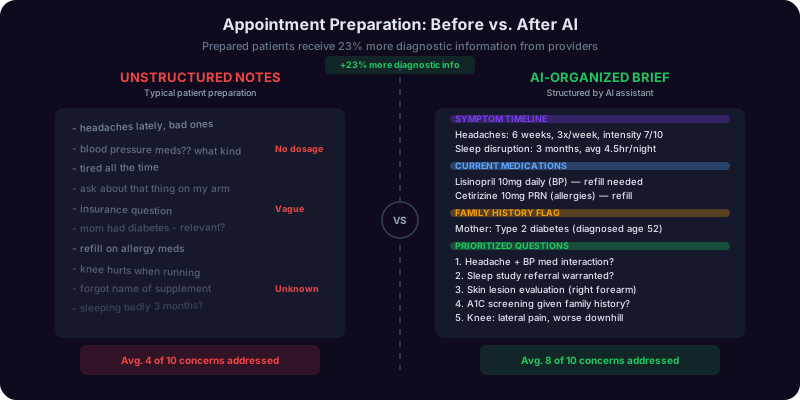
How AI helps you prepare. The Second Opinion Copilot can take your diagnosis and treatment plan as input and generate a customized question list tailored to your specific condition. It identifies the clinical considerations most relevant to your situation, surfaces questions you may not have thought to ask, and helps you organize your medical timeline into a concise summary that a consulting physician can review efficiently.
During the appointment. Take notes or, with permission, record the conversation. Ask the consulting physician to explain any areas where their assessment differs from your first opinion. Do not feel pressured to make decisions on the spot. A good second opinion physician will understand that you need time to compare recommendations and make a thoughtful decision.
After the appointment. Use AI to compare the two opinions side by side. Identify points of agreement and disagreement. If the opinions conflict significantly, a third opinion or a multidisciplinary tumor board (for cancer) may be warranted. For broader guidance on navigating complex professional decisions, see our guide on using AI for professional second opinions.
Second opinions are your right as a patient. Most physicians welcome them and view prepared, engaged patients as partners in care.
Limitations of AI Medical Advice and the Telemedicine Advantage
Understanding what AI cannot do is as important as understanding what it can. Responsible use of AI in healthcare requires clear-eyed awareness of its boundaries, and combining AI research with telemedicine creates a powerful approach that respects those boundaries while maximizing your access to expert guidance.
What AI cannot do (and should never be used for):
- Diagnose conditions. Diagnosis requires physical examination, medical history integration, and clinical judgment that no AI tool possesses. AI can help you understand a diagnosis, but it cannot make one.
- Prescribe or recommend specific medications. Medication decisions depend on your complete health profile, drug interactions, allergies, kidney and liver function, and other factors AI does not have access to.
- Replace emergency medical judgment. If you are experiencing symptoms like chest pain, difficulty breathing, sudden weakness, or severe bleeding, call 911 or go to the emergency room. AI cannot assess medical emergencies. See our guide on when to go to the emergency room.
- Interpret your results in full clinical context. A lab value, imaging finding, or symptom that is benign in one patient may be urgent in another. Only a provider who knows your full history can make that determination.
- Provide emotional support equivalent to a human provider. The therapeutic relationship with a trusted physician is irreplaceable.
The telemedicine plus AI combination. Telemedicine has expanded dramatically since 2020, and when combined with AI-assisted preparation, it creates an efficient pathway to expert second opinions. Here is how the combination works:
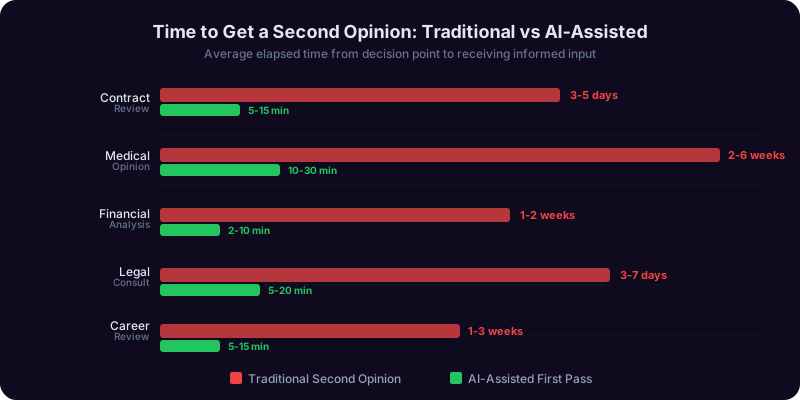
- AI research phase (30-60 minutes): Use AI to understand your diagnosis, research treatment options, and generate a structured question list
- Telemedicine consultation (15-30 minutes): Connect with a specialist via video who can review your records, examine you visually when relevant, and provide a clinical assessment
- AI follow-up phase (15-20 minutes): Use AI to understand the specialist's recommendations, compare them with your original treatment plan, and identify remaining questions
When telemedicine second opinions work well: Reviewing pathology or imaging results, evaluating a treatment plan for a condition already diagnosed with testing, medication management decisions, mental health consultations, and dermatology assessments via high-quality photos. When in-person is better: Conditions requiring hands-on examination, surgical consultations where the surgeon needs to assess anatomy directly, and complex cases where multi-specialty coordination is needed.
Major academic medical centers now offer formal telemedicine second opinion programs. These programs typically cost $500-$2,000 and include comprehensive record review by a specialist team. For patients who cannot afford traditional second opinions, see our guide on what to do when you cannot afford a doctor.
AI is a research and preparation tool, not a clinical tool. The combination of AI-assisted research with qualified medical professionals, whether in-person or via telemedicine, delivers the best outcomes.
How Copilotly Helps You Navigate Medical Decisions with Confidence
Navigating a complex diagnosis, evaluating treatment options, and seeking a meaningful second opinion requires hours of research across fragmented sources. Copilotly's AI copilots streamline this entire process, putting structured health research at your fingertips directly in your browser.
The Health Copilot serves as your medical research translator. When you encounter unfamiliar terminology in a diagnosis letter, a patient portal result, or a medical article, it provides plain-language explanations in real time. It helps you build a structured understanding of your condition, from basic disease mechanism to treatment landscape, without requiring you to piece together information from dozens of separate searches. It also generates personalized question lists based on your specific diagnosis and treatment stage.
The Second Opinion Copilot is built specifically for patients evaluating medical recommendations. It helps you organize your medical records into a clear timeline, compare your current treatment plan against published clinical guidelines, identify areas where a second opinion would add the most value, and prepare for second opinion consultations with structured questions and organized documentation. It surfaces considerations you may not have encountered, such as genetic testing or relevant clinical trials.
Practical scenarios where Copilotly makes a measurable difference:
- New cancer diagnosis: The Health Copilot explains staging, grading, and receptor status. The Second Opinion Copilot helps you evaluate whether the proposed treatment aligns with NCCN guidelines and prepares you for a second opinion consultation.
- Surgical recommendation: Research success rates, complication rates, and conservative alternatives. Generate questions about the surgeon's experience and expected outcomes.
- Chronic condition management: Track lab results over time, understand medication changes, and identify when a specialist referral might be warranted.
- Lab result review: Paste your results and get instant plain-language explanations with trend analysis when you provide historical data. For detailed lab interpretation guidance, see our blood test results guide.
- Clinical trial exploration: Identify relevant trials, understand eligibility criteria, and evaluate what participation involves.
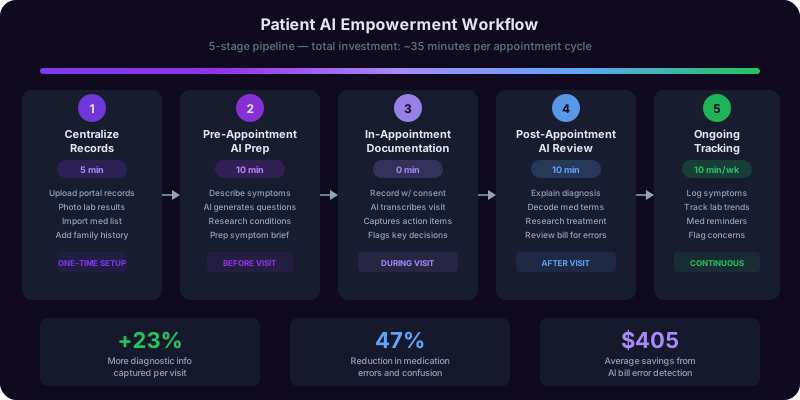
Why a browser extension matters for health research. Unlike standalone AI chat interfaces, Copilotly works where you already are. When you are reading your lab results on a patient portal, the copilot is there. When you are searching PubMed for treatment studies, it summarizes findings. When you are on ClinicalTrials.gov, it translates eligibility criteria. This contextual awareness eliminates the friction of switching between a research tool and the sources you are researching.
Copilotly does not store your medical data between sessions and does not claim to provide medical advice. It is a research accelerator that helps you become the informed, prepared patient that every good doctor wants to work with.
Copilotly is an AI research tool, not a medical device. It does not diagnose conditions, prescribe treatments, or replace professional medical advice. Always verify AI-generated health information with your healthcare provider before making medical decisions.
Frequently Asked Questions
Recommended Copilots
Recommended Copilots
Translates medical terminology, explains diagnoses in plain language, and helps you research conditions using published medical literature.
Try Free →Evaluates medical recommendations against clinical guidelines and helps you prepare organized, effective second opinion consultations.
Try Free →Related Articles
Get Answers From the Health Copilot
Ask a specialist AI copilot the question you just read about. Your first conversation needs no signup and no card.