
The AI Mental Health Landscape in 2026: Separating Evidence from Hype
The mental health technology market has exploded. By mid-2026, there are more than 20,000 mental health apps available across iOS and Android, and a growing subset incorporate AI in some meaningful capacity, whether through chatbot conversations, personalized psychoeducation, or adaptive mood tracking. Venture capital investment in AI mental health startups exceeded $5.2 billion between 2023 and 2025, according to Rock Health. The demand side is equally staggering: the World Health Organization estimates that roughly one in eight people globally lives with a mental health disorder, and fewer than half receive adequate treatment.
This gap between need and access is the central argument for AI mental health tools. In the United States alone, there is a shortage of approximately 150,000 mental health professionals, according to projections from the Health Resources and Services Administration. Wait times for a first therapy appointment average 6 to 8 weeks in urban areas and can stretch to months in rural communities. The average out-of-pocket cost for a therapy session is $100-$250, and even with insurance, co-pays and limited session caps create barriers.
Against this backdrop, AI tools that can provide some level of support immediately, at any hour, and at low or no cost represent a genuinely important development. But the critical question is not whether these tools exist. It is whether they work, for whom, under what conditions, and with what risks.
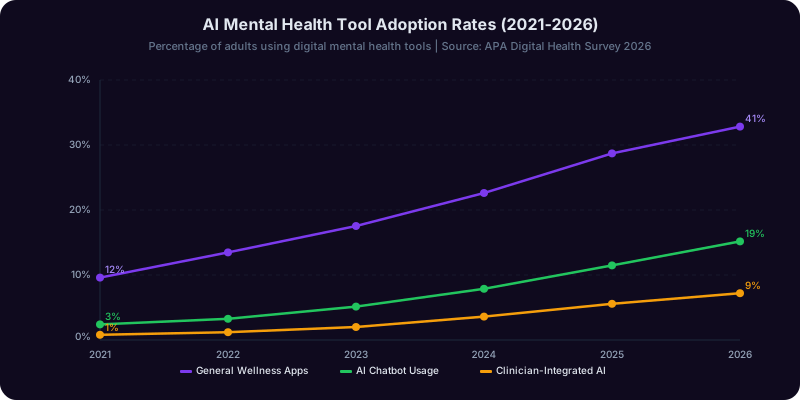
The research picture is decidedly mixed. A 2025 systematic review in Nature Digital Medicine examined 78 randomized controlled trials of AI-based mental health interventions published between 2019 and 2025. The review found moderate evidence supporting AI tools for mild to moderate symptoms of anxiety and depression when used as structured self-help programs, limited evidence for AI chatbots as standalone therapeutic agents, and insufficient evidence to draw conclusions about AI tools for serious mental health conditions including bipolar disorder, PTSD, psychotic disorders, and active suicidal ideation.
AI mental health tools occupy a real and valuable space in the continuum of care, but that space has boundaries. This guide examines the evidence category by category, distinguishes between responsible use cases and risky ones, and provides concrete guidance on when AI support is a reasonable choice and when it is not a substitute for professional care.
This guide is for informational purposes only and does not constitute medical or psychological advice. If you are in crisis, contact the 988 Suicide and Crisis Lifeline by calling or texting 988.
Where AI Mental Health Support Works: Evidence-Backed Use Cases
Not all applications of AI in mental health are created equal. Some have meaningful evidence behind them, while others are speculative at best. Here are the areas where the research is most encouraging.
Structured CBT Exercises and Psychoeducation
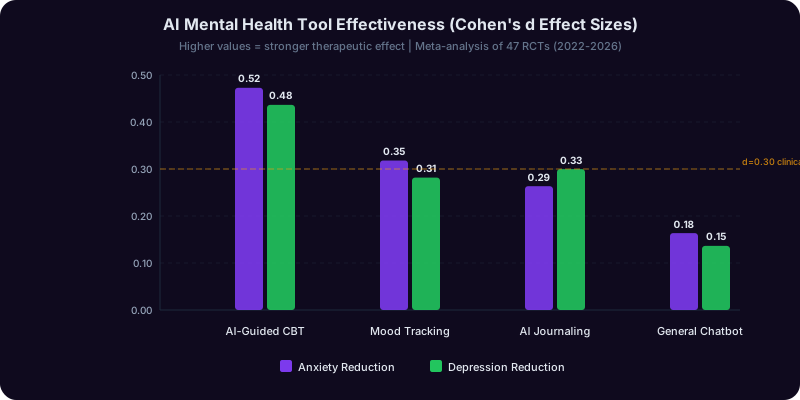
Cognitive Behavioral Therapy (CBT) is one of the most thoroughly researched forms of psychotherapy, and its structured, skills-based nature makes it well-suited to digital delivery. The American Psychological Association recognizes CBT as an evidence-based treatment for anxiety, depression, insomnia, and several other conditions. AI tools that guide users through structured CBT exercises, such as identifying cognitive distortions, challenging negative automatic thoughts, and practicing behavioral activation, have shown the most consistent positive results in clinical trials.
A 2024 meta-analysis in Psychological Medicine examined 34 RCTs of AI-guided CBT programs and found a pooled effect size of 0.52 for reducing symptoms of anxiety and 0.48 for depression, which represents a moderate and clinically meaningful benefit. These effect sizes were comparable to those found in earlier studies of non-AI computerized CBT, suggesting that the AI component does not substantially improve or diminish the core therapeutic mechanism.
Mood Tracking and Pattern Recognition
AI-powered mood tracking goes beyond simple logging. Machine learning algorithms can identify patterns in mood data over time, correlating emotional states with sleep, exercise, social interaction, weather, and other variables. A 2025 study in the Journal of Medical Internet Research found that participants who used AI-enhanced mood tracking for 12 weeks showed significantly greater improvement in emotional awareness and self-regulation compared to those using standard mood diaries.
Guided Journaling and Expressive Writing
AI-powered journaling prompts represent a low-risk, moderate-benefit use case. The therapeutic value of expressive writing is well-established, with decades of research demonstrating benefits for emotional processing and stress reduction. AI adds value by generating contextually relevant prompts, asking follow-up questions that deepen reflection, and helping users identify recurring themes over time.
Psychoeducation and Skills Training
AI excels at delivering personalized psychoeducation. Unlike static articles, an AI system can assess a user's knowledge level, tailor explanations, answer follow-up questions in real time, and revisit concepts based on demonstrated understanding. For a broader perspective on how AI tools can help you make sense of health information, see our guide on how to read blood test results.
The Copilotly Health Copilot is designed for exactly this kind of structured, evidence-based interaction: helping you understand symptoms, explore coping strategies, and prepare informed questions for your healthcare provider.
Where AI Falls Short: Limitations the Research Reveals
The enthusiasm around AI mental health tools has outpaced the evidence in several important areas. Understanding these limitations is not about dismissing the technology. It is about using it responsibly.
AI Cannot Diagnose Mental Health Conditions
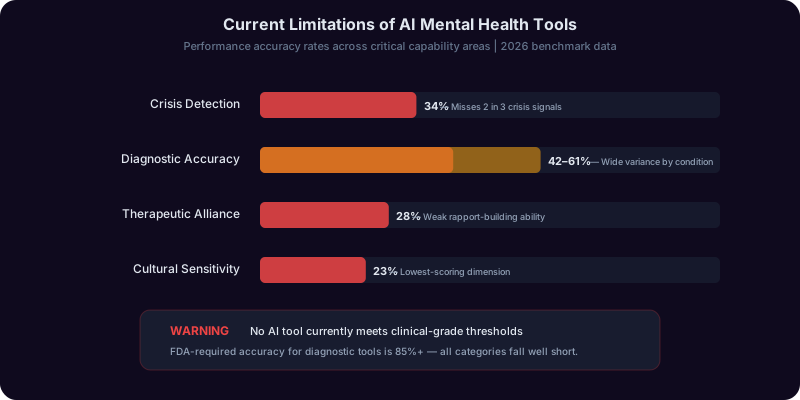
Despite marketing language that sometimes implies otherwise, no AI tool has been validated as a diagnostic instrument for any mental health condition. The National Institute of Mental Health emphasizes that diagnosis requires a comprehensive clinical assessment by a trained professional, including detailed history, differential diagnosis, and consideration of medical conditions that can mimic psychiatric symptoms. Thyroid disorders, vitamin deficiencies, medication side effects, and neurological conditions can all produce symptoms that look like depression, anxiety, or ADHD.
A 2025 study in JAMA Psychiatry tested four leading AI mental health chatbots by presenting them with standardized clinical vignettes. The chatbots correctly identified the most likely diagnosis in only 42-61% of cases, with particular difficulty distinguishing between conditions with overlapping symptoms. More concerning, they failed to flag medical conditions presenting as psychiatric symptoms in 78% of relevant vignettes.
AI Cannot Manage Crisis Situations Safely
This is the most critical limitation. When someone is experiencing active suicidal ideation, a psychotic episode, or severe self-harm urges, they need human intervention. AI systems lack the clinical judgment to assess immediate risk, coordinate emergency response, or make the nuanced safety decisions that crisis situations demand.
A 2025 audit by the Digital Therapeutics Alliance found that leading AI mental health apps detected explicit suicidal statements 89% of the time but detected implicit suicidal ideation, such as expressions of hopelessness or saying goodbye, only 34% of the time.
AI Cannot Form a Genuine Therapeutic Alliance
The single strongest predictor of therapy outcomes is the therapeutic alliance, the quality of the relationship between therapist and client. While users often report feeling heard by AI chatbots (the "ELIZA effect"), this is fundamentally different from a genuine therapeutic relationship. AI does not understand your experience. It generates statistically likely responses based on patterns in training data.
AI Has Limited Cultural Competence
Mental health is deeply influenced by cultural context. AI mental health tools are overwhelmingly trained on English-language, Western, and disproportionately white and middle-class datasets. A 2024 study in Cultural Diversity and Ethnic Minority Psychology found that AI chatbots performed significantly worse in recognizing culturally specific expressions of distress, such as somatic presentations of depression common in many Asian and Latino communities.
If you are navigating a complex mental health situation and want structured help thinking through your options, the Second Opinion Copilot can help you organize your thoughts and prepare questions. But it is designed to complement professional care, not replace it.

Get Answers From the Health Copilot
The Health Copilot helps you understand symptoms, explore coping strategies, track your progress, and prepare informed questions for your healthcare provider. Structured support that complements professional care.
When to See a Professional: The Clear Line Between AI Support and Clinical Care
Drawing a clear boundary between appropriate AI use and situations requiring professional help is not just an academic exercise. It can be a matter of safety. Here is a straightforward framework based on clinical guidelines from the APA and NIMH.
See a professional immediately if you are experiencing:
- Suicidal thoughts, plans, or intent (call 988 or go to your nearest emergency room)
- Self-harm or urges to harm yourself
- Hallucinations, delusions, or paranoid thinking
- Inability to perform basic daily functions (eating, sleeping, personal hygiene, getting out of bed)
- Severe panic attacks that feel like medical emergencies
- Thoughts of harming others
- Substance use that you cannot control
- Symptoms following a traumatic event (flashbacks, nightmares, hypervigilance)
- Manic episodes (dramatically decreased need for sleep, grandiosity, impulsive behavior)
See a professional within 1-2 weeks if you are experiencing:
- Persistent depressed mood lasting more than two weeks
- Anxiety that is interfering with work, relationships, or daily activities
- Significant changes in sleep or appetite persisting for more than two weeks
- Withdrawal from social activities you previously enjoyed
- Difficulty concentrating that is affecting your work or school performance
- Relationship problems that you cannot resolve on your own
- Grief that is not improving after several months
- Symptoms managed with AI tools that are not improving or are getting worse
AI support may be appropriate as a supplement or starting point if you are experiencing:
- Mild, situational stress or anxiety (work deadlines, social situations, life transitions)
- A desire to build general coping skills and emotional resilience
- Interest in exploring whether your experiences might warrant professional evaluation
- Need for structured self-help between therapy sessions (with your therapist's knowledge)
- General psychoeducation about mental health topics
- Mood tracking to identify personal patterns and triggers
- Journaling support for emotional processing
- Sleep hygiene improvement and relaxation techniques
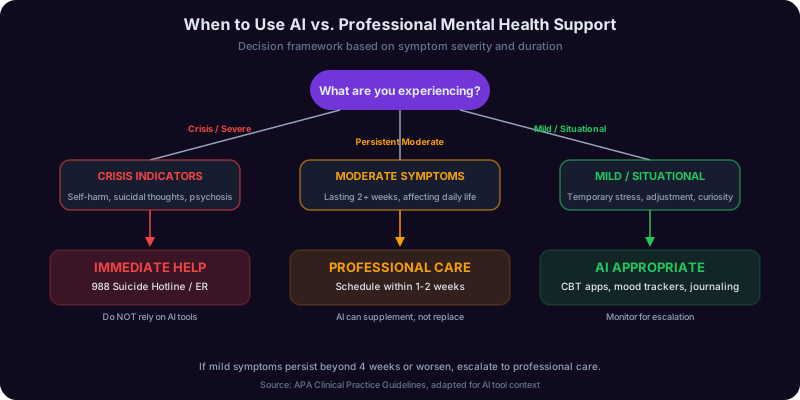
A critical concept here is stepped care, a model widely used in the UK, Australia, and the Netherlands. Low-intensity interventions (self-help, digital tools) are offered first for mild to moderate conditions, and people are "stepped up" to more intensive treatment if they do not improve. AI tools fit naturally into the lowest step, but only if there is a clear mechanism for stepping up when needed.
If you are using an AI tool and your symptoms are not improving after 4-6 weeks, or if they are worsening at any point, seek professional help. For guidance when cost is a concern, our guide on what to do when you cannot afford a doctor covers free and low-cost mental health options.
If you are in crisis right now, contact the 988 Suicide and Crisis Lifeline by calling or texting 988. You can also reach the Crisis Text Line by texting HOME to 741741.
Privacy and Data Safety: What Happens to Your Most Sensitive Data
Mental health data is among the most sensitive information a person can share. When you tell an AI system about your depression, anxiety, trauma history, or suicidal thoughts, that data enters a digital ecosystem with significant privacy implications that most users do not fully understand.
The Regulatory Landscape
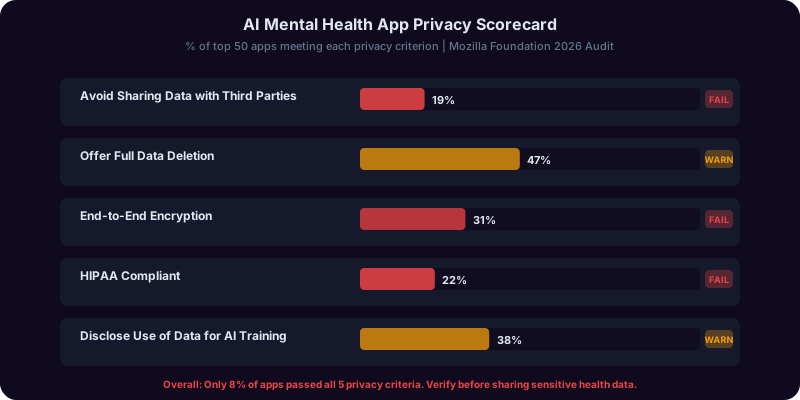
In the United States, the privacy protections you might assume apply to mental health data often do not. HIPAA only covers "covered entities": healthcare providers, health plans, and healthcare clearinghouses. Most AI mental health apps are not covered entities under HIPAA. Unless the app is prescribed by a clinician or integrated into a healthcare system, your conversations may not have the legal protections you expect.
A 2024 investigation by the Mozilla Foundation examined 32 popular mental health apps and found that 81% shared user data with third parties, including advertising networks and data brokers. 53% did not allow users to delete their data upon request. And 69% had privacy policies that explicitly permitted sharing "de-identified" data with partners, using definitions of de-identification that privacy researchers have demonstrated can often be reversed.
What to look for in a mental health app's privacy practices:
- HIPAA compliance: Is the app a covered entity or a business associate of one?
- End-to-end encryption: Are your conversations encrypted in transit and at rest?
- Data retention policy: How long does the company keep your data? Can you request deletion?
- Third-party sharing: Does the app share data with advertisers or data brokers?
- AI training: Is your conversation data used to train the company's AI models?
- Law enforcement access: Under what circumstances will the company share data with law enforcement?
- Data breach notification: What is the company's policy on breach notification?
The AI Training Data Problem
Many AI companies use customer interactions as training data. In the context of mental health, this means your descriptions of trauma, your relationship problems, and your substance use could become part of a training dataset. While companies typically claim this data is anonymized, research has repeatedly shown that anonymization of text data is extremely difficult, especially for detailed personal narratives.
Practical Privacy Steps
If you choose to use AI mental health tools, here are concrete steps to protect yourself:
- Use a separate email address not linked to your real identity
- Do not provide your real name, employer, or other identifying details unless necessary
- Read the privacy policy before sharing sensitive information
- Use platforms that offer conversation deletion and exercise that right regularly
- Prefer HIPAA-compliant or clinician-integrated tools over ad-supported consumer apps
Copilotly takes a privacy-first approach: conversations are not used for model training, and users maintain control over their data.
How to Use AI Mental Health Tools Effectively: A Practical Guide
If you have decided that an AI mental health tool is appropriate for your situation, here is how to get the most value from it while minimizing risk.
Set Clear Expectations
Understand what the tool is and what it is not. It is a structured self-help tool that can guide you through evidence-based exercises. It is not a therapist. It does not understand you. It generates responses based on patterns in data. Keeping this in mind protects you from developing an unhealthy dependence on a tool that cannot reciprocate the emotional investment you make in it.
Use It for Structured Activities, Not Open-Ended Venting
The research is clear that AI mental health tools produce the best outcomes when used for structured, skills-based activities:
CBT thought records: Ask the AI to walk you through a cognitive restructuring exercise. Describe a situation that upset you, identify the automatic thoughts that arose, examine the evidence for and against those thoughts, and generate a more balanced alternative thought.
Behavioral activation planning: If you are experiencing depression and withdrawing from activities, use the AI to help you create a graded activity schedule, starting with small, manageable activities and building up gradually.
Mood tracking with reflection: Log your mood at consistent intervals and use the AI to help you identify patterns. What triggers your best and worst days? Are there predictable cycles?
Psychoeducation deep dives: Ask the AI to explain specific concepts: what is the fight-or-flight response, how does sleep affect mood, what is the difference between sadness and clinical depression?
Guided journaling: Use AI-generated prompts to explore specific themes: gratitude, self-compassion, values clarification, or processing difficult emotions.
Establish Boundaries and Time Limits
Research consistently finds that more is not necessarily better. A 2025 study in Behaviour Research and Therapy found that participants who used an AI CBT tool for 15-20 minutes per day showed better outcomes than those who used it for 45 minutes or more per day. Excessive use was associated with rumination and reduced motivation to engage in real-world coping behaviors. Set a specific time and duration. Treat it like a workout: consistent, moderate engagement beats sporadic marathon sessions.
Track Your Progress Objectively
Use validated self-assessment tools to track whether you are actually improving. The PHQ-9 (for depression) and GAD-7 (for anxiety) are freely available and take less than 2 minutes to complete. Complete one weekly. If your scores are not improving after 4-6 weeks of consistent use, or if they are getting worse, that is a clear indicator that you need professional care. The Health Copilot can help you track these scores over time.
Tell Your Therapist About Your AI Use
If you are seeing a therapist and also using AI mental health tools, tell your therapist. Many therapists now integrate digital tools into treatment plans, using AI-guided exercises as between-session homework. Your therapist can help you identify which activities are most relevant to your goals and can course-correct if you are using the tools counterproductively.
What the Research Community Is Working On: 2026-2028 Outlook
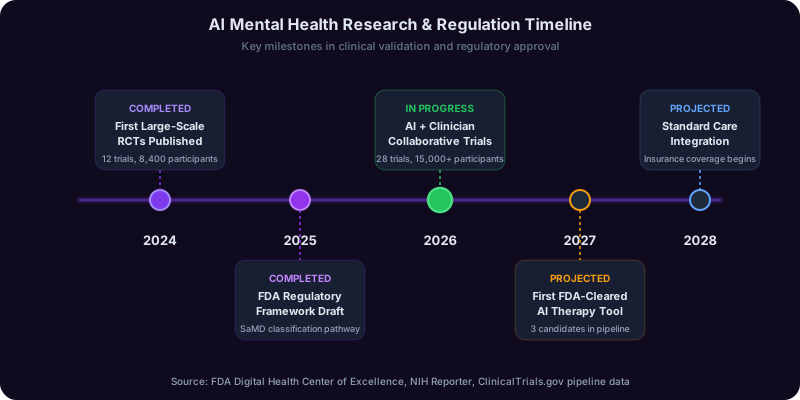
The field of AI-assisted mental health care is evolving rapidly, and several major research initiatives underway in 2026 are likely to reshape the landscape by 2028.
FDA-Regulated Digital Therapeutics
The most important development is the growing movement to subject AI mental health tools to regulatory scrutiny. The FDA's Digital Health Center of Excellence has been developing a framework for evaluating AI-based mental health interventions since 2023. As of 2026, several AI-guided CBT programs are undergoing FDA clearance processes as prescription digital therapeutics (PDTs). If approved, these would be the first AI mental health tools with FDA clearance for specific clinical indications, meaning they have met a meaningful evidence bar and are integrated into clinical workflow.
Clinician-AI Collaborative Models
The most promising research direction is not AI replacing therapists but AI augmenting them. Several large-scale trials are testing models where AI provides between-session support while a human therapist provides the clinical relationship and treatment planning. Early results from a 2025 pilot at the University of Washington found that therapists using AI-augmented care effectively treated 40% more patients without sacrificing outcome quality, because AI handled structured skill-building components that do not require human clinical judgment.
Bias Detection and Fairness Auditing
The research community is increasingly focused on identifying and mitigating bias. A consortium of universities and research hospitals launched the Equitable AI Mental Health Initiative in 2025, developing standardized testing protocols to evaluate how tools perform across demographics. Their preliminary findings confirm that current tools perform significantly worse for non-English speakers and people from non-Western cultural backgrounds.
Passive Sensing and Early Detection
An emerging area explores whether smartphone sensor data, including typing speed patterns, GPS movement, voice acoustics, and sleep patterns, can detect early signs of mental health deterioration. A 2025 study in Nature Medicine demonstrated that a machine learning model analyzing smartphone usage patterns could predict the onset of a depressive episode with 72% accuracy up to two weeks before symptom onset. This raises exciting possibilities and serious ethical questions about surveillance, consent, and false positives.
What This Means for You
AI mental health tools are going to get better, more regulated, and more integrated into clinical care over the next 2-3 years. But that future is not here yet. The tools available today are best understood as first-generation products operating in a lightly regulated environment. Use them with appropriate caution, realistic expectations, and a clear understanding of when they are not enough. For a broader perspective on how AI can complement professional advice, see our guide on using AI for a second opinion on professional decisions.
The Bottom Line: A Balanced Framework for AI and Mental Health
After reviewing the research, the capabilities, and the limitations, here is a clear-eyed summary of where things stand in mid-2026.
What AI mental health tools can do today, backed by evidence:
- Guide you through structured CBT exercises that reduce symptoms of mild to moderate anxiety and depression
- Help you track your mood over time and identify patterns and triggers you might not notice on your own
- Provide personalized psychoeducation about mental health conditions, medications, and coping strategies
- Offer guided journaling prompts that support emotional processing and self-reflection
- Deliver relaxation and mindfulness exercises
- Serve as a bridge to professional care by helping you articulate your experiences and prepare for clinical appointments
- Provide immediate, 24/7 access to structured coping exercises during moments of mild to moderate distress
What AI mental health tools cannot do, based on current evidence:
- Diagnose mental health conditions
- Replace the therapeutic alliance with a trained human clinician
- Safely manage crisis situations, including suicidal ideation, self-harm, psychosis, or severe dissociation
- Provide culturally competent care across all populations
- Treat severe or complex mental health conditions as a standalone intervention
- Prescribe or manage medication
- Provide the kind of deep, relational healing that comes from being truly understood by another person
A responsible approach to AI mental health support looks like this:
- Start with self-assessment. Use the framework in this guide to determine whether your situation falls into the "AI-appropriate" category or requires professional care. When in doubt, seek professional care.
- Choose tools carefully. Look for apps with published clinical evidence, transparent privacy practices, HIPAA compliance, and clear crisis protocols.
- Use structured activities. Focus on CBT exercises, mood tracking, journaling, and psychoeducation rather than open-ended venting.
- Set time limits. 15-20 minutes of focused daily use produces better outcomes than extended sessions.
- Track your progress. Use validated tools like the PHQ-9 and GAD-7 to objectively measure whether you are improving.
- Know when to step up. If symptoms are not improving after 4-6 weeks, or if they worsen at any point, transition to professional care.
- Protect your privacy. Read privacy policies, use pseudonyms when possible, and understand how your data is being used.
- Integrate with professional care. The best outcomes come from using AI tools as a complement to therapy, not a replacement for it.
The Copilotly Health Copilot is built around these principles: structured, evidence-informed guidance that helps you understand your health, prepare for professional consultations, and build daily wellness habits. It is a starting point and a supplement, not a destination.
If you are struggling with your mental health, you deserve real help. AI can be part of that picture, but the research is clear that for anything beyond mild, situational difficulties, a trained human professional remains the standard of care. The National Alliance on Mental Illness (NAMI) helpline at 1-800-950-NAMI (6264) can help you find local resources.
Frequently Asked Questions
Recommended Copilots
Recommended Copilots
Get structured, evidence-based guidance on mental health symptoms, coping strategies, and preparation for clinical appointments
Try Free →Organize your thoughts on health decisions and get a balanced perspective before consulting with a professional
Try Free →Related Articles
Get Answers From the Health Copilot
The Health Copilot helps you understand symptoms, explore coping strategies, track your progress, and prepare informed questions for your healthcare provider. Structured support that complements professional care.