

When You Should Write Your Own Demand Letter (and When You Should Not)
A demand letter is the document that turns a car accident claim into a settlement. It tells the insurance adjuster what happened, who was at fault, what your injuries cost you, and what you want them to pay. Most adjusters open with offers that are 30-50% of the case's actual value because most claimants accept those numbers. A well-structured demand letter, backed by evidence, routinely produces a final settlement that is 1.5x to 3x the initial offer.
The first decision is whether to write the letter yourself or hire a personal injury attorney. Attorneys typically charge 33% of the settlement (40% if the case goes to litigation). On a $20,000 settlement, that is $6,600 to $8,000 out of your pocket. For many claims, the marginal value an attorney adds is less than that fee. For others, it is much more.
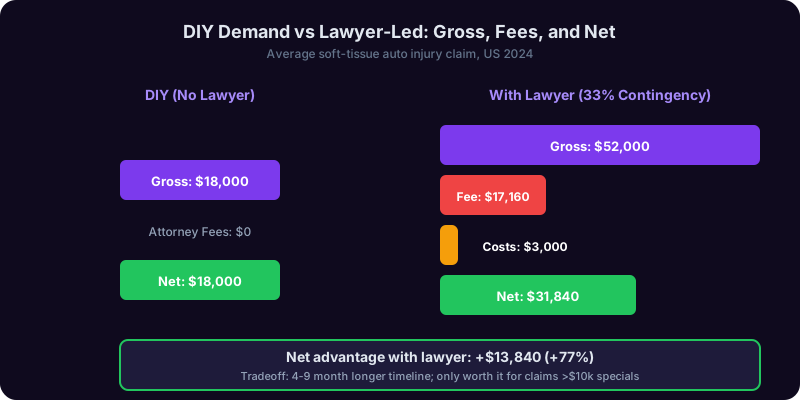
When Writing Your Own Letter Makes Sense
- Clear liability. The other driver was cited, rear-ended you, ran a red light, or was clearly at fault. The police report and witness statements support your version.
- Soft tissue injuries only. Whiplash, sprains, strains, bruising, minor lacerations. Treatment with a chiropractor, physical therapist, or primary care doctor. No surgery, no hospitalization beyond the ER visit.
- Total case value under $25,000. The realistic settlement range is small enough that the 33% attorney fee would eat a meaningful share of your recovery.
- You are organized and patient. You can gather records, document expenses, write a multi-page letter, and tolerate 30-90 days of back-and-forth negotiation.
- The at-fault driver has insurance. You are dealing with an established insurer, not chasing an uninsured motorist.
When You Should Hire an Attorney
- Serious injuries. Traumatic brain injury (TBI), spinal cord damage, broken bones requiring surgery, permanent scarring, internal injuries, or any injury with long-term complications. The value of these cases is substantially larger and the negotiation is more complex.
- Disputed liability. Both drivers are blamed, the police report is ambiguous, or the insurer has denied the claim. You need someone who can build a liability case and threaten litigation credibly.
- Wrongful death. A fatal accident requires an attorney. Period.
- Commercial vehicle involvement. Trucks, rideshares, delivery vans. Commercial carriers have aggressive defense teams and the policy limits are usually high enough to justify professional representation.
- Future medical care needed. If your doctor says you will need surgery, ongoing therapy, or future procedures, calculating future damages requires expertise.
- Insurer is acting in bad faith. Delays, lowball offers far below market value, denials despite clear evidence, or refusal to communicate.
Legal Disclaimer: This guide provides general information about the demand letter process for car accident claims. It is not legal advice and does not create an attorney-client relationship. For serious injuries, disputed liability, or any case where significant compensation is at stake, consult with a qualified personal injury attorney licensed in your state. Most personal injury attorneys offer free initial consultations.
If your situation falls into the gray zone between these categories, our complete car accident guide covers the steps you should take immediately after a crash, and our general demand letter guide explains the broader framework that applies to any type of demand.
The 7 Mandatory Sections of a Winning Demand Letter
Adjusters evaluate hundreds of demand letters. They have a mental checklist of what a credible, well-prepared claimant looks like, and the structure of your letter signals whether you fit that profile. A demand letter that wanders, omits sections, or fails to quantify damages tells the adjuster that the claimant does not understand the system and can be lowballed.
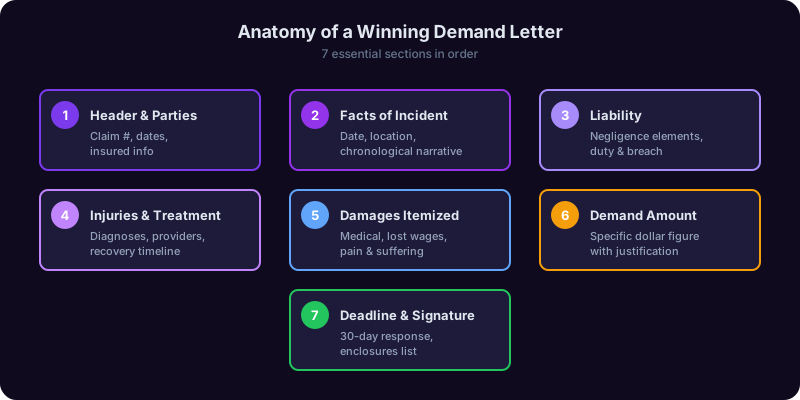
1. Caption and Reference Block
The top of the letter identifies the parties, claim, and document. Include: your full name and address, the date of the letter, the adjuster's name and address, the at-fault driver's name, the claim number, the policy number, the date of the accident, and a clear subject line such as "Demand for Settlement of Bodily Injury Claim."
2. Statement of Facts
A neutral, chronological account of the accident. Date, time, location, weather, road conditions, direction of travel, and what happened in 4-6 sentences. Stick to observable facts. Do not editorialize, do not assign blame in this section, and do not include emotional language. The adjuster will compare your account against the police report and the other driver's statement, so accuracy and consistency are essential.
3. Liability and Fault
Now you make the argument that the other driver was at fault. Cite the police report (with report number), traffic citations issued, the specific traffic law violated (running a red light, failure to yield, following too closely), and witness statements. If applicable, reference physical evidence such as skid marks, vehicle damage patterns, or surveillance footage. This is where you establish that your case is one the insurer would lose at trial.
4. Injuries and Diagnosis
List every injury, in medical terms, with the date of diagnosis and the diagnosing provider. Do not say "my neck hurt." Say "cervical strain (ICD-10 S13.4XXA) diagnosed on March 14, 2026 by Dr. Elena Martinez at Mercy Urgent Care." Include initial ER findings, follow-up diagnoses, imaging results (MRI, X-ray, CT findings), and any pre-existing conditions that were aggravated by the accident.
5. Treatment Chronology
A dated narrative of your medical care from the accident date forward. Include every ER visit, doctor appointment, physical therapy session, chiropractic visit, prescription, and diagnostic test. Note the impact on your daily life at each stage: missed work, missed activities, sleep disruption, ongoing pain levels. End with your current status: still in treatment, released from care, expected future treatment.
6. Damages and Special Damages
Itemize every dollar. Medical bills (broken out by provider), prescription costs, lost wages (with employer documentation), mileage to and from medical appointments (at the IRS medical rate), out-of-pocket expenses (over-the-counter medications, medical supplies, transportation), and any property damage not already settled. Total the special damages. This number anchors your demand.
7. Demand for Settlement
Your specific dollar demand, calculated using the multiplier or per diem method (covered in the next two sections), with a deadline for response (typically 30 days) and a statement of next steps if no acceptable response is received. The demand number should be 1.5x to 2x what you would actually accept, leaving room to negotiate down to your real target.
Sections that are missing, sections that are out of order, or sections that lack supporting evidence give the adjuster reasons to discount your demand. The seven-section structure is the floor, not the ceiling. Letters that include all seven sections, with documentation attached, are taken seriously. Letters that omit sections or rely on emotional appeals are not.
Calculating Your Case Value: The Multiplier Formula
The adjuster will not tell you how they calculate your case value, but the formula is not a secret. Insurance carriers use software (Colossus, ClaimIQ, and similar tools) that essentially applies a multiplier to your special damages, then adds back the specials and lost wages. You can run the same calculation yourself.
The Core Formula
Settlement Value = (Medical Bills x Multiplier) + Lost Wages + Out-of-Pocket Expenses + Future Medical Care
Each component matters:
- Medical bills. The total billed amount from every provider, not the amount paid by your health insurance. Use the gross billed numbers.
- Multiplier. A number between 1.5 and 5 that represents pain and suffering relative to the severity of your injuries.
- Lost wages. Documented income you missed because of the accident and recovery. Include sick days you used, hours you could not work, and any reduced earning capacity going forward.
- Out-of-pocket expenses. Prescriptions, OTC medications, mileage, medical supplies, transportation to appointments, parking at hospitals.
- Future medical care. If your doctor anticipates continued treatment, get a written estimate. This is added at full estimated cost.
Choosing the Right Multiplier
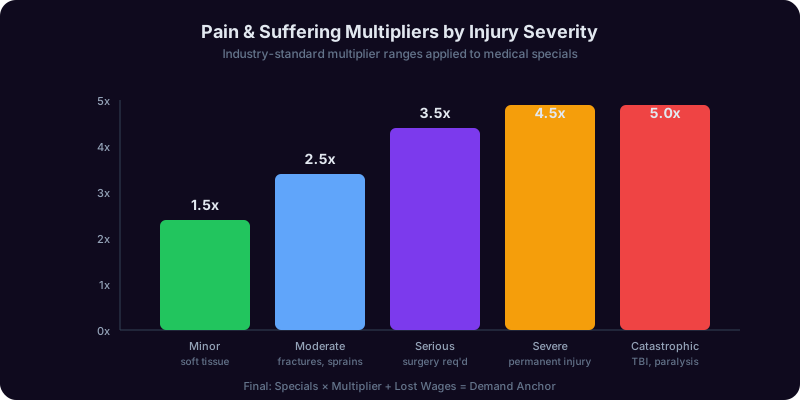
The multiplier reflects how badly you were hurt, how long you suffered, and whether there are permanent consequences. Adjusters and attorneys use the following rough tiers:
- 1.5x to 2x: Minor injuries. Soft tissue strain, minor whiplash, bruising. Treatment under 6 weeks. Full recovery expected.
- 2x to 2.5x: Moderate soft tissue. Whiplash with persistent symptoms, sprains requiring 2-3 months of physical therapy, minor lacerations with scarring.
- 2.5x to 3x: Significant soft tissue or minor fractures. Persistent pain beyond 3 months, fractures that healed without surgery, ongoing therapy needs.
- 3x to 4x: Serious injuries. Fractures requiring surgery, herniated discs, concussion with documented symptoms, injuries that affect daily activities for 6+ months.
- 4x to 5x: Severe or permanent injuries. Traumatic brain injury, spinal cord involvement, permanent scarring or disfigurement, permanent loss of function, surgery with hardware.
A Real Calculation Example
Sarah was rear-ended at a stoplight. She had whiplash, mild concussion symptoms for 3 weeks, and required 10 weeks of physical therapy. Her totals:
- ER visit: $2,800
- Primary care follow-ups (4 visits): $920
- MRI: $2,400
- Physical therapy (20 sessions): $4,600
- Total medical bills: $10,720
- Lost wages (3 weeks part-time recovery): $2,400
- Out-of-pocket (prescriptions, mileage, supplies): $480
Applying a 2.5x multiplier (moderate soft tissue with persistent symptoms):
($10,720 x 2.5) + $2,400 + $480 = $29,680 case value
Sarah would open her demand at approximately $40,000-$45,000, expect a first counter around $12,000-$15,000, and negotiate toward her $29,680 target. The initial adjuster offer before sending any demand letter was $6,500.
Adjustments That Move the Multiplier Up or Down
Move up: Documented gaps in activities you used to do, photos of visible injuries, a journal of pain levels and limitations, statements from family members about how the injury affected you, lost opportunities (canceled vacation, missed wedding, inability to care for children).
Move down: Gaps in treatment (more than 30 days between appointments suggests you were fine), pre-existing conditions affecting the same body part, social media posts showing you doing activities you claim you cannot do, inconsistencies between your account and the medical records.

Get Answers From the Legal Copilot
Ask a specialist AI copilot the question you just read about. Your first conversation needs no signup and no card.
Per Diem vs Multiplier Method: When to Use Each
The multiplier method is the dominant approach in personal injury claims, but the per diem ("per day") method is a powerful alternative for certain cases. Sophisticated claimants and attorneys often run both calculations and use whichever produces a higher, defensible number.
The Multiplier Method (Recap)
Multiply your total medical bills by a number between 1.5 and 5 based on injury severity. Add lost wages and out-of-pocket expenses. This approach works well when your medical bills are substantial and your injuries align cleanly with one of the standard severity tiers.
The Per Diem Method
Assign a daily dollar value to your pain and suffering, then multiply by the number of days you experienced it. The standard daily rate is your normal daily earnings, on the theory that one day of pain is worth at least one day of your time.
Per Diem Pain & Suffering = Daily Rate x Days of Recovery
Example: You earn $52,000 per year, which works out to roughly $200 per workday or $142 per calendar day. You suffered for 180 days from the accident to the end of physical therapy. Per diem pain and suffering = $142 x 180 = $25,560.
When the Multiplier Method Works Better
- Your medical bills are high relative to your daily earnings (a low earner with a $30,000 ER bill)
- Your injury was severe but the recovery period was relatively short (major fracture that healed in 4 months)
- You want to anchor the calculation to documented numbers (medical bills) that the adjuster cannot dispute
- The standard severity tiers map cleanly onto your injury
When the Per Diem Method Works Better
- You earn a high income and the multiplier method undervalues your time
- The recovery period was long but the medical bills were modest (months of self-managed pain without expensive procedures)
- Your injuries caused significant lifestyle disruption that is hard to capture through medical billing
- The other side is trying to anchor on low medical bills to push the multiplier down
Combining Both Methods
Many demand letters present both calculations and use the higher number as the demand. "Using the multiplier method, the value of my pain and suffering is $26,800 (medical bills of $10,720 x 2.5). Using the per diem method, the value is $25,560 ($142 daily rate x 180 days of recovery). I am demanding the higher of these calculations."
This signals to the adjuster that you have run the analysis multiple ways and that your number is defensible under either framework. It is harder to argue with a claimant who has done the math.
Limits and Caveats
- Policy limits cap your recovery. The at-fault driver's liability coverage sets a ceiling. If they carry $25,000 in bodily injury coverage and your case is worth $60,000, you can only collect $25,000 from their insurer (the remainder may come from your underinsured motorist coverage).
- Some states cap non-economic damages. A handful of states limit pain and suffering damages by statute. Check your state's laws.
- Comparative negligence reduces your award. If you were partially at fault, your settlement is reduced proportionally. In a 20% at-fault scenario, a $30,000 case becomes $24,000.
Full Demand Letter Template (Copy-Paste Ready)
What follows is a complete, three-page demand letter using a realistic fact pattern. Replace the bracketed placeholders with your specifics. The total document is approximately what an adjuster expects to receive in a soft-tissue claim under $30,000.
Sample Demand Letter
[Your Full Name]
[Your Street Address]
[City, State ZIP]
[Phone] | [Email]
August 9, 2026
Mark Thompson, Claims Adjuster
Liberty Mutual Insurance Company
175 Berkeley Street
Boston, MA 02116
Re: Demand for Settlement of Bodily Injury Claim
Claimant: Sarah Chen
Insured: Michael Reyes
Policy Number: AUTO-2024-887341
Claim Number: LM-2026-04-22918
Date of Loss: April 18, 2026
Dear Mr. Thompson,
This letter constitutes a formal demand for settlement of the bodily injury claim arising from the motor vehicle collision of April 18, 2026, in which your insured, Michael Reyes, struck the rear of my vehicle while I was stopped at a traffic signal. Please review the following carefully and respond within 30 days of receipt with a settlement offer that reflects the actual value of this claim.
1. Statement of Facts
On April 18, 2026, at approximately 4:42 PM, I was operating my 2022 Honda Civic eastbound on Westview Boulevard in San Diego, California. I came to a complete stop at the traffic signal at the intersection of Westview Boulevard and 14th Street. Weather conditions were clear and dry, and traffic was light. While stopped, my vehicle was struck from behind by a 2019 Ford F-150 driven by your insured, Michael Reyes. The impact pushed my vehicle forward approximately twelve feet.
2. Liability
Liability rests entirely with your insured. The San Diego Police Department responded to the scene (Report Number SD-2026-114782). Officer J. Reynolds documented that Mr. Reyes was following too closely and failed to maintain a safe stopping distance, in violation of California Vehicle Code Section 21703. Mr. Reyes was issued citation number C-2026-887442. The investigating officer noted no contributing factors on my part. Two independent witnesses (statements attached) confirmed that my vehicle was fully stopped at the signal when the impact occurred.
3. Injuries and Diagnosis
I sustained the following injuries as a direct result of this collision:
- Cervical strain with myofascial involvement (ICD-10 S13.4XXA), diagnosed April 18, 2026 by Dr. Elena Martinez at Mercy Urgent Care
- Lumbar strain (ICD-10 S33.5XXA), diagnosed April 18, 2026
- Post-concussive symptoms (ICD-10 S06.0X1A), diagnosed April 22, 2026 by Dr. Robert Hayes following persistent headaches and photosensitivity
- Anxiety related to driving, diagnosed May 8, 2026 by Dr. Patricia Lin, requiring six counseling sessions
MRI imaging on May 3, 2026 revealed mild disc bulging at C5-C6 and C6-C7 consistent with acute trauma, with no pre-existing degenerative changes noted in my prior 2023 imaging.
4. Treatment Chronology
April 18, 2026: Transported by ambulance to Mercy Urgent Care. CT of head and cervical spine negative for fracture. Discharged with prescriptions for cyclobenzaprine and ibuprofen.
April 22 - July 30, 2026: Twenty-four sessions of physical therapy at Pacific PT (3 sessions per week tapering to 1 per week).
May 3, 2026: MRI of cervical and lumbar spine (findings above).
May 8 - June 26, 2026: Six counseling sessions with Dr. Patricia Lin for driving anxiety.
April 18 - June 15, 2026: Unable to work my regular hours as a graphic designer due to neck pain limiting screen time. Returned to full duties on June 16, 2026.
I was released from active medical care on August 1, 2026, with instructions to follow up if symptoms return.
5. Damages
Special damages incurred to date:
Medical expenses:
- Mercy Urgent Care (ER and CT): $4,280
- Pacific PT (24 sessions): $5,520
- Dr. Hayes (3 follow-up visits): $690
- MRI imaging (Coastal Imaging): $2,400
- Dr. Lin (6 counseling sessions): $1,440
- Prescriptions: $186
Subtotal medical: $14,516
Lost wages: $3,200 (8 weeks at reduced hours, documented by employer letter)
Out-of-pocket (mileage, supplies, parking): $312
Total special damages: $18,028
6. Demand
Applying a pain and suffering multiplier of 2.5, which reflects the moderate severity of soft tissue injuries with persistent symptoms over a 15-week recovery period, I calculate the value of my claim as follows:
Medical bills ($14,516) x 2.5 = $36,290
Plus lost wages: $3,200
Plus out-of-pocket: $312
Total claim value: $39,802
To resolve this claim without litigation, I demand the sum of $48,500. I will consider any reasonable counteroffer that approaches the calculated value above. If a fair settlement is not reached within 30 days of your receipt of this letter, I will pursue all available remedies, including filing a complaint with the California Department of Insurance and proceeding to litigation under California's three-year statute of limitations for personal injury claims.
Documentation supporting every figure in this letter is enclosed. I look forward to your response.
Sincerely,
Sarah Chen
Enclosures: Police report, witness statements, all medical records, MRI report, billing statements, prescription receipts, employer wage loss letter, mileage log, photographs of vehicle damage and visible injuries
This template hits every required section, anchors the demand in calculated numbers, and gives the adjuster room to counter without insulting your position. Adapt it to your facts and keep the same disciplined structure.
The Evidence Packet: What to Attach (and Why)
A demand letter without evidence is just a request. A demand letter with a complete evidence packet is a settlement-ready file the adjuster can use to justify a payment to their supervisor. Adjusters need internal approval to pay any amount; the better your evidence, the easier their internal sell.
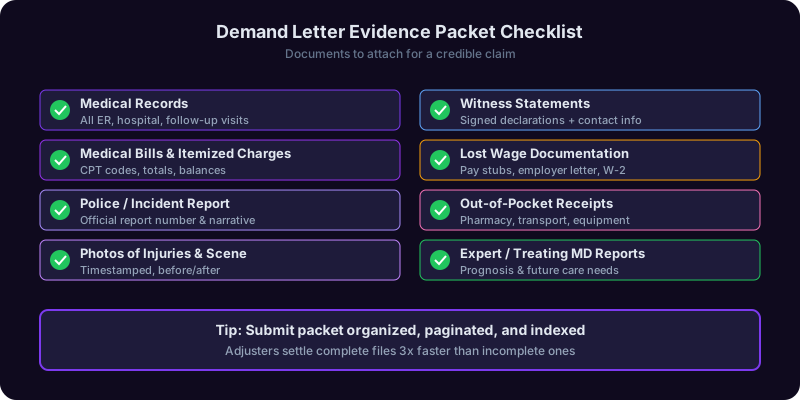
Incident Documentation
- Police report. Request the full report from the responding agency, including any supplemental pages. Highlight the parts that establish the other driver's fault.
- Traffic citation. If the other driver was cited, include a copy. This is often the single strongest liability document.
- Photos of the scene. Vehicle positions, skid marks, traffic signals, road conditions, debris field. Time-stamped photos taken at the scene are best.
- Photos of vehicle damage. Both vehicles, all angles, close-ups of impact points. Damage photos help establish severity of impact, which supports injury claims.
- Witness statements. Written statements from anyone who saw the accident, signed and dated. Include contact information so the adjuster can verify if needed.
- Dashcam or surveillance footage. If you have video, include it on a flash drive or via a secure link. Note that you are willing to provide the original file.
Medical Documentation
- Emergency room records. Complete chart from the ER visit, including triage notes, physician findings, and discharge instructions.
- All doctor visit notes. Every primary care, specialist, and follow-up appointment. The dates and frequency matter as much as the content.
- Imaging reports. X-rays, MRIs, CT scans. Include the radiologist's report, not just the images. The narrative findings are what adjusters read.
- Physical therapy or chiropractic notes. Initial evaluation, progress notes, discharge summary. Note any objective findings such as range of motion measurements.
- Itemized billing statements. From every provider, showing dates of service, CPT codes, billed amounts, and any insurance adjustments. Use the billed amount, not the paid amount, in your calculations.
- Prescription receipts. Every medication related to the accident, with dates and costs.
Financial Loss Documentation
- Employer wage loss letter. On company letterhead, signed by HR or a manager, stating your normal hours, the hours/days missed, and the amount of lost income. This is far more credible than your own statement.
- Pay stubs. Before and after the accident to demonstrate the actual reduction in income.
- Tax returns. For self-employed claimants, include the prior year's return to establish your normal earning capacity.
- Mileage log. Date, destination (medical provider), and round-trip miles for every accident-related appointment. Multiply by the IRS medical mileage rate.
- Out-of-pocket receipts. OTC medications, medical supplies (braces, ice packs, heating pads), parking fees at hospitals, transportation expenses.
Personal Impact Evidence
- Pain journal. A dated log of pain levels (0-10 scale), activities you could not do, sleep disruption, and emotional impact. Start it on the day of the accident and update it regularly.
- Photographs of visible injuries. Bruising, lacerations, swelling. Take photos every few days to document healing progression.
- Statements from family or coworkers. Brief, dated statements describing how the injuries affected your daily life. Optional but powerful.
How to Organize the Packet
Present the documents in the same order as the sections of your demand letter. Use a table of contents on the first page, tabbed dividers if you are sending a physical packet, and clearly labeled file names if sending electronically. Number every page. Make it impossible for the adjuster to miss anything or claim they did not receive a document.
For tips on documenting evidence in the immediate aftermath of a crash, our complete car accident guide covers what to gather at the scene and in the first 72 hours.
The Negotiation Flow: What Happens After You Send the Letter
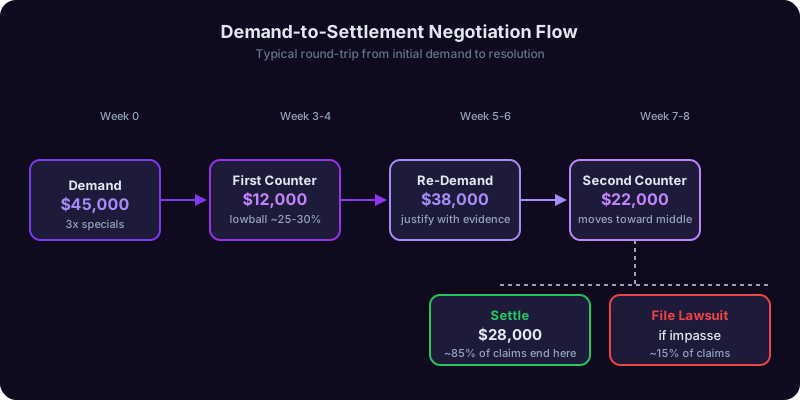
Sending the demand letter is the beginning of the negotiation, not the end. Most claims settle through 3-5 rounds of back-and-forth over 30-90 days. Understanding the standard sequence helps you maintain leverage and recognize when an offer is acceptable.
The First Counter (Almost Always Lower Than Your Demand)
Within 2-4 weeks of receiving your letter, the adjuster will respond. The first counter is almost always significantly lower than your demand. A demand of $48,500 typically draws a first counter in the $10,000-$18,000 range. This is not personal; it is procedure. The adjuster's opening number reflects the lowest amount the carrier might be able to settle for, and they have no incentive to start higher.
Do not accept the first counter. Do not become emotional. Do not threaten litigation in your first response unless the offer is truly insulting (below your documented special damages).
How to Respond to the First Counter
Reply in writing within 7-10 days. Acknowledge the offer, explain why it is too low, and provide a measured counter-counter. "I appreciate your prompt response. However, the offer of $14,200 does not adequately account for the $18,028 in documented special damages, let alone any compensation for pain and suffering. I am willing to reduce my demand to $42,000 in the interest of a prompt resolution."
Each counter-counter should give a little but not collapse to the adjuster's number. The pattern looks like:
- Your demand: $48,500
- First counter: $14,000
- Your counter: $42,000
- Second counter: $22,000
- Your counter: $36,000
- Third counter: $28,500
- Your counter: $32,000
- Final settlement: $30,000
Adjuster Tactics to Watch For
- The delay. Adjusters know that financial pressure pushes claimants to accept lower offers. If your letter sits unanswered for more than 30 days, send a follow-up referencing the original date and your willingness to escalate.
- The "final offer." Adjusters frequently call an offer "final" before it actually is. Test it by responding with a measured counter. If the offer truly is final, the adjuster will say so explicitly when they receive your counter.
- Questioning your treatment. The adjuster may suggest that you were treated for too long, that gaps in treatment indicate you were fine, or that certain providers are not credible. Respond with the medical justification, not anger.
- Pre-existing conditions. If you have any prior history with the same body part, the adjuster will use it. Your response is the doctor's note distinguishing the accident-related injury from any prior condition.
- Recorded statements. Never give a recorded statement to the at-fault driver's insurer. You are not required to, and adjusters use these statements to find inconsistencies later.
When to File Suit
If negotiations stall, or if the adjuster makes a final offer that is materially below your case value, you have two options: accept the offer or file a lawsuit. Filing suit dramatically changes the dynamic because it triggers litigation expenses on the insurance company's side, and litigation-track adjusters often have higher settlement authority than pre-litigation adjusters.
The statute of limitations for personal injury claims varies by state (1-6 years; commonly 2-3 years). File before the deadline regardless of negotiation status, because filing preserves your right to sue. You can continue negotiating after filing and most cases still settle before trial.
For unresolved claims under your state's small claims limit (typically $5,000-$15,000), small claims court can be a faster, cheaper alternative. Our small claims court guide walks through the process. For complex claims that warrant full litigation, hire an attorney before filing.
Releases and Closing the Settlement
Once you accept an offer, the insurer will send a release agreement and a settlement check. Read the release carefully. It will almost certainly include language that releases the at-fault driver and the insurer from all future claims related to the accident, including claims you may not know about yet. If your injuries could have long-term consequences, this is a critical decision point. Once you sign and cash the check, you cannot reopen the claim later.
Top 10 Mistakes That Kill Your Settlement (and How Copilotly Helps)
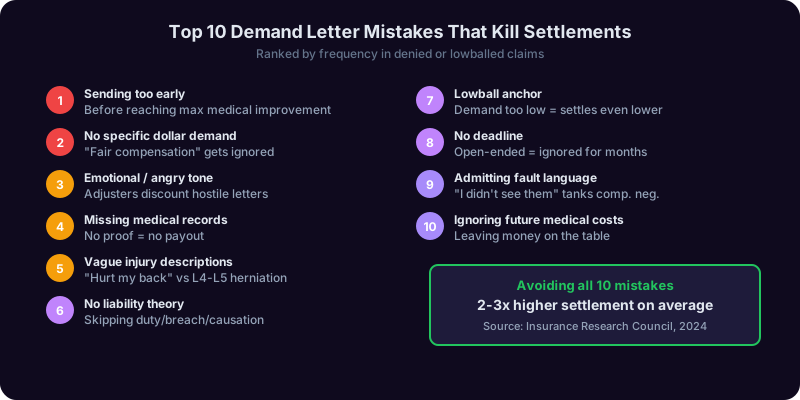
After thousands of demand letters, the same mistakes appear over and over. Each one transfers money from the claimant to the insurer. Avoiding them is the difference between a settlement that matches your case value and one that does not.
The Ten Settlement-Killing Mistakes
- Accepting the adjuster's first call offer. Insurers often call within days of the accident with a small offer ($500-$3,000) to close the claim before you understand the full scope of your injuries. Never accept an offer without knowing your final medical bills and prognosis.
- Giving a recorded statement. The at-fault driver's insurer will request a recorded statement. You are not legally required to provide one. Decline politely and direct all communication to written form.
- Settling before reaching maximum medical improvement. If you settle while still in treatment, you cannot recover for any additional care or worsening conditions. Wait until your doctor releases you or provides a clear long-term prognosis.
- Treatment gaps over 30 days. Adjusters interpret gaps as evidence that you were fine. Follow your doctor's treatment plan consistently. If you must miss appointments, document the reason in writing.
- Posting on social media. Photos of you hiking, dancing, lifting things, or smiling at parties become evidence that contradicts your claims. Set every account to private during the claim, and assume the adjuster is watching anyway.
- Failing to itemize damages. A demand letter with a lump-sum number and no breakdown gives the adjuster nothing to evaluate. Itemize every dollar of medical bills, wages, and out-of-pocket expenses.
- Anchoring too low. Your demand sets the ceiling of the negotiation. If you demand $20,000, you will not settle for $30,000. Open with a demand that is 1.5x to 2x your real target.
- Emotional or aggressive tone. Adjusters disregard letters that read like complaints. Professional, factual, evidence-based letters get taken seriously. Save the emotion for your pain journal.
- Missing the statute of limitations. Every state has a deadline (typically 2-3 years) for filing a personal injury lawsuit. Miss it and your case is dead, regardless of merit.
- Signing a broad release without reading it. Settlement releases are designed to close every possible claim forever. If you have any concern about future complications, negotiate the release language before signing.
How Copilotly's Legal Copilot Helps
Drafting a strong demand letter is part documentation, part strategy, and part writing craft. The Legal Copilot assists at every stage:
- Personalized letter drafts. Provide the accident facts, your injuries, your treatment, and your damages. The copilot produces a complete demand letter in the seven-section structure, with your numbers calculated and your evidence references inserted.
- Multiplier and per diem calculations. Enter your medical bills, lost wages, and recovery period. The copilot runs both calculations and recommends the higher, defensible number for your demand.
- Response drafting for counteroffers. When the adjuster comes back with a low offer, paste the response into the copilot and get a strategic counter-counter that maintains your position without burning the negotiation.
- Evidence packet checklists. A complete, state-specific checklist of every document you should gather and how to organize it.
- Plain-language explanations. When the adjuster uses unfamiliar terminology or cites policy provisions, the copilot translates the language and tells you what is actually being said.
Legal Disclaimer: Copilotly's Legal Copilot is an informational tool. It does not provide legal advice and does not substitute for an attorney. For serious injuries, traumatic brain injury, surgery, disputed liability, commercial vehicle accidents, or any case where significant compensation is at stake, consult a licensed personal injury attorney in your state. Most personal injury attorneys offer free initial consultations and work on contingency, meaning no fee unless you recover.
Authoritative Resources
- The National Highway Traffic Safety Administration (NHTSA) publishes accident reconstruction guidance and consumer information about post-crash steps.
- Your state bar association maintains a directory of personal injury attorneys and often offers free lawyer referral services. Find your state bar at the American Bar Association directory.
- Nolo's personal injury library provides state-specific articles on settlement procedures, statutes of limitations, and damages calculations.
- The National Association of Insurance Commissioners (NAIC) offers consumer resources for filing complaints against insurers acting in bad faith.
For related claim situations, our lemon law guide covers defective vehicle claims, and our AI appeal letters guide covers appeals of denied insurance claims more broadly. A well-built demand letter, supported by evidence and patience, regularly turns a $6,500 first offer into a $30,000 settlement. The math is real, the process is repeatable, and the work pays for itself.
Frequently Asked Questions
Recommended Copilots
Get Answers From the Legal Copilot
Ask a specialist AI copilot the question you just read about. Your first conversation needs no signup and no card.