
The EEOC vs State FEPA Agencies: Where to File and Why It Matters
When you believe you were fired for a discriminatory reason, the first strategic decision is where to file your charge. The federal Equal Employment Opportunity Commission (EEOC) enforces federal anti-discrimination laws, while every state has at least one Fair Employment Practices Agency (FEPA) enforcing state anti-discrimination law. Where you file changes your deadline, your potential damages, and sometimes your odds of success.
The 180-Day vs 300-Day Rule
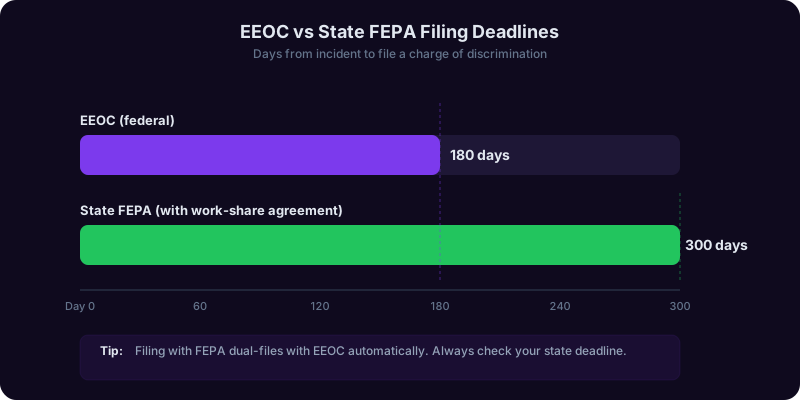
Under federal law, you generally have 180 days from the date of the discriminatory act (typically your termination date) to file a charge with the EEOC. However, this extends to 300 days if a state or local FEPA enforces a law that prohibits the same form of discrimination. Almost every state has such a law for race, sex, disability, and religion, so the practical deadline for most charges is 300 days. Age discrimination under the ADEA has its own rules, and a small handful of states (such as Alabama and Mississippi) do not have qualifying state laws for every protected class, leaving the deadline at 180 days.
This deadline is jurisdictional. Miss it by a day and you lose the right to sue under federal law in the vast majority of cases. The clock starts on the date of the adverse action, not the date you learned the action was discriminatory.
Work-Sharing Agreements
The EEOC has work-sharing agreements with most state FEPAs. When you file with one agency, the other is automatically notified and your charge is "dual filed." You do not need to file twice. The agency that takes the lead is usually the one you filed with first, but they coordinate to avoid duplicate investigations. Practically, this means: if you want to preserve both your state and federal rights, file with whichever agency has the longer deadline, the broader remedies, or the faster investigation in your jurisdiction.
When State Filing Is Better
- Broader protected classes. Many states protect categories the EEOC does not, such as marital status, source of income, political affiliation, or hairstyle (CROWN Act states).
- Smaller employer coverage. The EEOC only investigates employers with 15 or more employees for Title VII and ADA claims (20 or more for ADEA). State laws often cover much smaller employers, sometimes down to a single employee.
- Higher damage caps or none. Federal Title VII caps compensatory and punitive damages between $50,000 and $300,000 based on employer size. Many states (including California, New York, and New Jersey) have no caps.
When Federal Filing Is Better
- Multi-state employers or interstate conduct. Federal jurisdiction streamlines investigation when the misconduct involves multiple offices.
- You want a federal court option. An EEOC right-to-sue letter opens the door to federal court, which can have procedural advantages.
- Your state agency is slow or under-resourced. Some FEPAs have multi-year backlogs.
Legal Disclaimer: This guide is general legal information and not legal advice. EEOC charges involve strict deadlines and procedural rules that can vary by state and individual circumstances. If you have any doubt about your specific case, consult a licensed employment attorney before relying on this information.
Protected Classes: What the EEOC Covers (and What It Does Not)
The EEOC cannot help with every unfair firing. Federal anti-discrimination law only protects against termination motivated by membership in a specific protected class. Understanding what is and is not protected is the first filter for whether you have a viable EEOC charge.
The Federally Protected Classes
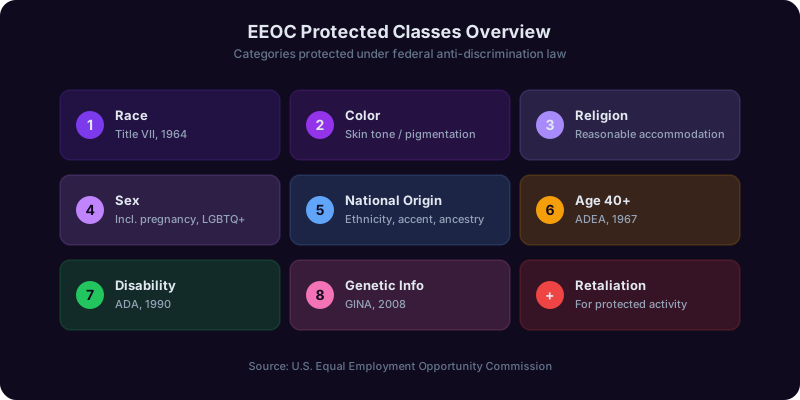
- Race and color. Title VII of the Civil Rights Act of 1964 covers both, including discrimination based on physical characteristics associated with race.
- Religion. Includes traditional religions and sincerely held religious beliefs, plus a duty for employers to provide reasonable accommodation unless it causes undue hardship.
- Sex. Includes pregnancy (under the Pregnancy Discrimination Act and the 2023 Pregnant Workers Fairness Act), sexual orientation, and gender identity (confirmed by the 2020 Bostock v. Clayton County Supreme Court decision).
- National origin. Includes ancestry, accent, ethnicity, and citizenship status in many cases (though employer verification of work authorization is permitted).
- Age 40 and over. The Age Discrimination in Employment Act (ADEA) only protects workers who are 40 or older. The EEOC will not investigate age claims from workers under 40, even if you were replaced by someone older.
- Disability. Under the Americans with Disabilities Act (ADA), qualified individuals with disabilities are protected, and employers must provide reasonable accommodations. Coverage includes physical and mental impairments that substantially limit major life activities, plus a record of impairment or being regarded as impaired.
- Genetic information. The Genetic Information Nondiscrimination Act (GINA) prohibits using genetic test results, family medical history, or genetic services participation as a basis for employment decisions.
- Retaliation. Although not a class, retaliation for engaging in protected activity (filing a complaint, requesting accommodation, participating in an investigation) is independently actionable under every federal anti-discrimination statute.
What the EEOC Does Not Cover
The EEOC has no jurisdiction over many situations that feel grossly unfair:
- At-will firings without a discriminatory motive. The vast majority of US workers are at-will employees who can be fired for any reason or no reason, as long as the reason is not illegal. A bad boss, a personality clash, favoritism toward a friend, or being scapegoated for someone else's mistake are not federally illegal.
- Personality conflicts and "culture fit" terminations unless culture-fit is being used as a pretext for discrimination against a protected class.
- Political beliefs in most private-sector jobs. Federal law does not protect private employees from being fired for political views. A handful of states (California, New York, Washington DC) provide some protection.
- Whistleblower retaliation for non-EEO matters. Whistleblower claims related to SEC, OSHA, IRS, or False Claims Act issues are handled by other agencies.
- Unfair treatment that is not tied to a protected class. A supervisor who is rude to everyone is not discriminating; a supervisor who is rude only to women, or only to workers over 50, may be.
The Pretext Concept
Most successful EEOC charges do not have a smoking gun. Employers almost never say "we are firing you because you are Black" or "we are firing you because you are pregnant." Instead, the question is whether the stated reason is the real reason or a pretext. Evidence of pretext includes: shifting or inconsistent explanations, similarly situated employees outside your class who were treated more leniently, statistical patterns of who gets fired, timing that coincides with protected activity (such as requesting accommodation), and stray remarks revealing bias.
Building Your Case: The Pre-Filing Evidence Checklist
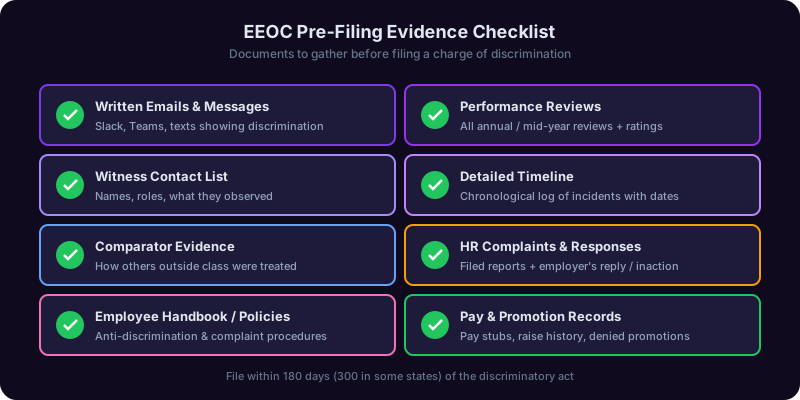
EEOC investigators have heavy caseloads and limited time per charge. The strength of your initial submission heavily influences whether your case gets serious attention, settles quickly, or sits in a queue for two years before being dismissed. Before you file, spend a few hours assembling a comprehensive evidence file.
The Six Categories of Evidence
1. Written Communications
- All emails between you and managers, HR, or coworkers that relate to your treatment, accommodation requests, complaints, or termination
- Text messages and Slack or Teams chats (screenshot with the sender name and date visible)
- The termination letter, severance offer, separation agreement (read the release carefully before signing anything)
- Any written warnings, performance improvement plans (PIPs), or disciplinary notices
2. Performance Documentation
- All performance reviews from your tenure, ideally showing a pattern of positive evaluations before any alleged "performance issues" surfaced
- Bonus letters, raise notifications, promotions, certifications, and awards
- Quantitative metrics if you were in a measurable role (sales numbers, KPI dashboards, project completions)
- Customer or client feedback that contradicts the employer's stated reason for firing
3. Witness Names and Contact Information
Identify coworkers, supervisors, vendors, or clients who observed the relevant events. List their names, job titles, what they observed, and any personal contact information you have (since you will lose access to company directories). Do not approach current employees in ways that could expose them to retaliation, but note who could be subpoenaed or interviewed.
4. The Timeline
Build a chronological narrative document that lists every relevant event with dates: when you were hired, your job duties, every positive review, every protected activity (complaint, accommodation request, leave), every adverse action, and every related comment. This timeline is the spine of your charge.
5. Comparators: Similarly Situated Employees
The single most persuasive type of evidence in many discrimination cases is the comparator: a coworker outside your protected class who engaged in similar conduct but was treated more favorably. The comparator should ideally share your supervisor, your job title or level, and have a similar tenure. Document what they did and how the employer responded. Three strong comparators can carry a case that has no smoking-gun evidence.
6. Policy and Handbook Documents
- The employee handbook in effect during your employment
- Any specific written policies on discrimination, accommodation, FMLA, or progressive discipline
- Job description for your role
- Offer letter and any employment contracts
Preserving Evidence Safely
Forward critical emails to a personal account before you are terminated whenever legally and ethically possible. Many employers cut off access immediately upon termination, and you may lose months of supporting documentation. Be cautious about taking confidential trade secrets, customer lists, or material outside the scope of your discrimination claim, as that can create separate legal exposure. For a deeper look at building documentation, see our wrongful termination guide and fired vs. laid off rights guide, which covers the documentation differences between performance terminations and reductions in force.

Get Answers From the Legal Copilot
Describe what happened in plain language and the Legal Copilot will organize your facts, identify every protected-class theory, and produce a chronological narrative ready for the EEOC questionnaire.
The Intake Interview and Questionnaire (Form 5): What to Expect
Filing an EEOC charge is a two-step administrative process. First, you submit an intake questionnaire (often called Form 5 or its modern online equivalent) that gives the agency the basic facts. Then an EEOC representative conducts an intake interview by phone or in person to formalize your charge. How you handle both stages shapes how the investigator perceives your case.
The Intake Questionnaire
The online questionnaire on the EEOC Public Portal asks for:
- Your contact information and demographic data
- The employer's name, address, and approximate number of employees
- The job title you held and your dates of employment
- The protected classes you believe were the basis for the discrimination
- The adverse actions taken against you (termination, demotion, harassment, denial of promotion, retaliation, failure to accommodate)
- Dates of each adverse action
- A narrative description of what happened
- Whether you want to file a charge or merely seek information
The narrative section is the single most important field. Keep it factual, chronological, and specific. Lead with the strongest evidence of discriminatory motive: direct statements of bias, comparator evidence, or close timing between protected activity and adverse action.
What the Intake Interview Covers
The intake interviewer will typically ask:
- To confirm your contact information and intent to file a charge (not just gather information)
- What protected class(es) you believe motivated the discrimination
- Why you believe the stated reason for the adverse action was pretextual
- What evidence and witnesses you have
- Whether you have already retained an attorney or filed elsewhere (state agency, EEOC field office, court)
- What remedy you are seeking: reinstatement, back pay, front pay, compensatory damages, policy changes
How to Prepare for the Interview
- Review your timeline before the call. Have dates, names, and key documents at hand. The interviewer is not testing your memory, but you want consistent and confident answers.
- Stick to facts, not adjectives. "My manager said \'we need a younger image for this team\' on March 12" is far more persuasive than "my manager is ageist."
- Identify your strongest single piece of evidence. Lead with it. If you have an email where your supervisor referenced your pregnancy negatively, that is your opening.
- Do not exaggerate or guess. If you do not know something, say so. Misstatements found later can sink your credibility.
- Be prepared to describe damages. Lost wages, lost benefits, emotional distress, job search costs, medical treatment related to the stress of the termination.
From Questionnaire to Formal Charge
After the interview, the EEOC will draft your formal Charge of Discrimination (Form 5). Review every fact carefully before signing. Once signed and filed, the charge is served on your employer, which triggers their obligation to respond and prohibits retaliation related to your charge. Errors in the formal charge are difficult to correct later and can become arguments for dismissal. If anything is wrong, request changes before you sign.
Filing Options Compared: Online Portal vs In-Person vs Mail
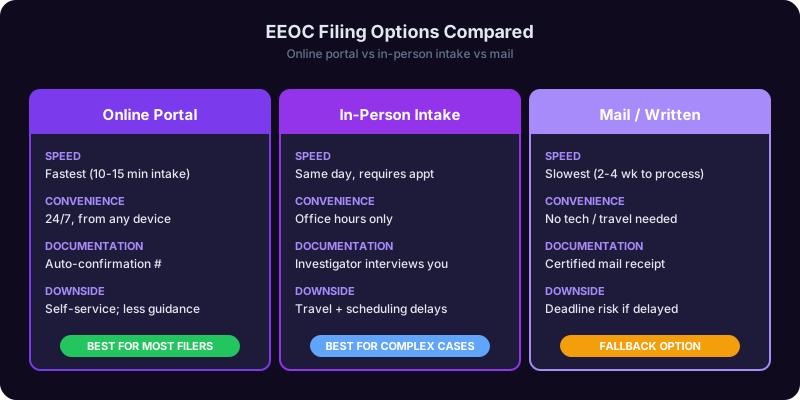
The EEOC accepts charges through three channels, each with different practical implications. Choosing the right one affects how quickly your charge enters the queue, how complete your initial submission is, and how well your case is documented from day one.
Option 1: Online Public Portal
The EEOC Public Portal launched as the primary intake channel. You create an account, complete the intake questionnaire, upload supporting documents, and schedule your intake interview, all from one dashboard. The portal then handles the rest of the communication with the agency.
Pros: Fastest path to a docketed charge. Built-in scheduling for the intake interview. Documents are securely stored in your case file. Easy to update contact information. The portal works on mobile.
Cons: If you have a complex case with many documents or unusual jurisdictional questions, the portal's structured fields may not fit your situation well. No live human guidance during the questionnaire stage.
Best for: Most filers. The portal is the recommended default for clear-cut termination, accommodation, or harassment charges.
Option 2: In-Person at an EEOC Field Office
You can walk into any of the EEOC's 53 field offices and complete an intake questionnaire with the assistance of staff. Most offices require an appointment scheduled through the portal first.
Pros: Direct staff assistance can help you describe complex situations clearly. Useful if you have limited English proficiency, a disability that makes online filing difficult, or low comfort with technology. Sometimes results in faster initial review.
Cons: Slower scheduling. Travel required. Field office staff are intake personnel, not investigators, so they cannot advocate for your case.
Best for: Filers who need accommodations, have complex jurisdictional questions, or feel that the online questionnaire does not capture their facts adequately.
Option 3: Mail or Fax
You can mail a letter to your nearest EEOC field office identifying yourself, the employer, the protected class(es), and the discriminatory acts. The letter alone does not file a charge but it does preserve the filing date for deadline purposes, after which the EEOC will follow up to complete the formal questionnaire and charge.
Pros: Useful in deadline emergencies (within days of the 180- or 300-day cutoff). Creates a paper trail of your filing date. Works when you cannot access the portal or office.
Cons: Slowest channel. Your case will still need the questionnaire and interview to formally docket. Risk of misrouted mail.
Best for: Filers staring down a hard deadline who need to preserve their rights immediately. Always send by certified mail with return receipt.
Recommendation
If you are reading this with 60 or more days before your deadline, use the online portal. If you have less than 30 days, file a preserving letter by certified mail today and then complete the portal questionnaire as soon as possible. If you have a complex disability, language, or accessibility need, request an in-person appointment.
After Filing: Mediation, Investigation, and the Right-to-Sue Letter
Once your charge is docketed, the EEOC controls the timeline. Understanding the stages will help you avoid surprises and know when you have leverage.
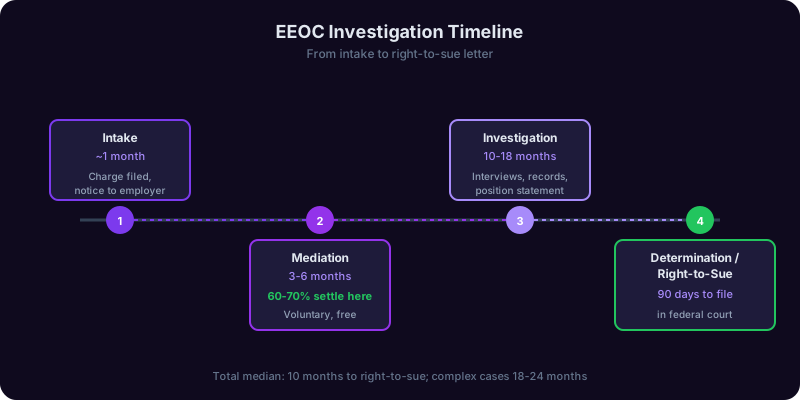
Stage 1: Mediation Invitation (Within 30-60 Days)
The EEOC offers free, voluntary mediation for most charges. Both you and your employer must agree. Mediation is conducted by a neutral mediator, often by video, and typically takes one session of 3-6 hours. Roughly 60-70% of mediated cases settle, with average resolution times under 90 days from filing.
Mediation can be a strong option if:
- You want a faster resolution rather than a multi-year investigation
- Your main goals are back pay, a neutral reference, and a clean separation rather than precedent or policy change
- You are concerned the investigation may result in a dismissal you cannot easily appeal
- You have realistic expectations about settlement value
Mediation may not be the right call if:
- You have strong direct evidence and believe a full investigation will produce a finding of cause that strengthens any subsequent lawsuit
- Your damages exceed what a quick settlement is likely to offer
- The employer has shown no interest in meaningful resolution
Stage 2: Employer Response (Position Statement)
If you decline mediation or it fails, the employer is required to file a position statement responding to your charge. Under current EEOC procedures, you have the right to request and review this statement and submit a rebuttal. Take this seriously. The position statement will set out the employer's narrative, and your rebuttal is your chance to point out factual inaccuracies, inconsistencies, and missing context.
Stage 3: Investigation
The EEOC investigation can take anywhere from 6 months to 2 years, with an average of 10-18 months. Investigators may request additional documents, interview witnesses, and ask the employer for data on similarly situated employees. Cooperate fully and quickly with any investigator requests, and keep your contact information current.
Stage 4: Outcomes
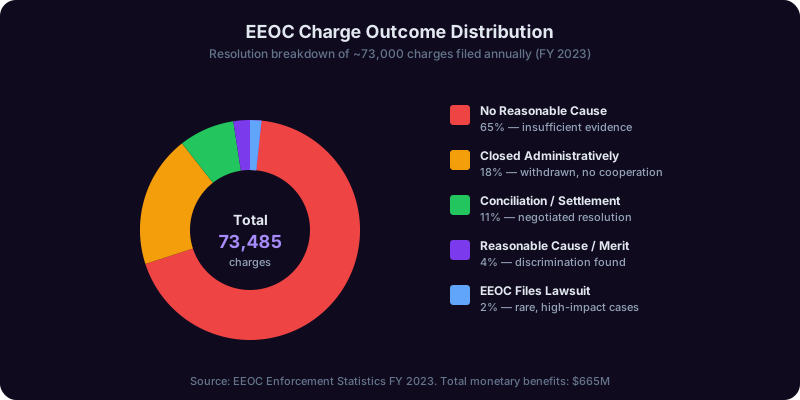
- No Reasonable Cause (about 65% of charges): The investigator did not find enough evidence to conclude discrimination occurred. You will receive a Dismissal and Notice of Rights, which is the right-to-sue letter. You then have 90 days to file a lawsuit in federal court.
- Reasonable Cause (3-5% of charges): The EEOC found evidence supporting your claim. The agency will attempt conciliation with the employer. If conciliation fails, the EEOC can either sue on your behalf (rare) or issue you a right-to-sue letter.
- Administrative Closure (about 15%): The charge is closed without a substantive determination because of jurisdictional issues, lost contact, or failure to cooperate.
- Settlement or Withdrawal With Benefits (about 15%): The matter is resolved before a determination, often through mediation, direct negotiation, or a withdrawal in exchange for compensation.
The Right-to-Sue Letter
Regardless of outcome, you can request a right-to-sue letter after 180 days from filing if you want to pursue a lawsuit before the EEOC completes its investigation. Once you receive the letter, the 90-day clock to file a federal lawsuit starts immediately and cannot be extended. Calendar it the moment you receive the letter.
Retaliation Claims and Protecting Yourself During the Investigation
Retaliation is the most frequently filed type of EEOC charge, accounting for more than half of all charges filed each year. The reason: even when an underlying discrimination claim is hard to prove, an employer's adverse response after the filing is often well-documented and easier to establish.
What Counts as Retaliation
An action is retaliatory if it would dissuade a reasonable employee from making or supporting a discrimination complaint. Examples include:
- Termination after a protected complaint
- Demotion, pay cut, or shift change
- Sudden negative performance reviews after a previous positive history
- Exclusion from meetings, projects, or training
- Increased scrutiny, surveillance, or micromanagement
- Threats, intimidation, or hostile statements
- Negative references after departure
Retaliation Has Its Own Clock
Each retaliatory act is a separate adverse action with its own 180/300-day deadline. If you filed an EEOC charge in February and were retaliated against in May, the retaliation clock starts in May, not February. You can amend your original charge to add the retaliation claim or file a new charge.
Retaliation Is Often Easier to Prove
The legal standard for retaliation does not require proving the underlying discrimination was real. Even if your original discrimination charge is eventually dismissed, your retaliation claim can still succeed if you can show: (1) you engaged in protected activity (filing the charge, supporting a coworker's charge, requesting accommodation, etc.), (2) the employer took an adverse action, and (3) there is a causal connection (usually timing). Close timing alone (a few weeks between the protected activity and the adverse action) is often enough to establish causation at the prima facie stage.
Protecting Yourself After Filing
- Stay professional and continue to perform well. Employers look for performance excuses to justify post-charge adverse actions. Do not give them ammunition.
- Document everything in writing. Confirm verbal meetings with follow-up emails: "To confirm our conversation today, you said X." Keep copies in a personal email or storage account.
- Save your file outside company systems. Continue to forward important materials to a personal email account as you would have before filing.
- Report any retaliation immediately. Contact your EEOC investigator to add a retaliation claim. Do not assume small acts of retaliation are not worth raising.
- Avoid social media commentary. Posts about your employer, your case, or the EEOC process can be subpoenaed and used against you.
- Be cautious about new severance offers. If your employer offers a severance or settlement that includes a release of your EEOC claim, read it carefully and consider getting legal review before signing.
If you are negotiating a severance offer that requires releasing your EEOC claim, see our AI employment contract review guide for how to analyze release language. For demanding fair severance terms, our demand letter guide walks through assertive but professional negotiation tactics.
When to Hire a Private Attorney and How Copilotly's Legal Copilot Helps
You do not need an attorney to file an EEOC charge. The process is designed for unrepresented workers and most charges are filed without one. That said, there are inflection points in any case where professional representation can meaningfully change the outcome, and there are tools that can sharpen your filing even if you proceed alone.
When You Probably Do Not Need an Attorney
- You are at the initial filing stage with a clear-cut case (termination shortly after disclosing pregnancy, requesting ADA accommodation, complaining about harassment)
- Your damages are modest (less than $25,000 in lost wages)
- The employer has fewer than 50 employees and is unlikely to mount a sophisticated defense
- You are exploring mediation with realistic settlement expectations
When You Should Strongly Consider Hiring an Attorney
- Significant damages. Lost income exceeds $50,000, or you have substantial emotional distress, medical bills, or future earning capacity at stake
- Complex legal issues. ERISA-governed benefits, mixed-motive analysis, executive compensation, equity vesting, or non-compete entanglements
- Class or pattern claims. Multiple coworkers with similar claims against the same employer
- The employer has counsel. Large employers and well-resourced defendants will have employment defense attorneys handling the response. Going pro se against represented counsel is a significant disadvantage
- You received a right-to-sue letter. The 90-day clock to file in federal court is short, court procedures are technical, and missing procedural requirements can sink an otherwise strong case
- You are negotiating a meaningful settlement or severance release
Cost Expectations
- Free initial consultations. Most employment plaintiff attorneys offer 30-60 minute case evaluations at no charge.
- Contingency fee arrangements. Many employment lawyers take strong cases on contingency, typically 33-40% of recovery, plus litigation costs. You pay nothing upfront and the attorney only collects if you recover.
- Hybrid arrangements. Some attorneys charge a reduced hourly rate plus a smaller contingency percentage.
- Hourly billing. Less common for plaintiffs but used in some advisory or limited-scope engagements. Rates range from $300-$700 per hour in major markets.
Finding the Right Attorney
Use the National Employment Lawyers Association (NELA) directory and your state bar's lawyer referral service. Ask: how many EEOC charges and discrimination cases the attorney has handled, what percentage went to litigation versus settled, and what your case is reasonably worth in their experience. Avoid attorneys who promise specific outcomes; experienced employment lawyers know that outcomes are inherently uncertain.
How Copilotly's Legal Copilot Supports Your EEOC Charge
The Legal Copilot is designed to help unrepresented filers produce a stronger initial submission. You can use it to:
- Draft your intake narrative. Describe what happened in plain language, and the copilot organizes it into the chronological, fact-focused structure investigators respond to best.
- Identify protected-class theories. Sometimes a termination has more than one legal angle (race + retaliation, age + disability + national origin). The copilot helps you identify every viable theory so nothing is left out.
- Pull statute and regulation references. Cite the specific Title VII, ADA, ADEA, or GINA provisions that apply to your facts.
- Draft comparator analyses. Help you describe the similarly situated employees who were treated differently in a way investigators find persuasive.
- Draft your rebuttal to the employer's position statement. Spot logical gaps, factual misstatements, and unsupported assertions to attack point by point.
- Estimate damages. Calculate lost wages, lost benefits, and other recoverable items so you can negotiate informed of what your case is worth.
Combine the Legal Copilot for legal framing with the Writing Copilot for tone and polish. For broader career strategy after a wrongful termination, see our complete wrongful termination guide and our AI appeal letters guide for related processes like unemployment appeals and severance negotiation.
Legal Disclaimer: The information in this guide and provided by the Copilotly Legal Copilot is general legal information, not legal advice. EEOC charge filings have strict deadlines and procedural requirements that vary by state, jurisdiction, and individual circumstances. Always confirm critical deadlines with the EEOC directly, and consult a licensed employment attorney before relying on any guidance for material decisions in your case.
Frequently Asked Questions
Recommended Copilots
Recommended Copilots
Drafts your EEOC intake narrative, identifies viable protected-class theories, and cites the right statutes and regulations
Try Free →Supports job search, severance negotiation, and reference strategy while your EEOC charge is being investigated
Try Free →Related Articles
Get Answers From the Legal Copilot
Describe what happened in plain language and the Legal Copilot will organize your facts, identify every protected-class theory, and produce a chronological narrative ready for the EEOC questionnaire.