
Bankruptcy in 2026: What It Actually Does and Who It Helps
Bankruptcy is a federal legal process that either eliminates or restructures your debts when you cannot repay them. It is not a moral failing. It is a legal tool created by Congress so that overwhelming debt does not permanently destroy people's financial lives. In 2025, approximately 480,000 Americans filed for bankruptcy, and that number is projected to rise in 2026 as pandemic-era forbearance programs have ended and consumer debt has reached record levels.
Chapter 7: Liquidation Bankruptcy
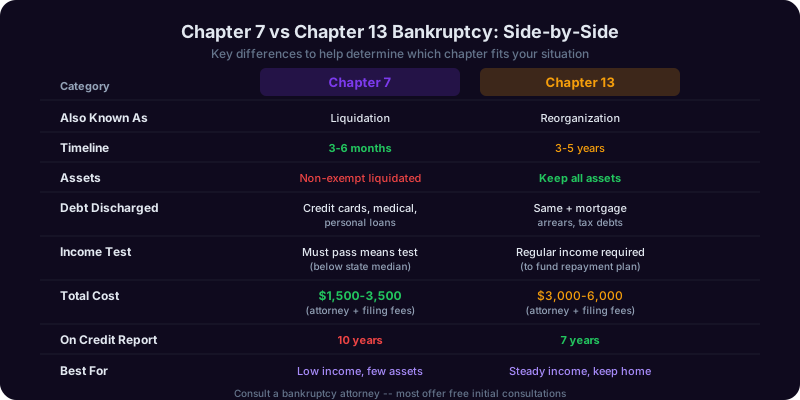
Chapter 7 wipes out most unsecured debts (credit cards, medical bills, personal loans) in exchange for potentially surrendering non-exempt assets. The process takes 3-6 months. Roughly 96% of Chapter 7 filers keep all of their property because exemption laws protect essential assets. You must pass the means test to qualify.
Chapter 13: Reorganization Bankruptcy
Chapter 13 creates a court-supervised repayment plan lasting 3-5 years. You keep all your property but must commit disposable income to repaying a portion of your debts. Remaining qualifying debts are discharged at the end. Chapter 13 is designed for people who earn too much for Chapter 7 or who need to catch up on mortgage or car payments to avoid foreclosure.
The Scale of the Decision
Bankruptcy affects your credit report for 7 years (Chapter 13) or 10 years (Chapter 7). It can impact renting, employment, security clearances, and loan qualification. But for many people drowning in debt, the alternative, years of collection calls, wage garnishments, and lawsuits, is worse.
According to the U.S. Courts, Chapter 7 filings outnumber Chapter 13 by approximately 2 to 1 nationally, though the ratio varies significantly by state.
The Finance Copilot can help you assess whether bankruptcy is the right path or whether alternatives like debt settlement or credit counseling might be more appropriate.
This guide provides general legal and financial information for educational purposes only. It is not legal or financial advice. Bankruptcy law is complex and varies by jurisdiction. Consult a qualified bankruptcy attorney for advice specific to your situation.
The 2026 Means Test: Do You Qualify for Chapter 7?
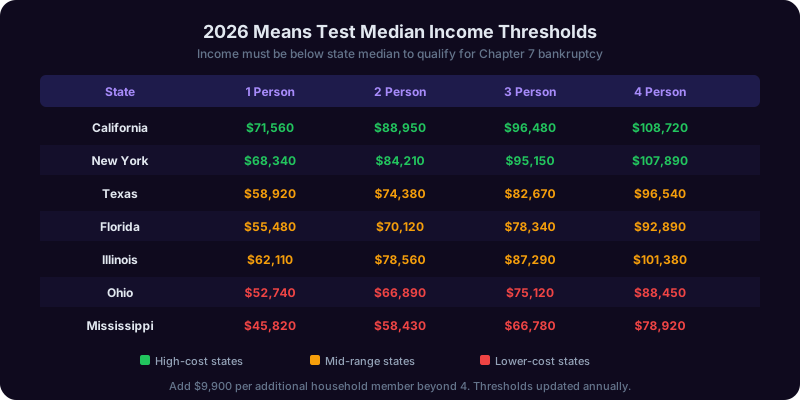
The means test is the gatekeeper for Chapter 7 bankruptcy. Created by Congress in 2005 through BAPCPA, it compares your household income to the median income in your state. If you earn below the median, you automatically pass. If above, additional calculations determine eligibility.
Step 1: Compare Income to State Median
The test uses your current monthly income (CMI), which is your average monthly income over the 6 calendar months before filing. This includes wages, self-employment income, rental income, and pensions. It does not include Social Security benefits.
Approximate 2026 median income thresholds for selected states:
| State | 1-Person | 2-Person | 4-Person |
|---|---|---|---|
| California | $65,700 | $86,400 | $108,500 |
| Texas | $56,200 | $73,500 | $93,800 |
| New York | $62,800 | $83,100 | $107,900 |
| Florida | $55,400 | $71,200 | $91,600 |
| Ohio | $52,800 | $67,500 | $90,200 |
Current thresholds are published by the U.S. Trustee Program. Always verify before making filing decisions.
Step 2: The Full Means Test (Above-Median Filers)
If your income exceeds the median, allowed deductions are subtracted to determine disposable income: IRS housing and utility allowances, transportation costs, secured debt payments, priority debts (child support, taxes), and documented special circumstances.
If monthly disposable income is less than $176.25, you pass. If more than $293.75, you fail and must file Chapter 13. Between those amounts, the court evaluates whether you can repay a meaningful portion of unsecured debt over five years.
Who Skips the Means Test
- Disabled veterans whose debts were incurred during active duty
- Reservists and National Guard called to active duty for 90+ days
- Non-consumer debtors with primarily business-related debts (over 50%)
The Finance Copilot can run a preliminary means test calculation based on your income and household size.
What Debts Get Discharged vs. What Survives Bankruptcy
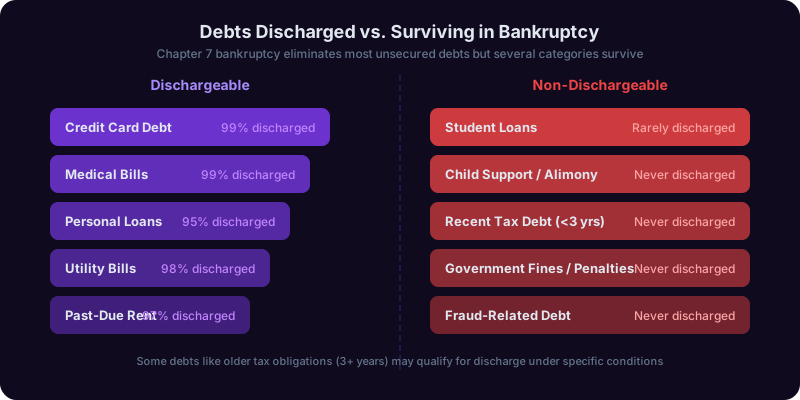
Bankruptcy does not erase all debt. Understanding which debts can be discharged and which survive is critical to deciding whether filing will solve your financial problems.
Debts That Are Discharged
| Debt Type | Chapter 7 | Chapter 13 |
|---|---|---|
| Credit card debt | Discharged | Partial repayment, remainder discharged |
| Medical bills | Discharged | Partial repayment, remainder discharged |
| Personal loans | Discharged | Partial repayment, remainder discharged |
| Utility bills | Discharged | Partial repayment, remainder discharged |
| Collection accounts | Discharged | Partial repayment, remainder discharged |
| Lawsuit judgments | Discharged | Partial repayment, remainder discharged |
Debts That Survive (Non-Dischargeable)
| Debt Type | Why It Survives |
|---|---|
| Student loans | Presumed non-dischargeable. Can be discharged through adversary proceeding proving undue hardship. 2023 DOJ guidance has made this somewhat easier. |
| Child support and alimony | Always non-dischargeable. No exceptions. |
| Recent income taxes | Taxes due within last 3 years survive. Older taxes may be dischargeable if filed on time and assessed 240+ days ago. |
| Debts from fraud | Creditor must file adversary proceeding to prove fraud. |
| DUI injury judgments | Death or injury from intoxicated driving. No exceptions. |
| Criminal fines | Government penalties always survive. |
Secured Debts: A Special Category
Secured debts (mortgages, car loans) work differently. In Chapter 7, you can surrender the property and discharge the debt, reaffirm the debt to keep the property, or redeem by paying current market value in a lump sum. In Chapter 13, you can cure arrearages through your repayment plan while keeping the property, which is why Chapter 13 is called the "save your home" chapter.
If most of your debt is non-dischargeable, bankruptcy may not provide meaningful relief. The Legal Copilot can help you categorize your debts and estimate what percentage would be eliminated.

Get Answers From the Finance Copilot
Ask a specialist AI copilot the question you just read about. Your first conversation needs no signup and no card.
Bankruptcy Exemptions: What You Get to Keep, State by State
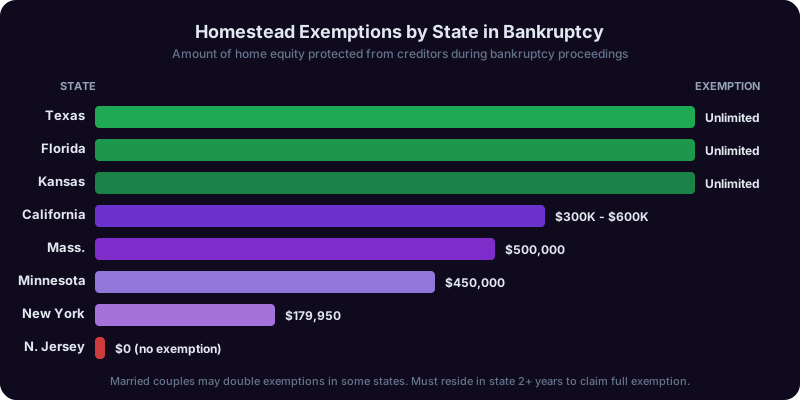
Exemptions determine what property you can protect in bankruptcy. Every state has its own system, and about 20 states plus DC let you choose between state and federal exemptions. The differences are enormous.
Federal Exemptions (2026 Amounts)
| Property Type | 2026 Federal Exemption |
|---|---|
| Homestead | $27,900 individual / $55,800 married |
| Motor vehicle | $4,450 |
| Household goods | $14,875 total ($700 per item) |
| Jewelry | $1,875 |
| Wildcard | $1,475 + up to $13,950 of unused homestead |
| Retirement accounts | Unlimited (ERISA plans); $1,512,350 (IRAs) |
Key State Differences
| State | Homestead | Vehicle | Notes |
|---|---|---|---|
| Texas | Unlimited | $2,500 | 10 acres urban, 100 acres rural |
| Florida | Unlimited | $1,000 | 1/2 acre urban, 160 acres rural |
| California (Sys 1) | $300K-$600K | $3,325 | Based on county median home price |
| New York | $180K-$400K | $4,825 | Varies by county |
| New Jersey | $0 | $0 | Must use federal exemptions |
Retirement Accounts Are Protected
ERISA-qualified accounts (401k, 403b, pensions) are protected with no dollar limit under federal law. IRAs are protected up to $1,512,350. A person with $2 million in a 401k and $500,000 in credit card debt can file Chapter 7, discharge the credit card debt, and keep every penny of the retirement account.
The Domicile Rule
You cannot move to Texas or Florida for unlimited homestead protection and file immediately. Federal law requires 730 days (2 years) of residency to use a state's exemptions. If you have lived in your current state for less than 730 days, the court applies the exemptions from your prior state of residence.
The Finance Copilot can help identify which of your assets would be exempt in your state.
The Filing Process: Costs, Steps, and What to Expect
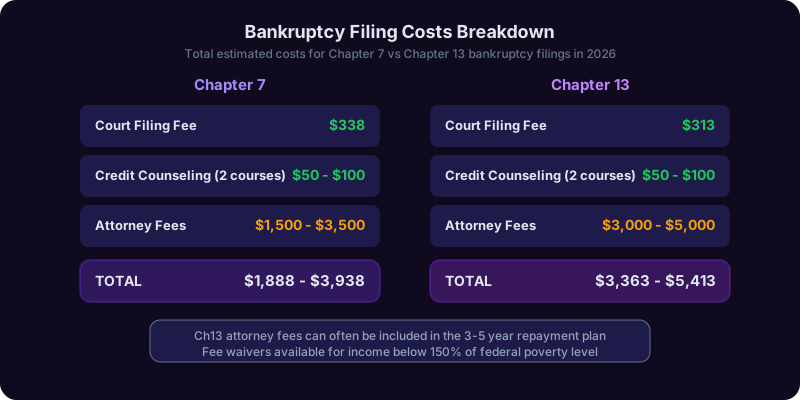
Filing for bankruptcy involves court fees, attorney costs, mandatory counseling, and extensive paperwork. Here is what each step costs in 2026.
Filing Fees and Attorney Costs
| Cost Component | Chapter 7 | Chapter 13 |
|---|---|---|
| Court filing fee | $338 | $313 |
| Attorney fees | $1,200-$3,500 | $2,500-$6,000 |
| Credit counseling (2 sessions) | $30-$100 | $30-$100 |
| Estimated total | $1,568-$3,938 | $2,843-$6,413 |
Chapter 7 filing fees can be waived for filers below 150% of the poverty line. Chapter 13 attorney fees can usually be included in the repayment plan, reducing upfront costs. Federal law requires two counseling sessions: pre-filing credit counseling and pre-discharge debtor education, both available online through agencies listed by the U.S. Trustee Program.
Step-by-Step Timeline
- Weeks 1-2: Complete pre-filing credit counseling. Gather documents: 2 years of tax returns, 6 months of pay stubs, bank statements, lists of debts, assets, and expenses.
- Weeks 2-4: Consult a bankruptcy attorney (most offer free consultations). Attorney runs means test and advises on chapter selection.
- Weeks 4-6: Attorney prepares petition. You review and sign. Petition is filed.
- Immediately upon filing: The automatic stay stops all collection activity: calls, letters, lawsuits, wage garnishments, and foreclosure proceedings.
- 20-40 days after filing: 341 Meeting of Creditors. You answer questions under oath from the trustee. Typically 5-15 minutes.
- Chapter 7 discharge: 60-90 days after the 341 meeting. Total: 3-6 months.
- Chapter 13 discharge: After completing 3-5 years of plan payments.
For a detailed understanding of your rights when dealing with creditors, see our complete guide to debt collector rights.
Credit Impact: How Bankruptcy Affects Your Score and for How Long
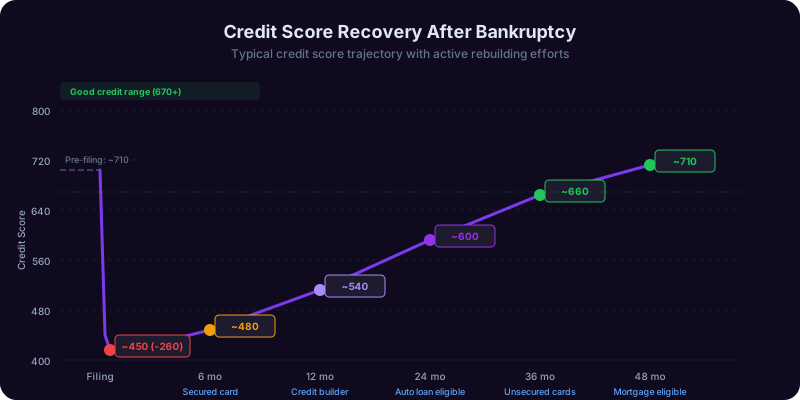
Bankruptcy devastates your credit score in the short term, but recovery is faster than most people expect.
The Initial Score Drop
| Pre-Filing Score | Chapter 7 Drop | Chapter 13 Drop | Post-Filing Range |
|---|---|---|---|
| 780+ (Excellent) | 200-240 pts | 180-220 pts | 540-580 |
| 680-779 (Good) | 150-200 pts | 130-180 pts | 500-580 |
| 580-679 (Fair) | 100-150 pts | 80-130 pts | 450-530 |
| Below 580 (Poor) | 50-100 pts | 30-80 pts | 430-500 |
Counterintuitively, if your credit is already damaged by collections, charge-offs, and judgments, the additional drop from bankruptcy may be smaller than expected. Some people with scores in the low 500s see their score stabilize within 6-12 months of discharge because bankruptcy eliminates ongoing negative reporting.
How Long It Stays
- Chapter 7: On your credit report for 10 years from filing date
- Chapter 13: On your credit report for 7 years from filing date
After 2-3 years of responsible credit use, many people achieve scores of 650-700 regardless of chapter. The scoring penalty is most severe in the first 2 years and diminishes steadily.
Recovery Milestones
| Timeframe | What Becomes Possible |
|---|---|
| Immediately | Secured credit cards, credit builder loans |
| 1 year | FHA mortgage (Ch13 only); subprime unsecured cards |
| 2 years | FHA mortgage (Ch7); conventional auto loans |
| 3 years | USDA loans; scores approaching 650-700 |
| 4 years | Conventional mortgage (Ch7); scores of 680-720 |
| 7/10 years | Ch13/Ch7 falls off report entirely |
For a detailed understanding of credit scoring factors, see our complete credit score guide.
Alternatives to Bankruptcy: Debt Settlement, Hardship Programs, and Credit Counseling
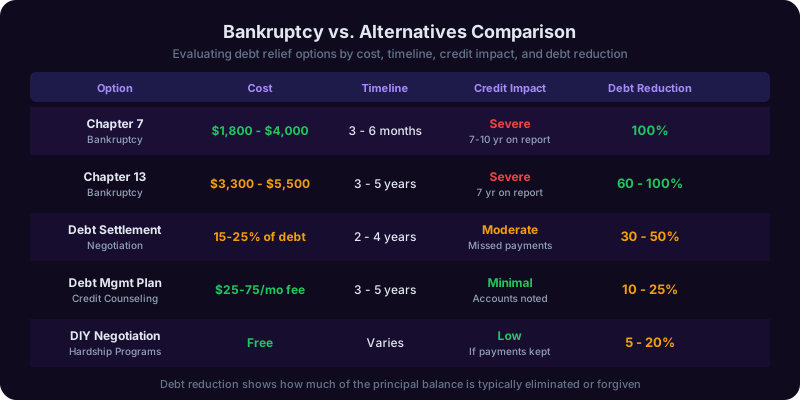
Bankruptcy should be a last resort. Several alternatives may resolve your debt without the credit impact and legal complexity of filing.
Debt Settlement
You negotiate with each creditor to accept a lump sum that is less than what you owe, typically 40-60 cents on the dollar. Pros: avoids bankruptcy filing, significant debt reduction. Cons: forgiven debt over $600 is taxable income (IRS Form 1099-C), creditors are not obligated to settle, your score drops while you stop payments, and settlement companies charge 15-25% of enrolled debt. Best for: people with 1-3 specific unsecured debts and access to lump-sum funds.
Creditor Hardship Programs
Most major lenders have internal hardship programs. Call directly, explain your situation, and request modified terms: temporary rate reductions (0-5% for 6-12 months), payment deferrals, or fee waivers. Pros: free, no credit damage if enrolled before missing payments. Cons: temporary relief only, does not reduce principal. Best for: temporary hardship with expected income recovery.
Nonprofit Credit Counseling and DMPs
A HUD-approved counseling agency may recommend a Debt Management Plan (DMP): reduced interest rates (0-8%), one monthly payment, distributed to creditors over 3-5 years. Fees: $25-$75 setup, $25-$50/month. Best for: $10,000-$50,000 in credit card debt with affordable monthly payments.
Comparison Table
| Factor | Chapter 7 | Chapter 13 | Settlement | DMP |
|---|---|---|---|---|
| Timeline | 3-6 months | 3-5 years | 2-4 years | 3-5 years |
| Credit impact | 10 years | 7 years | 7 years | Moderate |
| Debt reduction | 100% | Partial | 40-60% | 0% (interest only) |
| Legal protection | Automatic stay | Automatic stay | None | None |
| Cost | $1,500-$3,900 | $2,800-$6,400 | 15-25% of debt | $50-$75/mo |
If you are being harassed by debt collectors, read our guide to dealing with debt collectors. The Finance Copilot can compare these alternatives based on your specific debt amounts and income.
Rebuilding Credit After Bankruptcy and How Copilotly Helps
The day your bankruptcy is discharged is day one of credit recovery. With disciplined effort, you can rebuild from the 400-500s to the high 600s or low 700s within 18-24 months.
The 24-Month Action Plan
| Month | Action | Expected Score |
|---|---|---|
| Month 1 | Pull all 3 credit reports from AnnualCreditReport.com. Dispute any discharged debts still showing balances. Open a secured credit card (Discover it Secured or Capital One Platinum). | 450-550 |
| Month 2-3 | Open a credit builder loan (Self Financial or local credit union). Activate Experian Boost for utility and streaming payments. | 500-580 |
| Month 6 | Request credit limit increase on secured card. Continue 100% on-time payments. | 540-620 |
| Month 12 | Apply for one entry-level unsecured card. Do not apply for multiple cards. | 600-660 |
| Month 18-24 | Consider authorized user status on a family member's aged card. Get pre-approved through credit union for any needed auto loan. | 660-720 |
An emergency fund is critical post-bankruptcy. Without savings, one unexpected expense forces you back into debt. Aim for $1,000 within 6 months and 3 months of expenses within 18 months. For a comprehensive guide on secured cards and credit builder loans, see our guide to building credit from nothing.
How Copilotly Helps at Every Stage
The Finance Copilot and Legal Copilot assist throughout the process:
- Before filing: Categorize debts as dischargeable vs. non-dischargeable, run a preliminary means test, compare bankruptcy vs. alternatives with your specific numbers, and review exemptions for your state
- During filing: Generate document checklists, prepare questions for attorney consultations, draft creditor communications, and explain your rights under the automatic stay
- After discharge: Create a personalized 24-month credit rebuilding roadmap, guide you through credit report disputes, recommend appropriate financial products at each recovery stage, and track milestone eligibility (credit limit increases, unsecured cards, mortgage windows)
Important Limitations
Copilotly provides educational information and AI-powered guidance. It does not provide legal advice, represent you in court, or replace a bankruptcy attorney. For affordable legal representation, contact your local Legal Services Corporation office. Upsolve provides free Chapter 7 filing assistance for qualifying low-income filers.
This guide provides general legal and financial information for educational purposes only. It is not legal or financial advice. Bankruptcy law is complex and varies by jurisdiction. Laws and thresholds change regularly; always verify current figures before making decisions. Consult a qualified bankruptcy attorney and, if needed, a tax professional for advice specific to your situation.
Frequently Asked Questions
Recommended Copilots
Related Articles
Get Answers From the Finance Copilot
Ask a specialist AI copilot the question you just read about. Your first conversation needs no signup and no card.