
Before You Resign: The Pre-Departure Checklist
Quitting a job is a significant decision with financial, professional, and emotional consequences. Before you submit your resignation, work through this checklist to make sure you are leaving from a position of strength rather than impulse:
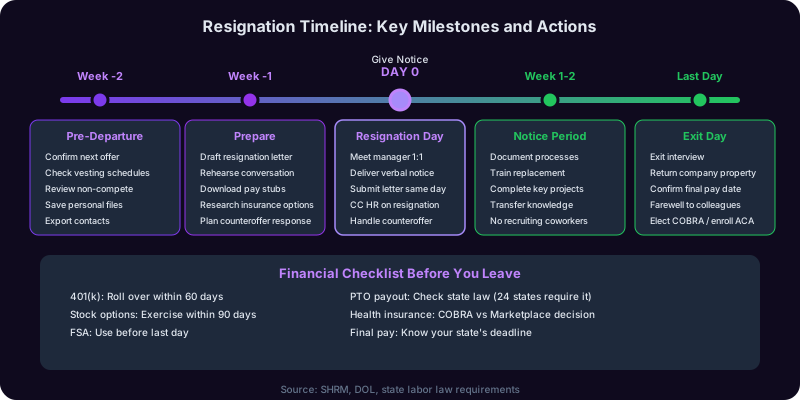
1. Confirm your next move. The ideal time to resign is after you have a signed offer letter from a new employer with a confirmed start date. If you are leaving without another job lined up, ensure you have at least 3-6 months of living expenses saved. The average job search takes 3-5 months in 2026 according to the Bureau of Labor Statistics, and it often takes longer at senior levels or in specialized fields. Data from Indeed's job search research confirms that candidates who resign with a plan in place report significantly lower stress and shorter gaps in employment.
2. Review your financial obligations. Check for any agreements that affect your departure:
- Vesting schedules: If you have stock options, RSUs, or 401(k) employer matching, check when they vest. Leaving 2 weeks before a vesting cliff could cost you thousands.
- Signing bonuses or tuition reimbursement: Many companies require you to repay these if you leave within 1-2 years. Review your agreement for clawback provisions.
- Non-compete agreements: Some states enforce non-competes (though the FTC has been working to restrict them). Know whether yours is enforceable in your state and whether it restricts your planned next role. See our non-compete agreement guide for state-by-state details.
- Deferred compensation: Understand what happens to any deferred compensation or bonus payments when you resign.
3. Save personal files and contacts. Once you resign, your access to company systems may be revoked quickly, sometimes immediately. Before you give notice:
- Save personal documents, performance reviews, and any work samples you are legally entitled to keep
- Export personal contacts and professional connections
- Download pay stubs and tax documents
- Note your current benefits information (health plan details, 401(k) account numbers)
4. Do not tell coworkers before your manager. Your direct manager should be the first person at the company to know you are leaving. Telling coworkers first risks the news reaching your manager through the grapevine, which is disrespectful and can damage the relationship you need to maintain for a reference. According to SHRM's guidance on employee resignations, maintaining this order of communication is one of the most important factors in preserving professional relationships.
The Career Copilot can help you evaluate whether the timing is right for your departure and identify any financial or contractual issues to address before resigning. The Finance Copilot can help you assess whether your savings are sufficient for a job transition.
How to Give Your Two-Week Notice: The Conversation Script
The resignation conversation is the moment most people dread. It does not need to be dramatic. In fact, the simpler and more professional you keep it, the better the outcome for everyone. Here is a step-by-step approach:
Schedule a private meeting. Do not resign via email, Slack, or in a hallway. Request a one-on-one meeting with your direct manager. "I would like to schedule 15 minutes to discuss something important" is sufficient. In-person is ideal; video call is acceptable for remote workers.
Keep the conversation short and clear. You do not need to justify your decision at length or apologize for leaving. Here is a simple script:
"I wanted to let you know that I have decided to resign from my position. My last day will be [date, typically 2 weeks from today]. I have really valued my time here and I want to make this transition as smooth as possible. I am happy to help train my replacement or document my processes during my remaining time."
Do not badmouth anyone or anything. Even if your reason for leaving is a terrible manager, toxic culture, or low pay, the resignation conversation is not the time to air grievances. You can read our salary negotiation scripts guide if compensation is a factor in your departure. Keep your stated reason neutral: "I have been offered an opportunity that aligns with my long-term career goals" or "I am making a change for personal reasons." You gain nothing from burning bridges and potentially lose future references and professional connections.
Be prepared for common responses:
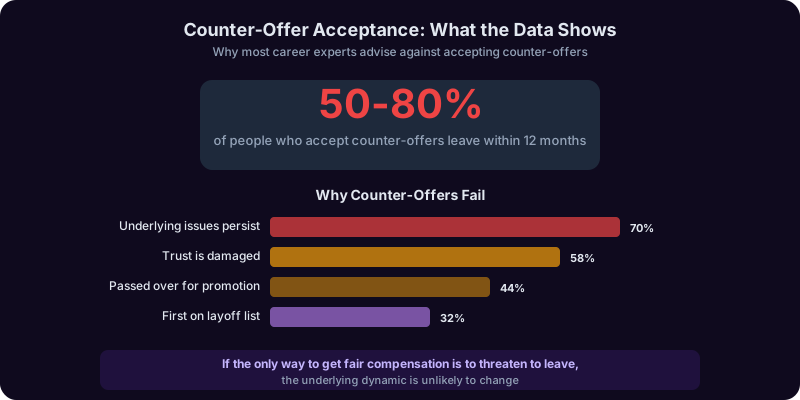
- Counteroffer: Your employer may offer more money, a promotion, or other incentives to stay. Research from Harvard Business Review and multiple staffing firms consistently shows that 50-80% of people who accept counteroffers leave within 12 months anyway. The underlying reasons for leaving usually persist. Decide in advance whether you would consider a counteroffer and under what specific conditions.
- Immediate termination: Some companies will ask you to leave the same day, especially in sensitive roles (finance, sales with client relationships, or roles with access to competitive information). This is not personal. If this happens, you are typically paid through the end of your notice period. Know your company's typical practice before giving notice.
- Guilt trip: "We really need you right now" or "You are leaving us in a tough spot." Be empathetic but firm. You are not responsible for your employer's staffing challenges.
- Anger: Some managers take resignations personally. Stay calm, professional, and do not engage with hostility. Repeat your commitment to a smooth transition and leave the conversation if it becomes unproductive.
The Career Copilot can help you rehearse the resignation conversation, anticipate your manager's likely reaction, and prepare responses to counteroffers or pushback.
How to Write a Resignation Letter: Template and Examples
After your verbal conversation, submit a written resignation letter. This creates an official record of your departure date and demonstrates professionalism. Your letter should be brief, positive, and unambiguous. Here is a proven template:
Basic resignation letter template:
"Dear [Manager's Name],
I am writing to formally notify you of my resignation from my position as [Job Title] at [Company Name]. My last day of work will be [Date].
I am grateful for the opportunities I have had during my time here, including [1-2 specific positive experiences or skills gained]. I am committed to ensuring a smooth transition and am happy to assist with training, documentation, or handoff during my remaining time.
Thank you for the support and guidance you have provided. I wish the team continued success.
Sincerely, [Your Name]"
Key principles for your letter:
- Keep it to one page. Three to four short paragraphs is ideal.
- State your last day clearly. Remove any ambiguity about when you are leaving.
- Be positive. Even if your experience was negative, the resignation letter is not the place to express it. This document may end up in your personnel file and could be referenced by future employers.
- Do not include your new employer. You are under no obligation to share where you are going. Saying "I have accepted a position at another company" is sufficient if you want to explain.
- Offer to help with the transition. This demonstrates professionalism and goodwill.
How to submit: Email is standard for most workplaces. Send it to your direct manager and CC your HR representative. Keep a copy for your records. Some companies have a formal resignation process through their HR portal; check with HR if you are unsure.
Timing: Submit your written resignation on the same day as your verbal conversation or immediately after. Do not leave a gap between the conversation and the formal letter. For more guidance on professional written communication, see our cover letter writing guide, which covers many of the same principles of professional tone and structure.
The Career Copilot can help you draft a resignation letter tailored to your specific situation, tenure, and relationship with your employer.

Get Answers From the Career Copilot
Use the Career Copilot to draft your resignation letter, prepare for the exit conversation, and plan your job transition. The Insurance Copilot can help you navigate health coverage options, and the Employment Law Copilot can explain your rights.
Surviving the Two-Week Notice Period: What to Do and What to Avoid
The two weeks between giving notice and your last day can feel awkward, but how you handle this period has a lasting impact on your professional reputation. Here is how to navigate it well:
What to do during your notice period:
- Document everything. Create detailed handoff documents for your responsibilities, ongoing projects, recurring tasks, and key contacts. Include login credentials (for shared accounts), file locations, process steps, and deadlines. The more thorough your documentation, the smoother the transition and the better your reputation.
- Train your replacement. If a replacement has been identified, spend time walking them through your role. If no replacement exists yet, train a colleague who will absorb your duties temporarily. Create training materials they can reference after you leave.
- Complete critical work. Finish any projects you can realistically complete before your last day. For long-term projects, bring them to a logical handoff point and document the status, next steps, and any pending decisions.
- Say goodbye professionally. Send individual messages to close colleagues thanking them and sharing your personal contact information. A brief, positive farewell email to your broader team on your last day is appropriate.
What to avoid during your notice period:
- Do not slack off. "Short-timer syndrome" (mentally checking out once you have given notice) is common but unprofessional. Maintain your normal work quality and hours.
- Do not badmouth the company. Even to trusted colleagues, negative comments during your notice period can spread and damage your reputation.
- Do not recruit coworkers. Attempting to bring colleagues to your new company during your notice period can create legal issues and will definitely damage your relationship with your current employer.
- Do not take company property or proprietary information. Taking client lists, code, documents, or other company intellectual property is both unethical and potentially illegal. Take only what is personally yours.
- Do not post on social media about leaving until your last day or after. Premature announcements can create awkward situations with clients, partners, or colleagues who have not been informed through proper channels.
Should you give more than two weeks? Two weeks is the standard expectation for most positions. Senior roles, technical specialists, or positions that are difficult to fill may warrant 3-4 weeks. Giving too much notice can backfire: some companies will accept your resignation but ask you to leave before the end of your stated period. Discuss the appropriate notice length with your manager during the resignation conversation. The Harvard Business Review recommends calibrating your notice period to the complexity of your role and the health of the working relationship. According to a Glassdoor workplace survey, 65% of managers view employees who provide thorough transition documentation more favorably for future rehires and references.
The Career Copilot can help you create a comprehensive transition plan and handoff documentation that will leave a strong final impression.
The Exit Interview: What to Say, What to Skip, and How to Use It
Most companies conduct exit interviews, either with your manager, HR, or both. These are voluntary in almost all cases (you can decline), but participating can be beneficial if you handle it strategically.
The purpose of exit interviews: Companies use exit interviews to identify patterns in turnover, surface management problems, and gather feedback about workplace culture, compensation, and processes. The information you share may (or may not) be used to make improvements.
What to share:
- Constructive, specific feedback. "The project management process could be more efficient" or "Cross-team communication was a consistent challenge" is useful feedback. Focus on systems and processes, not individuals.
- Positive experiences. Mention specific things you valued: a great team, meaningful projects, good learning opportunities. This is genuine and helps the company understand what is working.
- General reasons for leaving. "I found an opportunity that offered career growth in [area]" or "I am relocating for personal reasons" is appropriate. You do not owe detailed explanations.
What to skip:
- Personal attacks on managers or colleagues. Even if warranted, personal criticism in an exit interview rarely leads to change and may follow you through your professional network.
- Detailed salary information about your new role. You do not need to disclose what your new employer is paying you.
- Venting. The exit interview is not therapy. Keep emotions in check even if you are leaving because of genuine mistreatment. If you experienced harassment or illegal activity, report it to HR formally, not in the exit interview.
- Promises about staying in touch that you do not intend to keep. Be genuine in your statements.
A critical reality check: Exit interview feedback is not always confidential, despite HR's claims. What you say may be shared with your former manager or team. Assume that anything you say could get back to people at the company. This does not mean you should lie or be entirely guarded, but be thoughtful and professional about what you share.
If you experienced genuinely problematic situations (discrimination, harassment, safety violations, or illegal activity), the Employment Law Copilot can help you understand your rights and whether to raise these issues during the exit process or through other channels.
Health Insurance After Quitting: COBRA, Marketplace, and Other Options
Losing health insurance is one of the biggest practical concerns when leaving a job. Your employer-sponsored coverage typically ends on your last day of employment or the last day of the month in which you resign (policies vary by employer). Here are your options for maintaining coverage:
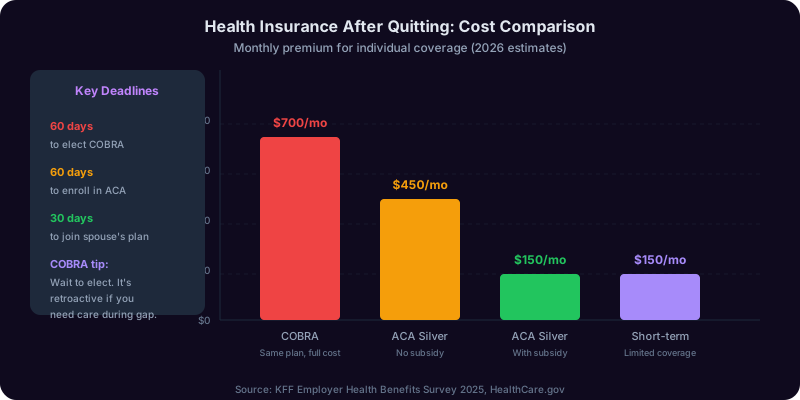
COBRA (Consolidated Omnibus Budget Reconciliation Act): COBRA allows you to continue your exact same employer health plan for up to 18 months after leaving. The catch: you pay the full premium (the employer's share plus your share) plus a 2% administrative fee. The average COBRA premium for individual coverage is approximately $650-$750 per month in 2026, and family coverage averages $1,800-$2,200 per month. COBRA is expensive but valuable if you are mid-treatment with specific doctors or need coverage for a short gap. You have 60 days from losing coverage to elect COBRA, and it is retroactive, meaning you can wait and only elect it if you incur medical expenses during the gap.
ACA Marketplace (Healthcare.gov): Losing employer coverage qualifies you for a Special Enrollment Period on the ACA marketplace. You have 60 days from your coverage loss date to enroll. Marketplace plans are often significantly cheaper than COBRA, especially if you qualify for premium subsidies based on your income. In 2026, a household earning up to 400% of the federal poverty level ($58,320 for an individual) may qualify for subsidies that reduce monthly premiums to $50-$300 depending on income and plan level. Even if your income is higher, Marketplace plans are often cheaper than COBRA's full-freight pricing. Visit Healthcare.gov's coverage guide for the unemployed for details on Special Enrollment Periods and subsidy eligibility.
Spouse's or partner's plan: If your spouse or domestic partner has employer-sponsored health insurance, your loss of coverage is a qualifying life event that allows you to be added to their plan outside of open enrollment. This is often the cheapest option.
Short-term health insurance: Short-term plans offer limited coverage for 1-12 months (duration limits vary by state) at relatively low premiums ($100-$300/month). However, they typically do not cover pre-existing conditions, mental health, maternity, or prescription drugs. They are a stopgap, not a long-term solution.
Medicaid: If your income drops significantly after quitting (especially if you are job searching without pay), you may qualify for Medicaid in states that expanded coverage under the ACA. Income limits vary by state but generally cover individuals earning up to approximately 138% of the federal poverty level ($20,783 for an individual in 2026).
Critical timeline: Do not let your coverage lapse without a plan. Medical debt is the #1 cause of bankruptcy in the United States, and a single emergency room visit or hospitalization without insurance can cost $10,000-$100,000+. Make your health insurance decision before your last day of work. If you are unsure which option is right for your situation, our guide on getting medical care without insurance covers additional resources and cost-reduction strategies.
The Insurance Copilot can help you compare COBRA, Marketplace, and other options based on your specific health needs, medications, and budget. The Budgeting Copilot can help you factor insurance premiums into your post-resignation budget.
Final Paycheck, PTO Payout, 401(k), and Other Financial Loose Ends
When you leave a job, several financial matters require attention. Missing any of these can cost you money:
Final paycheck: Most states require employers to issue your final paycheck by your last day or within a specific number of days after separation. California requires same-day payment if you give at least 72 hours' notice. Other states allow up to 30 days. Your final check should include all hours worked, including any overtime. If your employer fails to pay on time, many states impose penalties. Check your state's specific payday laws at the Department of Labor.
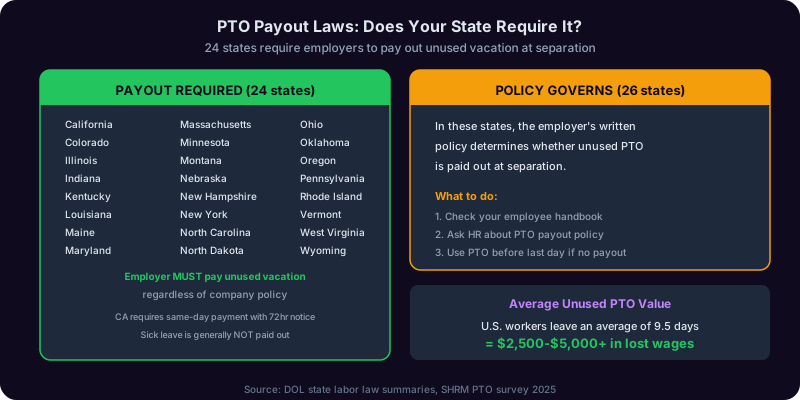
PTO and vacation payout: Whether your employer must pay out unused vacation and PTO depends on your state and company policy. Approximately 24 states require employers to pay out accrued, unused vacation time at separation. These include California, Colorado, Illinois, Massachusetts, Montana, and New York. Other states allow the employer's policy to govern. Check your employee handbook and state law. Sick leave is generally not paid out. U.S. workers leave an average of 9.5 unused PTO days on the table, representing $2,500-$5,000+ in lost wages.
401(k) and retirement accounts: Your 401(k) balance is yours (vested portions, at least). You have several options:
- Leave it where it is: If your balance exceeds $5,000, most plans allow you to keep the account at your former employer. This is fine as a temporary measure but can lead to forgotten accounts over time.
- Roll it to your new employer's plan: If your new employer has a 401(k), you can do a direct rollover. This keeps your money tax-deferred and consolidates your retirement savings.
- Roll it to an IRA: Rolling to a traditional IRA gives you the widest investment options and full control. Make sure it is a direct rollover (trustee to trustee) to avoid tax withholding and potential penalties. This is the best option for most people.
- Cash it out (avoid this): You will owe income tax on the full amount plus a 10% early withdrawal penalty if you are under 59 and a half. On a $50,000 balance, this could mean losing $15,000-$20,000 to taxes and penalties.
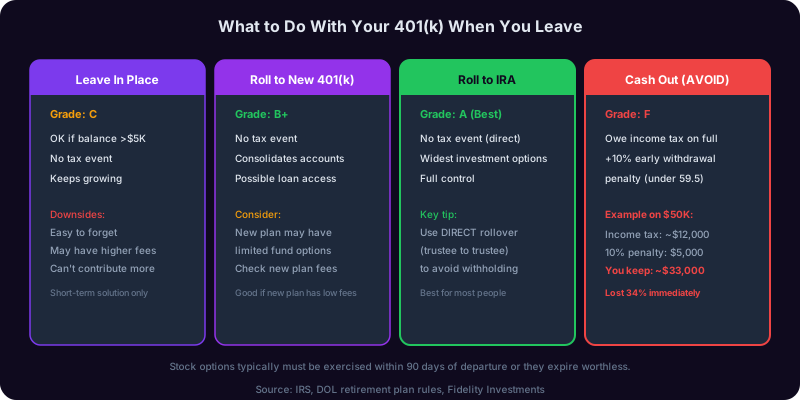
Equity compensation: If you have stock options, RSUs, or other equity, your departure triggers important deadlines. Vested stock options typically must be exercised within 90 days of your last day or they expire worthless. Unvested RSUs are forfeited. ESPP shares (Employee Stock Purchase Plan) already purchased are yours, but your current contribution period may be affected. Review your equity agreements carefully and consider consulting a financial advisor if the amounts are significant.
Other benefits to address:
- HSA (Health Savings Account): The money is yours permanently. You can keep the account, roll it to another HSA, or continue using it for qualified medical expenses.
- FSA (Flexible Spending Account): Unlike HSAs, FSA funds are typically "use it or lose it." You generally have until your last day to incur eligible expenses. Submit claims promptly.
- Life and disability insurance: Employer-provided coverage ends when you leave. You may have the option to convert to an individual policy, though premiums will be higher. Decide whether you need individual coverage before your conversion deadline passes (usually 30-60 days).
The Finance Copilot can help you make the right decisions about your 401(k) rollover and equity compensation. The Insurance Copilot can guide you through life and disability insurance decisions. If you believe your employer is not paying what they owe, the Employment Law Copilot can explain your rights.
Quitting in Difficult Situations: Toxic Jobs, No Notice, and Being Asked to Stay
Not every resignation follows the textbook path. Here is how to handle the most common complicated scenarios:
Quitting a toxic job: If your workplace is genuinely toxic (hostile manager, harassment, ethical violations, or a culture that damages your mental health), you may feel desperate to leave immediately. Even in toxic situations, try to give at least 2 weeks' notice if you can. However, your mental health and physical safety come first. If the environment is causing you genuine harm, it is acceptable to give shorter notice or resign effective immediately. In your resignation letter, keep the tone professional and neutral regardless of the circumstances. Document any incidents of harassment, discrimination, or illegal activity and preserve this documentation outside of company systems. If you believe you were forced out by intolerable conditions, see our fired vs. laid off rights guide for information about constructive discharge claims.
Quitting without another job: This is sometimes the right decision, particularly if your current role is damaging your health or preventing you from conducting an effective job search. If you quit without a next role:
- Have at least 3-6 months of expenses saved
- Apply for unemployment (you may or may not qualify depending on your state and the circumstances of your departure; voluntary resignations often do not qualify, but there are exceptions for hostile work environments). The CareerOneStop unemployment finder can help you locate your state's filing portal.
- Secure health insurance before your last day
- Start your job search immediately; our interview preparation guide can help you get ready for your next opportunity. The Career Copilot can also help you optimize your resume.
Being asked to stay longer than your notice: Your employer may ask you to extend your notice period beyond 2 weeks. You are under no legal obligation to do so. If you have flexibility (your new start date allows it) and the relationship is positive, extending by 1-2 weeks can build significant goodwill. If extending would delay your new role or create hardship, politely decline: "I understand the transition is challenging, and I will do everything I can to document and hand off my work within my notice period, but I am not able to extend my last day."
Being asked to leave immediately: Some companies, especially in competitive industries, will escort you out the same day you give notice. If this happens:
- You should still be paid through the end of your notice period (check your state's laws)
- Ask about the logistics for returning company property and collecting personal items
- Confirm your coverage end date for health insurance and other benefits
- Request that your termination be recorded as a resignation, not a firing
Counter-offers and pressure to stay: If your employer makes a counter-offer, take at least 24-48 hours to consider it rather than responding in the moment. Ask yourself: would this counter-offer have been offered without a resignation? If the only way to get fair compensation or treatment is to threaten to leave, the underlying dynamic is unlikely to change. That said, some counter-offers are genuine and address the root cause of your departure. For guidance on evaluating compensation packages, our salary negotiation guide covers frameworks that apply to counter-offer evaluation as well. The Career Copilot can help you evaluate a counter-offer objectively.
For guidance on your legal protections when leaving a difficult workplace, including constructive discharge claims, final pay disputes, and non-compete enforcement, the Employment Law Copilot can provide state-specific guidance.
Frequently Asked Questions
Recommended Copilots
Recommended Copilots
Get help writing your resignation letter, navigating counter-offers, and planning your career transition
Try Free →Understand your rights regarding final pay, PTO payout, non-competes, and workplace protections
Try Free →Compare COBRA, Marketplace, and other health insurance options after leaving your job
Try Free →Related Articles
Get Answers From the Career Copilot
Use the Career Copilot to draft your resignation letter, prepare for the exit conversation, and plan your job transition. The Insurance Copilot can help you navigate health coverage options, and the Employment Law Copilot can explain your rights.