
The Therapy Cost Crisis: Why Mental Health Care Is So Expensive and What You Can Do About It
Mental health care in the United States operates inside a paradox. Demand for therapy has never been higher, with the National Institute of Mental Health reporting that one in five American adults lives with a mental illness and nearly one in twenty lives with a serious mental illness. Yet the average cost of a single therapy session, between $100 and $250 for a licensed therapist and $200 to $400 for a psychiatrist, places consistent treatment out of reach for a vast portion of the population. A 2025 survey by the American Psychological Association found that 42% of adults who wanted mental health care in the past year did not receive it, and the most commonly cited barrier was cost.
The economics of therapy are genuinely difficult. Licensed therapists invest 6 to 10 years in graduate education and supervised clinical hours. They carry student debt, pay for office space, malpractice insurance, continuing education, and licensure fees. Solo practitioners must cover these costs through session fees alone, which explains why rates in major metropolitan areas can reach $300 or more per session. A weekly therapy commitment at $200 per session adds up to $10,400 per year, more than many Americans spend on rent in several months.
But the landscape is changing rapidly. The convergence of telehealth expansion, sliding-scale networks, federal parity enforcement, employer EAP programs, and AI-powered mental health tools has created more paths to affordable therapy than at any point in history. The challenge is no longer that options do not exist. It is that most people do not know about them.
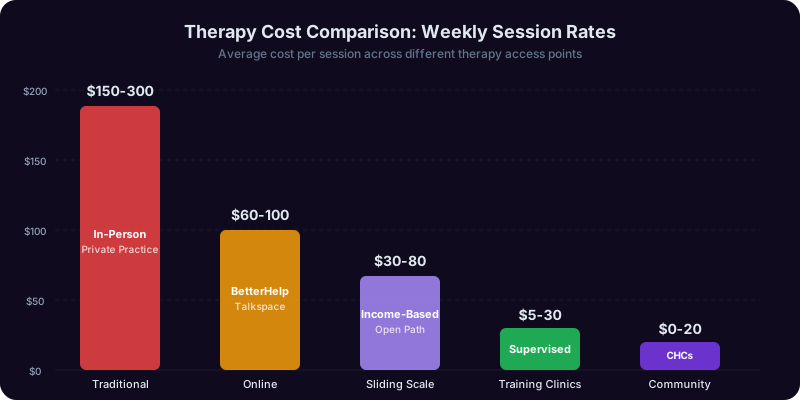
This guide is organized from the most accessible options to the most specialized. We cover online therapy platforms with transparent pricing, sliding-scale directories, community mental health centers, university training clinics, how to maximize your insurance benefits under the Mental Health Parity Act, employer EAP programs, free crisis resources, and the emerging role of AI mental health tools. Every option listed is currently available in 2026, and we include realistic cost ranges so you can make informed decisions.
One framing note before we begin: affordable therapy does not mean inferior therapy. Some of the most effective therapists in the country work at community mental health centers, university clinics, and online platforms. A therapist's skill is not determined by their hourly rate, and a $30 session with the right clinician can produce better outcomes than a $300 session with the wrong one. The research is clear that the therapeutic relationship, the quality of the connection between you and your therapist, is the single strongest predictor of positive outcomes, more than the therapist's degree, theoretical orientation, or the setting where treatment occurs.
Important disclaimer: This guide provides information about mental health resources, not clinical advice. If you are in crisis, contact the 988 Suicide and Crisis Lifeline by calling or texting 988. If you are in immediate danger, call 911.
Online Therapy Platforms Compared: BetterHelp, Talkspace, Open Path, and More
Online therapy platforms have fundamentally changed the accessibility equation for mental health care. By eliminating office overhead and geographic constraints, these platforms offer licensed therapy at a fraction of traditional costs. But they vary significantly in pricing, therapist quality, session format, and what you actually receive for your money. Here is an honest comparison of the major platforms as of mid-2026.
BetterHelp: $60-100 Per Week
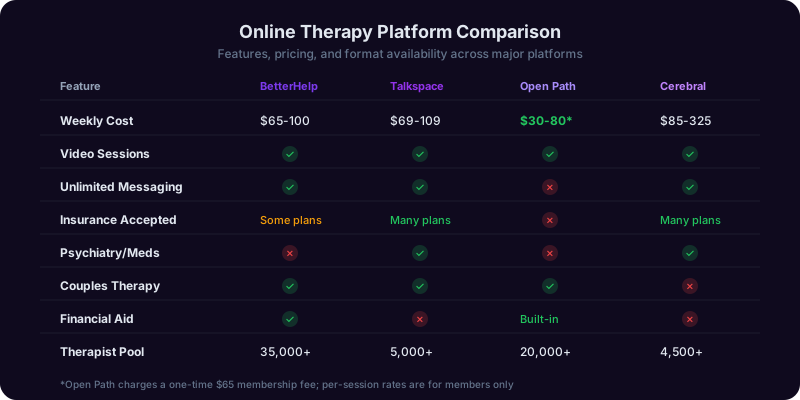
BetterHelp is the largest online therapy platform, with over 35,000 licensed therapists and more than 4 million users served. Plans cost between $60 and $100 per week (billed monthly at $240-$400), which includes one live session per week (video, phone, or audio-only) plus unlimited asynchronous messaging with your therapist. Financial aid is available and can reduce costs by 25-50% for qualifying applicants. BetterHelp does not accept insurance but provides superbills you can submit for potential out-of-network reimbursement.
Strengths: Large therapist pool means better matching, easy therapist switching if the fit is wrong, financial aid program, flexible session formats. Weaknesses: Does not accept insurance directly, therapist quality varies widely, messaging responses can be delayed 24-48 hours, does not prescribe medication, and has faced scrutiny over data sharing practices.
Talkspace: $69-109 Per Week
Talkspace differentiates by accepting many major insurance plans, including Aetna, Cigna, Optum, and several state Medicaid programs. Without insurance, plans range from $69 to $109 per week. The platform offers therapy, psychiatry, and couples therapy. Psychiatric sessions for medication management start at $249 for the initial evaluation and $125 for follow-ups. Talkspace therapists tend to have more clinical experience on average than BetterHelp, partly because of stricter credentialing requirements.
Strengths: Insurance accepted, psychiatry available, couples therapy option, good for medication management alongside talk therapy. Weaknesses: More expensive without insurance, smaller therapist pool than BetterHelp, wait times for psychiatry can be 2-3 weeks.
Open Path Collective: $30-80 Per Session
Open Path is fundamentally different from BetterHelp and Talkspace. It is a nonprofit network of over 22,000 licensed therapists who agree to offer reduced rates to members. You pay a one-time lifetime membership fee of $65 and then pay your therapist directly at rates between $30 and $80 per session, with no subscription commitment. Sessions are individual between you and the therapist, not mediated through a platform messaging system.
Strengths: Lowest per-session cost, no ongoing subscription, direct therapist relationship, therapists volunteer for the network which often signals genuine commitment to accessibility. Weaknesses: Membership fee is non-refundable, therapist availability varies by location, no messaging between sessions, does not include psychiatry.
Other Notable Platforms
Cerebral ($85-$325 per month) focuses on psychiatric care, including medication management for anxiety, depression, ADHD, and insomnia. It pairs prescribing providers with optional therapy. Best for people who need medication plus therapy in one platform. Brightside ($95-$349 per month) combines therapy and psychiatry with a focus on measurement-based care, tracking symptom scores throughout treatment. Alma is a therapist directory that helps you find in-network providers, making it easier to use insurance for therapy rather than paying out of pocket.
How to Choose
The right platform depends on three factors: your budget, your insurance, and whether you need medication management. If you have insurance that covers mental health, check Talkspace or use Alma's directory first, because insurance can reduce your cost to a $20-$50 copay. If you are paying out of pocket and want the lowest per-session cost, Open Path at $30-$80 per session is hard to beat. If you value unlimited messaging between sessions and flexible scheduling, BetterHelp's weekly model offers good value. If you need psychiatric medication, Talkspace or Cerebral are the strongest options.
Regardless of platform, treat the first session as a mutual interview. A good therapeutic relationship matters more than the platform, the price, or the therapist's credentials. If you do not feel heard and understood after two to three sessions, switch therapists. Every major platform makes this easy. For more on managing mental health through self-guided approaches that complement therapy, see our guide on AI journaling for mental health.
Sliding Scale Therapy and Community Mental Health Centers: $0 to $50 Per Session
For people who cannot afford even the reduced rates of online platforms, sliding-scale therapists and community mental health centers represent the most accessible path to professional therapy. These options are underused largely because people do not know they exist or assume they involve long waits and inferior care. The reality is more nuanced and often much better than expected.
Sliding Scale Private Practice Therapists
Many private practice therapists reserve a portion of their caseload for sliding-scale clients, meaning they adjust their fees based on your ability to pay. A therapist whose standard rate is $175 per session might offer sliding-scale slots at $40 to $80. The Psychology Today therapist directory lets you filter specifically for sliding-scale providers in your area. When you contact a therapist, be direct: state your budget and ask what they can offer. Many therapists will work with you because they entered the profession to help people, not to turn away those who need care most.
Tips for finding sliding-scale therapists:
- Use Psychology Today's directory and filter by "Sliding Scale" and your zip code
- Contact therapists directly rather than relying on directory listings alone, as many offer sliding scale but do not advertise it
- Call on Tuesdays through Thursdays when therapists are most likely to answer or return calls
- Be specific about your budget: "I can afford $50 per session" is more effective than "Do you have a sliding scale?"
- Ask about reduced-rate group therapy, which some practices offer at $20 to $40 per session
Community Mental Health Centers
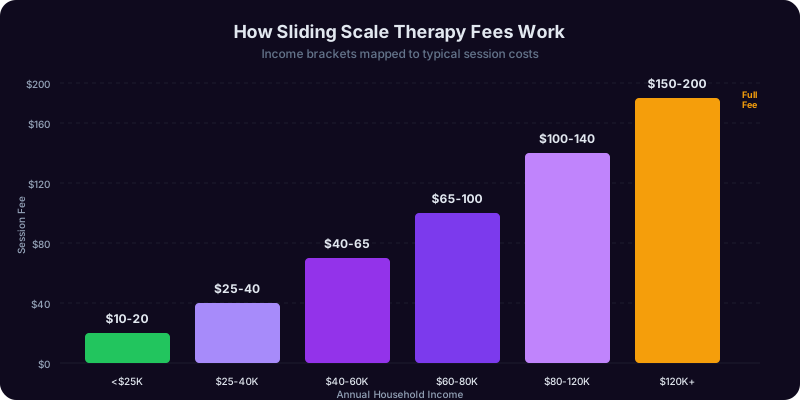
Community mental health centers (CMHCs) are the backbone of public mental health care in the United States. There are approximately 2,700 CMHCs operating across the country, funded through a combination of federal, state, and local dollars. These centers are required to serve anyone regardless of ability to pay and use income-based sliding fee scales similar to community health centers for physical care.
Typical sliding-scale fees at CMHCs:
| Income Level | Typical Session Cost |
| Below 100% Federal Poverty Level | $0 - $10 |
| 100% - 150% FPL | $10 - $25 |
| 150% - 200% FPL | $25 - $50 |
| Above 200% FPL | $50 - $100 (still below market rate) |
Services at CMHCs typically include individual therapy, group therapy, psychiatric medication management, substance abuse treatment, crisis intervention, and case management. Many also offer specialized programs for children and adolescents, veterans, trauma survivors, and people with severe mental illness. The SAMHSA National Helpline at 1-800-662-4357 provides free referrals to local CMHCs and other treatment services 24 hours a day, 7 days a week.
Addressing Common Concerns About CMHCs
"The wait times are too long." This is sometimes true. Average wait times for a first appointment range from 2 to 8 weeks depending on your area and the severity of your symptoms. However, most CMHCs offer same-day or next-day crisis appointments for urgent situations. If you are in acute distress, say so when you call. Additionally, many centers have expanded telehealth capacity since 2020, reducing wait times significantly.
"The quality of care is lower." Not necessarily. CMHCs employ licensed therapists, psychologists, and psychiatrists who meet the same credentialing standards as private practice clinicians. Many clinicians choose to work at CMHCs specifically because they want to serve underserved populations. The evidence shows that therapy outcomes at CMHCs are comparable to private practice outcomes for most conditions when controlling for symptom severity and client engagement.
"I do not want to be seen at a government clinic." CMHCs are not government clinics in the way most people imagine. Many are run by nonprofit organizations and operate in modern, welcoming facilities. Your visit is confidential and protected by the same HIPAA regulations that govern any healthcare provider. You will not be reported to anyone for seeking mental health care.
For a comprehensive overview of other low-cost healthcare options beyond mental health, see our guide on what to do when you cannot afford a doctor.

Get Answers From the Health Copilot
Ask a specialist AI copilot the question you just read about. Your first conversation needs no signup and no card.
University Training Clinics: High-Quality Therapy for $5 to $30 Per Session
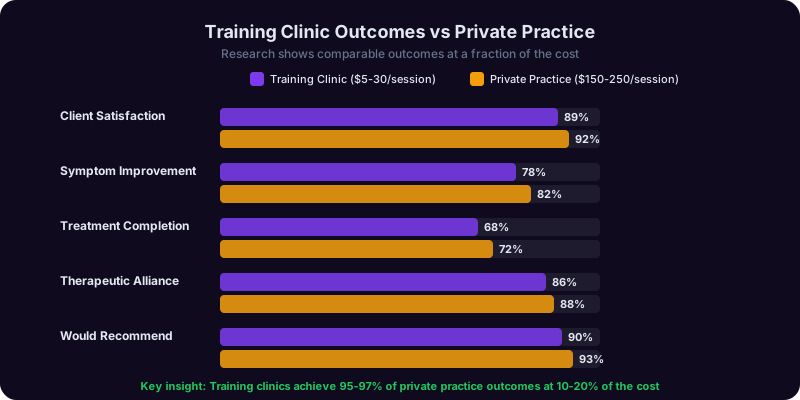
One of the best-kept secrets in affordable mental health care is the university training clinic. Nearly every graduate program in clinical psychology, counseling psychology, social work, and marriage and family therapy operates a training clinic where advanced students provide therapy under the close supervision of licensed faculty. These clinics offer therapy at dramatically reduced rates, typically $5 to $30 per session, and some charge nothing at all.
How Training Clinics Work
At a training clinic, your therapist is a graduate student in their second, third, or fourth year of a doctoral or master's program. They have completed coursework in psychotherapy, psychopathology, assessment, and ethics. They are supervised by a licensed psychologist or clinical faculty member who reviews case notes, watches session recordings, and provides ongoing guidance on treatment planning. In many programs, the supervisor is a highly experienced clinician with decades of practice.
This model produces a distinctive advantage: your therapist brings fresh, current training in evidence-based treatments (CBT, DBT, ACT, exposure therapy), and their work is reviewed by an expert who catches things a solo practitioner might miss. A 2024 meta-analysis published in Training and Education in Professional Psychology found that client outcomes at training clinics were not significantly different from outcomes at fully licensed practices for anxiety, depression, and relationship problems.
Finding a Training Clinic Near You
Nearly every major university with a psychology or counseling program operates one. Here is how to find them:
- Search "[university name] psychology training clinic" or "[university name] counseling center community clinic"
- Check universities within driving distance, even if you are not affiliated with the school. Training clinics serve the general public, not just students
- Contact the psychology or social work department directly and ask about their community clinic
- The Association of Psychology Training Clinics (APTC) maintains a directory at aptc.org
Some well-known training clinics include those at Columbia University, University of Michigan, University of Texas at Austin, University of California Los Angeles, Emory University, and the University of Washington. But smaller state universities and even some community colleges with counseling programs offer similar services.
What to Expect
Intake process: Most training clinics conduct a thorough intake assessment, often more comprehensive than what you would receive in private practice. This typically includes standardized questionnaires for depression (PHQ-9), anxiety (GAD-7), and overall functioning, plus a clinical interview. This data helps the student therapist and their supervisor develop a targeted treatment plan.
Session frequency: Weekly sessions of 50 minutes are standard. Treatment duration varies but typically runs 12 to 24 sessions for focused issues and longer for complex presentations.
Academic calendar: One limitation is that training clinics often operate on the academic calendar. Your therapist may graduate or rotate to a different placement, requiring a transition to a new clinician. Good clinics manage this transition carefully, with warm handoffs and continuity of treatment planning, but it is a real consideration for people seeking long-term therapy.
Recording: Sessions may be audio or video recorded for supervision purposes. You will be asked to consent to this. The recordings are confidential, reviewed only by the supervisor, and typically destroyed after the training year ends.
Beyond Psychology Programs
Social work programs, marriage and family therapy programs, and pastoral counseling programs also operate training clinics with similar models and pricing. If you are looking specifically for couples or family therapy, MFT training clinics often specialize in relational work and charge $10 to $40 per session. Some divinity schools and seminaries offer pastoral counseling clinics that integrate spiritual perspectives with clinical training, often at no cost. For strategies on managing anxiety while you search for the right therapist, see our guide on how to reduce anxiety naturally.
Using Insurance for Therapy: The Mental Health Parity Act and How to Maximize Your Benefits
If you have health insurance, whether through an employer, the ACA marketplace, Medicaid, or Medicare, you almost certainly have some coverage for mental health care. The challenge is understanding what your plan actually covers and how to navigate a system that does not make it easy. Federal law is on your side, but you need to know how to use it.
The Mental Health Parity and Addiction Equity Act
The Mental Health Parity and Addiction Equity Act (MHPAEA), originally passed in 2008 and strengthened through subsequent regulations, requires that health insurance plans offering mental health benefits provide coverage that is no more restrictive than coverage for medical and surgical care. In practice, this means:
- If your plan covers unlimited doctor visits for physical health, it cannot cap therapy sessions at an arbitrary number
- Copays for therapy cannot be higher than copays for a specialist medical visit
- Deductibles for mental health services cannot be separate from or higher than the medical deductible
- Prior authorization requirements for therapy cannot be more burdensome than those for comparable medical services
- The plan cannot apply more restrictive criteria for determining medical necessity for mental health versus physical health
Despite these protections, parity violations remain common. A 2025 report from the Department of Labor found that over 40% of plans audited had at least one parity violation, most commonly in the form of more restrictive prior authorization for mental health services, narrower provider networks for behavioral health, and higher out-of-pocket maximums for mental health care. If your insurer denies or limits your mental health coverage, you have the right to appeal, and citing MHPAEA gives your appeal legal weight.
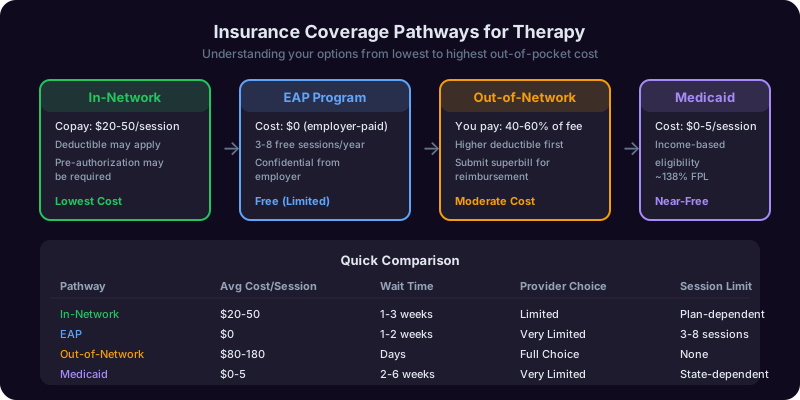
In-Network vs. Out-of-Network: What It Actually Costs
The single biggest determinant of what you pay for therapy is whether your therapist is in-network with your insurance plan.
| Scenario | Your Typical Cost Per Session |
| In-network therapist, after deductible met | $20 - $50 copay |
| In-network therapist, before deductible met | $80 - $150 (negotiated rate) |
| Out-of-network therapist, with OON benefits | $100 - $200 (after OON deductible and reimbursement) |
| Out-of-network therapist, no OON benefits | $150 - $300 (full cost) |
Finding In-Network Therapists
Your insurance company's provider directory is the official starting point, but these directories are notoriously inaccurate. A 2024 study found that up to 50% of listed mental health providers were either not accepting new patients, had left the network, or had incorrect contact information. These phantom networks inflate the appearance of access without delivering it. Better strategies:
- Call the therapist directly rather than relying on the directory listing
- Use Alma, Headway, or Grow Therapy, platforms that connect you specifically with in-network therapists and verify insurance eligibility before your first session
- Call your insurance company and specifically request a list of currently accepting new patients in-network therapists within 30 miles
- Ask the insurance company about the network adequacy exception: if no in-network therapist is available within a reasonable distance or timeframe (typically 30 miles or 2 weeks), the plan may be required to cover an out-of-network therapist at in-network rates
Superbills and Out-of-Network Reimbursement
If you cannot find a suitable in-network therapist, many out-of-network therapists provide a superbill, a detailed receipt that you submit to your insurance for reimbursement. Depending on your plan's out-of-network benefits, you may be reimbursed 50% to 80% of the allowed amount after meeting your out-of-network deductible. Services like Reimbursify and Thrizer automate the superbill submission process and can handle the insurance paperwork for you. For a broader understanding of navigating health insurance, our guide on understanding health insurance covers deductibles, copays, and plan selection in depth.
Free Therapy Through EAPs, Crisis Resources, and Government Programs
Several pathways to completely free mental health care exist that most people overlook. Employee Assistance Programs, crisis services, and government-funded programs can provide immediate support without any out-of-pocket cost.
Employee Assistance Programs (EAPs)
If you work for a company with more than 50 employees, you very likely have access to an Employee Assistance Program that includes free therapy sessions. EAPs are employer-funded benefits that typically provide 3 to 12 free sessions per issue per year with a licensed therapist. The sessions are confidential and generally not reported to your employer beyond aggregate utilization data.
Key facts about EAPs that most employees do not know:
- 78% of employers offer EAP benefits, but only about 5-8% of employees use them each year
- Sessions are genuinely confidential under federal and state law. Your employer knows that X number of employees used the EAP, but not who or why
- EAP therapists can address anxiety, depression, relationship problems, grief, workplace stress, substance use, and family conflicts
- Many EAPs now include telehealth options, making access easier than ever
- Family members, including spouses, domestic partners, and dependent children, are typically eligible
- You can use EAP sessions to start therapy while you search for a longer-term affordable provider
To find your EAP: check your employee benefits portal, your company's intranet, your insurance card (some list the EAP number), or simply ask your HR department. You can call the EAP directly without going through HR.
Free Crisis Resources
If you are in crisis or need immediate support, several resources are available at no cost:
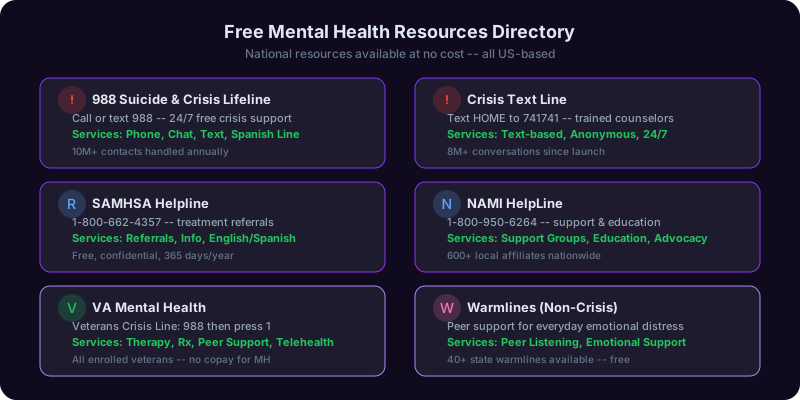
- 988 Suicide and Crisis Lifeline: Call or text 988 for immediate support. Available 24/7 in English and Spanish. For deaf/hard of hearing, use the relay service at 711 then 988
- Crisis Text Line: Text HOME to 741741 to connect with a trained crisis counselor via text
- SAMHSA National Helpline: Call 1-800-662-4357 for free referrals to local treatment and support services. Available 24/7, 365 days a year
- Veterans Crisis Line: Call 988 then press 1, or text 838255
- Trans Lifeline: Call 877-565-8860 for peer support from trans and nonbinary people
- The Trevor Project: Call 1-866-488-7386 or text START to 678-678 for LGBTQ+ youth crisis support
These are not just for people who are suicidal. The 988 Lifeline and Crisis Text Line serve anyone experiencing emotional distress, overwhelming anxiety, panic attacks, or a mental health crisis of any kind.
Government-Funded Programs
Medicaid: If your income falls below 138% of the Federal Poverty Level (approximately $21,600 for a single person in 2026) and you live in a state that expanded Medicaid, you qualify for comprehensive mental health coverage at little to no cost. Medicaid covers therapy, psychiatry, medication, and inpatient treatment. Apply through healthcare.gov or your state's Medicaid office.
Medicare: For adults 65 and older or those with qualifying disabilities, Medicare Part B covers outpatient mental health services including therapy and psychiatric care. After meeting the annual deductible, Medicare typically covers 80% of the approved amount for therapy with an in-network provider.
VA Mental Health Services: Veterans can access free or low-cost mental health care through the Department of Veterans Affairs, including therapy, psychiatry, PTSD treatment, substance abuse programs, and peer support. Eligibility is broader than many veterans realize. You do not need a service-connected disability rating to receive VA mental health care. Contact your local VA medical center or call 1-800-827-1000.
NAMI Support Groups
The National Alliance on Mental Illness (NAMI) offers free peer support groups in communities across the country. While not therapy, these groups provide connection, education, and emotional support from people with lived experience. NAMI Connection for adults with mental health conditions and NAMI Family-to-Family for family members of people with mental illness are both evidence-based programs offered at no cost. Find a group at nami.org/support-education.
AI Therapy Tools: What Woebot, Wysa, and AI Copilots Can and Cannot Do
The emergence of AI-powered mental health tools has created a new tier of support that is available 24/7, costs little or nothing, and eliminates the stigma and logistical barriers of traditional therapy. But the space is filled with overblown claims and genuine concerns. Here is what the evidence actually says about AI therapy tools in 2026, what they do well, what they do poorly, and where they fit in the broader mental health landscape.
Woebot: The Most Studied AI Mental Health Tool
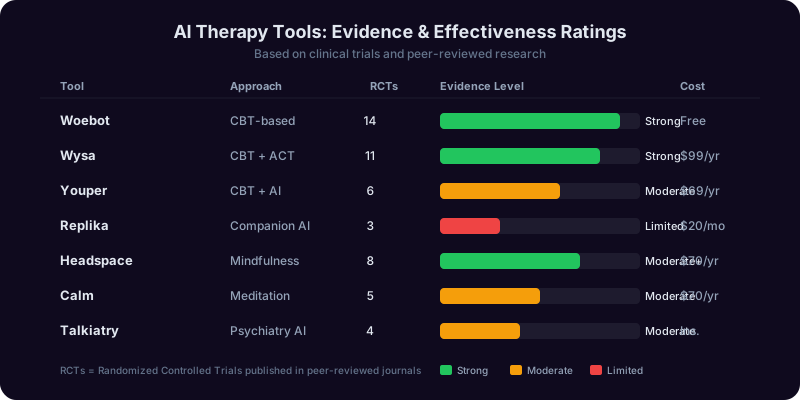
Woebot is a chatbot developed by clinical psychologists at Stanford University that delivers Cognitive Behavioral Therapy (CBT) techniques through a conversational interface. It is one of the few AI mental health tools with multiple published randomized controlled trials. A 2017 study in the Journal of Medical Internet Research found that college students using Woebot for two weeks showed significant reductions in depression symptoms compared to an information-only control group. Subsequent studies have replicated these findings across broader populations, with effect sizes for depression reduction ranging from 0.28 to 0.44.
Woebot does not use a general-purpose large language model. Instead, it employs a structured, rule-based conversation system with clinically validated pathways. This means interactions feel more scripted than a conversation with ChatGPT, but the clinical content is tightly controlled and evidence-based. Woebot is free to use and available on iOS and Android.
Wysa: NHS-Evaluated and Insurance-Integrated
Wysa combines AI-guided self-help exercises with optional access to human therapists. The AI component offers CBT, DBT (Dialectical Behavior Therapy), meditation, breathing exercises, and mood tracking. It has been evaluated by the UK National Health Service (NHS) for safety and efficacy and is used in several NHS stepped-care programs. Wysa's AI is free, with optional human therapist access starting at approximately $30 per session for text-based therapy.
A 2023 study published in JMIR Mental Health involving over 36,000 Wysa users found that users who engaged with the app for at least 4 weeks showed 31% reduction in depression scores and 28% reduction in anxiety scores as measured by the PHQ-9 and GAD-7. These are clinically meaningful improvements, though the study lacked a randomized control group, limiting causal conclusions.
General AI Chatbots as Therapy Aids
A growing number of people use general-purpose AI tools like ChatGPT, Gemini, and similar for informal mental health support. While these tools can be surprisingly empathetic and can explain therapeutic concepts clearly, they are not designed for clinical use and carry meaningful risks. They may hallucinate clinical information, provide inaccurate guidance about medications, fail to recognize crisis situations, and lack the guardrails that purpose-built mental health tools implement. The National Institute of Mental Health has cautioned against relying on general AI systems for mental health support without professional oversight.
What AI Tools Do Well
- Immediate availability: Available at 3 AM during a panic attack when no therapist is reachable
- Reducing barriers: No appointments, no waiting rooms, no insurance paperwork, no stigma
- Skill building: Teaching CBT techniques, breathing exercises, and cognitive restructuring in an interactive format
- Between-session support: Reinforcing skills learned in therapy when your therapist is not available
- Psychoeducation: Explaining mental health concepts, medication mechanisms, and treatment options in accessible language
What AI Tools Cannot Do
- Diagnose: AI tools are not qualified to diagnose mental health conditions
- Prescribe: No AI tool can prescribe or adjust psychiatric medication
- Provide a therapeutic relationship: The human connection that research identifies as the strongest predictor of therapy outcomes is absent
- Handle complex trauma: PTSD, complex trauma, and severe mental illness require human clinical expertise
- Manage crisis safely: While some tools have crisis protocols, they cannot replace a trained crisis counselor or emergency services
How Copilotly Fits In
The Copilotly Mental Health Copilot is designed as a complementary support tool, not a therapy replacement. It can help you explore your thoughts through structured CBT exercises, practice breathing and grounding techniques, understand mental health concepts, and prepare questions for therapy sessions. Because it operates as a browser extension, it is available wherever you are online, providing support in the context of your daily life. For a detailed look at how AI-guided journaling can supplement therapy, see our AI mental health support research guide.
Building Your Affordable Mental Health Plan: A Step-by-Step Framework and How Copilotly Helps
With all the options covered in this guide, the challenge shifts from finding affordable therapy to choosing the right combination for your specific situation. Mental health care is not one-size-fits-all, and the best approach often involves layering multiple resources rather than relying on a single one. Here is a practical framework for building a plan that works for your budget and your needs.
Step 1: Assess Your Situation
Start by honestly evaluating three factors:
Severity: Are you dealing with everyday stress and mild mood issues, or are you experiencing symptoms that significantly interfere with work, relationships, or daily functioning? Mild to moderate symptoms can often be managed with a combination of self-help tools and less frequent therapy. Moderate to severe symptoms, including persistent depression, panic disorder, PTSD, bipolar disorder, or psychotic symptoms, require professional clinical care and should not be managed with self-help tools alone.
Budget: What can you genuinely afford per month for mental health care? Be realistic. Even $50 per month opens doors to community mental health centers and Open Path Collective therapists. Zero budget still gives you access to EAPs, crisis lines, NAMI support groups, and AI tools.
Insurance: Do you have any form of health insurance? If yes, your first step should always be understanding your mental health benefits, because insurance-covered therapy with a $25 copay is almost always the most cost-effective option if you can find a good in-network provider.
Step 2: Match Resources to Your Situation
| Your Situation | Recommended Starting Point | Monthly Cost |
| Insured, mild-moderate symptoms | In-network therapist via Alma/Headway | $80 - $200 (copays) |
| Insured, need medication | Talkspace or in-network psychiatrist | $80 - $200 |
| Uninsured, some budget | Open Path ($30-80/session) or CMHC | $120 - $320 |
| Uninsured, very limited budget | University training clinic + AI tools | $20 - $120 |
| Employed with EAP | EAP sessions (free) then transition | $0 initially |
| No budget at all | CMHC sliding scale + NAMI + AI tools | $0 |
| In crisis | 988 Lifeline, then CMHC or ER | $0 |
Step 3: Layer Your Support System
The most effective and affordable approach combines professional therapy with self-guided practices. Think of it in tiers:
Tier 1 (Foundation): Daily self-care practices that cost nothing. These include AI-guided journaling, breathing exercises, physical activity, sleep hygiene, and social connection. The Copilotly Mental Health Copilot and Wellness Copilot support this tier by providing structured exercises, mood tracking, and psychoeducation directly in your browser.
Tier 2 (Regular support): Weekly or biweekly therapy sessions at whatever frequency your budget allows. Even twice-monthly sessions at a sliding-scale provider produce meaningful improvement for many people, especially when combined with Tier 1 practices between sessions.
Tier 3 (Specialized care): Psychiatric medication management, intensive outpatient programs, or specialized treatments like EMDR for trauma. These are accessed through insurance, CMHCs, or university medical centers and are essential for certain conditions.
Step 4: Know When to Escalate
Self-help tools and affordable therapy are appropriate for many situations, but some conditions require more intensive intervention. Seek immediate professional help if you experience:
- Thoughts of suicide or self-harm (call or text 988 immediately)
- Hearing voices or experiencing hallucinations
- Inability to care for yourself (not eating, not sleeping for days, unable to leave bed)
- Severe substance use that is out of control
- Symptoms that are getting progressively worse despite treatment
- Manic episodes with reckless behavior
How Copilotly Supports Your Mental Health Journey
Copilotly is designed to fill the gaps between therapy sessions, not replace them. The Mental Health Copilot offers guided CBT thought records, grounding exercises, and mood exploration. The Health Copilot helps you understand how physical health factors like sleep, nutrition, and exercise affect your mental state. And because Copilotly operates as a browser extension available wherever you work and browse, support is always one click away, no app switching, no appointment scheduling, no waiting rooms.
Whether you are using insurance-covered therapy, a $30 Open Path session, a free university training clinic, or building your own self-care practice with AI tools, the goal is the same: consistent engagement with your mental health. The most affordable therapy is the one you actually attend regularly, and the most effective self-help tool is the one you actually use. Start with what you can access today, and build from there.
If you or someone you know is struggling with mental health, the 988 Suicide and Crisis Lifeline is available 24/7 by calling or texting 988. The SAMHSA National Helpline at 1-800-662-4357 provides free referrals to local treatment services. You are not alone, and help is available.
Frequently Asked Questions
Recommended Copilots
Recommended Copilots
Get guided CBT exercises, mood tracking, and grounding techniques to support your mental health between therapy sessions
Try Free →Understand how physical health factors like sleep, nutrition, and exercise affect your mental state
Try Free →Related Articles
Get Answers From the Health Copilot
Ask a specialist AI copilot the question you just read about. Your first conversation needs no signup and no card.