
The Caregiving Crisis and How AI Is Changing the Equation
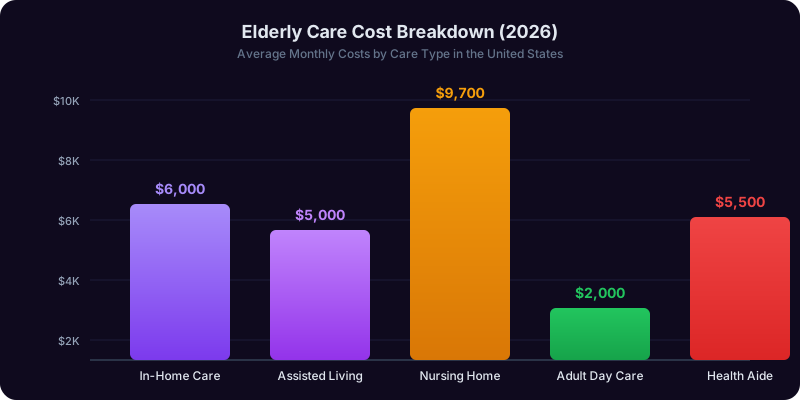
If you are caring for an aging parent, you already know the numbers do not add up. The average cost of a home health aide in the United States is $33 per hour, or roughly $5,720 per month for full-time care. An assisted living facility averages $4,885 per month, and a private nursing home room costs $9,733 per month, according to the Genworth Cost of Care Survey. Meanwhile, the median household income for Americans aged 65 and older is roughly $50,290. The math simply does not work for most families.
The result is that 53 million Americans serve as unpaid family caregivers, according to AARP. These caregivers spend an average of 24 hours per week on care responsibilities, with 23% providing 41 or more hours per week, effectively a second full-time job. The economic value of this unpaid care exceeds $600 billion annually, larger than the entire revenue of the home care and nursing home industries combined.
AI technology is not going to replace the human connection that elderly care demands, but it is rapidly filling gaps that previously required either expensive professional services or constant family vigilance. Medication adherence AI can catch dangerous drug interactions and missed doses. Fall detection systems using computer vision and wearable sensors can alert family members within seconds. Cognitive health platforms can track subtle changes in speech patterns and memory that humans might miss for months. Remote monitoring dashboards can give adult children real-time visibility into a parent's daily routines from across the country.
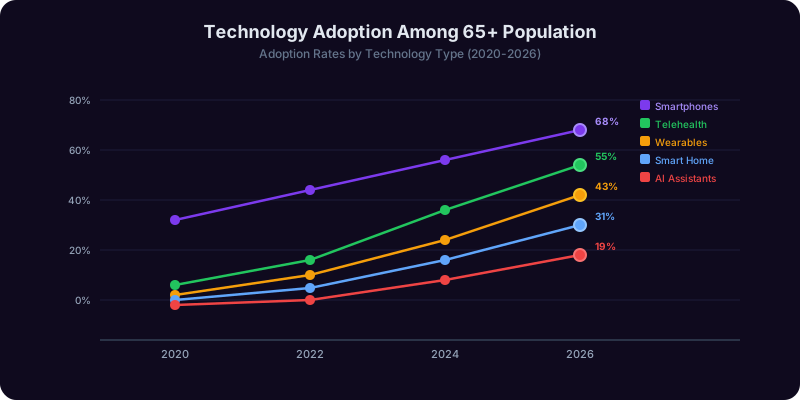
The adoption curve is accelerating. A 2025 study by the National Institute on Aging found that 42% of family caregivers now use at least one AI-powered tool in their caregiving routine, up from 18% in 2023. Among caregivers aged 35-54, the demographic most likely to be managing both children and aging parents, adoption has reached 56%. The tools are becoming easier to use, more affordable, and more effective every year.
This guide covers the AI tools and strategies that are making a measurable difference in elderly parent care right now. Not speculative technology, not research prototypes, but real products and approaches that family caregivers are using today. We will cover medication management, fall detection, cognitive health, caregiver burnout, financial planning, legal considerations, monitoring systems, and how AI assistants like Copilotly's Health Copilot can help you navigate the complexity of elder care without drowning in it.
AI-Powered Medication Management: Preventing the $528 Billion Problem
Medication mismanagement is the single largest preventable health risk for elderly adults. The average American over 65 takes 5 to 7 prescription medications simultaneously, and those over 80 often take 10 or more. The CDC estimates that medication non-adherence causes approximately 125,000 deaths and 10% of all hospitalizations among older adults each year, costing the U.S. healthcare system an estimated $528 billion annually in avoidable medical spending.
The problem is not just forgetting to take pills. It is taking the wrong dose, dangerous drug interactions that neither the patient nor their primary physician caught, duplicate prescriptions from multiple specialists, and medications that are contraindicated with newly developed conditions. An elderly parent seeing a cardiologist, endocrinologist, and primary care physician might end up on three medications that interact badly because no single provider has the full picture.
AI Medication Management Tools That Work
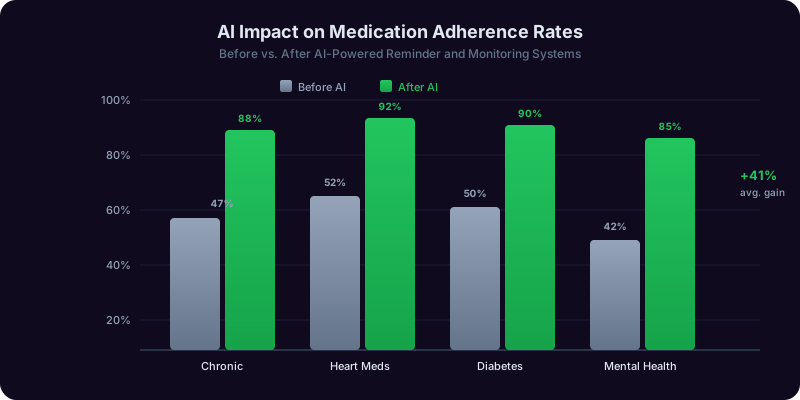
MedMinder is a smart pill dispenser that uses AI to manage complex medication schedules. It dispenses the correct pills at the correct times, locks compartments to prevent double-dosing, and sends alerts to caregivers if a dose is missed. The device costs $50-$80 per month including the monitoring service, which is roughly the cost of a single unnecessary ER visit caused by a medication error. Studies show adherence rates improve from roughly 50% to 87% when smart dispensers are used.
Medisafe is a free app that tracks medications, sends customizable reminders, and flags potential drug interactions using an AI engine trained on FDA databases. It can coordinate medication schedules across family members, so an adult child in another state can see whether their parent took their morning medications. The app's interaction checker covers over 22,000 drugs and has flagged critical interactions in roughly 16% of user profiles.
Amazon Pharmacy's PillPack pre-sorts medications into individual dose packets organized by date and time. While not strictly AI, the system uses automated algorithms to optimize packaging, check for interactions, and coordinate refills. The service is free for Prime members and works with most insurance plans. For elderly parents who struggle with multiple pill bottles, having everything pre-sorted into tear-open packets eliminates the most common sources of error.
What to Look For in AI Medication Tools
When evaluating medication management AI for a parent, prioritize these features:
- Drug interaction checking that cross-references all prescriptions, OTC medications, and supplements
- Caregiver notifications when doses are missed, ideally with escalation (text first, then phone call)
- Simple interfaces with large text and minimal steps for the elderly user
- Refill coordination that prevents medications from running out
- Integration with pharmacy systems so that changes made by physicians are automatically reflected
The Health Copilot can help you understand potential drug interactions, research medication side effects, and prepare questions to discuss with your parent's physicians. For detailed medication questions, it can explain what each drug does, why timing matters, and what side effects to watch for. If you are managing insurance coverage for these medications, our guide on understanding health insurance covers formulary tiers and prescription cost structures.
Fall Detection and Home Monitoring: AI That Saves Lives
Falls are the leading cause of injury-related death for Americans over 65. Every year, one in four older adults falls, resulting in approximately 3 million emergency department visits, 800,000 hospitalizations, and over 38,000 deaths, according to the CDC. The average cost of a fall-related hospitalization for an older adult exceeds $35,000. But the most dangerous aspect of falls is not the fall itself. It is the time spent on the ground. An elderly person who lies on the floor for more than one hour after a fall has a 50% chance of dying within six months, even if the fall itself caused no serious injury, due to dehydration, hypothermia, rhabdomyolysis, and psychological trauma.
Traditional medical alert systems (the "I've fallen and I can't get up" pendant) require the person to press a button. The problem is that roughly 80% of falls that result in a head injury leave the person unable or confused enough not to activate the alert. AI-powered fall detection changes this by identifying falls automatically without any user action required.
Wearable AI Fall Detection
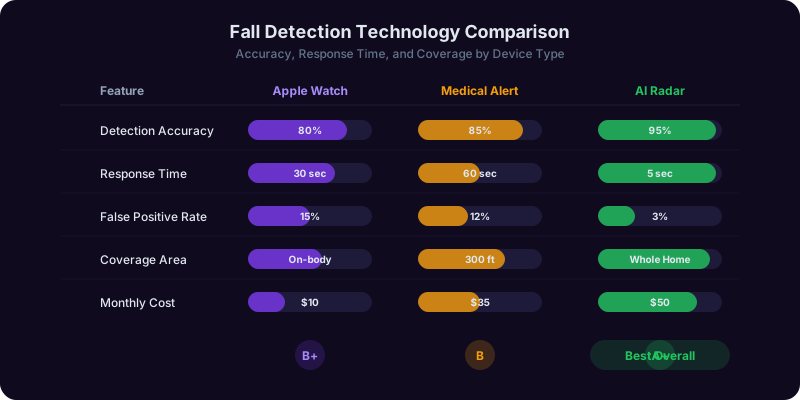
The Apple Watch Series 10 and Apple Watch Ultra 2 include fall detection that uses accelerometer and gyroscope data processed by on-device machine learning models. When the watch detects a hard fall, it taps the wrist, sounds an alarm, and displays an alert. If the wearer does not respond within 60 seconds, the watch automatically calls emergency services and sends a message with the wearer's location to emergency contacts. Apple reports the feature has a false positive rate below 2% and has detected falls in situations ranging from slipping on ice to falling down stairs.
Google Pixel Watch 3 offers comparable fall detection at a lower price point, using Google's TensorFlow-based motion classification models. Samsung Galaxy Watch 6 provides fall detection integrated with Samsung's SmartThings ecosystem, enabling coordination with in-home sensors. All three require the watch to be worn, which remains the biggest limitation. Elderly adults often remove watches at night, in the shower, or simply forget to charge them.
Camera-Based and Ambient AI Monitoring
For more comprehensive coverage, camera-based and ambient sensor systems do not require the elderly person to wear anything. CarePredict Tempo uses a wrist-worn sensor combined with room beacons to track activity patterns, sleep quality, eating habits, and bathroom usage. Its AI learns your parent's daily routine and flags deviations that could indicate health problems, such as spending more time in the bathroom (possible UTI), reduced meal times (appetite loss), or decreased movement (pain or depression).
Vayyar (formerly EllieGrid) uses radar-based sensing technology, not cameras, to detect falls without any visual monitoring, addressing privacy concerns. The device mounts on a wall and uses 4D imaging radar to detect body position and movement. It can distinguish between a controlled sit-down and an actual fall with over 95% accuracy, and it works through doors and walls. At roughly $300 for the device plus $30/month for monitoring, it is comparable in cost to traditional medical alert systems.
Smart Home Integration
AI monitoring is most effective when multiple data points are combined. A comprehensive setup might include:
- Motion sensors on bedroom, bathroom, and kitchen doors to track daily movement patterns
- Smart medication dispensers that confirm doses were taken
- Smart scales that track weight changes (sudden weight loss can indicate health decline)
- Water usage sensors to ensure adequate hydration
- Stove sensors that automatically shut off burners if left unattended
Platforms like Amazon Alexa Care Hub and Google Nest Hub can aggregate this data and send daily summaries to caregivers. The setup cost for a comprehensive smart home monitoring system ranges from $500-$1,500, with monthly monitoring fees of $20-$50, dramatically less than the $5,720/month cost of a home health aide.

Get Answers From the Health Copilot
Ask a specialist AI copilot the question you just read about. Your first conversation needs no signup and no card.
Cognitive Health and Dementia: AI for Early Detection and Daily Support
Alzheimer's disease and related dementias affect approximately 6.9 million Americans aged 65 and older, and that number is projected to reach 13.8 million by 2060. But the most insidious aspect of cognitive decline is how gradually it develops. The average time between the first subtle symptoms of Alzheimer's and a formal diagnosis is 2.8 years. During that window, a parent might miss bill payments, forget medications, get lost on familiar routes, or repeat questions, changes that family members often attribute to normal aging until they become impossible to ignore.
AI is proving remarkably effective at detecting cognitive decline earlier than human observation alone. Research published in Nature Medicine in 2025 demonstrated that machine learning models analyzing speech patterns could identify early-stage Alzheimer's with 87% accuracy, often 18-24 months before clinical diagnosis. The key markers are not what the person says but how they say it: increased use of filler words, simplified sentence structures, longer pauses between ideas, reduced vocabulary diversity, and difficulty with word retrieval.

AI-Powered Cognitive Screening Tools
Linus Health is an FDA-cleared digital cognitive assessment platform that uses a tablet-based test taking approximately 5 minutes to complete. It measures reaction time, memory recall, spatial processing, and executive function, generating a detailed report that tracks changes over time. The platform uses machine learning to compare results against age-matched norms and flag concerning patterns. It costs $150-$300 per assessment through a healthcare provider, though some Medicare Advantage plans now cover it.
BrainCheck offers a consumer-facing cognitive assessment app that runs gamified memory and processing tests. It is less comprehensive than Linus Health but more accessible, costing approximately $10-$20 per month for ongoing monitoring. The app's AI baseline your parent's cognitive performance and alert you to statistically significant declines, filtering out normal day-to-day variations in performance.
Cognifit provides personalized brain training exercises that adapt difficulty based on AI assessment of the user's cognitive strengths and weaknesses. While brain training games alone do not prevent dementia, the platform's tracking and reporting features give caregivers longitudinal data on cognitive trends. The program costs $19.99/month and provides detailed progress reports.
Daily Support for Cognitive Impairment
For parents already experiencing mild cognitive impairment (MCI) or early-stage dementia, AI tools can extend independence:
- Voice assistants like Amazon Alexa and Google Home can provide medication reminders, calendar prompts, and step-by-step instructions for daily tasks. The key is setting up routines that activate automatically without requiring the parent to initiate them.
- GPS tracking devices like Jiobit or AngelSense, originally designed for children with autism, are increasingly used for elderly adults with wandering risk. They provide real-time location tracking, geofencing alerts when the wearer leaves a defined safe zone, and location history.
- AI conversation companions like ElliQ, developed specifically for older adults, can engage in daily conversation, prompt physical activity, suggest cognitive exercises, and facilitate video calls with family. Studies show that regular social engagement, even with AI, reduces the rate of cognitive decline by up to 30% in socially isolated elderly adults.
When to Seek Professional Evaluation
AI tools are screening aids, not diagnostic tools. If any of the following patterns emerge, schedule a comprehensive cognitive evaluation with a neurologist or geriatrician:
- Difficulty managing finances that were previously handled independently
- Getting lost in familiar locations
- Repeating questions or stories within short timeframes
- Personality changes, especially increased agitation, suspicion, or apathy
- Declining personal hygiene or home maintenance
The Health Copilot can help you document these observations in a structured format that is useful for healthcare providers, track symptom progression over time, and research questions to ask during cognitive evaluations.
Caregiver Burnout: How AI Reduces the Invisible Toll
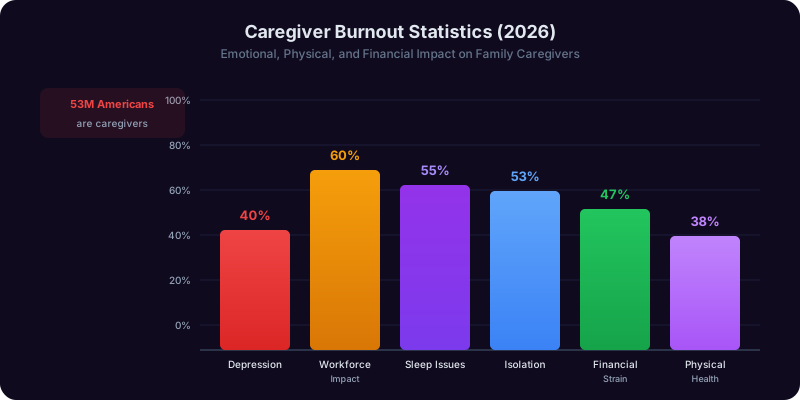
Caregiver burnout is not just stressful. It is a measurable health crisis. Family caregivers have a 63% higher mortality rate than non-caregivers of the same age, according to a landmark study in the Journal of the American Medical Association. They are twice as likely to suffer from depression, 3.5 times more likely to develop anxiety disorders, and show significantly elevated rates of cardiovascular disease, immune dysfunction, and chronic pain. The National Institute on Aging identifies caregiver stress as a clinical health risk in its own right.
The numbers behind the burden are staggering. Caregivers spend an average of $7,242 per year out of pocket on caregiving expenses. They lose an average of $522,000 in lifetime earnings due to reduced work hours, career interruptions, and missed promotions. Over 60% of caregivers report that caregiving has affected their ability to work, and 1 in 5 have had to quit their job entirely.
How AI Reduces Caregiver Burden
AI does not eliminate caregiving work, but it systematically reduces the two factors most correlated with burnout: constant vigilance and information overload.
Constant vigilance is the need to always be watching, always be available, always be worrying. AI monitoring tools (covered in the fall detection and medication sections of this guide) transform this from a 24/7 human responsibility into an automated system that only alerts you when something actually requires attention. Instead of calling your parent three times a day to confirm they took their medication, ate a meal, and seem okay, the system confirms these things silently and only contacts you when intervention is needed. Caregivers using comprehensive remote monitoring report 47% lower anxiety levels and 35% fewer sleep disruptions compared to caregivers without these tools.
Information overload is the cognitive burden of managing medical appointments, insurance paperwork, medication schedules, legal documents, care coordination between siblings, physician communication, and a hundred other administrative tasks. AI assistants can organize, summarize, and prioritize this information. The Health Copilot can help you understand medical reports, research treatment options, and prepare for appointments. The Insurance Copilot can help decode coverage decisions and appeal denials.
AI Tools Specifically for Caregiver Wellness
- Cariloop is an AI-powered caregiving platform that combines technology with human coaching. It helps caregivers create care plans, find local resources, manage tasks, and access professional caregiver coaches. Many employers now offer Cariloop as a benefit, so check with your HR department. For those paying out of pocket, plans start at approximately $100/month.
- Ianacare is a free app that helps caregivers coordinate help from their support network. It allows friends and family to sign up for specific tasks (grocery runs, doctor visit transportation, meal delivery) and uses AI to match available helpers with upcoming needs.
- Wellthy provides a dedicated care coordinator powered by AI workflow tools who handles administrative tasks: finding providers, scheduling appointments, managing insurance claims, and researching benefits. Plans range from $150-$350/month.
Recognizing Burnout Before It Becomes a Crisis
Track these warning signs in yourself:
- Persistent exhaustion that sleep does not resolve
- Increasing resentment toward the care recipient or other family members
- Social withdrawal from friends, hobbies, and activities you previously enjoyed
- Neglecting your own medical appointments and health needs
- Using alcohol, food, or other substances to cope
- Feeling trapped with no way out
If you recognize three or more of these patterns, you are in burnout territory. The National Caregiver Support Line (1-855-227-3640) provides free counseling and referrals. Our guide on AI mental health support covers additional resources for managing stress, anxiety, and depression, whether you are a caregiver or dealing with your own health challenges.
Financial Planning for Elder Care: AI Tools for the $400,000 Question
The average American turning 65 today will need approximately $315,000 to $400,000 in savings to cover healthcare and long-term care costs during retirement, according to Fidelity Investments. That figure does not include regular living expenses. For families navigating elder care costs, the financial complexity can be as overwhelming as the medical complexity.
Understanding the Cost Landscape
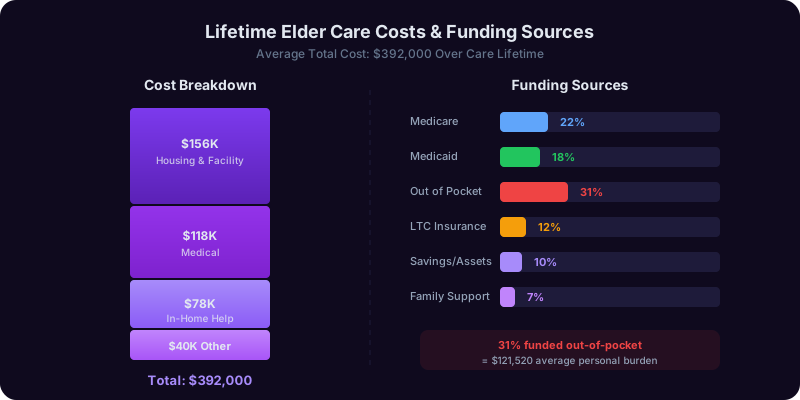
The major cost categories for elder care in 2026 break down as follows:
| Care Type | Monthly Cost (National Median) | Annual Cost |
| In-home aide (44 hrs/week) | $5,720 | $68,640 |
| Adult day care | $1,690 | $20,280 |
| Assisted living facility | $4,885 | $58,620 |
| Nursing home (semi-private) | $8,121 | $97,452 |
| Nursing home (private) | $9,733 | $116,796 |
| Memory care facility | $6,935 | $83,220 |
These costs have increased at 3-5% annually over the past decade, outpacing general inflation. A parent who needs memory care at age 78 and lives to 88 could require over $900,000 in facility costs alone.
AI Financial Planning Tools
Genworth CareScout offers an AI-powered cost calculator that estimates care costs based on your parent's location, current health status, projected care needs, and local market rates. It provides scenario modeling so you can compare the financial impact of aging in place with in-home care versus transitioning to assisted living versus a nursing facility.
Silvur (formerly Kindur) is an AI-driven retirement planning app designed specifically for the 50+ demographic. It integrates Social Security optimization, Medicare planning, and long-term care cost projections into a single dashboard. The app uses machine learning to model thousands of financial scenarios based on your parent's assets, income sources, health status, and care needs. It costs $49.99/year and has been shown to help users identify an average of $23,000 in additional lifetime benefits through Social Security timing optimization alone.
Medicare and Medicaid Navigation
Understanding what Medicare does and does not cover is critical. Medicare covers short-term skilled nursing facility care (up to 100 days after a qualifying hospital stay), some home health services, hospice care, and durable medical equipment. It does not cover long-term custodial care, most assisted living costs, or around-the-clock home care, which is exactly what most elderly parents eventually need.
Medicaid covers long-term care, but only for individuals who have spent down their assets below strict thresholds (typically $2,000 in countable assets for a single individual). The spend-down process and Medicaid application are among the most complex administrative tasks in elder care. AI tools like the Insurance Copilot can help you understand eligibility requirements, navigate the application process, and identify which assets are countable versus exempt.
Veterans Benefits
If your parent is a veteran, the VA's Aid and Attendance benefit can provide up to $2,431/month for a veteran or $1,318/month for a surviving spouse to help pay for in-home care, assisted living, or nursing home care. Roughly one-third of eligible veterans never apply for this benefit because they do not know it exists. AI-powered benefits screeners on the VA website and through veteran service organizations can determine eligibility in minutes.
Tax Deductions and Credits for Caregivers
Many caregiving expenses are tax-deductible, but most caregivers miss them:
- Medical expense deduction: If you pay more than 7.5% of your adjusted gross income on medical expenses (including those for a dependent parent), the excess is deductible
- Dependent care credit: If your parent qualifies as your dependent, you may claim up to $3,000 in care expenses
- State-level caregiver tax credits: Over 30 states offer caregiver-specific tax credits ranging from $500 to $5,000
For help navigating the tax implications of caregiving, our guide on using AI for tax preparation covers deduction identification and filing strategies.
Legal Considerations: Power of Attorney, Advance Directives, and AI Assistance
The legal dimensions of elder care are among the most consequential and most neglected aspects of caregiving. A 2024 survey by Caring.com found that 56% of American adults do not have a will, and an even higher percentage lack the specific legal documents needed for elder care: durable power of attorney, healthcare proxy, and advance directives. When a parent develops cognitive impairment without these documents in place, the family faces expensive, time-consuming, and emotionally devastating guardianship proceedings in court.
Essential Legal Documents for Elder Care
Durable Power of Attorney (DPOA) is the single most important document in elder care planning. It designates a person (the agent) to make financial decisions on behalf of the parent if they become incapacitated. Unlike a standard power of attorney, a durable POA remains effective even after the principal becomes mentally incapacitated, which is exactly when you need it most. Without a DPOA, you cannot access your parent's bank accounts, sell their property, manage their investments, or handle their bills if they become unable to do so themselves. You would need to petition a court for guardianship, a process that typically costs $5,000-$15,000 in legal fees and takes 3-6 months.
Healthcare Power of Attorney (HCPOA) designates someone to make medical decisions when the parent cannot. This is separate from the financial DPOA and equally critical. Without it, physicians may not be able to discuss treatment options with you, and end-of-life decisions could end up in court.
Advance Directives (Living Will) document the parent's wishes regarding life-sustaining treatment, resuscitation, mechanical ventilation, artificial nutrition, and organ donation. These are not just about end-of-life scenarios. They cover situations like whether to pursue aggressive treatment for a new cancer diagnosis in a parent with advanced dementia. Having these wishes documented prevents family conflict and ensures the parent's autonomy is respected.
How AI Helps with Elder Care Legal Planning
AI tools are making legal document preparation more accessible and affordable:
- Trust & Will uses an AI-guided questionnaire to generate state-specific estate planning documents including wills, trusts, powers of attorney, and advance directives. The complete package costs $199-$599, compared to $1,500-$3,000 for an elder law attorney to prepare the same documents.
- FreeWill offers free basic wills and advance directives supported by partnerships with nonprofit organizations. The AI-driven platform walks you through complex decisions with plain-language explanations.
- Copilotly's legal tools can help you understand the differences between document types, research state-specific requirements, and prepare questions for attorney consultations. Our guide on how to get power of attorney walks through the complete process step by step.
Medicaid Estate Planning
If long-term care costs may eventually require Medicaid, estate planning becomes significantly more complex. Medicaid has a 5-year lookback period for asset transfers, meaning that any gifts, transfers to family members, or asset repositioning done within five years of a Medicaid application can result in a penalty period during which Medicaid will not cover care costs. This is not an area for DIY legal work. Families in this situation need an elder law attorney certified by the National Elder Law Foundation. The National Academy of Elder Law Attorneys (naela.org) maintains a directory of certified practitioners.
AI can help you prepare for these consultations by organizing financial information, understanding Medicaid rules in your state, and generating questions that ensure you cover all critical topics during what may be a $300-$500/hour attorney meeting. The Insurance Copilot can help you understand Medicaid eligibility rules and the interaction between Medicare and Medicaid coverage. For broader estate planning beyond elder care, our guide on AI estate planning covers wills, trusts, and inheritance strategies in detail.
Elder Abuse Protections
Financial exploitation is the most common form of elder abuse, with estimated losses exceeding $36.5 billion annually. AI-powered banking tools from institutions like Bank of America and Wells Fargo now offer unusual transaction alerts specifically designed for elderly account holders: large withdrawals, new payees, wire transfers, and spending pattern changes trigger notifications to designated family members. If you have DPOA, set up these alerts on your parent's accounts immediately.
How Copilotly Helps You Navigate Every Aspect of Elder Care
Elder care is not a single problem. It is a web of interconnected challenges spanning medicine, finance, law, insurance, family dynamics, logistics, and emotional resilience. The reason so many caregivers feel overwhelmed is that each of these domains has its own jargon, its own bureaucracy, and its own set of rules that seem designed to confuse. AI assistants are uniquely suited to this problem because they can operate across all of these domains simultaneously, translating complexity into actionable steps.
The Health Copilot for Medical Navigation
The Health Copilot serves as your always-available medical research assistant. In an elder care context, it can help you:
- Research diagnoses: When a doctor says your parent has "moderate aortic stenosis" or "stage 3 chronic kidney disease," the Health Copilot explains what that means in practical terms: what symptoms to watch for, what the typical progression looks like, and what treatment options exist
- Prepare for appointments: Generate structured lists of questions based on your parent's current conditions, recent symptoms, and medication changes
- Understand test results: Break down lab work, imaging reports, and specialist assessments into plain language
- Compare treatment options: Research the evidence base for different treatment approaches and help you formulate informed questions for physicians
The Insurance Copilot for Coverage and Claims
The Insurance Copilot can help navigate the labyrinth of Medicare Parts A, B, C, and D, Medigap supplemental policies, Medicaid, and long-term care insurance. Specific use cases include:
- Determining whether a specific service, medication, or piece of equipment is covered under your parent's plan
- Understanding Explanation of Benefits (EOB) statements and identifying billing errors
- Researching the Medicare Part D coverage gap (the "donut hole") and strategies to minimize its impact
- Preparing appeals for denied claims, which succeed roughly 40-50% of the time but are rarely filed
Building Your AI-Assisted Care System
The most effective approach to AI-assisted elder care is layered. Here is a practical implementation plan organized by priority:
Week 1 - Safety Foundation:
- Set up fall detection (Apple Watch, Vayyar, or equivalent)
- Install a smart medication dispenser or configure Medisafe
- Set up stove auto-shutoff if applicable
- Configure caregiver emergency contacts on all devices
Week 2 - Monitoring and Communication:
- Install motion sensors on key rooms
- Set up a voice assistant with medication reminders and daily check-in routines
- Configure remote monitoring dashboard (Alexa Care Hub or equivalent)
- Set up video calling on a tablet with a simplified interface
Week 3 - Financial and Legal:
- Use AI tools to audit current insurance coverage and identify gaps
- Review and update (or create) power of attorney and advance directives
- Set up banking alerts for unusual transactions
- Use financial planning tools to model care cost scenarios
Week 4 - Cognitive and Social:
- Establish a cognitive health baseline with a screening tool
- Set up brain training apps if appropriate
- Configure an AI companion like ElliQ for social engagement
- Create a shared family caregiving calendar using Ianacare or similar
The total cost for this comprehensive setup ranges from $300-$1,000 in initial equipment and $50-$150/month in ongoing subscriptions, a fraction of the cost of even part-time professional care. Combined with Copilotly's AI copilots for on-demand research and support, you create a care infrastructure that scales with your parent's needs while protecting your own health and finances.
The reality of caregiving is that no technology replaces the human relationship between you and your parent. But AI tools can absorb the logistical, administrative, and monitoring burdens that drain your energy, freeing you to spend your time together on what actually matters. If you are not sure where to start, open the Health Copilot and describe your situation. It will help you identify the most pressing needs and build a plan from there.
Frequently Asked Questions
Recommended Copilots
Related Articles
Get Answers From the Health Copilot
Ask a specialist AI copilot the question you just read about. Your first conversation needs no signup and no card.