
Why Having No Credit Is Almost as Bad as Having Bad Credit
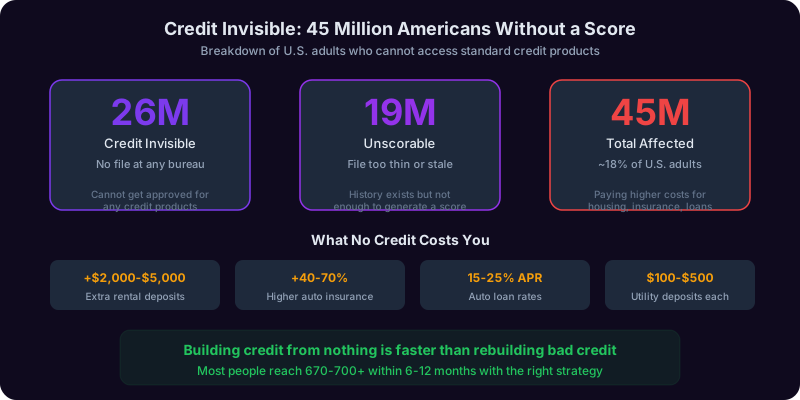
In the United States, approximately 26 million adults are "credit invisible," meaning they have no credit file at any of the three major bureaus. Another 19 million have credit files too thin or too stale to generate a score. Together, that is roughly 45 million adults who cannot get approved for most credit cards, loans, or even apartment rentals based on their credit alone.
Having no credit is not the same as having bad credit, but the practical result is often similar. When a lender pulls your credit and finds nothing, they have no evidence that you will repay. Most lenders are not willing to take that risk. Here is what no credit typically means in practice:
- Credit card applications: Denied for most standard and rewards cards. Only secured cards and a handful of starter cards will approve you.
- Auto loans: Either denied or approved at very high interest rates (often 15-25%) because you are considered maximum risk.
- Apartment rentals: Many landlords require a minimum credit score of 620-680. Without any score, you may need a co-signer or a larger security deposit (sometimes 2-3 months' rent).
- Utility services: Electric, gas, and internet providers may require a deposit of $100-$400 without a credit history.
- Insurance: In most states, auto and home insurance companies use credit-based insurance scores. No credit can result in higher premiums.
According to the Consumer Financial Protection Bureau (CFPB), credit invisible consumers face systematically higher costs across nearly every financial product. The CFPB estimates these consumers pay thousands more per year in deposits, interest, and fees compared to those with established credit.
The good news: building credit from nothing is actually faster and easier than rebuilding damaged credit. You do not have negative marks to overcome. You just need to establish a track record. Most people following a deliberate credit-building plan can reach a 670-700+ score within 6-12 months.
The Finance Copilot can help you assess your current credit status and build a personalized plan based on your starting point. For help managing the budgeting side of credit building, the budget planning tool can set up a monthly plan that keeps your spending and payments on track.
Step 1: Get a Secured Credit Card (The Foundation of Your Credit)
A secured credit card is the single most effective tool for building credit from nothing. It works exactly like a regular credit card except that you provide a cash deposit upfront that serves as your credit limit. If you deposit $500, your credit limit is $500. This deposit protects the card issuer, which is why they can approve you with no credit history.
Your secured card activity is reported to all three credit bureaus each month, building your credit history with every on-time payment. After 6-12 months of responsible use, most issuers will upgrade you to an unsecured card and return your deposit.
How to choose a secured card:
- Reports to all three bureaus: This is non-negotiable. If the card does not report to Equifax, Experian, AND TransUnion, it will not build your credit effectively. Verify this before applying.
- Low or no annual fee: The best secured cards charge $0-$35 annually. Avoid cards charging $50+ in annual fees.
- Upgrade path: Choose a card that offers automatic review for upgrade to an unsecured card, typically after 6-12 months.
- Minimum deposit: Most secured cards require $200-$500. Some allow deposits up to $2,500-$5,000 if you want a higher limit.
Top secured cards for 2026:
- Discover it Secured: No annual fee, earns cash back, automatic upgrade review at 7 months, reports to all three bureaus. Widely considered the best option for credit builders.
- Capital One Platinum Secured: $0 annual fee, possible credit limit higher than deposit, automatic upgrade review.
- Bank of America Customized Cash Rewards Secured: No annual fee, earns cash back, reports to all three bureaus.
How to use your secured card correctly:
- Use it for 1-2 small recurring purchases per month (a streaming subscription or gas fill-up)
- Keep utilization below 10% of your limit. On a $500 limit, that means keeping your balance under $50 at statement time.
- Set up autopay for the full balance every month. Carrying a balance and paying interest does nothing extra for your credit.
- Never miss a payment. One missed payment can set your credit building back by months.
The Budgeting Copilot can help you set up a spending plan that keeps your secured card utilization low and ensures you never miss a payment. The Finance Copilot can compare secured card options based on your specific needs.
Step 2: Add a Credit Builder Loan for Credit Mix
A credit builder loan is a unique product designed specifically for people building credit. Unlike a traditional loan where you receive money upfront and pay it back, a credit builder loan works in reverse: you make monthly payments into a savings account, and the lender reports those payments to the credit bureaus. At the end of the term, you receive the money you paid in (minus fees and interest).
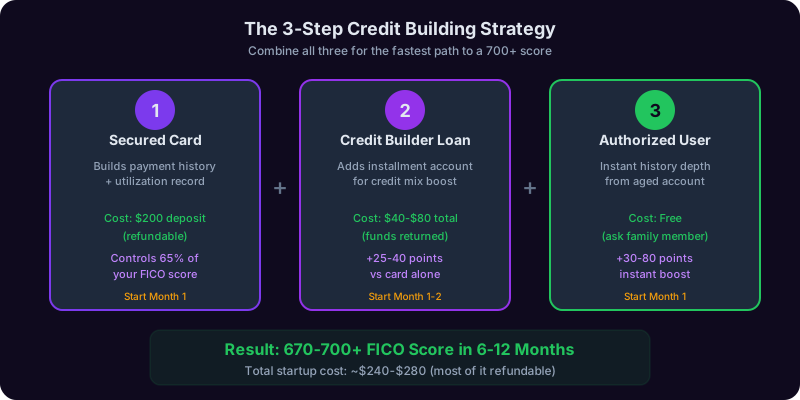
Credit builder loans serve two purposes: they add an installment account to your credit mix (complementing your revolving credit card), and they build a consistent payment history. Having both revolving and installment accounts on your credit report gives you a more diverse credit profile, which can boost your score by 10-20 points beyond what a credit card alone provides.
Where to get a credit builder loan:
- Self (formerly Self Lender): The largest credit builder loan provider. Plans range from $25-$150/month for 12-24 months. No credit check required. Reports to all three bureaus. Monthly cost starts at approximately $25 plus a small administrative fee.
- Credit unions: Many local credit unions offer credit builder loans with very low interest rates (3-10%) and terms of 6-24 months. Joining a credit union is often free or requires a small deposit ($5-$25).
- MoneyLion: Offers a Credit Builder Plus program with no interest and no hard credit check.
How much it costs: A typical 12-month, $1,000 credit builder loan from Self costs about $92/month. At the end of the 12 months, you receive approximately $1,000 back (the total you paid minus fees and interest of roughly $40-$80). So the net cost of building 12 months of installment loan history is about $40-$80. That is a very reasonable price for the credit boost it provides.
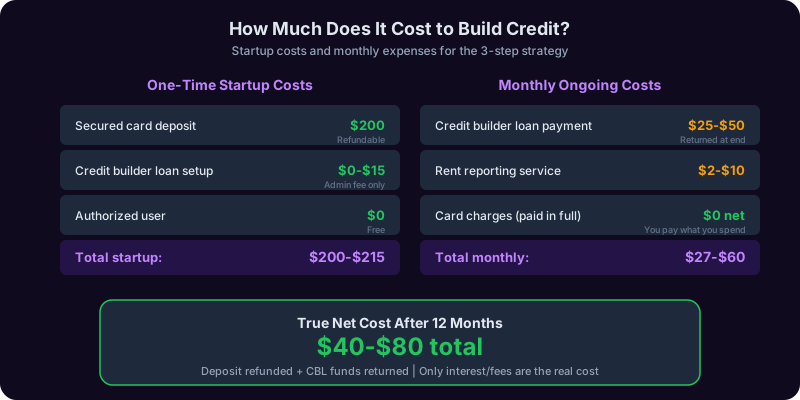
When to start one: You can open a credit builder loan at the same time as your secured credit card, or wait 1-2 months. Having both running simultaneously accelerates your credit building because you are generating positive payment history on two accounts with different credit types.
The Finance Copilot can help you compare credit builder loan options and calculate the total cost for your specific plan. The Budgeting Copilot can factor the monthly payment into your budget to make sure it is manageable.

Get Answers From the Finance Copilot
Use the Finance Copilot to create a personalized credit-building plan, compare secured card options, and track your progress toward your target score. The Budgeting Copilot can help you manage payments and keep utilization low.
Step 4: Use Alternative Data and Rent Reporting to Boost Your Score
Traditional credit scoring relies on credit cards and loans, but newer tools allow you to get credit for bills you are already paying. These can provide a meaningful score boost, especially when your credit file is thin.
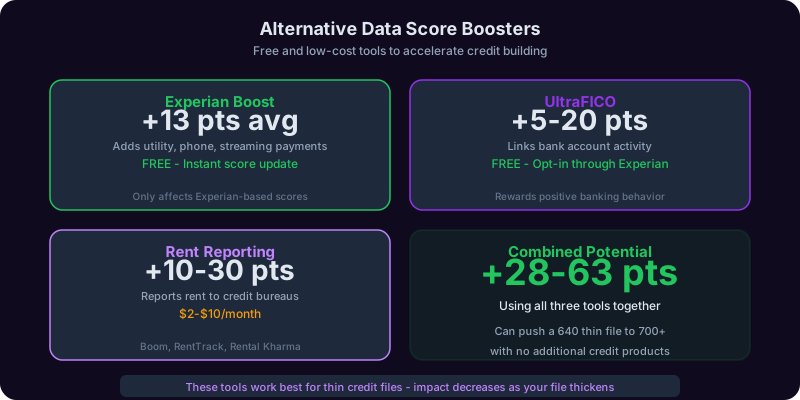
Experian Boost: This free service from Experian adds your utility, phone, and streaming service payment history to your Experian credit file. You link your bank account, Experian identifies qualifying payments, and your score updates immediately. The average user sees a 13-point increase. It only affects your Experian-based scores, not TransUnion or Equifax, but many lenders use Experian, so it still matters. Learn more at the official Experian Boost page.
UltraFICO: Also from Experian, UltraFICO factors in your checking and savings account activity, including account age, transaction history, and maintaining a positive balance. It is designed for people with thin credit files or scores just below a lending threshold. It is free and opt-in.
Rent reporting services: Rent is most people's largest monthly expense, but it traditionally did nothing for your credit. Rent reporting services change that by reporting your rent payments to one or more credit bureaus. Options include:
- Boom: Reports to all three bureaus, costs about $2-$10/month
- Rental Kharma: Reports to TransUnion, costs about $7-$10/month
- RentTrack: Reports to all three bureaus, pricing varies
- Self Rent Reporting: From the same company that offers credit builder loans, reports to all three bureaus
Rent reporting can add 10-30 points to your score, particularly if you have been renting for a while and have a consistent payment record. Some services can even report past rent payments (up to 24 months of history).
Limitations: Not all credit scoring models incorporate rent data or alternative payment data the same way. FICO 10 and VantageScore 4.0 are designed to give more weight to these data points than older models. The benefit you see depends on which scoring model your specific lender uses. Still, adding these data sources provides additional positive signals on your credit report at minimal cost.
The Finance Copilot can help you identify which alternative data services will benefit you most based on your current credit profile and spending patterns.
Realistic Timeline: What to Expect Month by Month
Here is a realistic timeline for building credit from nothing using the strategies in this guide. Individual results vary based on factors like starting age, income, and consistency, but this represents the typical trajectory:
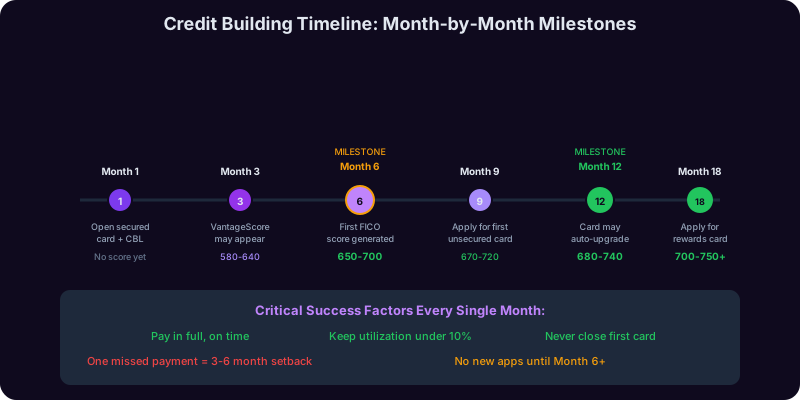
| Month | Actions | Expected Score Range |
| Month 1 | Open secured credit card; apply for credit builder loan; get added as authorized user | No score yet (need 6 months for FICO) |
| Month 2-3 | Make all payments on time; keep utilization under 10%; set up Experian Boost and rent reporting | VantageScore may appear (580-640) |
| Month 4-5 | Continue consistent payments; all three accounts building history | VantageScore improving (620-670) |
| Month 6 | FICO score is now generated; authorized user history provides age boost | FICO: 650-700; VantageScore: 650-710 |
| Month 7-9 | Apply for first unsecured credit card (a starter/student card); continue all payments | 670-720 |
| Month 10-12 | Secured card may auto-upgrade to unsecured; credit builder loan may complete | 680-740 |
| Month 12-18 | Apply for a better rewards card; continue building history | 700-750+ |
Critical milestones:
At 6 months, FICO generates your first score. This is when credit-building really starts to show tangible results. Before 6 months, only VantageScore (available through Credit Karma and other free services) will produce a score.
At 12 months, you have a full year of payment history, which is typically enough to qualify for mainstream credit cards, standard auto loans, and most apartment rentals without a co-signer.
At 24 months, you have 2 years of history, a stronger average account age, and (if you have been consistent) a score in the 720-760 range. This qualifies you for most premium financial products and the best interest rates on smaller loans.
You can check your credit reports for free at AnnualCreditReport.com, the only federally authorized source. Monitoring your progress regularly helps you stay motivated and catch errors early. The myFICO education center also provides excellent resources on how FICO scores are calculated.
The most common mistakes that slow progress:
- Missing even one payment (sets you back 3-6 months of progress)
- Letting utilization creep above 30% (easy fix but commonly overlooked)
- Opening too many accounts at once (each hard inquiry and new account temporarily dips your score)
- Closing your first credit card when you get a better one (kills your account age)
If you are also working on building financial stability, our guide on how to build an emergency fund covers why having savings alongside credit is essential for long-term financial health.
The Finance Copilot can help you track your progress against this timeline and adjust your strategy as you hit each milestone. The Budgeting Copilot can help you maintain the consistent payment habits that make this timeline achievable.
Mistakes to Avoid: What Derails New Credit Builders
Building credit is straightforward, but several common mistakes can significantly slow your progress or actively damage the credit you are working to build:
1. Applying for too many cards at once. When you are excited about building credit, it is tempting to apply for multiple cards to speed things up. Every application triggers a hard inquiry that temporarily drops your score by 5-10 points. More importantly, multiple new accounts lower your average account age. Apply for one secured card to start, then wait at least 6 months before applying for anything else.
2. Maxing out your secured card. Just because your limit is $500 does not mean you should spend $500. High utilization is one of the fastest ways to suppress your score. Keep your balance at statement time below 10% of your limit ($50 on a $500 card). If you need to make a larger purchase, pay it off before the statement closing date so the lower balance gets reported.
3. Paying only the minimum. While paying the minimum is enough to avoid a late payment, carrying a balance generates interest (secured cards typically charge 20-25% APR) and keeps your utilization high. Pay the full statement balance every month. There is no credit-building benefit to carrying a balance.
4. Closing your first card. Your first credit card becomes the oldest account on your credit report. Even if you eventually get better cards, keep this one open. Length of credit history accounts for 15% of your FICO score. If it has an annual fee, ask the issuer to convert it to a no-fee card rather than closing it.
5. Falling for credit repair scams. No company can legally remove accurate negative information from your credit report. Companies that promise to "fix" your credit or create a "new credit identity" are scams. Legitimate credit building takes time and consistent positive behavior. Anyone promising overnight results is lying. The FTC's guide on credit repair scams can help you identify fraudulent services.
6. Ignoring your credit reports. Check your credit reports at AnnualCreditReport.com at least quarterly. Errors are common (affecting 1 in 4 consumers according to the FTC), and catching them early prevents unnecessary score damage. Also monitor for identity theft, which is particularly concerning when your credit file is new and thin. Our guide on how to freeze your credit explains how to protect your newly built credit from fraud.
7. Co-signing loans when your credit is new. Once your score starts improving, friends or family may ask you to co-sign. This is extremely risky for someone with a short credit history. If the primary borrower misses payments, your new credit is destroyed. Avoid co-signing until you have several years of established credit and can absorb the potential impact.
For a deeper understanding of what factors make up your credit score and how each one is weighted, read our comprehensive guide on understanding your credit score.
The Finance Copilot can help you navigate these decisions and avoid common pitfalls. When in doubt about whether a financial decision will help or hurt your credit, ask before you act.
Special Situations: Students, Immigrants, and Starting Over After Divorce
Different life circumstances require different credit-building approaches. Here is guidance for the most common special situations:
College students: Students have a unique advantage: student credit cards are designed for applicants with limited income and no credit history. Cards like the Discover it Student Cash Back and Capital One Journey Student Rewards approve students with no credit and no co-signer. Having a student ID and being enrolled in a degree program is often sufficient. These cards offer small limits ($500-$1,500) but report to all three bureaus and earn rewards. If you have federal student loans, those also build credit through on-time payments once you enter repayment. For more on managing student debt strategically, see our guide on student loan repayment strategies.
Recent immigrants: Building credit in the United States as a new arrival presents unique challenges because international credit history does not transfer. However, several paths exist:
- ITIN loans and cards: Some banks and credit unions accept an Individual Taxpayer Identification Number (ITIN) instead of a Social Security Number. Secured cards from credit unions are often the most accessible option.
- Nova Credit: A service that translates credit history from certain countries (including India, Mexico, Brazil, and several European nations) into a format that U.S. lenders can evaluate. This can help you skip the "credit invisible" phase entirely.
- Credit unions: Often more willing to work with immigrants who have limited documentation or no SSN. Many immigrant-focused credit unions exist in major metro areas.
Starting over after divorce: If your credit was entirely tied to your spouse's accounts (you were an authorized user but never a primary account holder), you may find yourself effectively credit invisible after divorce. The steps are the same as building from scratch: secured card, credit builder loan, and building your own independent credit profile. If you do have negative items from the marriage (joint accounts where your ex stopped paying), those will need to be addressed separately. The Finance Copilot can help you assess your post-divorce credit situation and build a recovery plan.
After aging out of foster care: Young adults leaving the foster care system often have no credit history and limited financial support. Programs like the Foster Club's financial literacy resources and local nonprofit credit-building programs can help. A secured card with a $200 deposit and careful management is the most accessible starting point.
No matter your starting situation, the fundamental strategy is the same: open accounts that report to the bureaus, make every payment on time, keep utilization low, and be patient. If you are just starting your career or a side hustle, our guide on how to start a side hustle can help you generate the extra income to fund your credit-building journey. The Finance Copilot can tailor these general strategies to your specific circumstances and the Budgeting Copilot can help you manage the financial commitments involved in credit building.
Frequently Asked Questions
Recommended Copilots
Recommended Copilots
Get a personalized credit-building plan based on your specific starting point and goals
Try Free →Manage monthly payments for your secured card and credit builder loan to stay on track
Try Free →Understand how your growing credit score affects insurance rates and find better deals
Try Free →Related Articles
Get Answers From the Finance Copilot
Use the Finance Copilot to create a personalized credit-building plan, compare secured card options, and track your progress toward your target score. The Budgeting Copilot can help you manage payments and keep utilization low.