
Why Second Opinions Matter More Than You Think
The most expensive mistakes people make are not the result of bad luck. They are the result of acting on incomplete information under pressure. A second opinion is not about doubting yourself. It is about reducing the asymmetry between you and the other party in a high-stakes situation.
The information gap problem. In most professional decisions, the other party has significantly more information and experience than you. Your landlord has signed hundreds of leases; you have signed maybe three. Your surgeon performs the recommended procedure weekly; you have never had surgery. Your employer's HR team negotiates compensation packages daily; you negotiate yours once every few years. This information asymmetry means you are at a structural disadvantage without outside input.
What the research shows. A study published in the Journal of the American Medical Association found that 21% of patients who sought a second medical opinion received a substantially different diagnosis. Research from the Consumer Financial Protection Bureau shows that homebuyers who get just one additional mortgage quote save an average of $1,500 over the life of the loan. A 2024 survey by the American Bar Association found that individuals who consulted an attorney before signing a contract were 3.6 times less likely to end up in a dispute over that contract.
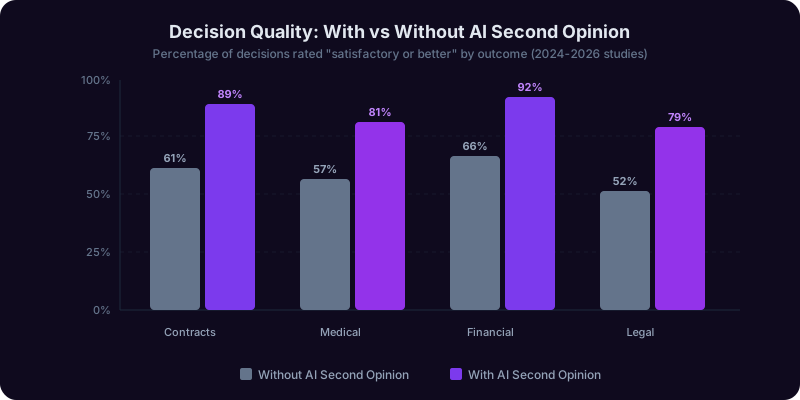
The cost of not getting a second opinion. People skip second opinions for three reasons: time pressure ("I need to decide by Friday"), cost concerns ("I cannot afford a lawyer just to review this"), and overconfidence ("I read the contract carefully, it looks fine"). But the cost of a bad decision almost always exceeds the cost of a second opinion. A $300 attorney review is cheap compared to a $15,000 lawsuit over a contract clause you missed. A $250 specialist consultation is nothing compared to an unnecessary $50,000 surgery.
The good news: getting a second opinion has never been faster or more accessible. Between AI tools, telehealth platforms, and on-demand professional services, you can get informed input on most decisions within hours, not weeks. The Contract Review Copilot can analyze agreements in minutes, flagging risks that would take a non-lawyer hours to identify.
See our real-world walkthrough: landlord keeping security deposit.
Contract Signing: Leases, Employment Agreements, and Business Deals
Contracts are the most common high-stakes documents people sign without adequate review. The other party drafted the contract to protect their interests. Your job is to make sure it also protects yours. Try our AI contract review tool for step-by-step help.
Residential leases. The average American renter will sign 8-10 leases in their lifetime, committing to $10,000-$30,000+ per lease. Yet most people spend more time researching a $200 appliance than reading their lease. Key clauses that catch tenants off guard: early termination penalties (often 2-3 months' rent, or $3,000-$6,000), automatic renewal clauses (your lease silently converts to month-to-month at a higher rate), maintenance responsibility language (who pays for what when something breaks), and guest/subletting restrictions that could cost you if circumstances change.
Employment agreements. Non-compete clauses, intellectual property assignment provisions, arbitration agreements, and severance terms are often buried in onboarding paperwork that employees sign without reading. A non-compete clause that prevents you from working in your industry for 12-24 months after leaving can cost you hundreds of thousands in lost income. The FTC's 2024 rule restricting non-competes is facing legal challenges, meaning enforcement varies by state. Get a second opinion before signing any employment contract with restrictive covenants.
Business contracts. Vendor agreements, partnership deals, SaaS terms of service (for business-critical tools), and client contracts all contain clauses that can create unexpected obligations. Indemnification clauses, liability caps, auto-renewal terms, and intellectual property ownership provisions are the most commonly problematic areas.
What a second opinion catches. A trained reviewer (human or AI) will flag: one-sided termination rights, hidden fee escalation clauses, liability limitations that leave you exposed, vague language that could be interpreted against you, and missing protections that should be standard. The Contract Review Copilot can analyze any contract and highlight these risks in plain English, giving you specific questions to raise before signing.
The 24-hour rule. Never sign a contract the same day you receive it. Any legitimate party will give you at least 24-48 hours to review. If someone pressures you to sign immediately, that pressure is itself a red flag. Use that time to get a second opinion. For more on reviewing contracts effectively, see our guide to reading and negotiating contracts.
Medical Treatment Decisions
Getting a second medical opinion is not rude, disrespectful, or unnecessary. It is a standard practice that every good doctor supports. For significant medical decisions, it can literally be life-saving.
When a second opinion is most critical:
- Surgical recommendations. Research shows that 25% of second opinions for surgery result in a different recommendation (different procedure, non-surgical alternative, or "watch and wait" approach). Spine surgery, knee replacement, and hysterectomy are among the most over-recommended procedures.
- Cancer diagnosis and treatment plans. The Mayo Clinic reported that 88% of patients seeking second opinions for complex diagnoses received a refined or changed diagnosis. For cancer specifically, second opinions change the treatment plan in 30-40% of cases.
- Chronic condition management. If your current treatment is not working after a reasonable time period, seeking another perspective is prudent, not disloyal.
- Any procedure with significant risk or cost. If the out-of-pocket cost exceeds $5,000 or the procedure carries meaningful risks, a second opinion is a reasonable investment.
How to get a medical second opinion. Your insurance likely covers it. Most plans cover second opinions for surgery and major diagnoses without requiring a referral. Telehealth second opinion services (Cleveland Clinic, Mayo Clinic, and others offer remote second opinions) cost $500-$1,500 out of pocket for complex cases but can save tens of thousands in unnecessary procedures.
What to bring to a second opinion appointment:
- All imaging (X-rays, MRIs, CT scans) on disc or digital
- Lab results from the past 6-12 months
- Your current diagnosis and recommended treatment plan
- A list of all medications you take
- Specific questions you want answered
The Health Copilot can help you prepare for a second opinion by organizing your medical information, generating relevant questions to ask, and helping you understand the terminology in your diagnosis. It does not replace a doctor but ensures you walk into the appointment informed and prepared.

Get Your Answer Now, Free
Before you sign that contract, accept that diagnosis, or commit to that financial plan - get an AI-powered second opinion in minutes, not days.
Financial Commitments: Mortgages, Investments, and Major Purchases
Financial decisions have compounding consequences. A slightly better mortgage rate saves tens of thousands over 30 years. A poorly chosen investment vehicle costs you hundreds of thousands in retirement savings. Getting a second opinion on major financial commitments is one of the highest-ROI actions you can take. Try our AI tax filing assistant for step-by-step help.
Mortgages. The difference between a 6.5% and 6.8% interest rate on a $350,000 mortgage is approximately $22,000 over 30 years. Yet 47% of homebuyers only get one mortgage quote (Freddie Mac, 2024). Always get at least 3 quotes. Beyond the rate, compare: origination fees (0.5-1% of loan amount), points, closing cost estimates, prepayment penalties, and adjustable-rate terms. A mortgage broker can comparison-shop for you, but make sure they disclose their compensation structure (they earn more from some lenders than others).
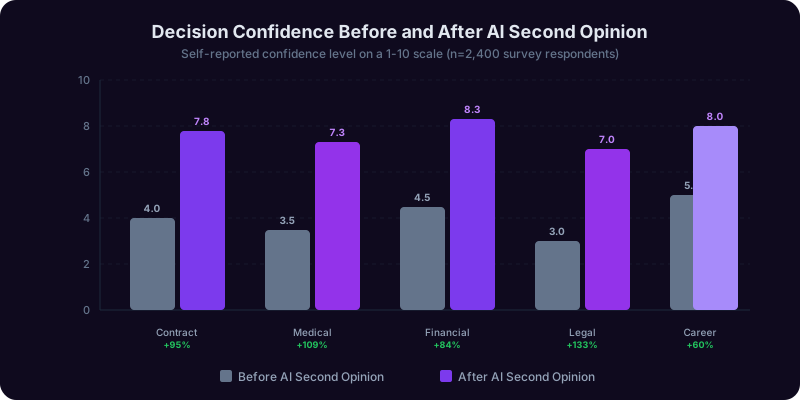
Investment advice. If a financial advisor recommends a specific product (annuity, whole life insurance, managed fund), get a second opinion from a fee-only fiduciary advisor. Fee-only advisors charge a flat fee or hourly rate rather than earning commissions on products they sell. The difference matters: commission-based advisors may recommend products that pay them 3-7% upfront commissions, while a fee-only advisor has no financial incentive to recommend one product over another. A one-time fee-only consultation costs $200-$500 and can save you from products with hidden fees that erode your returns by 1-2% annually (which compounds to 30-50% of your potential returns over 30 years).
Major purchases over $5,000. Cars, home renovations, and elective procedures all benefit from structured comparison. For cars: get the out-the-door price from at least 3 dealers before negotiating. For home renovations: get 3 bids and ask each contractor to explain why their price differs from competitors. For elective medical procedures: cash-pay prices can vary by 300-500% between providers in the same city.
Refinancing offers. When your bank or a lender contacts you about refinancing, always compare their offer against at least 2 competitors. Refinancing involves closing costs of $2,000-$5,000, and the breakeven point (where monthly savings exceed closing costs) may be further out than the sales pitch suggests.
The Finance Copilot can analyze mortgage offers, calculate true cost comparisons, and help you prepare questions for financial advisors so you walk in informed rather than dependent on their recommendations.
Legal Disputes: When to Fight vs When to Settle
Legal disputes are emotional, expensive, and often drag on far longer than expected. The decision to fight, settle, or walk away is one of the most consequential choices you can make, and it is almost impossible to evaluate objectively when you are personally involved.
The economics of litigation. The average cost of taking a civil case through trial in the United States is $15,000-$100,000+ for each side, depending on complexity. Small claims court is cheaper ($30-$75 filing fee, no attorney required) but is limited to $5,000-$25,000 depending on your state. Even if you win, collecting a judgment is a separate challenge; roughly 80% of small claims judgments are not fully collected. For a detailed walkthrough, see our complete guide to small claims court.
When to fight:
- The amount at stake significantly exceeds the cost of litigation
- You have strong evidence (documentation, witnesses, written agreements)
- The other party has assets to collect from if you win
- The matter involves an important principle or precedent (employment discrimination, consumer fraud) where the outcome affects more than just money
- An attorney has reviewed your case and assessed a strong likelihood of success
When to settle:
- The cost of litigation approaches or exceeds the amount in dispute
- Your evidence is mixed or circumstantial
- You want closure and the stress of a prolonged dispute is affecting your health or work
- The other party makes a reasonable settlement offer (typically 50-70% of the claimed amount is considered reasonable)
- The dispute involves a relationship you need to preserve (landlord you still rent from, employer you still work for)
When to walk away:
- The amount at stake is less than $2,000-$3,000 and you are not in a small claims-friendly jurisdiction
- The other party has no collectible assets ("judgment-proof")
- The emotional cost of pursuing the matter exceeds the potential recovery
Before making any of these decisions, spend $200-$500 on an initial attorney consultation. Most attorneys offer 30-60 minute consultations at a reduced rate. Prepare by organizing your documents and timeline. The Legal Copilot can help you prepare for that consultation by organizing your facts, identifying relevant legal issues, and generating the right questions to ask. If you need to send a formal demand first, our cease and desist letter guide walks you through the process.
Career Moves: Job Offers, Quitting, and Major Transitions
Career decisions are among the most consequential choices you will make, yet most people make them based on gut feeling rather than structured analysis. The asymmetry is real: your potential employer has a team of recruiters and HR professionals managing the process. You are doing this alone, often under time pressure.
Evaluating a job offer. Most people fixate on salary and miss the total compensation picture. Beyond base pay, evaluate: bonus structure and realistic payout history (ask "what percentage of employees received the full bonus last year?"), equity (RSUs, stock options, or phantom equity, and what are the vesting terms?), health insurance (compare premiums, deductibles, and out-of-pocket maximums, which can differ by $3,000-$8,000 annually between plans), retirement match (a 6% match on a $100,000 salary is $6,000/year in free money), PTO policy (2 weeks vs 4 weeks is worth $3,800-$7,700 on a $100,000 salary), and remote work flexibility (commuting costs $4,000-$12,000/year in most metro areas).
When to quit. The decision to leave a job should be based on data, not emotion. Quit when: you have another offer in hand (or 6+ months of expenses saved), your career growth has genuinely stalled (not just a bad quarter, but a structural ceiling), the work environment is damaging your health, or you have been documenting issues and raising concerns for 6+ months with no improvement. Do not quit in the heat of a bad day, during a conflict with your manager, or before understanding your financial runway.
Negotiating a raise or promotion. Most employees do not negotiate because they feel uncomfortable. But salary negotiation has an expected value of thousands of dollars. A $5,000 raise at age 30, compounded at 3% annual increases for 35 years, is worth over $290,000 in additional lifetime earnings. Before negotiating, research your market rate (the Career Copilot and Salary Copilot can help), document your achievements with specific metrics, and practice your talking points with someone who will give honest feedback.
Major transitions (career changes, starting a business, going freelance). These decisions benefit most from multiple perspectives: someone who has made the same transition, a financial advisor who can assess your runway, and a mentor or coach who can help you evaluate your readiness. The biggest risk in career transitions is not failure. It is making the jump without adequate preparation and burning through savings before the new path generates income.
How AI Copilots Provide Instant Second Opinions
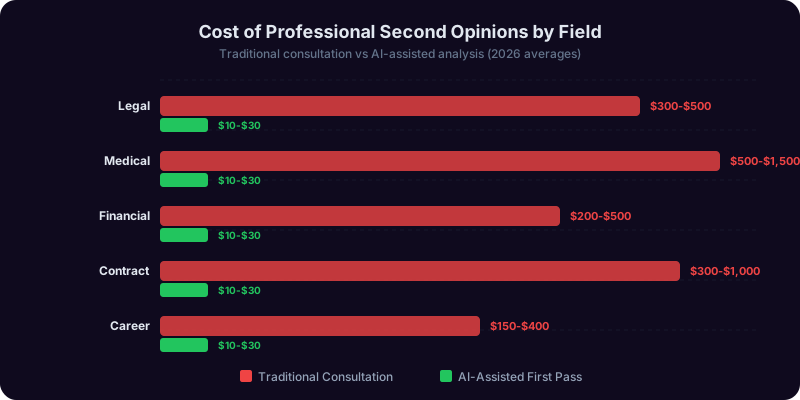
The traditional barriers to getting second opinions were time, cost, and access. You had to schedule appointments, pay consultation fees, and find the right professional. AI copilots eliminate these barriers for the initial analysis, giving you a fast, affordable first pass before you invest in a human expert for the final decision. According to a Stanford HAI report on AI in professional services, AI-assisted preparation reduces total professional consultation costs by 30-50% on average.
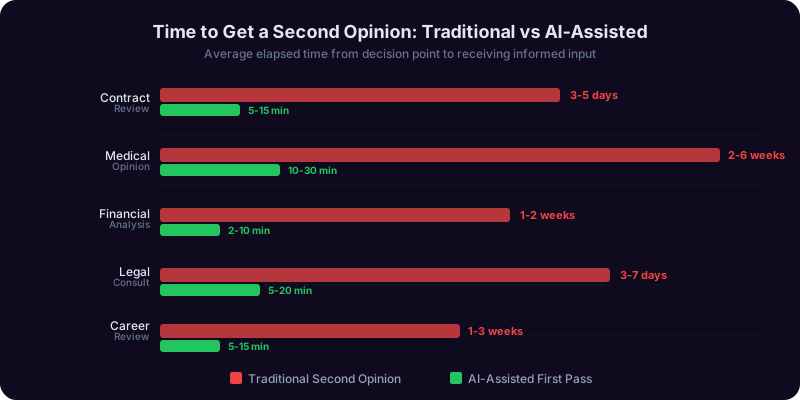
What AI copilots do well:
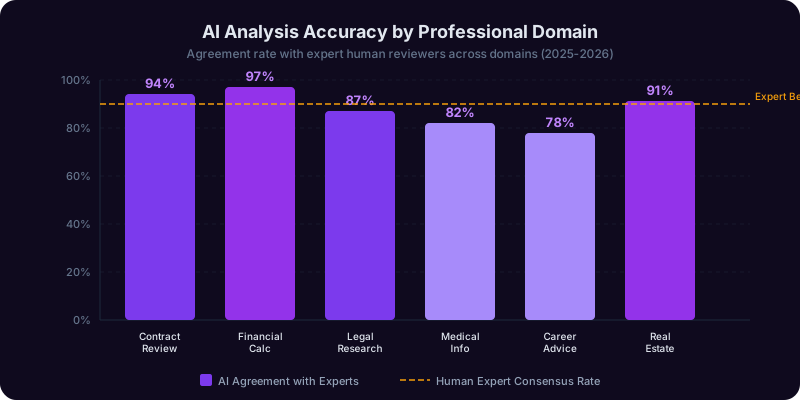
- Contract analysis. AI can read and flag problematic clauses in contracts in minutes, identifying one-sided terms, missing protections, unusual language, and areas that need clarification. The Contract Review Copilot processes leases, employment agreements, and vendor contracts and explains each concern in plain language.
- Financial calculations. AI excels at running the math on financial decisions: mortgage comparisons, total compensation analysis, tax implications, and break-even calculations. The Finance Copilot can compare multiple scenarios in seconds with precision that is tedious to do manually.
- Research and preparation. Before a medical consultation, legal meeting, or financial advisor appointment, AI can help you organize your information, generate informed questions, and understand the terminology you will encounter. This preparation makes your paid professional time dramatically more productive.
- Identifying what you do not know. Often the most valuable second opinion is someone pointing out a question you did not think to ask. AI copilots are trained on thousands of scenarios and can surface considerations you might miss.
What AI copilots do not replace:
- Licensed professional judgment for your specific situation
- Legal representation in disputes or negotiations
- Medical diagnosis or treatment decisions
- Fiduciary financial advice
The ideal workflow: Use an AI copilot as your first second opinion. Let it analyze the contract, run the numbers, or prepare your questions. Then bring the AI's analysis to a human professional for the areas that need expert judgment. This approach typically saves 50-70% on professional fees because your paid expert time is focused on the complex issues rather than routine analysis.
Try it: upload a contract to the Contract Review Copilot, describe your situation to the Career Copilot, or ask the Legal Copilot about your dispute. You will have actionable insights in minutes rather than days.
For more on this topic, read our guide on How to Write a Demand Letter That Gets Results, or learn how to use AI to prepare for a lawyer consultation.
Frequently Asked Questions
Recommended Copilots
Recommended Copilots
Get an AI second opinion on any professional decision before you commit
Try Free →Second opinion on medical decisions, treatment plans, and diagnoses
Try Free →Second opinion on financial commitments, investments, and major purchases
Try Free →Second opinion on contracts, legal disputes, and rights
Try Free →Continue Exploring
Related Articles
Get Your Answer Now, Free
Before you sign that contract, accept that diagnosis, or commit to that financial plan - get an AI-powered second opinion in minutes, not days.