
Immediate Steps at the Scene: Safety, 911, and Documentation
The first few minutes after a car accident are critical, both for your physical safety and for protecting your legal rights. Your body may be flooded with adrenaline, which can mask pain and cloud judgment. Take a breath, focus on these steps in order, and do not rush through them.
Disclaimer: This guide provides general information about car accidents, insurance claims, and legal rights. It is not legal advice. Laws vary by state, and every accident is different. If you have been seriously injured or face a disputed-fault situation, consult a licensed attorney in your state.
Step 1: Stop and Check for Safety
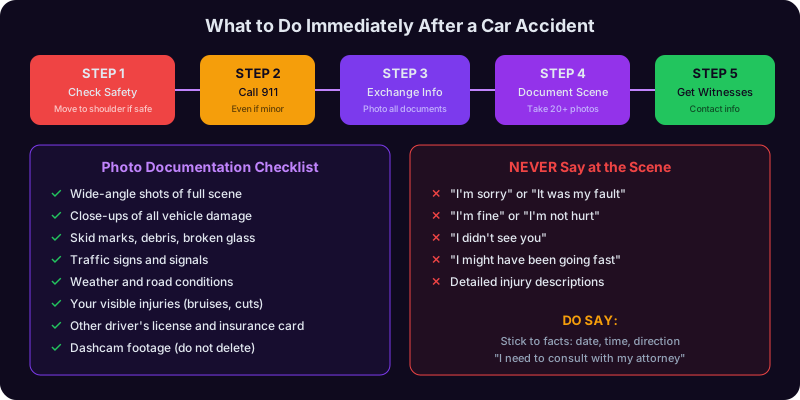
Pull over to a safe location if possible. If your car is drivable, move it to the shoulder or a nearby parking lot to avoid blocking traffic and reduce the risk of secondary collisions. Turn on your hazard lights. If the car cannot be moved or you are on a highway, stay inside with your seatbelt on until emergency responders arrive, unless there is an immediate danger such as fire or smoke.
Step 2: Call 911
Call 911 even if the accident seems minor. Here is why this matters:
- A police report creates an official record. Insurance companies treat police reports as the most credible account of what happened. Without one, the claim becomes your word against the other driver's.
- Some states legally require it. Many states require you to report accidents that involve injuries, deaths, or property damage above a certain threshold (typically $500-$2,500 depending on the state). The National Highway Traffic Safety Administration (NHTSA) provides state-specific reporting requirements.
- Hidden injuries may not be apparent yet. Adrenaline can mask symptoms of whiplash, concussions, internal bleeding, and soft tissue injuries. Having emergency responders evaluate you creates a medical record tied to the accident.
Step 3: Exchange Information
Collect the following from every driver involved. Use your phone to photograph documents rather than relying on handwritten notes, which can be lost or illegible.
Car Accident Information Exchange Checklist:
- Full legal name of each driver
- Phone number and email address
- Driver's license number and state
- Insurance company name and policy number
- License plate number and state
- Vehicle make, model, year, and color
- Vehicle Identification Number (VIN) if accessible (visible through the windshield on the driver's side dashboard)
- Names and contact information of passengers
- Names and contact information of witnesses (bystanders, other drivers who stopped)
- Badge number and name of responding officer
- Police report number (the officer may provide this at the scene or tell you how to obtain it later)
Step 4: Document Everything with Photos and Video
Your phone is your most powerful tool at the accident scene. Take far more photos than you think you need. Insurance adjusters and attorneys will review these images to reconstruct what happened, assess damage, and determine fault.
Photo Documentation Guide:
- Wide-angle shots showing the full scene, including the position of all vehicles, traffic signals, stop signs, lane markings, and road conditions
- Close-up shots of all vehicle damage from multiple angles for every vehicle involved
- Skid marks, debris, and broken glass on the road
- Traffic signs and signals near the intersection or location
- Weather and road conditions (wet pavement, ice, fog, sun glare)
- Your visible injuries (bruises, cuts, swelling) - photograph these immediately and again over the following days as bruising develops
- The other driver's license, insurance card, and license plate
- Dashcam footage if you have it - do not delete or overwrite the file
If witnesses are present, ask if they are willing to share their contact information. Witness statements can be decisive in disputed-fault cases. If a witness offers to stay until police arrive, that is even better.
Step 5: Note the Time, Date, and Location
Write down or voice-record the exact time, date, street names or intersection, direction of travel for each vehicle, and a brief description of what happened while it is fresh in your memory. Your phone's photo metadata will capture timestamps automatically, but having your own written account matters.
The Auto Copilot can help you organize your accident documentation and ensure you have not missed any critical information. For a broader understanding of how to protect your legal rights in any situation, explore our legal guidance resources.
What to Say and What Never to Say After an Accident
What you say at the accident scene and in the days that follow can significantly help or permanently damage your insurance claim and legal case. Insurance adjusters, attorneys, and even the other driver's insurance company will scrutinize your statements for anything that implies fault or undermines your injuries. This is not about being dishonest - it is about being careful and precise.
Statements That Can Hurt Your Claim
Avoid these common mistakes, even if you are shaken and speaking without thinking:
- "I'm sorry" or "It was my fault." Even a reflexive apology can be used as an admission of liability. You may feel responsible in the moment, but you may not have the full picture. Perhaps the other driver was speeding, ran a red light you did not see, or was distracted. Apologizing before the facts are clear can be used against you.
- "I'm fine" or "I'm not hurt." Adrenaline masks pain. Many serious injuries - whiplash, herniated discs, concussions, internal bleeding - do not produce symptoms for hours or even days. If you tell the other driver, a police officer, or an insurance adjuster that you are fine, that statement will be used later to argue that your injuries are not related to the accident.
- "I didn't see you" or "I wasn't paying attention." These are direct admissions that can establish negligence on your part, even if the other driver was primarily at fault.
- Speculating about what happened: "I think I might have been going a little fast" or "Maybe I should have braked sooner." Stick to facts you know for certain. If you are unsure about something, say "I'm not sure" rather than guessing.
- Discussing your injuries in detail with the other driver or their insurance company. You do not yet know the full extent of your injuries. Any description you give now will be treated as a ceiling, not a floor.
What You Should Say
Keep your statements at the scene factual, brief, and neutral:
- To the other driver: Exchange information. You are not required to discuss what happened or who was at fault. Be polite but keep it to the essentials.
- To the police officer: State the facts as you observed them: "I was traveling northbound on Main Street at approximately 30 miles per hour. The other vehicle entered the intersection." Do not speculate, do not admit fault, and do not minimize your injuries. If you are in pain, say so. If you feel dizzy, disoriented, or unwell, say so.
- To your own insurance company: Report the accident promptly. Provide basic facts: when, where, who was involved, and the police report number. You are contractually obligated to report the accident to your insurer, but you do not need to provide a recorded statement to the other driver's insurance company.
The Police Report: Why It Matters
The police report is often the single most influential document in an insurance claim. It includes:
- The officer's description of the scene and road conditions
- Statements from both drivers and any witnesses
- The officer's preliminary determination of fault (in many states)
- Any citations issued (running a red light, failure to yield, DUI)
- A diagram of the accident scene
If you believe the police report contains errors - for example, if the officer attributed fault to you based on incomplete information - you can request a correction or submit a supplemental statement. The process varies by jurisdiction, but most police departments have a procedure for amending reports. Do this promptly; waiting weeks undermines your credibility.
If you are unsure how to communicate with insurance companies or need help understanding what a police report means for your claim, the Insurance Copilot can walk you through the process step by step. For guidance on how to read and interpret legal documents related to your claim, see our guide on reading and negotiating contracts and legal documents.
Medical Attention: Why Timing and Documentation Are Everything
Seeking medical attention after a car accident is not just about your health - though that is the most important reason. It is also one of the most consequential decisions you will make for your insurance claim. Insurance companies routinely deny or reduce claims when there is a gap between the accident and the first medical visit. The logic they use: if you were really hurt, you would have gone to the doctor right away.
The Hidden Injury Problem
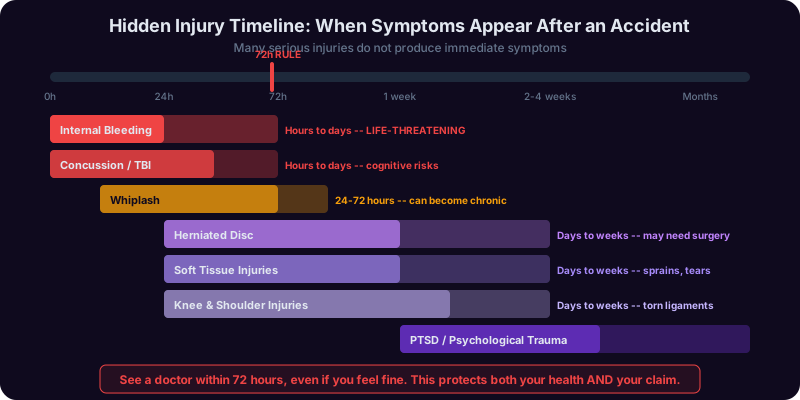
Many of the most common car accident injuries do not produce immediate symptoms. This is not unusual - it is the norm. Understanding this can save you thousands of dollars and months of pain.
| Injury | Common Delay Before Symptoms Appear | Why It's Dangerous to Ignore |
|---|---|---|
| Whiplash | 24-72 hours | Can become chronic neck pain, headaches, and reduced mobility if untreated |
| Concussion / TBI | Hours to days | Undiagnosed concussions can cause long-term cognitive problems; second-impact syndrome can be fatal |
| Herniated disc | Days to weeks | Numbness, weakness, and severe pain that may require surgery |
| Internal bleeding | Hours to days | Life-threatening if not detected; symptoms may include dizziness, fainting, and abdominal pain |
| Soft tissue injuries | Days to weeks | Sprains, strains, and tears that worsen with activity and delay healing |
| PTSD / psychological trauma | Weeks to months | Anxiety, flashbacks, sleep disruption, and avoidance behavior that significantly impact daily life |
| Knee and shoulder injuries | Days to weeks | Torn ligaments and cartilage damage that may require surgical repair |
The 72-Hour Rule
See a doctor within 72 hours of the accident, even if you feel fine. The CDC motor vehicle safety guidelines emphasize the importance of prompt medical evaluation. This accomplishes several things:
- Creates a medical record linking your injuries to the accident. This is the single most important piece of documentation for your claim. Without it, the insurance company will argue that your injuries were pre-existing or caused by something else.
- Catches injuries early. A doctor can identify signs of concussion, internal injuries, and spinal issues that you might not notice yourself. Early treatment generally produces better outcomes and lower total medical costs.
- Establishes a baseline. If your injuries worsen over time - which is common with whiplash and disc injuries - having an initial examination on record shows the progression and connects it to the accident.
Where to Go
- Emergency room: If you have any head injury symptoms, chest pain, difficulty breathing, severe pain, or visible deformity, go to the ER immediately.
- Urgent care: For moderate symptoms that do not appear life-threatening but need prompt attention. Urgent care centers can perform X-rays and basic imaging.
- Your primary care physician: Schedule an appointment within 1-3 days. Your PCP can perform a thorough examination, order imaging (MRI, CT scan) if needed, and refer you to specialists.
- Specialists: Depending on your injuries, you may need an orthopedist, neurologist, chiropractor, or physical therapist. Follow your doctor's referrals.
Documenting Your Medical Treatment
Keep a detailed record of every medical visit, treatment, and expense related to the accident. This documentation forms the foundation of your compensation claim.
- Save every medical bill, receipt, and explanation of benefits (EOB)
- Keep a pain and symptom journal. Record your daily pain levels (1-10 scale), symptoms, limitations on daily activities, missed work days, and how the injuries affect your sleep, mood, and relationships. This journal becomes evidence of pain and suffering.
- Follow your treatment plan exactly. If your doctor prescribes physical therapy three times a week, go three times a week. Insurance companies look for gaps in treatment to argue that your injuries are not serious. Missing appointments gives them ammunition.
- Do not use social media. Insurance adjusters routinely check claimants' social media profiles. A photo of you smiling at a family event, exercising, or traveling can be used to argue that your injuries are exaggerated, even if you were in significant pain at the time.
If you are dealing with medical bills from the accident and need help understanding charges, disputing errors, or negotiating costs, our guide on how to dispute medical bills covers the process in detail. The Health Copilot can also help you understand treatment options and medical terminology in your records.

Get Answers From the Legal Copilot
The Legal and Insurance Copilots help you understand your rights, organize documentation, evaluate settlement offers, and prepare for conversations with adjusters and attorneys. Get clear, step-by-step guidance tailored to your state and situation.
Filing an Insurance Claim: Your Insurance vs. Theirs, and Fault vs. No-Fault States
Understanding which insurance company to file with, and how the claims process works in your state, is one of the most confusing parts of a car accident. The answer depends on whether you live in a fault or no-fault state, the severity of your injuries, and the specifics of your coverage.
Fault vs. No-Fault States
The United States is divided into two systems for handling car accident claims, and the state where the accident occurs determines which rules apply.
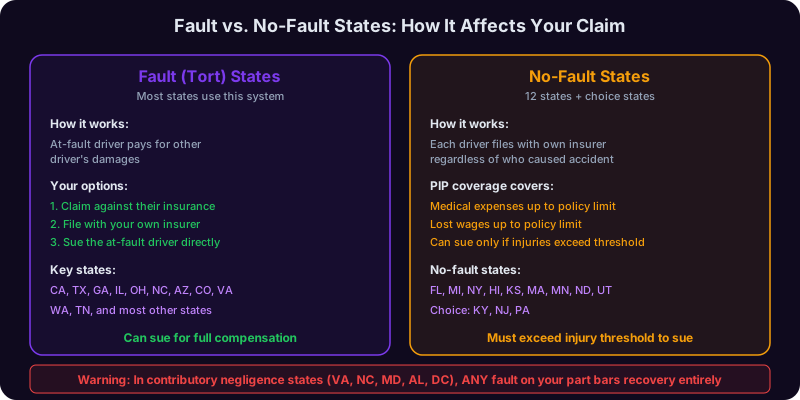
Fault (Tort) States: The driver who caused the accident is financially responsible for the other driver's damages. The injured party can file a claim against the at-fault driver's insurance (a third-party claim), file with their own insurance and let the insurers sort it out, or file a lawsuit directly against the at-fault driver. Most states use this system.
No-Fault States: Each driver files a claim with their own insurance company regardless of who caused the accident. Your own policy's Personal Injury Protection (PIP) covers your medical expenses and lost wages up to a limit. You can only step outside the no-fault system and sue the other driver if your injuries exceed a certain threshold - typically either a dollar amount or a verbal threshold describing the severity of injuries (such as "serious injury" including fractures, disfigurement, or permanent loss of function).
Fault vs. No-Fault States Table
| No-Fault States | Fault States (Examples) | Choice No-Fault States |
|---|---|---|
| Florida | California | Kentucky |
| Michigan | Texas | New Jersey |
| New York | Georgia | Pennsylvania |
| New Jersey (default) | Illinois | |
| Pennsylvania (default) | Ohio | |
| Hawaii | North Carolina | |
| Kansas | Arizona | |
| Massachusetts | Colorado | |
| Minnesota | Virginia | |
| North Dakota | Tennessee | |
| Utah | Washington |
Note: New Jersey and Pennsylvania give drivers the choice between no-fault and tort coverage when purchasing their policy. Kentucky also offers this choice.
Filing with Your Own Insurance (First-Party Claim)
You should always notify your own insurance company about the accident, regardless of who was at fault. Your policy may provide:
- Collision coverage: Pays for repairs to your vehicle, minus your deductible, regardless of fault.
- Personal Injury Protection (PIP): Covers medical expenses and lost wages in no-fault states. Some fault states also offer optional PIP.
- Medical Payments coverage (MedPay): Covers medical expenses regardless of fault, typically with lower limits than PIP.
- Uninsured/Underinsured Motorist (UM/UIM) coverage: Covers your damages if the at-fault driver has no insurance or insufficient coverage. This is one of the most valuable and underused coverages.
Filing Against the Other Driver's Insurance (Third-Party Claim)
In a fault state, if the other driver caused the accident, you can file a claim against their liability insurance. This is called a third-party claim. You are not the policyholder - you are a third party making a demand against someone else's policy. Important distinctions:
- The other driver's insurance company does not work for you. Their goal is to minimize what they pay.
- You are not required to give a recorded statement to the other driver's insurer. Politely decline and refer them to your attorney or your own insurance company.
- The claims process can take weeks to months, especially if fault is disputed or injuries are still being treated.
Steps to File Your Claim
- Report the accident to your own insurer within 24 hours. Most policies require prompt reporting. Delaying can give them grounds to deny coverage.
- Provide basic facts: date, time, location, other driver's information, police report number, and a brief factual description of what happened.
- Submit your documentation: photos, the police report (once available), medical records, repair estimates, and any witness information.
- Get a claim number and the name of your assigned adjuster.
- Do not accept a settlement before you know the full extent of your injuries. Once you sign a release, you cannot go back for more money if your condition worsens.
The Insurance Copilot can help you understand your specific coverage, walk you through the claims process for your state, and prepare you for conversations with adjusters. If you are dealing with disputes about fault or coverage, the Legal Copilot can explain your options.
Dealing with Insurance Adjusters: Tactics, Recorded Statements, and Settlement Offers
Insurance adjusters are professionals whose job is to close claims for as little money as possible. This is not a conspiracy - it is their job description. The adjuster assigned to your claim may be friendly, sympathetic, and genuinely helpful. They may also be using well-established techniques to minimize your payout. Understanding these tactics is essential to protecting your claim.
Common Adjuster Tactics
- The quick settlement offer: Within days of the accident, the other driver's insurance may offer you a fast check. The amount is almost always far below what your claim is worth. They are betting that you will accept before you know the full extent of your injuries or understand the value of your claim. Never accept an early settlement offer without fully understanding your injuries and damages.
- Requesting a recorded statement: The other driver's adjuster will likely ask you to provide a recorded statement about the accident. You are not legally required to do this. Politely decline. Anything you say in a recorded statement can and will be used to reduce or deny your claim. If they press, say: "I need to consult with my attorney before providing any recorded statements."
- Downplaying your injuries: "It looks like a minor fender-bender" or "These injuries usually resolve in a few weeks" are common minimization tactics. The adjuster is not your doctor. Do not let them characterize the severity of your injuries.
- Asking for a blanket medical authorization: The adjuster may ask you to sign a medical records release form. Read it carefully. A broad authorization allows them to access your entire medical history, including pre-existing conditions they can use to argue your injuries are not related to the accident. Only authorize release of records related to the accident injuries, and only for the treatment period following the accident.
- Delaying the process: Some adjusters intentionally slow-walk claims, hoping you will become frustrated and accept a lower offer. They know you have bills to pay and may be missing work.
- Using your social media: Adjusters routinely search claimants' social media profiles for evidence that contradicts injury claims. A Facebook check-in at a hiking trail, an Instagram photo from a party, or a tweet about running errands can all be used against you.
How to Handle the Adjuster
- Be polite but guarded. You do not gain anything by being adversarial, but you should not volunteer information either.
- Stick to facts. Provide the date, time, location, and basic description of the accident. Do not speculate about fault, do not discuss your injuries in detail, and do not discuss prior accidents or pre-existing conditions.
- Document every interaction. Keep a log of every phone call, email, and letter with the adjuster. Note the date, time, who you spoke with, and what was discussed. Follow up phone conversations with an email summarizing what was said.
- Do not accept the first offer. The first settlement offer is almost always a starting point, not a final number. You have the right to negotiate. If the offer seems low, ask the adjuster to explain in writing how they calculated the amount.
- Get repair estimates independently. Do not rely solely on the insurance company's preferred body shop. Get at least two independent estimates for vehicle repairs.
- Never sign anything without understanding it fully. Settlement releases are final. Once you sign, you waive your right to pursue additional compensation, even if your injuries worsen.
Your Own Insurance Adjuster
Note that you will likely deal with two adjusters: one from your own insurance company and one from the other driver's insurer. Your own adjuster has a better alignment of interests with you (you are their customer), but their company still wants to minimize payouts. Cooperate with your own adjuster while being strategic with the other driver's adjuster.
If you feel overwhelmed by the claims process or believe the adjuster is acting in bad faith, the Consumer Rights Copilot can help you understand your rights and options. Insurance companies have legal obligations to handle claims in good faith, and violating those obligations can expose them to additional liability. If you need to put your demands in writing, our guide on how to write a demand letter can help you structure a formal request for fair compensation. You can also file a complaint with your state's department of insurance if an insurer is acting in bad faith.
When You Need a Car Accident Lawyer (and When You Might Not)
Not every car accident requires an attorney. Minor fender-benders with no injuries, clear fault, and cooperative insurance companies can often be resolved on your own. But there are specific situations where hiring a lawyer is not just helpful - it is essential to getting fair compensation.
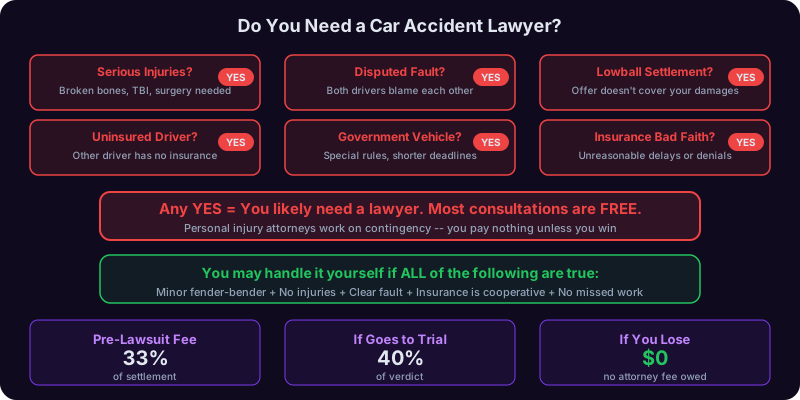
You Likely Need a Lawyer If:
- You suffered serious injuries. Broken bones, traumatic brain injuries, spinal injuries, surgeries, or any injury requiring extended medical treatment significantly increases the complexity and value of your claim. Insurance companies fight hardest on high-value claims.
- Fault is disputed. If both drivers blame each other, or if the police report is ambiguous about fault, the insurance companies will try to shift liability. An attorney can gather evidence, interview witnesses, and build a case for your version of events.
- The insurance company is offering a lowball settlement. If the offer does not cover your medical bills, lost wages, and pain and suffering, an attorney can negotiate a significantly higher amount. Studies consistently show that claimants represented by attorneys receive higher settlements on average than those who negotiate on their own, even after attorney fees.
- The other driver was uninsured or underinsured. Navigating UM/UIM claims is complex and often requires legal expertise.
- Multiple vehicles or parties are involved. Multi-car accidents create complicated liability questions that are difficult to resolve without legal representation.
- The insurance company is acting in bad faith. Unreasonable delays, denial of a valid claim, or failure to investigate properly may constitute bad faith, which can expose the insurer to additional damages.
- You are being blamed for the accident but believe you were not at fault. Comparative negligence rules vary by state, and even partial fault can significantly reduce your compensation. An attorney can fight to minimize your percentage of fault.
- A government entity is involved. Accidents involving government vehicles or caused by road defects maintained by a government entity have special rules, shorter deadlines (often 30-180 days to file a notice of claim), and sovereign immunity issues that require legal expertise.
You Might Handle It Yourself If:
- The accident was a minor fender-bender with no injuries
- Fault is clear and undisputed
- Your vehicle damage is minor and covered by insurance
- You did not miss any work
- The insurance company is being responsive and reasonable
How Car Accident Lawyers Get Paid
Most personal injury attorneys work on a contingency fee basis, meaning you pay nothing upfront. The attorney takes a percentage of your settlement or court award, typically:
- 33% (one-third) if the case settles before a lawsuit is filed
- 40% if a lawsuit is filed and the case goes to trial
- Some attorneys use a sliding scale based on the stage at which the case resolves
The contingency fee structure means the attorney only gets paid if you get paid. It also means the attorney has a financial incentive to maximize your settlement. Before hiring an attorney, ask about:
- Their fee percentage and whether it changes if the case goes to trial
- Who pays for case expenses (filing fees, expert witnesses, medical record costs) and whether those are deducted from your share of the settlement
- Their experience with car accident cases specifically
- Their track record with settlements and verdicts
Finding the Right Attorney
Look for a personal injury attorney with specific car accident experience in your state. Avoid attorneys who handle every type of law - you want someone who focuses on personal injury. Get referrals from your state bar association, read reviews, and schedule consultations with at least two or three attorneys. Initial consultations are almost always free.
The Legal Copilot can help you evaluate whether your situation warrants an attorney, prepare questions for your consultation, and understand the legal terminology you will encounter. If you have been wrongfully terminated due to injuries from the accident, that is a separate legal claim worth exploring.
Understanding Compensation: How Car Accident Settlements Are Calculated
Car accident compensation is not a single number pulled from thin air. It is built from specific, documented categories of damages. Understanding what you are entitled to - and how values are calculated - gives you the knowledge to evaluate whether a settlement offer is fair or whether you are being shortchanged.
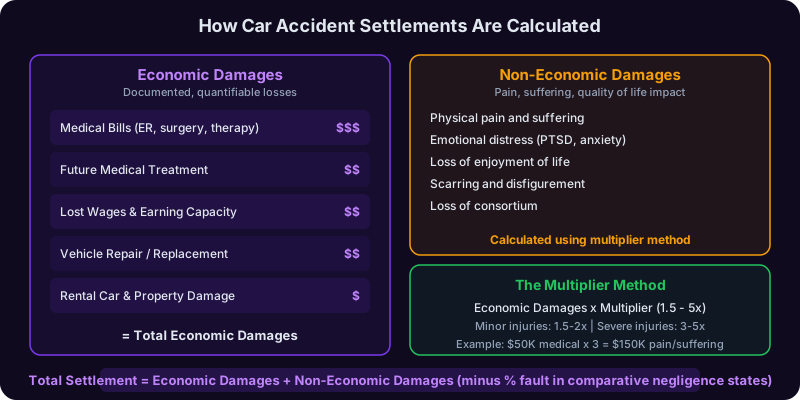
Economic Damages (Quantifiable Losses)
These are damages with a specific dollar amount that can be documented with bills, receipts, and records.
Medical Expenses:
- Emergency room visits, ambulance fees, and hospital stays
- Surgery and anesthesia
- Doctor visits, specialist consultations, and follow-up care
- Physical therapy and rehabilitation
- Prescription medications
- Medical equipment (crutches, braces, wheelchair)
- Future medical expenses for ongoing treatment (estimated by medical experts)
Total medical expenses are typically the foundation of the settlement calculation. Document every dollar, including copays and out-of-pocket expenses that your health insurance did not cover. If you need help understanding or disputing medical charges, our guide on how to dispute medical bills walks through the process.
Lost Wages and Earning Capacity:
- Wages lost during recovery (documented with pay stubs or employer verification)
- Sick days and vacation days used for recovery
- Bonuses, commissions, or overtime you would have earned
- Reduced earning capacity if your injuries prevent you from returning to your previous job or working at the same level
- Self-employment income loss (documented with tax returns and financial records)
Property Damage:
- Vehicle repair costs or fair market value if the car is totaled
- Rental car expenses while your vehicle is being repaired
- Personal property damaged in the accident (phone, laptop, car seat, etc.)
- Diminished value - even after repair, a car with an accident history is worth less than a comparable car without one. Some states allow you to claim this difference.
Non-Economic Damages (Pain and Suffering)
These damages compensate you for the human impact of the accident - the things that do not come with a receipt but are very real.
- Physical pain and suffering: The pain you experienced and continue to experience
- Emotional distress: Anxiety, depression, PTSD, fear of driving, sleep disruption
- Loss of enjoyment of life: Activities you can no longer do or enjoy as a result of your injuries
- Loss of consortium: Impact on your relationship with your spouse
- Scarring and disfigurement: Permanent visible changes to your appearance
- Inconvenience: The disruption to your daily life during recovery
How Pain and Suffering Is Calculated
There is no universal formula, but two methods are commonly used:
The Multiplier Method: Total economic damages are multiplied by a number between 1.5 and 5, depending on the severity of injuries. Minor injuries with full recovery might use a multiplier of 1.5-2. Severe injuries with lasting impact might use 3-5. For example: $50,000 in medical bills and lost wages multiplied by 3 = $150,000 in pain and suffering, for a total claim of $200,000.
The Per Diem Method: A daily dollar amount is assigned for every day you are affected by your injuries. For example: $200 per day for 365 days of recovery = $73,000 in pain and suffering.
Insurance companies use proprietary software (such as Colossus) to calculate settlement ranges based on injury codes, treatment duration, and other factors. An experienced attorney knows how these systems work and how to present your claim to maximize the calculated value.
What Reduces Your Compensation
- Comparative negligence: If you were partially at fault, your compensation is reduced by your percentage of fault in most states. In a state with modified comparative negligence, if you are 50% or more at fault (51% in some states), you may recover nothing.
- Failure to mitigate damages: If you did not seek medical treatment, did not follow your doctor's orders, or engaged in activities that worsened your injuries, the insurance company will argue you failed to mitigate your damages.
- Pre-existing conditions: The insurance company will try to attribute your symptoms to conditions that existed before the accident. However, the "eggshell plaintiff" doctrine holds that the at-fault driver takes the victim as they find them - if you had a pre-existing back condition that the accident worsened, you are entitled to compensation for the worsening.
The Insurance Copilot can help you organize your damages, understand how settlement values are calculated, and evaluate whether an offer is reasonable. If you have received a lowball offer and need to respond formally, our guide on writing a demand letter can help you craft a persuasive counter. For debt issues that arise from accident-related bills, our debt collector rights guide explains your protections.
Statute of Limitations: Filing Deadlines by State
The statute of limitations is the legal deadline for filing a lawsuit after a car accident. Miss this deadline, and you lose your right to sue - permanently. No exceptions, no extensions (with very rare circumstances). This applies to filing a lawsuit in court, not to filing an insurance claim, though insurance claims also have their own deadlines under your policy.
Disclaimer: Statutes of limitations can change through legislation or court decisions. The deadlines listed below reflect current law as of 2026, but you should verify the applicable deadline for your state and situation. Government claims, claims involving minors, and discovery-rule exceptions may alter these deadlines. Consult an attorney in your state if you are approaching a deadline.
Statute of Limitations for Car Accident Lawsuits by State
| State | Personal Injury | Property Damage | Important Notes |
|---|---|---|---|
| California | 2 years | 3 years | Government claims require filing within 6 months |
| Texas | 2 years | 2 years | Proportionate responsibility rule; you can recover if under 51% at fault |
| Florida | 2 years | 4 years | Changed from 4 years to 2 years for personal injury in 2024; modified comparative negligence (51% bar) |
| New York | 3 years | 3 years | No-fault state; must meet serious injury threshold to sue |
| Pennsylvania | 2 years | 2 years | Choice no-fault state; deadline runs from date of accident |
| Illinois | 2 years | 5 years | Modified comparative negligence (50% bar) |
| Ohio | 2 years | 2 years | Modified comparative negligence (51% bar) |
| Georgia | 2 years | 4 years | Modified comparative negligence (50% bar) |
| North Carolina | 3 years | 3 years | Contributory negligence state - any fault by you bars recovery entirely |
| Michigan | 3 years | 3 years | No-fault state with unique unlimited PIP benefits (reformed in 2019) |
| New Jersey | 2 years | 6 years | Choice no-fault state; verbal or monetary threshold to sue |
| Virginia | 2 years | 5 years | Contributory negligence state - any fault by you bars recovery |
| Arizona | 2 years | 2 years | Pure comparative negligence - you can recover even at 99% fault |
| Massachusetts | 3 years | 3 years | No-fault state; modified comparative negligence (51% bar) |
| Colorado | 3 years | 3 years | Modified comparative negligence (50% bar) |
Critical Exceptions and Shorter Deadlines
- Government entities: If your accident involved a government vehicle, a road defect on a government-maintained road, or any government employee acting in their official capacity, you typically must file a notice of claim within 30 to 180 days - far shorter than the general statute of limitations. Missing this administrative deadline can bar your claim entirely, even if the general statute of limitations has not expired.
- Minors: In most states, the statute of limitations is tolled (paused) until the minor turns 18. The clock then starts running from their 18th birthday.
- Discovery rule: For injuries not immediately apparent, some states start the clock from the date the injury was discovered or should have been discovered, rather than the date of the accident.
- Wrongful death: If the accident resulted in a death, the statute of limitations for a wrongful death claim may differ from the personal injury deadline. In many states, it is 2 years from the date of death.
Insurance Claim Deadlines
Separate from the lawsuit deadline, your insurance policy has its own deadlines for reporting the accident and filing a claim. Most policies require "prompt" or "reasonable" notification, which typically means within days, not weeks. Some policies specify exact deadlines (30 days, 60 days). Failing to report within your policy's timeframe can give the insurer grounds to deny coverage.
Do not confuse the statute of limitations (deadline to file a lawsuit) with the insurance claim deadline (deadline to notify your insurer). Both matter, and the insurance deadline is almost always shorter.
If you are unsure about the deadlines that apply to your situation, the Legal Copilot can help you identify the relevant statute of limitations for your state and alert you to shorter deadlines for government claims or other special situations. Time is genuinely of the essence - if you are approaching any deadline, consult an attorney immediately. You can verify your state's specific statute of limitations through the Cornell Law Institute legal encyclopedia. If you are facing a security deposit dispute alongside your accident claim, be aware that those have separate deadlines as well.
Frequently Asked Questions
Recommended Copilots
Recommended Copilots
Get guidance on fault determination, statute of limitations, and when to hire an attorney
Try Free →Navigate the claims process, understand your coverage, and evaluate settlement offers
Try Free →Organize accident documentation, vehicle damage assessment, and repair estimates
Try Free →Understand medical terminology, treatment options, and injury documentation for your claim
Try Free →Know your rights when dealing with insurance adjusters and bad faith claim handling
Try Free →Continue Exploring
Related Articles
Get Answers From the Legal Copilot
The Legal and Insurance Copilots help you understand your rights, organize documentation, evaluate settlement offers, and prepare for conversations with adjusters and attorneys. Get clear, step-by-step guidance tailored to your state and situation.