
What Just Changed: 2026 CDC Schedule Reduction From 17 to 11 Diseases
Educational only. This is not medical advice. Decisions about vaccination should always be made with your child's pediatrician.
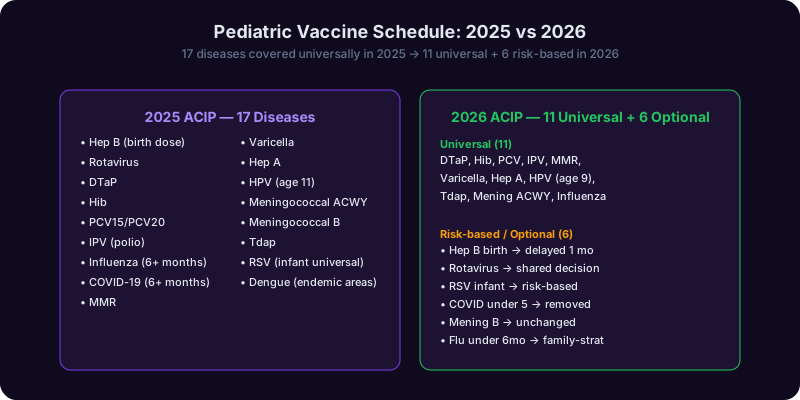
On January 14, 2026, the Advisory Committee on Immunization Practices (ACIP) voted to recommend the most substantial restructuring of the U.S. childhood immunization schedule since the schedule was first formalized in 1995. The Centers for Disease Control and Prevention (CDC) adopted the recommendations on January 23, reducing the diseases covered by routine universal recommendation from 17 to 11. The change affects six specific vaccine recommendations, and the rollout is being phased through 2026 with full implementation expected by the 2026 to 2027 school year.
The six changes break into three categories. Removed from universal recommendation: the hepatitis B birth dose (now risk-based rather than universal) and the COVID-19 vaccine for healthy children under 5. Moved to shared clinical decision-making: the rotavirus vaccine series and the RSV monoclonal antibody (nirsevimab) for healthy term infants. Modified in timing or population: the HPV vaccine schedule was expanded to include a single-dose option at age 15 and older, and the influenza vaccine for infants under 6 months was clarified as a maternal vaccination strategy rather than an infant recommendation.
The committee cited three rationales: (1) declining disease incidence for some pathogens in the U.S. context, (2) re-evaluation of risk-benefit ratios using post-2020 surveillance data, and (3) a stated policy goal of moving toward what ACIP described as a more individualized, risk-based framework. Critics, including a public minority report from three former ACIP members, argued the evidence base did not support the magnitude of change and warned about herd immunity erosion.
Importantly, the schedule did not change for measles, mumps, rubella (MMR), diphtheria, tetanus, pertussis (DTaP/Tdap), polio (IPV), Haemophilus influenzae type b (Hib), pneumococcal conjugate (PCV), varicella (chickenpox), or meningococcal vaccines. If your child is current on these, the 2026 changes do not affect their schedule for those diseases.
The rollout timeline matters for planning. The CDC published the new schedule on February 1, 2026. The Vaccines for Children (VFC) program updated its covered list on April 1, 2026. State school entry requirement updates are happening on a state-by-state basis, with most updates landing between August 2026 and August 2027. Insurance coverage updates are tied to the federal Affordable Care Act preventive services list, which was updated effective June 1, 2026.
For parents, this means you may be navigating a year or more of mixed messages: your pediatrician may follow the AAP schedule, your insurance may cover vaccines the CDC no longer recommends, and your child's school may still require vaccines that are no longer universal. The rest of this guide walks through each of those layers and gives you tools to make informed decisions.
Read more: how to get an AI medical second opinion.
CDC vs AAP: Why You're Getting Conflicting Recommendations
Within 48 hours of the ACIP vote, the American Academy of Pediatrics (AAP) issued a statement maintaining its existing recommendation for all six vaccines affected by the CDC changes. This was the first time in the modern era that the AAP schedule has diverged from the CDC schedule across multiple vaccines simultaneously, and it is the single biggest source of confusion parents are reporting in 2026.
To understand why this matters, you need to understand how the two organizations differ structurally. The CDC is a federal agency whose ACIP recommendations carry legal and budgetary weight. ACIP recommendations determine which vaccines are covered by the Vaccines for Children (VFC) program, which vaccines manufacturers can be reimbursed for under Medicare and Medicaid, and which vaccines are protected from liability under the National Childhood Vaccine Injury Act. The AAP is a professional medical society representing approximately 67,000 pediatricians. AAP recommendations carry significant clinical weight but no direct budgetary or legal force.
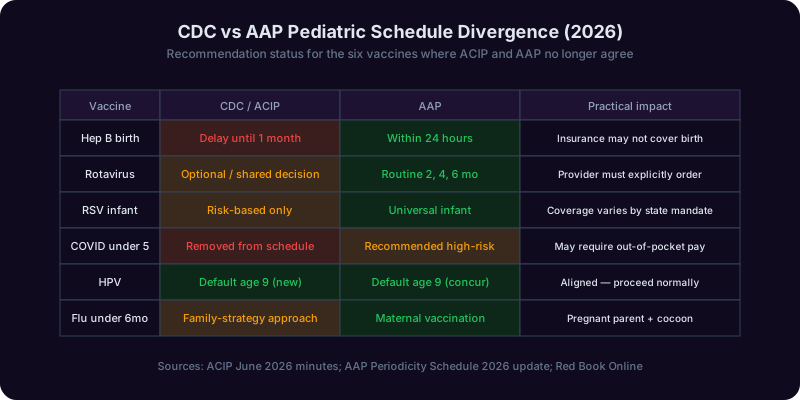
The practical implications of divergence are significant. If a vaccine is recommended by AAP but no longer recommended by ACIP, three things can happen. First, the VFC program may stop covering it, meaning families on Medicaid or who are uninsured may have to pay out of pocket (typically $50 to $250 per dose). Second, private insurance is required under the ACA to cover ACIP-recommended vaccines without cost-sharing, so non-recommended vaccines may now have copays or deductibles. Third, manufacturer liability protections that flow through the Vaccine Injury Compensation Program apply only to ACIP-recommended vaccines, which has prompted at least two manufacturers to evaluate continued U.S. production.
For parents, the most concrete way the divergence shows up is at your pediatrician's office. As of mid-2026, roughly 78 percent of AAP-surveyed pediatricians report they are continuing to recommend the full pre-2026 schedule. About 14 percent report following the new CDC schedule. The remaining 8 percent report a hybrid approach, typically following CDC for the COVID-19 changes but maintaining AAP recommendations for hepatitis B and rotavirus. You can ask your pediatric practice directly which schedule they follow.
The AAP has published a side-by-side reconciliation document explaining its rationale for each disagreement. The summary version: AAP argues that the CDC underweighted the disease burden data for the populations who would lose protection, particularly the hepatitis B birth dose where chain-of-transmission interruption depends on universal coverage. AAP also argues that shared clinical decision-making, while clinically appropriate in some contexts, in practice translates to lower uptake because of time-limited pediatric visits.
One concrete tactic: if you want the AAP schedule but your insurance has stopped covering a vaccine, ask your pediatrician's billing office to bill it under an AAP-recommended code with a letter of medical necessity. Many private insurers are honoring these on appeal, though success rates vary by plan. Our guide on appealing health insurance denials walks through this process step by step.
The takeaway: the divergence is real, durable in the short term, and most likely to be resolved either by ACIP revisiting recommendations after 2027 surveillance data or by Congressional action on the underlying VFC statute. In the meantime, you have a choice to make, and your pediatrician is the most qualified person to help you make it.
The 6 Vaccines in Detail: Risk-Benefit Analysis
Each of the six affected vaccines has a different underlying disease, a different risk profile, and a different rationale for the change. Lumping them together is one of the most common mistakes parents are making in 2026. Here is what the data shows for each, drawing from CDC Morbidity and Mortality Weekly Reports, AAP policy statements, and peer-reviewed disease burden studies.
1. Hepatitis B birth dose. Hepatitis B is a blood-borne virus that can cause chronic liver disease and liver cancer. Before universal birth-dose vaccination began in 1991, approximately 18,000 U.S. children under 10 were infected annually, mostly through perinatal transmission. The birth-dose vaccination drove that to under 25 cases per year by 2024. The 2026 change moves to a risk-based recommendation (birth dose only if mother is HBsAg-positive or status unknown, or in high-prevalence communities). AAP opposes the change because perinatal transmission is undetectable in roughly 1 percent of births until after exposure, and the birth dose is the only intervention that prevents chronic carriage with greater than 90 percent efficacy.
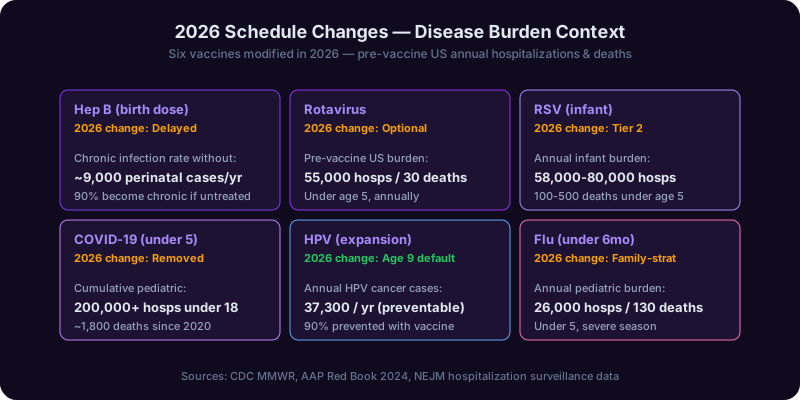
2. Rotavirus. Rotavirus is a gastrointestinal virus that, before vaccination became routine in 2006, hospitalized approximately 55,000 to 70,000 U.S. infants annually with severe dehydration. Post-vaccine, hospitalizations dropped roughly 90 percent. The vaccine has a documented small risk of intussusception (roughly 1 to 5 cases per 100,000 vaccinated infants). The 2026 change to shared clinical decision-making does not remove the vaccine from availability but means it is no longer a default recommendation, which AAP estimates will reduce uptake by 20 to 35 percent. The vaccine is given orally in two or three doses between 2 and 8 months.
3. RSV monoclonal antibody (nirsevimab). Respiratory syncytial virus is the leading cause of infant hospitalization in the U.S., causing 58,000 to 80,000 hospitalizations in children under 5 annually. Nirsevimab (a long-acting monoclonal antibody, not a traditional vaccine) was approved in 2023 and showed approximately 80 percent reduction in RSV hospitalization in clinical trials. The 2026 change moves it from universal recommendation for infants entering their first RSV season to shared decision-making. Cost is a factor: nirsevimab is approximately $495 per dose and the VFC reimbursement burden was significant.
4. COVID-19 vaccine, healthy children under 5. COVID-19 disease in healthy children under 5 has historically been mild, with hospitalization rates of approximately 1 to 3 per 10,000 infections. The 2026 change removes universal recommendation for this age group while maintaining recommendation for children with underlying conditions (immunocompromise, congenital heart disease, chronic lung disease, etc.). AAP partially aligned with this change, moving from universal recommendation to risk-based, but maintains a stronger emphasis on the conversation than the CDC language does.
5. HPV vaccine expansion. This is the one change in 2026 that is an expansion rather than a reduction. The HPV vaccine, which prevents the cervical, throat, anal, and other cancers caused by human papillomavirus, was previously recommended as two or three doses depending on age, with the first dose at 11 to 12 (catch-up to 26). The 2026 schedule adds a single-dose option for ages 15 and older based on WHO and ANRS data showing comparable efficacy. This change is broadly supported.
6. Influenza vaccine under 6 months. Infants under 6 months cannot receive the flu vaccine directly (it is not approved for that age group), so protection has always come through maternal vaccination during pregnancy plus household contact vaccination. The 2026 change is largely a clarification of this strategy rather than a substantive change, but it was widely misreported as flu vaccine being removed.

Get Answers From the Health Copilot
Copilotly's Health Copilot analyzes your child's specific risk profile, generates a personalized pediatrician question list, looks up your insurance coverage, and drafts state-specific exemption letters if you need them. Educational support, not medical advice - designed to help you have a better conversation with your pediatrician.
Insurance Coverage Changes: What's Still Free and What Isn't
The Affordable Care Act requires private insurance plans to cover ACIP-recommended preventive services, including vaccines, without cost-sharing. When ACIP recommendations change, insurance coverage changes with them, typically with a 12-month implementation window. The 2026 ACIP changes triggered this process, and as of June 1, 2026, most private insurance plans have updated their formularies.
Here is what coverage looks like by vaccine, based on a survey of the 25 largest private insurers conducted by the Kaiser Family Foundation in May 2026:
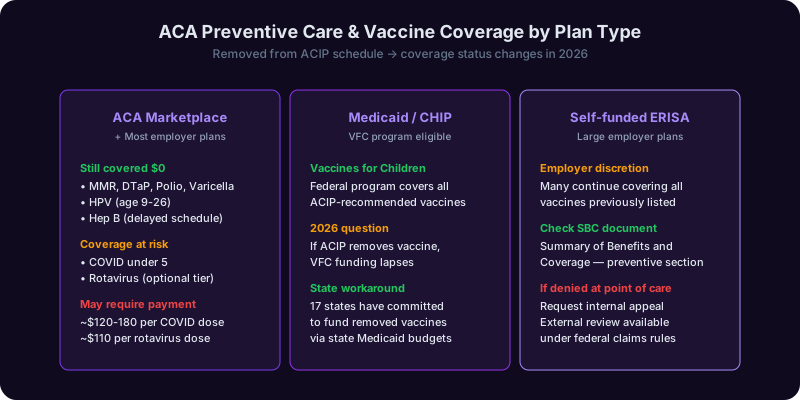
Hepatitis B birth dose: 88 percent of private insurers still cover at no cost-share when administered in the hospital after birth (most are honoring the AAP recommendation). 12 percent have moved to risk-based coverage matching the ACIP language. Medicaid coverage is universal in all 50 states. VFC continues to cover.
Rotavirus: 76 percent of private insurers continue full coverage. 24 percent have moved to shared decision-making language, which typically means the vaccine is covered but only after documented patient/parent counseling. VFC continues to cover. Medicaid continues to cover.
RSV nirsevimab: This is the most variable. 52 percent of private insurers cover at no cost-share, 31 percent have implemented prior authorization, and 17 percent have moved nirsevimab to non-preventive billing (subject to deductible). VFC coverage was reduced in the April 2026 update to high-risk infants only, which is one of the most controversial elements of the change.
COVID-19 vaccine under 5: 64 percent of private insurers continue full coverage. 36 percent have moved to risk-based, typically requiring an underlying-condition diagnosis code on the claim. VFC moved to risk-based effective April 1, 2026.
HPV expanded: Universal coverage continues; the single-dose option is now covered.
Flu under 6 months: Not applicable as an infant vaccine; maternal flu vaccination during pregnancy is universally covered under the ACA's prenatal preventive services list.
Three practical tips for parents:
Tip 1: Check your specific plan, not the national average. Coverage varies dramatically. Call the member services number on the back of your insurance card before the appointment and ask specifically: 'Is CPT code [vaccine code] covered at no cost-share for my child?' Get the answer and a reference number for the call.
Tip 2: Watch for billing codes. If your pediatrician's office bills a covered vaccine under a non-covered code, you can be charged hundreds of dollars in error. The most common 2026 issue is the RSV nirsevimab CPT code (90380) being billed without the corresponding ICD-10 risk diagnosis. Review your Explanation of Benefits within 30 days.
Tip 3: Appeal denials. Insurance denials for AAP-recommended but non-ACIP vaccines are appealable. Our complete guide to insurance appeals includes the specific language that works for these denials. For broader insurance literacy, see our understanding health insurance guide.
State Mandates vs CDC: Where Your Child's School Still Requires Vaccines
School vaccine requirements are set at the state level, not the federal level. The CDC schedule is a recommendation; state laws are mandates with legal force for school enrollment. This separation means a vaccine can be no longer universally recommended by the CDC but still required by your state for kindergarten entry. As of August 2026, this is the situation in most states.
State legislatures move slowly compared to federal advisory committees. Most state immunization laws reference the ACIP schedule by date or by version, meaning they automatically update only when the state explicitly adopts the new version. As of August 2026, only seven states (Florida, Texas, Idaho, Montana, Tennessee, West Virginia, and Wyoming) have adopted the 2026 ACIP schedule as their school requirement baseline. The other 43 states and DC continue to require vaccines per their pre-2026 statutes.
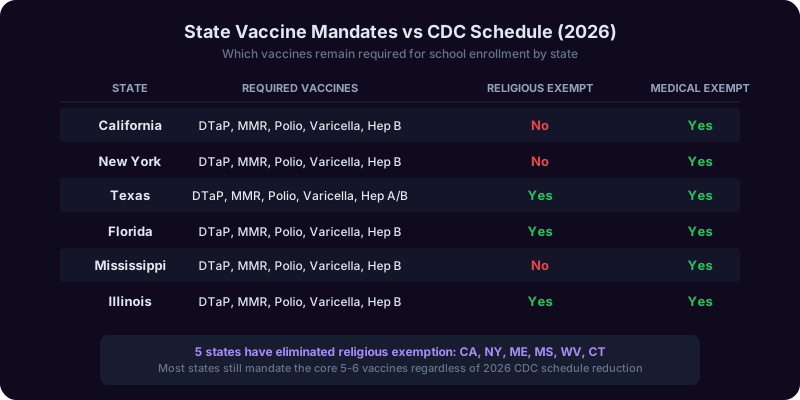
Here is the comparison for the four largest states by population:
| State | Hep B Birth | Rotavirus | RSV | COVID Under 5 | Exemptions Allowed |
|---|---|---|---|---|---|
| California | Required | Not required | Not required | Not required | Medical only |
| Texas | Risk-based 2026 | Not required | Not required | Not required | Medical, religious, philosophical |
| New York | Required | Not required | Not required | Not required | Medical only |
| Florida | Risk-based 2026 | Not required | Not required | Not required | Medical, religious |
Note that rotavirus, RSV, and COVID-19 vaccines have never been school entry requirements in any state. School entry requirements have historically focused on the diseases with classroom transmission risk: MMR, DTaP, polio, varicella, Hib, hepatitis B, and meningococcal in middle school. Of the 2026 changes, only the hepatitis B birth dose has school-entry implications, and only because the birth dose is the start of the three-dose series.
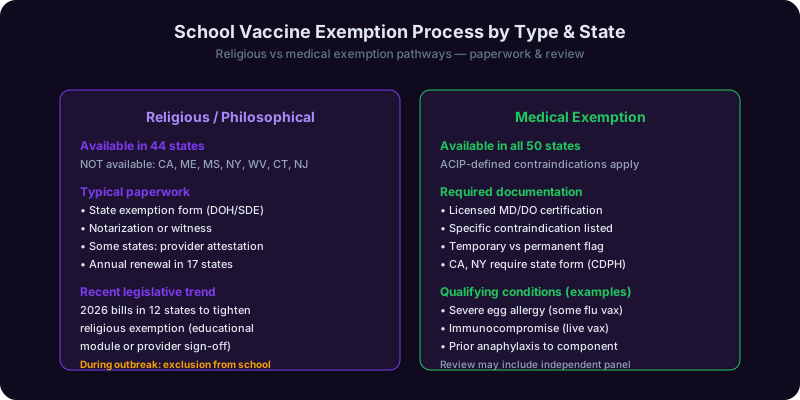
Exemption categories vary by state. As of August 2026, all 50 states allow medical exemptions (signed by a physician). 44 states allow religious exemptions. 15 states allow philosophical or personal-belief exemptions. The five states that allow no non-medical exemptions are California, Connecticut, Maine, Mississippi, and New York. Exemption paperwork requirements vary widely.
If you are considering an exemption, the process matters. Religious exemptions in states like Texas require a notarized affidavit. Medical exemptions require physician signature and typically a specific qualifying condition (anaphylaxis to a vaccine component, severe immunocompromise, etc.). Philosophical exemptions, where available, typically require a state-issued form and attendance at an educational module.
A practical note: even in states that allow non-medical exemptions, schools and daycares often have exclusion policies during outbreaks. If there is a measles, pertussis, or hepatitis A outbreak in your school district, exempted children are typically excluded from school for 21 days or longer. Plan for this possibility. The National Conference of State Legislatures maintains a live tracker, and your state health department website is the authoritative source for your specific requirements.
The Pediatrician Conversation: A 6-Question Framework
The single highest-leverage action you can take in 2026 is to have a structured, well-prepared conversation with your child's pediatrician. The 2026 changes have created unusual variability in what individual pediatricians recommend, and a 15-minute well-child visit is rarely enough time to work through the questions you need answered without a framework. Here is the 6-question framework we recommend.
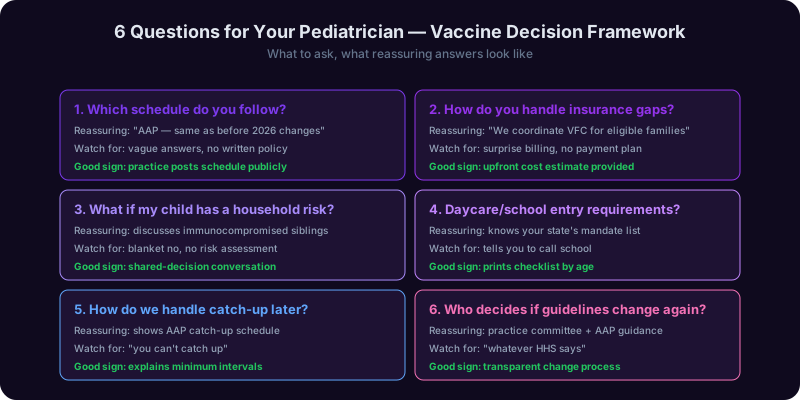
Question 1: Which schedule does your practice follow - CDC 2026, AAP, or hybrid? This is the foundational question. The answer tells you what default recommendations you will hear and what conversations you need to have. A reassuring answer is any clear, consistent answer. A concerning answer is uncertainty or inconsistency between providers in the same practice. If the practice does not have a unified position, ask which individual pediatrician at the practice has the most updated knowledge on the 2026 changes.
Question 2: For each of the six changed vaccines, what is your specific recommendation for my child, and what is your reasoning? The reasoning matters more than the recommendation. A reassuring answer cites specific factors about your child (age, risk profile, family history, daycare attendance, etc.). A concerning answer is a blanket policy applied without considering your child's individual situation. Ask follow-up questions until you understand the reasoning.
Question 3: What is the disease burden in our specific community for each of these diseases? Local epidemiology matters. Hepatitis B prevalence varies 50-fold across U.S. counties. RSV hospitalization rates vary by season and region. Your pediatrician should know or be able to look up the state and county-level surveillance data. A reassuring answer references specific local data. A concerning answer dismisses the question or treats all communities as identical.
Question 4: What does coverage look like for my insurance, and what would out-of-pocket cost be if not covered? The billing office can usually answer this, but the pediatrician should know the practice's billing policies and whether they will work with you on alternative coding for AAP-recommended but non-ACIP vaccines. A reassuring answer offers concrete next steps. A concerning answer treats cost as the parent's problem alone.
Question 5: If we decide to deviate from your recommendation, what is the plan for monitoring and what would change your recommendation in the future? A good pediatric relationship survives disagreement. The answer to this question tells you whether your pediatrician will stay engaged with your child's care if you make a decision they would not have made. A reassuring answer offers a clear monitoring plan and a path back. A concerning answer is hostility or a refusal to continue caring for your child.
Question 6: What documentation will I need for school, daycare, future providers, or international travel? Whatever you decide, the paperwork matters. Schools need vaccination records or exemption forms. Future pediatricians need accurate history. International travel may require proof of specific vaccinations regardless of CDC recommendations. A reassuring answer offers to prepare the specific paperwork.
If, after this conversation, you are not comfortable with your pediatrician's approach, getting a second opinion is reasonable. Our guide on AI-assisted medical second opinions walks through how to structure a second opinion process. For broader conversations, see our parent's guide to kids and AI boundaries.
The Catch-Up Schedule: If You're Behind After 6+ Years of Mixed Messages
If your child is behind on the recommended schedule, you are not alone. CDC surveillance data shows that approximately 23 percent of U.S. children are at least one dose behind by age 6, with the largest gaps in adolescent vaccines (HPV, meningococcal, Tdap booster). The 2026 schedule changes have not affected catch-up principles, which remain based on AAP and CDC catch-up tables that were last updated in 2024.
The good news: most vaccines have wide catch-up windows. Combined vaccines (DTaP, MMR, MMRV) can usually be administered together with no efficacy reduction. The minimum interval between doses of the same vaccine is preserved, but you do not have to restart a series even if years have passed since the previous dose. The phrase to know is 'count the dose, follow the interval' - past doses still count, you just continue from where you stopped.
Spacing safety. The most common parent question on catch-up is whether multiple vaccines can be given in a single visit. The answer, supported by decades of clinical data, is yes. The CDC's General Best Practice Guidelines explicitly state that there is no maximum number of vaccines that can be administered at the same visit, and that simultaneous administration does not reduce efficacy or increase adverse events. If you prefer fewer vaccines per visit for comfort reasons, a spread-out schedule is reasonable but typically requires more visits.
Immunoglobulin testing. For some vaccines, particularly MMR and varicella, you can verify immunity with a titer blood test rather than re-vaccinating. This is helpful when records are lost or you are unsure whether a past dose was effective. Titer tests are typically $50 to $150 each and may or may not be covered by insurance. If immunity is confirmed, no further dose is needed.
The immigration physical requirement. If your child immigrated to the U.S. or is sponsoring an immigrant relative, vaccine requirements for the I-693 medical examination are set by USCIS and follow the ACIP schedule as of the date of the exam. The 2026 changes have already been incorporated into USCIS guidance as of May 2026. If you are planning international travel, particularly to countries with active vaccine-preventable disease outbreaks, the CDC Travelers' Health page is the authoritative source.
Vaccines that were on your child's old schedule but are not on the 2026 schedule. If your child received hepatitis B birth dose, rotavirus, RSV nirsevimab, or COVID under 5 before the schedule changed, those doses are still considered valid, effective, and complete. You do not need to do anything different. The change applies prospectively to new vaccination decisions, not retroactively to past doses.
Practical catch-up workflow. Step 1: get a complete vaccine record from every provider who has ever administered a vaccine to your child (most states have an immunization information system that aggregates this). Step 2: bring the record to a single appointment with your current pediatrician. Step 3: have them generate a customized catch-up schedule that accounts for past doses, your child's current age, and the 2026 recommendations you have chosen to follow. Step 4: schedule the catch-up appointments at the recommended minimum intervals.
For adolescents catching up, the HPV single-dose expansion in 2026 is a significant simplification. If your 15-year-old is unvaccinated, a single dose is now considered an acceptable schedule. For more on adolescent health, see our flu vs cold vs COVID guide.
Risk-Based Decisions: Specific Conditions That Should Raise Your Bar
The 2026 CDC schedule's central premise is a shift toward risk-based, individualized decisions. Whether you agree with that shift or not, the practical reality is that certain conditions in your family meaningfully change the calculus for vaccinating your child. These are the categories where most pediatricians, AAP and CDC alike, recommend the more protective rather than less protective course.
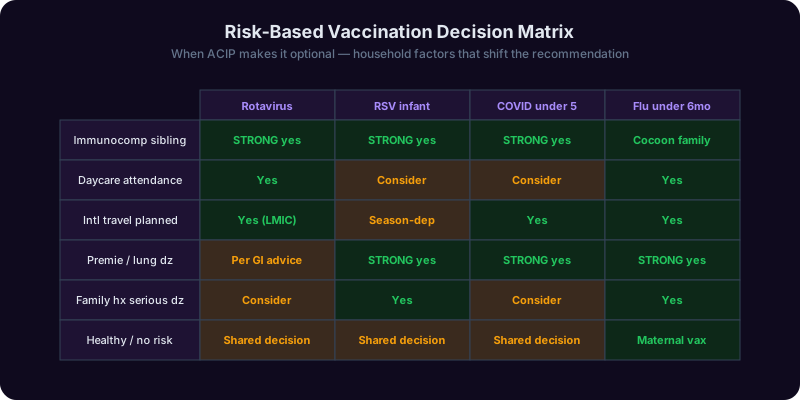
1. Immunocompromised household members. If your child shares a household with a person who is immunocompromised (cancer treatment, organ transplant, congenital immunodeficiency, autoimmune disease on immunosuppressive medication, HIV with low CD4 count), your child's vaccinations are part of the immunocompromised person's protection. This is called cocooning. For these households, the AAP schedule is almost always more appropriate than the reduced CDC schedule. The diseases this most affects are hepatitis B, rotavirus, RSV, and COVID-19. Live vaccines (rotavirus, MMR, varicella) have specific guidance in immunocompromised households that your pediatrician can walk through.
2. Daycare attendance, especially under 12 months. Daycare is a high-transmission environment for nearly all vaccine-preventable diseases. Infants in daycare have 2 to 4 times higher rates of RSV hospitalization, rotavirus gastroenteritis, and respiratory infections compared to home-care infants. If your infant attends daycare, the case for RSV nirsevimab and rotavirus vaccination is substantially stronger than the CDC's shared decision-making framing might suggest.
3. International travel. International travel reintroduces diseases that are rare or absent in the U.S. Measles, hepatitis A, hepatitis B, typhoid, and several others are far more common in many travel destinations. The CDC Travelers' Health page maintains country-specific recommendations that often go beyond the routine schedule. If your family travels internationally, particularly to South Asia, Africa, or parts of South America, the relevant decision-making is the CDC travel recommendations, not the 2026 routine schedule.
4. Family history of vaccine-preventable disease. If a parent or grandparent had chronic hepatitis B and resulting liver disease, your child's individual risk-benefit for hepatitis B vaccination is different from the population average. If a sibling had severe RSV requiring hospitalization, your infant's risk for severe RSV is elevated. Family history of cervical, throat, or anal cancer makes HPV vaccination more important. Discuss family history specifically with your pediatrician.
5. Pregnancy in the household. If a household member is pregnant, your child's vaccinations protect the pregnancy. Rubella infection in a non-immune pregnant person causes congenital rubella syndrome with severe birth defects. Pertussis in a household is the leading source of infant pertussis cases. MMR and Tdap status of all household members matters for any pregnancy.
6. Underlying medical conditions in your child. Congenital heart disease, chronic lung disease, Down syndrome, sickle cell disease, asplenia, chronic kidney disease, diabetes, and HIV all change vaccine recommendations. The 2026 schedule maintains universal recommendation for COVID-19 vaccination in children under 5 with these conditions, and maintains nirsevimab for high-risk infants. Your pediatric subspecialist should be part of the conversation.
7. Prematurity. Infants born before 35 weeks gestation are considered high-risk for RSV and several other respiratory infections. The 2026 schedule maintains universal nirsevimab recommendation for preterm infants entering their first RSV season.
For broader context, our medical second opinions guide can help structure a more thorough evaluation.
What to Document for Future Pediatricians and Schools
Whatever you decide about the 2026 schedule changes, the documentation matters. Future pediatricians, schools, daycares, summer camps, sports teams, colleges, and employers may ask for your child's vaccination records over the next 20 years. Decisions you make now will be referenced repeatedly.
1. Maintain a primary record. The official vaccine record is typically kept by the administering provider, but parents should maintain their own copy. Acceptable formats include the CDC's official immunization record card, your state's immunization information system printout, or your patient portal's exportable record. Update it after every vaccine appointment. Keep both digital and physical copies. The yellow international certificate of vaccination is required for some travel destinations and is separate from the routine record.
2. Document declined vaccines. If you decline a vaccine that your pediatrician recommended, ask for documentation in the medical record that you were offered the vaccine and declined. This protects you and the pediatrician, and it provides clarity for future providers about whether a missing vaccine is a true gap or a deliberate decision. The AAP has a Refusal to Vaccinate form that many practices use.
3. Document the rationale. If your decision is based on a specific reason (medical contraindication, religious belief, the 2026 ACIP change, family history), document that reason in writing. A short letter from you to the pediatrician's office, asking it to be included in the chart, is sufficient. This becomes critical for exemption applications, IEP and 504 plan paperwork, and college enrollment forms.
4. Religious vs medical exemption paperwork. These have different requirements and different consequences. Medical exemptions are signed by a physician and typically reference a specific contraindication (severe allergy to a vaccine component, severe immunocompromise, history of anaphylaxis). They are generally accepted everywhere and rarely challenged. Religious exemptions are signed by the parent and reference a sincere religious belief. They are accepted in 44 states for school but increasingly scrutinized. Philosophical exemptions, where available, are the most likely to be revoked during outbreaks.
5. IEP and 504 considerations. If your child has an Individualized Education Program or 504 plan, immunization status can be relevant to certain accommodations (medically fragile classifications, home-bound education during outbreaks). Discuss with your child's IEP team how the immunization plan integrates with the educational plan.
6. Exemption letter template. Most state health departments publish exemption letter templates. Use the official template rather than crafting your own - schools have rejected non-template letters even when the content was substantively identical. The Copilotly Health Copilot can generate a state-specific exemption letter using your reasoning, but verify the final letter against your state's current template.
7. Annual renewal. Some states require annual renewal of exemptions. Calendar this. A lapsed exemption can result in your child being excluded from school until either the exemption is renewed or the missing vaccines are administered.
8. Future provider transitions. When you change pediatricians, ensure the vaccine record and all documented decisions transfer with the medical record. A simple form requesting medical record transfer should specify 'including immunization record and all related documentation.' Verify after the transition that the new provider has the complete record.
For long-term documentation strategy, see our parent's guide to kids and AI boundaries.
How Copilotly's Health Copilot Helps You Decide and Prepare
Educational only. This is not medical advice. Decisions about vaccination should always be made with your child's pediatrician.
The 2026 vaccine schedule changes have created a uniquely difficult decision environment for parents. The information is technical, the recommendations conflict, the insurance and school implications are state- and plan-specific, and the timeline is moving quickly. Copilotly's Health Copilot was designed to help with exactly this kind of multi-source, individualized decision-making.
Here is how the Health Copilot supports the workflow this guide describes:
1. Risk profile analysis. The Health Copilot integrates your child's age, medical history, family history, household composition (siblings, immunocompromised household members, pregnant household members), daycare or school attendance status, travel plans, and your zip code's local disease epidemiology. It generates a personalized risk-benefit summary for each of the six 2026 vaccine changes, citing the underlying data and clearly distinguishing between AAP and CDC recommendations.
2. Pediatrician question generator. Using the 6-question framework from Section 6 of this guide, the Health Copilot generates a personalized list of questions for your specific pediatrician appointment. The questions reference your child's actual situation rather than generic templates. You can print the list, save it to your phone, or share it ahead of time with your pediatrician's office.
3. Insurance coverage lookup. Enter your insurance carrier and plan name. The Health Copilot pulls the current 2026 coverage status for each of the six changed vaccines, the specific CPT codes that should be billed, and the prior authorization requirements if any. If you have already received an Explanation of Benefits with an unexpected charge, you can upload it for analysis.
4. State requirement summarizer. Enter your state. The Health Copilot pulls your state's current school entry requirements, exemption categories, exemption paperwork requirements, and any pending legislation. This is especially useful for families who have moved or are planning to move.
5. School exemption letter drafting. If you decide an exemption is appropriate for your situation, the Health Copilot drafts the letter using your state's official template and your specific reasoning. The draft is a starting point, not a final document - you should review, edit, sign, and where required notarize before submitting.
6. Catch-up schedule generator. Upload or enter your child's existing vaccination record. The Health Copilot generates a customized catch-up schedule using the AAP or CDC framework you select, the minimum spacing intervals, and the combined vaccine options available at your pediatrician's age range.
7. Documentation organizer. The Health Copilot can structure your child's vaccine record, declined-vaccine documentation, exemption paperwork, and decision rationale into a single exportable file that you can share with new providers, schools, or summer camps as needed.
8. Update notifications. The 2026 schedule is likely to continue evolving. The Health Copilot tracks changes relevant to your child's situation and notifies you when something material changes.
Related capabilities include our second opinion workflow and insurance navigation guide.
Sources: CDC Immunization Schedules, AAP Immunization Policy, NIH MedlinePlus Childhood Immunization, ACIP Recommendations, and AAP HealthyChildren.org.
Frequently Asked Questions
Recommended Copilots
Related Articles
Get Answers From the Health Copilot
Copilotly's Health Copilot analyzes your child's specific risk profile, generates a personalized pediatrician question list, looks up your insurance coverage, and drafts state-specific exemption letters if you need them. Educational support, not medical advice - designed to help you have a better conversation with your pediatrician.