
The GLP-1 Drug Landscape in 2026: What Is Available and What It Costs
The GLP-1 receptor agonist market has expanded significantly since semaglutide first gained mainstream attention in 2022. Understanding which drugs are available, what they are approved for, and their list prices is the foundation for finding affordable access. As of mid-2026, the primary GLP-1 medications prescribed for weight management are:
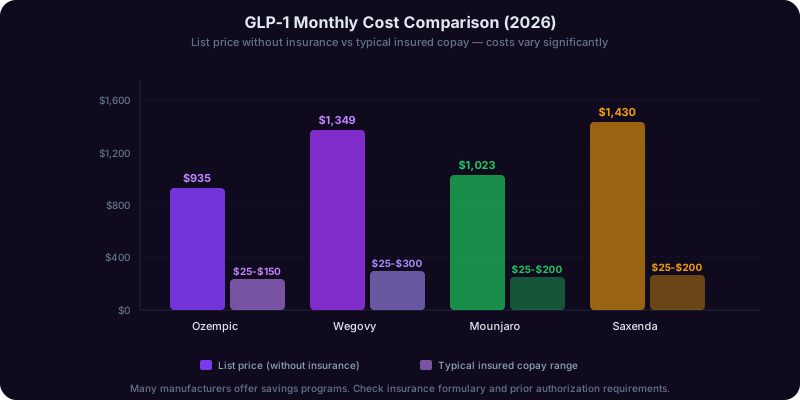
- Semaglutide (Wegovy) -- Manufactured by Novo Nordisk, FDA-approved specifically for chronic weight management. Weekly injection. Maximum dose 2.4 mg. List price: $1,349/month.
- Semaglutide (Ozempic) -- Same molecule as Wegovy, FDA-approved for type 2 diabetes but widely prescribed off-label for weight loss. Weekly injection. Maximum dose 2.0 mg. List price: $935/month.
- Tirzepatide (Zepbound) -- Manufactured by Eli Lilly, FDA-approved for weight management. Dual GIP/GLP-1 receptor agonist. Weekly injection. Doses from 2.5 mg to 15 mg. List price: $1,060/month.
- Tirzepatide (Mounjaro) -- Same molecule as Zepbound, FDA-approved for type 2 diabetes. Weekly injection. List price: $1,023/month.
- Oral semaglutide (Rybelsus) -- Daily pill form approved for type 2 diabetes. Lower bioavailability than injections. List price: $936/month.
- Liraglutide (Saxenda) -- Daily injection for weight management. Older, less effective than semaglutide but still prescribed when newer options are unavailable. List price: $1,430/month.
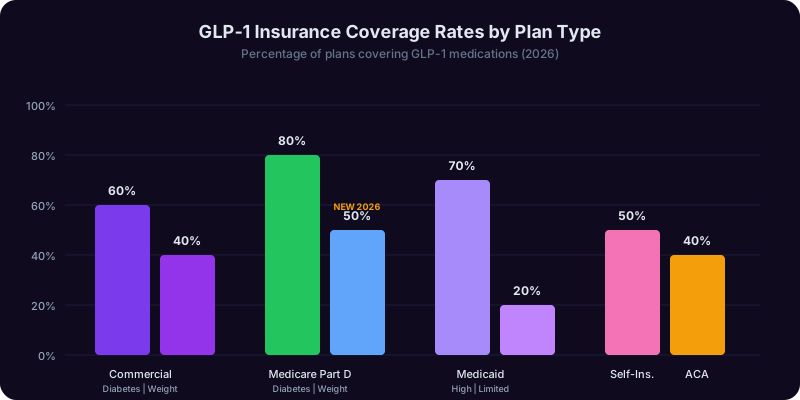
The critical distinction for affordability is between FDA-approved indication and off-label use. Insurance companies are far more likely to cover a medication for its FDA-approved indication. Ozempic for diabetes has better coverage than Ozempic prescribed off-label for weight loss. Wegovy and Zepbound carry FDA weight management approvals, giving them a clearer path to obesity coverage, but many plans still exclude weight loss medications entirely.
A 2025 KFF analysis found that only about 25% of large employer plans covered GLP-1 medications for weight loss. Medicare Part D historically excluded weight loss drugs entirely, but that changed with the TREAT Act and subsequent CMS guidance in 2025-2026. For a deeper understanding of how these drugs work and their side effect profiles, see our complete GLP-1 side effects guide.
The bottom line: without insurance coverage, manufacturer assistance, or alternative sourcing, GLP-1 medications cost $11,000 to $17,000 per year out of pocket. The rest of this guide is about closing that gap.
This article is for informational purposes only and does not constitute medical advice. Always consult a qualified healthcare professional before starting, stopping, or changing any medication. Pricing reflects publicly available list prices as of mid-2026 and may vary by pharmacy, region, and insurance plan.
Insurance Coverage Strategies: Getting Your Plan to Pay
Insurance coverage for GLP-1 medications varies enormously depending on your plan type, your diagnosis, and how your prescriber submits the claim. The difference between a $25 copay and a $1,349 monthly bill often comes down to strategy.
Step 1: Know Your Formulary
Every insurance plan has a formulary -- a list of covered drugs organized into tiers. GLP-1 medications, when covered, are almost always on Tier 4 (specialty) or Tier 5 (non-preferred specialty), meaning higher copays and prior authorization requirements. Call the number on your insurance card and ask: (1) Is semaglutide or tirzepatide on your formulary? (2) For which diagnoses? (3) What tier? (4) What is the copay? (5) Is prior authorization required? Document answers including the representative's name and date. The Insurance Copilot can help you prepare these questions and interpret responses.
Step 2: Get the Right Diagnosis Codes
The ICD-10 codes your doctor uses matter enormously. Codes that improve coverage odds include:
- E66.01 -- Morbid obesity due to excess calories (BMI 40+ or 35+ with comorbidities)
- E66.09 -- Other obesity due to excess calories
- E11.x -- Type 2 diabetes (for Ozempic or Mounjaro specifically)
- E78.x -- Disorders of lipoprotein metabolism
- I10 -- Essential hypertension
If you have type 2 diabetes or prediabetes, Ozempic and Mounjaro are significantly easier to get covered because they carry FDA diabetes approvals.
Step 3: Document Failed Alternatives (Step Therapy)
Most insurers require step therapy -- proof that you tried cheaper alternatives first. Common required steps include 3-6 months of a structured diet/exercise program, trials of metformin, phentermine, bupropion-naltrexone (Contrave), or orlistat. Make sure your medical records reflect each attempt with specific dates, duration, and outcomes. For detailed guidance on step therapy, see our insurance denial appeal guide.
Step 4: Leverage Employer Advocacy
If you have employer-sponsored insurance, your HR department has more influence than you might think. Self-insured employers can modify their formulary. A 2025 analysis in Health Affairs estimated that employers save $2,100 to $4,200 per treated employee per year in reduced comorbidity costs when covering GLP-1 medications.
Document everything in writing. Follow up phone calls with emails summarizing what was discussed. Create a paper trail that supports an appeal if your initial claim is denied.
The Medicare GLP-1 Bridge Program: $50/Month Access for Seniors
The single biggest development in GLP-1 affordability for 2026 is the Medicare GLP-1 Bridge program, enacted following the Treat and Reduce Obesity Act (TREAT Act) and subsequent CMS implementation guidance. For decades, Medicare Part D explicitly excluded coverage for weight loss medications. That exclusion has now been partially lifted, creating a pathway for millions of Medicare beneficiaries to access GLP-1 medications at dramatically reduced cost.
How the Program Works
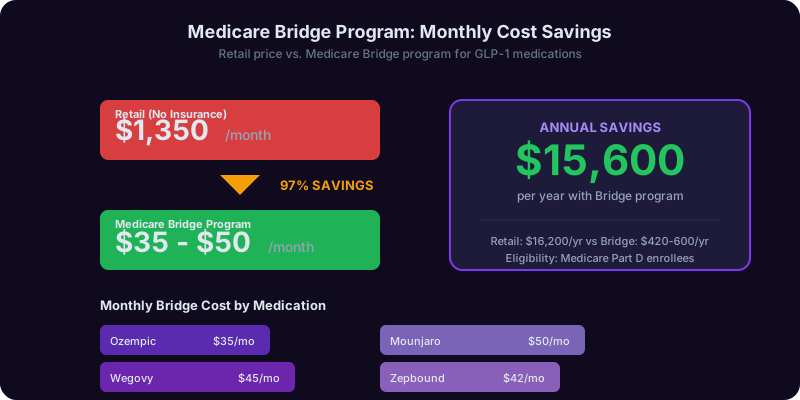
The Bridge program allows Part D plans to cover FDA-approved anti-obesity medications -- including Wegovy and Zepbound -- for beneficiaries who meet specific criteria. Eligible patients pay a capped copay of $35 to $50 per month, saving over $1,000/month compared to list price. Eligibility criteria include:
- BMI of 30+ (obese), OR BMI 27+ with at least one weight-related comorbidity (type 2 diabetes, hypertension, dyslipidemia, sleep apnea, cardiovascular disease, or osteoarthritis)
- Documentation of a weight management counseling visit within the prior 12 months
- Prescription from a qualified healthcare provider
- Enrollment in a Part D plan that has opted into the Bridge program
Approximately 60% of Part D plans have opted in as of mid-2026. Check whether your plan participates at Medicare Plan Compare or by calling 1-800-MEDICARE.
Key Limitations
- Coverage gap: Once total drug costs exceed the initial coverage limit ($5,030 in 2026), cost-sharing increases. However, the Inflation Reduction Act's $2,000 annual out-of-pocket cap on Part D limits total exposure.
- Prior authorization: Most plans require it even under the Bridge program. Plan for a 2-4 week approval process.
- Duration limits: Certain plans limit initial approval to 6-12 months, requiring reauthorization with documented clinical response (typically 5%+ weight loss).
How to Enroll
- Verify your plan participates via Medicare Plan Compare or your Part D plan directly.
- Schedule a weight management counseling visit with your primary care provider to create required clinical documentation.
- Submit prior authorization with complete documentation: BMI history, comorbidities, prior weight management attempts, and the specific medication requested.
- If denied, appeal immediately. The first-level appeal must be filed within 60 days. Include a letter of medical necessity. For step-by-step guidance, see our insurance denial appeal guide.
If you are a Medicare beneficiary with a BMI over 27 and any weight-related condition, this program could save you over $15,000/year. The Insurance Copilot can walk you through enrollment and help prepare prior authorization documentation.

Get Answers From the Health Copilot
Use the Insurance Copilot to check formulary coverage, find savings programs, and draft appeal letters. The Health Copilot helps you prepare clinical documentation for prior authorization.
Manufacturer Coupons, Savings Cards, and Patient Assistance Programs
Both Novo Nordisk (Ozempic, Wegovy) and Eli Lilly (Mounjaro, Zepbound) operate savings programs that can dramatically reduce out-of-pocket costs. Programs change frequently, so always verify current terms directly with the manufacturer.
Novo Nordisk Programs
Wegovy Savings Card: For commercially insured patients whose plan covers Wegovy, copays as low as $0 for the first 3 months, then $25/month for up to 24 months. Maximum savings of $500 per 28-day supply. Not available to government insurance beneficiaries.
Ozempic Savings Card: Copays as low as $25/month for up to 24 months, with maximum savings of $300 per 28-day supply.
Novo Nordisk Patient Assistance Program (PAP): For uninsured patients with income at or below 400% of the Federal Poverty Level (~$62,400 single, ~$128,640 family of four in 2026), GLP-1 medications at no cost. Requires proof of income, proof of no insurance, and a valid prescription. Processing takes 4-6 weeks. Apply through NovoCare or call 1-866-310-7549.
Eli Lilly Programs
Zepbound Savings Card: Commercially insured patients with coverage pay as low as $25/month. For patients whose plan does not cover Zepbound, Lilly has offered self-pay pricing at $399/month for single-dose vials and $549/month for autoinjector pens -- a 60-65% discount off list price.
Mounjaro Savings Card: Copays as low as $25/month with maximum savings of $573 per 28-day supply for up to 24 months.
Lilly Cares Foundation: Mounjaro and Zepbound at no cost to uninsured patients below 400% FPL. Apply through LillyCares.com or call 1-800-545-6962.
Maximizing Savings Card Value
- Stack with insurance: If your plan covers the drug with a $300/month copay, the savings card reduces it to $25. The card pays the difference.
- Time your enrollment: Some cards reset annually. Ask about timing when you apply.
- Request bridge supplies: While prior authorization is pending, manufacturer reps can sometimes provide a 30-day supply at no cost.
- Check quarterly: Programs update frequently. What was unavailable three months ago may exist now.
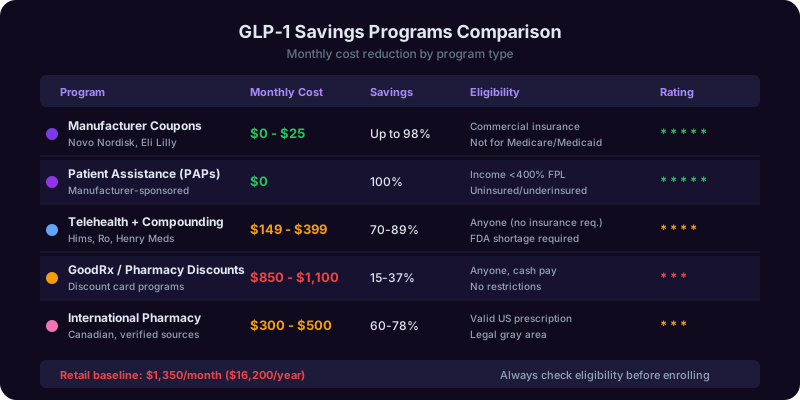
Important: Manufacturer savings cards are not available to patients on Medicare, Medicaid, TRICARE, or other government programs due to the federal Anti-Kickback Statute. Medicare beneficiaries should focus on the GLP-1 Bridge program. For help navigating the overlap between manufacturer programs and insurance, our health insurance guide covers how copay assistance interacts with deductibles and out-of-pocket maximums.
Telehealth Platforms, GoodRx Pricing, and Compounded Semaglutide
Beyond insurance and manufacturer programs, a growing ecosystem of telehealth platforms, pharmacy discount tools, and compounding pharmacies serves the demand for affordable GLP-1 access.
Telehealth Weight Loss Platforms
Several telehealth companies offer GLP-1 prescriptions with bundled medical consultations:
- Ro: Wegovy and compounded semaglutide. $145-$499/month including provider visits. Accepts some commercial insurance for branded medication.
- Hims & Hers: Compounded semaglutide and tirzepatide. Starting at $199/month including consultations, lab monitoring, and medication.
- Found: Branded GLP-1s with insurance coordination. $99/month membership for clinical support; medication costs handled through insurance separately.
- Calibrate: Year-long metabolic health program. $1,500-$1,800/year (excluding medication), with insurance coordination for the GLP-1.
- PlushCare / Amazon One Medical: General telehealth where providers prescribe GLP-1s. Visit fees $0-$99 depending on insurance.
The key advantage: these providers handle GLP-1 prescribing daily and are often more efficient at navigating prior authorization than a general practitioner.
GoodRx and Pharmacy Discount Cards
GoodRx aggregates pricing from thousands of pharmacies. Typical GoodRx prices as of mid-2026: Ozempic $800-$900/month, Wegovy $1,200-$1,300/month, Mounjaro $950-$1,000/month. These savings are modest (saving $25-$150 off list) because discount cards have limited leverage against brand-name biologics with no generic competition. Still worth checking -- the same drug can cost $200 more at one chain versus another.
Compounded Semaglutide: Lower Cost, Higher Risk
Compounding pharmacies create custom formulations of drugs on the FDA drug shortage list. While semaglutide was listed (roughly 2023-2024), compounders legally produced it at $150-$500/month. As of 2026, the legal landscape is shifting as the brand-name shortage resolves. Key considerations:
- Quality variability: Compounded drugs are not FDA-approved. The FDA has issued warnings about products with incorrect dosing or contamination.
- Legal status: If semaglutide leaves the shortage list, 503A pharmacies must stop compounding it. 503B outsourcing facilities face similar restrictions.
- Salt form issues: Some compounders use semaglutide sodium salt rather than the semaglutide base in Ozempic/Wegovy. The FDA has stated these are not the same active ingredient.
If you choose compounded semaglutide, verify the pharmacy is a 503B outsourcing facility registered with the FDA and provides a Certificate of Analysis for each batch. The Medication Copilot can help you evaluate branded versus compounded tradeoffs.
Prior Authorization Tips and Appeal Strategies for GLP-1 Denials
Prior authorization is the most common barrier between a GLP-1 prescription and filling it. A 2025 AMA survey found that 94% of physicians reported prior authorization delays access to necessary medications, and GLP-1s are among the most frequently denied drug classes. But appeals succeed far more often than patients realize.
Getting Approved the First Time
Many denials result from incomplete paperwork, not clinical disagreement. A complete prior authorization package should include:
- Letter of medical necessity referencing the patient's BMI history, weight-related comorbidities with ICD-10 codes, and clinical rationale for this specific GLP-1.
- Documentation of failed alternatives with specific dates, duration, and outcomes for each.
- Supporting lab work: A1C, lipid panels, fasting glucose, liver function, thyroid panel.
- Clinical trial citations -- the STEP trials (semaglutide) and SURMOUNT trials (tirzepatide) are gold standards.
- BMI calculation documentation: Height, weight, date measured, and resulting BMI. Some denials occur simply because BMI was not explicitly calculated.
The Appeal Process When Denied
According to CMS data, appeal success rates for GLP-1 denials range from 40% to 65%. Here is the multi-level process:
Level 1: Internal appeal. You have 30-60 days. Specifically address the denial reason. If the denial says "not medically necessary," argue necessity with clinical evidence. If it says "step therapy not completed," provide documentation or argue why step therapy should be waived.
Level 2: Peer-to-peer review. Your prescriber speaks directly with the insurer's medical director. This is often the most effective step -- it moves the conversation from clerical to clinical. Prepare your doctor with talking points: patient history, failed alternatives, and relevant trial data.
Level 3: External review. An independent third-party physician reviews the case. External review approval rates tend to be higher because the reviewer applies clinical evidence standards rather than cost-containment criteria.
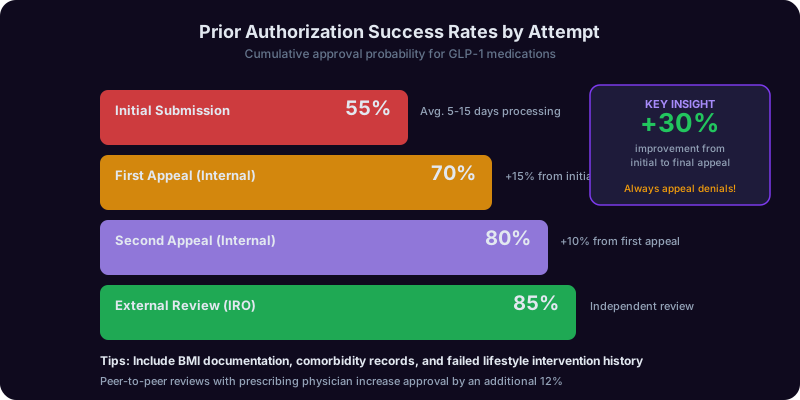
A strong appeal frames the medication as preventing expensive downstream care: "Covering this $1,060/month medication prevents claims that typically exceed $50,000 per cardiovascular event." For templates and step-by-step instructions, see our comprehensive insurance appeal guide. The Insurance Copilot can draft appeal letters tailored to your specific denial reason.
Lifestyle Alternatives and Complementary Approaches
Not everyone can access or afford GLP-1 medications, and not everyone needs them. For individuals with BMIs in the 27-35 range without severe comorbidities, evidence-based lifestyle interventions can produce meaningful weight loss. For those on GLP-1s, lifestyle changes improve outcomes and help preserve results if the medication is eventually discontinued.
Evidence-Based Dietary Approaches
The most consistent finding in nutrition research is that no single diet is superior -- adherence over time matters most. Approaches with strong evidence include:
- High-protein diets (1.2-1.6 g/kg/day): A 2024 meta-analysis in The American Journal of Clinical Nutrition confirmed that higher protein improves satiety, preserves lean mass, and slightly increases thermogenesis. This is the single most impactful dietary modification for weight management.
- Mediterranean diet: Consistently associated with reduced cardiovascular risk and sustainable weight management. The PREDIMED trial demonstrated metabolic benefits sustained over 5+ years.
- Time-restricted eating: A 2023 New England Journal of Medicine review found 16:8 or 14:10 patterns produce weight loss comparable to continuous calorie restriction at 12 months.
Exercise for Weight Management
Exercise alone produces modest weight loss (2-5% of body weight) but is critical for maintenance and metabolic health:
- Resistance training 2-3x/week: A 2024 study in Obesity found structured resistance training preserved 90% more lean mass in semaglutide patients versus non-exercisers.
- 150-300 minutes/week moderate aerobic activity: The Physical Activity Guidelines for Americans recommend this range. For maintenance, 300 minutes is more effective.
- Daily NEAT: Walking more, stairs, standing desks. NEAT can account for 200-900 calories/day.
Supplements: Realistic Expectations
No supplement replicates GLP-1 effects, despite marketing claims. A few have modest evidence:
- Fiber supplements (glucomannan, psyllium): Modest weight loss in trials (1-3 kg over placebo at 12 weeks).
- Berberine: Sometimes called "nature's Ozempic" on social media, but misleading -- a 2023 meta-analysis found only 1-2 kg weight loss over 12 weeks versus placebo.
- Green tea extract (EGCG): Slight thermogenic effect, meaningful only at high doses with modest results.
None should be considered alternatives for patients with severe obesity or comorbidities. They may serve as complementary strategies. The Nutrition Copilot and Fitness Copilot can create customized programs based on your goals and current fitness level.
Cost Comparison and Your Action Plan for Affordable Access
The monthly cost of GLP-1 therapy varies from $0 to $1,430 depending on your access pathway.
Annual Cost by Access Pathway
| Pathway | Monthly | Annual | Who Qualifies |
| Manufacturer PAP | $0 | $0 | Uninsured, below 400% FPL |
| Insurance + savings card | $0-$25 | $0-$300 | Commercial insurance covering drug |
| Medicare GLP-1 Bridge | $35-$50 | $420-$600 | Part D, BMI 30+ or 27+ w/comorbidity |
| Telehealth + compounded | $150-$350 | $1,800-$4,200 | Anyone with qualifying Rx |
| Zepbound self-pay | $399-$549 | $4,788-$6,588 | Commercial ins. without coverage |
| Insurance high copay | $200-$500 | $2,400-$6,000 | Commercial, specialty tier |
| GoodRx cash price | $800-$1,300 | $9,600-$15,600 | Anyone (minimal GLP-1 savings) |
| Full retail | $935-$1,430 | $11,220-$17,160 | Anyone |
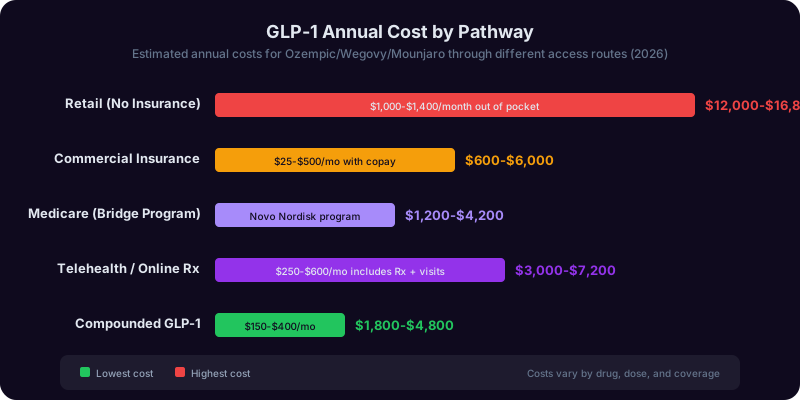
Factor in hidden costs: prescriber visits ($100-$300 each, 2-4/year), lab monitoring ($200-$600/year -- see our blood test guide), protein supplements ($50-$100/month), and gym ($0-$60/month). Context matters: untreated obesity costs an estimated $11,856/year in medical expenses (JAMA Network Open, 2024), and cardiovascular hospitalizations exceed $50,000 each. For existing medical bills, our medical bill dispute guide covers negotiation strategies.
Your Action Checklist
- Check your insurance formulary for GLP-1 coverage and prior authorization requirements
- Verify Medicare GLP-1 Bridge eligibility if on Part D
- Visit manufacturer websites for current savings card and PAP programs
- Schedule a prescriber appointment with complete medical documentation
- Apply for manufacturer savings card before filling the prescription
- If denied, file a formal appeal within 30-60 days
- Request a peer-to-peer review between your prescriber and the insurer's medical director
- Explore telehealth platforms if traditional access is limited
- Evaluate compounded options only from FDA-registered 503B facilities
- Start resistance training and high-protein nutrition from day one
The Insurance Copilot can decode your formulary and draft appeal letters. The Health Copilot organizes clinical documentation for prior authorization. The Medication Copilot compares semaglutide versus tirzepatide based on your profile and cost constraints. The Nutrition Copilot and Fitness Copilot build the lifestyle foundation that maximizes treatment benefit. For related strategies, see our guides on AI insurance comparison and affordable healthcare options.
Disclaimer: This article provides general health and financial information for educational purposes only. It does not constitute medical, legal, or financial advice. Verify current details with manufacturers, insurers, and providers. Consult a healthcare professional before starting any medication.
Frequently Asked Questions
Recommended Copilots
Recommended Copilots
Organize medical history and track GLP-1 treatment progress for prior authorization and clinical monitoring
Try Free →Navigate formulary coverage, GLP-1 Bridge eligibility, savings programs, and draft insurance appeal letters
Try Free →Compare GLP-1 medication options, check drug interactions, and evaluate branded versus compounded tradeoffs
Try Free →Build high-protein meal plans that preserve lean mass during GLP-1 weight loss on reduced appetite
Try Free →Design resistance training programs to prevent muscle loss while losing weight on GLP-1 medications
Try Free →Related Articles
Get Answers From the Health Copilot
Use the Insurance Copilot to check formulary coverage, find savings programs, and draft appeal letters. The Health Copilot helps you prepare clinical documentation for prior authorization.