

Americans Are Overpaying for Insurance by Thousands Every Year
Insurance is the largest recurring expense most households never actively manage. According to the Insurance Information Institute (III), the average American household spent approximately $22,000 on insurance premiums in 2025, broken down roughly as follows: health insurance at $8,400 (employee share of employer-sponsored plans) to $16,000+ (ACA marketplace family plan), auto insurance at $2,300 per vehicle, homeowners insurance at $2,200, and life insurance at $400-$1,200 depending on coverage. These numbers have increased 8-12% annually since 2022.
The problem is not that insurance is expensive. The problem is that most people choose a plan once and never revisit it. A 2025 survey by J.D. Power found that 61% of policyholders had not compared their current coverage to alternatives in over two years. Among those who did compare, 42% found a better deal, saving an average of $1,100 on auto insurance and $800-$2,400 on health insurance annually.
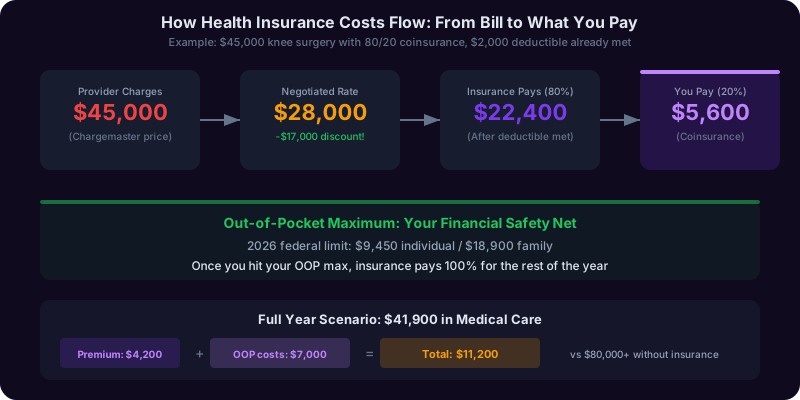
Why do people stick with suboptimal coverage? Because insurance is deliberately difficult to compare. Policies use different terminology for the same concepts, bury critical exclusions in 40-page documents, and structure deductibles, copays, and coinsurance in ways that make apples-to-apples comparison nearly impossible without expertise. This is exactly where AI excels - reading and analyzing full policy documents in seconds, extracting the terms that affect your costs, and presenting side-by-side comparisons in plain language.
| Insurance Type | Average Annual Premium | Typical Savings From Switching | % Who Never Compare |
|---|---|---|---|
| Health (employer plan) | $8,400 (employee share) | $800-$2,400 | 73% |
| Health (ACA marketplace) | $7,200-$16,800 (family) | $1,200-$4,800 | 55% |
| Auto | $2,300 per vehicle | $400-$1,100 | 58% |
| Homeowners | $2,200 | $300-$900 | 65% |
| Life (term, 20-year) | $400-$1,200 | $100-$500 | 71% |
The total savings opportunity for a household that actively compares across all insurance types is $2,800-$9,700 per year. Over a decade, that is $28,000-$97,000 that could go toward an emergency fund, retirement savings, or debt payoff.
Disclaimer: This guide provides general information about insurance comparison strategies. It is not insurance, legal, or financial advice. Coverage needs vary by individual and state. Consult a licensed insurance professional for guidance on your specific situation.
Health Insurance: Comparing ACA Marketplace, Employer, and Off-Exchange Plans
Health insurance is the most expensive and most confusing insurance product most people buy. Getting this one right can save or cost you thousands of dollars and determine whether a major illness becomes a financial catastrophe.
The Three Main Sources
Employer-sponsored plans cover approximately 156 million Americans. Your employer typically pays 70-83% of the premium. The average employee contribution in 2026 is roughly $7,000 for single coverage and $21,000 for family coverage (before the employer subsidy). Most employers offer 2-4 plan options during open enrollment.
ACA Marketplace plans (via HealthCare.gov or state exchanges) serve approximately 21 million enrollees. Premium subsidies are available for households earning up to 400% of the federal poverty level. Without subsidies, a benchmark Silver plan for a 40-year-old costs approximately $500-$650/month. With subsidies, many enrollees pay under $100/month.
Off-exchange plans are purchased directly from insurers and do not qualify for premium tax credits. These are primarily used by higher-income individuals who want access to broader provider networks.
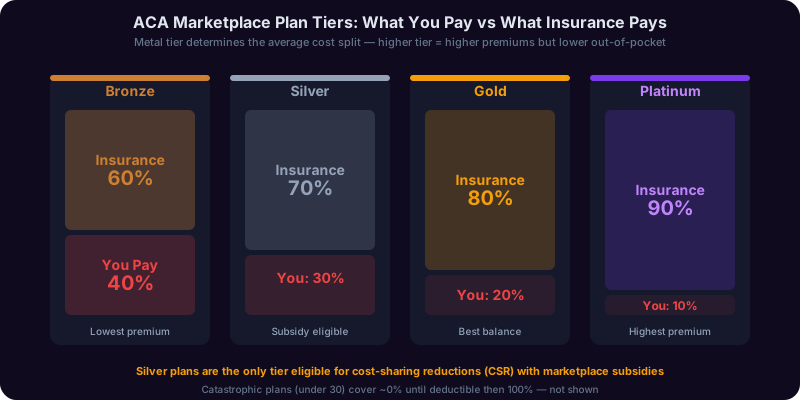
The Metal Tier System
| Tier | Insurer Pays | You Pay | Typical Deductible | Best For |
|---|---|---|---|---|
| Bronze | 60% | 40% | $7,000-$8,000 | Healthy, rarely use care |
| Silver | 70% | 30% | $4,000-$6,000 | Moderate use, subsidy-eligible |
| Gold | 80% | 20% | $1,500-$3,000 | Regular prescriptions, specialists |
| Platinum | 90% | 10% | $0-$500 | Chronic conditions, frequent care |
What AI Does That Comparison Websites Cannot
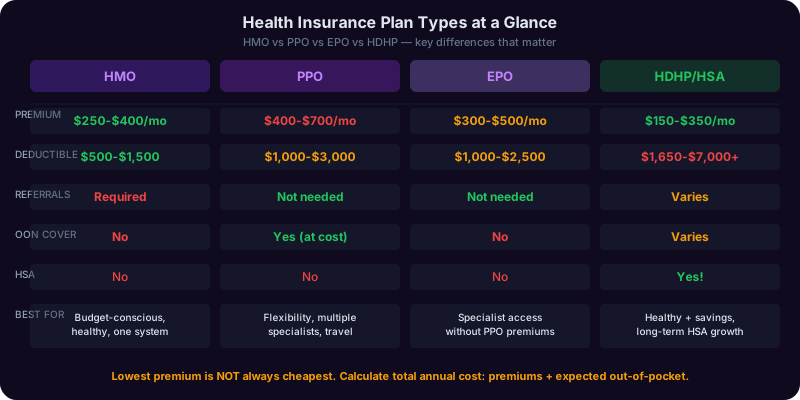
- Total cost modeling: Feed AI your expected healthcare usage and it calculates the true annual cost of each plan including premiums, deductibles, copays, and coinsurance.
- Formulary analysis: AI checks whether your specific medications are covered and at what tier. A single drug moving from Tier 2 to Tier 3 can cost $1,500-$3,000 more per year.
- Provider network verification: Upload your list of doctors and AI verifies whether each is in-network for every plan you are considering.
- Fine-print extraction: AI reads the full Summary of Benefits and Coverage and flags unusual exclusions, prior authorization requirements, and step therapy protocols.
If you are navigating medical bills alongside insurance decisions, our guide on how to dispute a medical bill covers strategies for reducing what you owe. The Insurance Copilot can model the total annual cost of each plan option based on your medications, doctors, and expected usage.
Auto Insurance: Finding Real Savings Without Sacrificing Coverage
Auto insurance is the product where comparison shopping pays off the most dramatically. The National Association of Insurance Commissioners (NAIC) reports that premiums for identical coverage from different insurers can vary by 200-300% in the same ZIP code. The average annual auto insurance premium reached $2,314 in 2025, up 22% from 2022. In high-cost states like Michigan, Florida, and Louisiana, average premiums exceed $3,000.
The Six Coverages You Need to Understand
| Coverage | What It Covers | Required? | Recommended Minimum |
|---|---|---|---|
| Bodily injury liability | Injuries you cause to others | Yes (most states) | 100/300 |
| Property damage liability | Damage to others' property | Yes (most states) | $100,000 |
| Collision | Your car in an accident | No (unless financed) | $500-$1,000 deductible |
| Comprehensive | Theft, weather, vandalism | No (unless financed) | $500-$1,000 deductible |
| Uninsured motorist | Other driver has no insurance | Varies by state | Match liability limits |
| Medical payments / PIP | Your medical costs | Varies by state | $5,000-$10,000 |
Discounts Most Drivers Miss
Insurers offer dozens of discounts but rarely apply them automatically. The most commonly missed:
- Bundling (15-25%): Combining auto and home or renters insurance with the same carrier.
- Telematics/usage-based (10-40%): Programs like Progressive Snapshot and State Farm Drive Safe can reduce premiums by 20-40% for safe, low-mileage drivers.
- Low mileage (5-15%): Driving under 7,500-10,000 miles per year. Remote workers often qualify.
- Defensive driving course (5-10%): State-approved courses, typically valid for 3 years.
- Good student (5-15%): Drivers under 25 with a B average or better.
- Professional organization (3-10%): Military, alumni, and professional memberships.
How AI Compares Auto Policies
When you upload your auto policy declarations page to an AI tool, it extracts your coverage limits, deductibles, premiums, and applied discounts, then identifies coverages where you are over-insured, areas where you are dangerously under-insured, discounts you qualify for but are not receiving, and whether your deductible-to-premium ratio is optimal. Raising your deductible from $500 to $1,000 typically saves 15-20% on collision and comprehensive premiums. The Insurance Copilot can analyze your declarations page and identify where you are overpaying or under-covered.

Get Answers From the Insurance Copilot
Upload your policy documents and get an instant analysis of coverage gaps, hidden exclusions, and savings opportunities across health, auto, home, and life insurance.
Homeowners and Renters Insurance: Coverage Gaps That Could Ruin You
Homeowners insurance is deceptively complex. Most policyholders believe they are fully covered until they file a claim and discover their policy excludes the exact event that damaged their home. The average homeowners premium in 2025 was $2,230, varying from $1,200 in Vermont to over $4,500 in Florida and Louisiana. Premiums have risen 30-40% since 2020 in disaster-prone states.
Standard Coverages in a Homeowners Policy
| Coverage | What It Protects | Common Limit |
|---|---|---|
| Dwelling (A) | Structure of your home | Rebuild cost (NOT market value) |
| Other Structures (B) | Detached garage, fence, shed | 10% of dwelling |
| Personal Property (C) | Your belongings | 50-70% of dwelling |
| Loss of Use (D) | Temporary housing | 20-30% of dwelling |
| Personal Liability (E) | Injury lawsuits | $100K-$300K |
| Medical Payments (F) | Minor guest injuries | $1,000-$5,000 |
Exclusions That Catch People Off Guard
- Flood damage: Standard policies do not cover flooding. A separate NFIP or private flood policy is required ($900/year average). FEMA reports that 40% of flood claims come from outside designated high-risk zones.
- Earthquake damage: Excluded in standard policies. In California, CEA policies cost $800-$3,000/year.
- Sewer and drain backup: Typically excluded unless you add an endorsement ($50-$100/year). One of the most common and costly claims.
- Mold remediation: Most policies cap mold at $5,000-$10,000 or exclude it entirely. Remediation can cost $10,000-$30,000.
- Home business equipment: Standard policies may limit business equipment to $2,500.
- Replacement cost vs. actual cash value: An ACV policy deducts depreciation, meaning your 5-year-old roof is valued at a fraction of replacement cost. Always confirm you have replacement cost coverage.
Renters Insurance: Underrated and Underused
Only 57% of renters carry renters insurance, despite it costing just $15-$30/month. It covers personal belongings against theft, fire, and water damage, provides $100,000-$300,000 in liability protection, and pays for temporary housing if your apartment becomes uninhabitable. Your landlord's insurance covers the building, not your stuff. At $180-$360/year, it is one of the best deals in insurance.
The Insurance Copilot can read your full policy and flag every exclusion and sub-limit. If you are buying your first home, our guide on first-time home buyer mistakes covers how insurance fits into the purchase process.
Life Insurance: Term vs. Permanent and How Much You Actually Need
Life insurance is the product people avoid thinking about, which is why they often buy the wrong type, the wrong amount, or pay too much. Confused buyers are easier to upsell into expensive permanent policies when a simple term policy would serve them better.
Term Life Insurance: What Most People Need
Term life is straightforward: you pay a fixed premium for a fixed period (10, 20, or 30 years), and if you die during that term, your beneficiaries receive the death benefit. Current rates for a healthy, non-smoking 35-year-old on a 20-year term:
| Coverage Amount | Monthly Premium (Male) | Monthly Premium (Female) | Annual Cost |
|---|---|---|---|
| $250,000 | $18-$25 | $14-$20 | $168-$300 |
| $500,000 | $28-$38 | $22-$30 | $264-$456 |
| $1,000,000 | $45-$65 | $35-$50 | $420-$780 |
The premium difference between companies for the same coverage can be 40-60%. Over 20 years, a $20/month difference on a $500,000 policy is $4,800 in unnecessary cost.
Permanent Life Insurance: Limited Use Cases
Whole life and universal life provide lifetime coverage with a cash value component. They cost $300-$600/month for the same $500,000 of coverage that costs $30/month as term. Permanent insurance makes sense only for estate planning (estates exceeding $13.61 million), business succession funding, special needs trust planning, or guaranteed insurability with existing medical conditions.
For everyone else: buy term and invest the difference. A $500,000, 20-year term policy at $30/month plus investing the $270/month difference in an index fund averaging 8% returns grows to approximately $160,000 over 20 years.
How Much Coverage Do You Need?
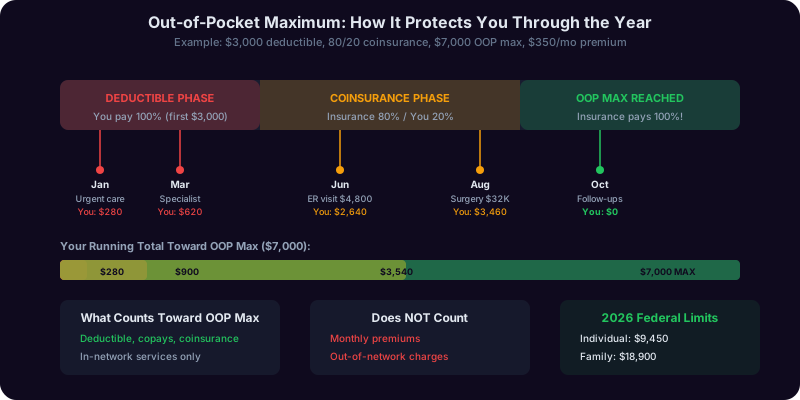
The standard recommendation is 10-12 times annual income, but a precise calculation includes:
- Income replacement: Annual salary multiplied by years until your youngest child is financially independent
- Debt payoff: Outstanding mortgage, student loans, car loans, credit card debt
- Future expenses: College tuition ($25,000-$60,000/year for 4 years), childcare costs
- Final expenses: Funeral and burial average $8,000-$12,000
- Subtract existing assets: Savings, employer life insurance, spouse income, Social Security survivor benefits
AI tools run this calculation instantly using your specific financial inputs and model multiple scenarios to determine optimal coverage. The Finance Copilot can calculate exactly how much life insurance you need based on your debts, dependents, income, and existing assets.
How to Read Insurance Fine Print and Spot Hidden Exclusions
Insurance policies are legal contracts written to protect the insurance company. The average health insurance policy spans 80-120 pages, homeowners policies run 40-60 pages, and auto policies are 20-30 pages of dense legal language. Most policyholders never read past the declarations page, which is where claims denial problems begin.
Common Exclusions That Surprise Policyholders
| Insurance Type | Common Exclusion | Why It Matters |
|---|---|---|
| Health | Experimental treatments | Insurers define this broadly - some deny newer cancer treatments |
| Health | Out-of-network follow-up | ER visit covered, but follow-up with same specialist may not be |
| Auto | Commercial use | Delivering for DoorDash without rideshare endorsement can void claims |
| Auto | Wear and tear | Worn tire blowout causing accident - tire not covered |
| Home | Gradual damage | Slow leaks over months excluded - only sudden events covered |
| Home | Vacancy clause | Unoccupied 30-60 days may void or limit coverage |
| Life | Suicide clause | No payout for suicide within first 24 months |
Prior Authorization and Step Therapy
Prior authorization means your insurer must approve treatment before you receive it. Without approval, the entire claim can be denied. The American Medical Association reported that 35% of prior auth requests are initially denied, with approval taking 2-5 business days.
Step therapy requires you to try cheaper medications before the insurer covers your doctor's prescription. If your doctor prescribes a $400/month brand-name drug, the insurer may require you to first fail on two generics, a process taking months.
Claims Denial Rates
The Centers for Medicare and Medicaid Services (CMS) transparency data shows ACA marketplace insurers denied an average of 17% of in-network claims in 2024. Some insurers denied over 30%. Yet fewer than 1 in 500 denied claims are appealed, and approximately 40-60% of appeals are successful.
How AI Reads Fine Print
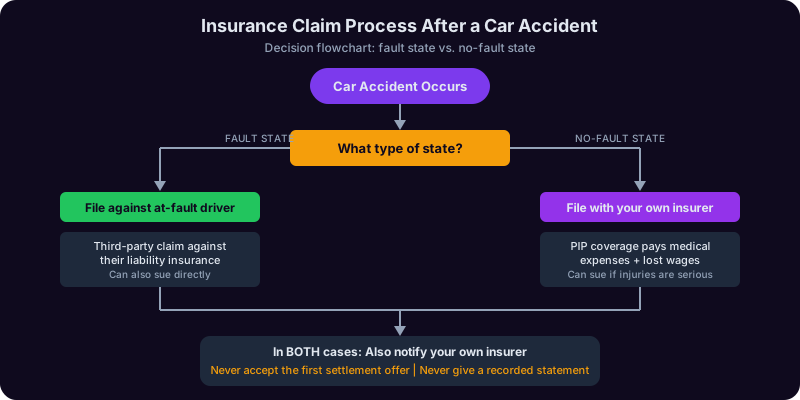
AI excels at policy analysis because it can read an 80-page document in seconds, extract every exclusion and limitation, compare language across multiple policies, flag ambiguous phrases insurers use to deny claims, and calculate the impact of step therapy on your treatment timeline. The Insurance Copilot produces a plain-language summary of every exclusion and condition in your policy. For a broader foundation, see our guide on understanding health insurance.
AI Tools for Insurance Comparison: Traditional Sites vs. AI-Powered Analysis
Traditional comparison sites like Policygenius, The Zebra, and Insurify serve a purpose for initial quote generation. But AI-powered analysis goes deeper - reading actual policy documents, modeling personalized costs, and identifying coverage gaps that comparison sites miss entirely.
AI vs. Traditional Comparison
| Task | Traditional Site | AI-Powered Analysis |
|---|---|---|
| Premium quotes | Yes, multiple carriers | Yes, plus total annual cost modeling |
| Compare deductibles | Basic side-by-side | True cost based on your expected usage |
| Read policy documents | No | Extracts exclusions, limits, conditions |
| Check medication coverage | Some formulary search | Tier, prior auth, quantity limits, step therapy |
| Provider networks | Basic name search | Cross-references your full provider list |
| Identify coverage gaps | No | Flags personal risk areas against exclusions |
| Model claim scenarios | No | Simulates accidents, hospital stays, home damage |
| Appeal denied claims | No | Drafts appeals with regulatory references |
Using Copilotly for Insurance Analysis
Copilotly's browser-based AI copilots work alongside you as you browse insurer websites and policy documents:
- Insurance Copilot: Upload your policy document or Summary of Benefits and Coverage for a plain-language breakdown of coverage, exclusions, and total cost modeling. Compare two policies side by side or identify gaps in current coverage.
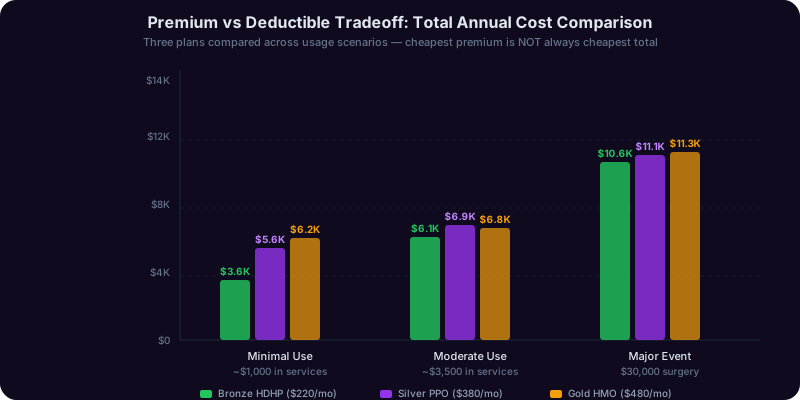
- Finance Copilot: Calculate break-even points between high and low deductible plans, model HSA tax advantages paired with HDHPs, and determine optimal premium-to-deductible ratios.
- Consumer Rights Copilot: When insurers are not playing fair - identify whether a denial violates state regulations, draft formal appeals, or file complaints with your state Department of Insurance.
The AI-Assisted Insurance Review Workflow
- Gather your current policies. Collect declarations pages for every active policy. Most insurers provide these in your online account.
- Upload to the Insurance Copilot. Ask: "What are the major exclusions?" and "What coverage gaps should I know about?"
- Model your expected costs. Share your healthcare usage, driving habits, home value, and dependents. Get total annual cost calculations.
- Generate comparison criteria. Have AI create a personalized checklist for shopping alternatives.
- Evaluate alternatives. Paste new quotes into Copilotly for side-by-side analysis against current coverage.
- Check bundling opportunities. Calculate whether combining policies saves money after accounting for coverage differences.
This workflow takes 2-3 hours with AI versus 10-15 hours manually, producing a far more thorough analysis than most consumers could do on their own.
Proven Strategies to Save $2,000-$5,000 on Insurance Every Year
Beyond comparison shopping, structural strategies reduce insurance costs without reducing coverage. These are the moves financially savvy households make - and that AI can help you identify.
Optimize Your Deductible-Premium Balance
Raising your auto deductible from $500 to $1,000 typically saves 15-20% on collision and comprehensive premiums. On a $2,300 annual premium, that is $345-$460/year. Ensure you have the higher deductible available in your emergency fund. For health insurance, an HDHP with an HSA often has premiums $2,000-$4,000/year lower than a comparable PPO. A family on an HDHP with a $3,000 employer HSA contribution and $2,500 in premium savings is $5,500/year ahead.
Bundle Intelligently
Bundling auto and home insurance saves 15-25% on average, but it is not always the best deal. If one carrier is cheapest for auto and another for home, and the individual savings exceed the bundle discount, keep policies separate. AI can model both scenarios with your actual numbers.
Review After Life Changes
Events that should trigger an immediate insurance review:
- Paid off car loan: Consider dropping collision and comprehensive if premiums exceed 10% of your car's value.
- Children leaving home: Removing a young driver saves $1,000-$3,000/year.
- Home improvements: Security systems (5-15% discount), impact-resistant roofing (10-35% in hail-prone areas).
- Credit score improvement: A better credit score can reduce auto and home premiums by 10-30%.
- Remote work: Fewer commute miles means lower auto premiums. Some insurers offer specific remote worker discounts.
Leverage HSA Tax Advantages
The HSA is the most tax-advantaged account in the U.S. tax code: contributions are tax-deductible, growth is tax-free, and withdrawals for medical expenses are tax-free. The 2026 limits are $4,300 individual and $8,550 family. Maxing out a family HSA at a 24% bracket saves approximately $2,052 in federal taxes alone.
Group and Affinity Discounts
Many organizations negotiate unadvertised group rates. Check through your employer, alumni associations, professional organizations (IEEE, AMA), warehouse clubs (Costco partners with several insurers), and military affiliations (USAA ranks among the lowest-cost insurers consistently).
The Finance Copilot can model the total financial impact of each strategy for your specific policies and tax situation. To put your savings to work, see our guide on how to start investing with $100.
Frequently Asked Questions
Recommended Copilots
Recommended Copilots
Analyze full policy documents, compare coverage across plans, and identify exclusions that could cost you thousands
Try Free →Calculate total insurance costs, model deductible-premium tradeoffs, and optimize HSA tax advantages
Try Free →Appeal denied insurance claims, file complaints with state regulators, and understand your legal protections
Try Free →Fit insurance premiums into your overall budget and identify savings to redirect toward coverage gaps
Try Free →Understand medical terminology in health insurance policies and verify clinical appropriateness of denied treatments
Try Free →Related Articles
Get Answers From the Insurance Copilot
Upload your policy documents and get an instant analysis of coverage gaps, hidden exclusions, and savings opportunities across health, auto, home, and life insurance.