
Health & Wellness
How to Prepare for an Adult ADHD Evaluation: What to Bring and Track
An estimated 75-80% of adults with ADHD remain undiagnosed, often into their 30s and 40s. Walk into your evaluation prepared: the ASRS and DIVA-5 screeners clinicians trust, a 2-week symptom journal template, the exact evidence to bring, and how to choose between a psychiatrist, psychologist, or telehealth evaluator.
Adult ADHD in 2026: Prevalence, DSM-5-TR Criteria, and Why Diagnosis Comes So Late
Adult ADHD is one of the most under-diagnosed mental health conditions in the United States. The Centers for Disease Control and Prevention estimates that roughly 6% of U.S. adults (more than 15 million people) currently have ADHD, yet only a fraction have received a formal diagnosis. According to research summarized by CHADD (Children and Adults with Attention-Deficit/Hyperactivity Disorder), an estimated 75 to 80% of adults with ADHD are undiagnosed or misdiagnosed, frequently first identifying their symptoms in their 30s, 40s, or even later in life.
Why so many adults reach midlife without a diagnosis:
- ADHD diagnostic criteria were historically developed around hyperactive school-aged boys, missing quieter inattentive presentations
- Bright, high-achieving adults compensate through extra hours, perfectionism, and elaborate workarounds ("masking") until life demands outpace their coping systems
- Symptoms are often misattributed to anxiety, depression, burnout, perimenopause, or personality flaws
- Life transitions (new job, parenthood, loss of structure, perimenopause) suddenly overwhelm previously workable systems
- Pediatricians and primary care doctors often lack training to recognize adult presentations
DSM-5-TR criteria for adult ADHD (revised 2022): The American Psychiatric Association's Diagnostic and Statistical Manual of Mental Disorders, 5th Edition, Text Revision requires:
- At least 5 symptoms of inattention and/or hyperactivity-impulsivity in adults aged 17 and older (down from 6 in children)
- Symptoms must be present for at least 6 months and inconsistent with developmental level
- Several symptoms must have been present before age 12 (this is the "childhood onset" requirement)
- Symptoms cause clear impairment in two or more settings (work, home, school, relationships, finances)
- Symptoms are not better explained by another mental disorder
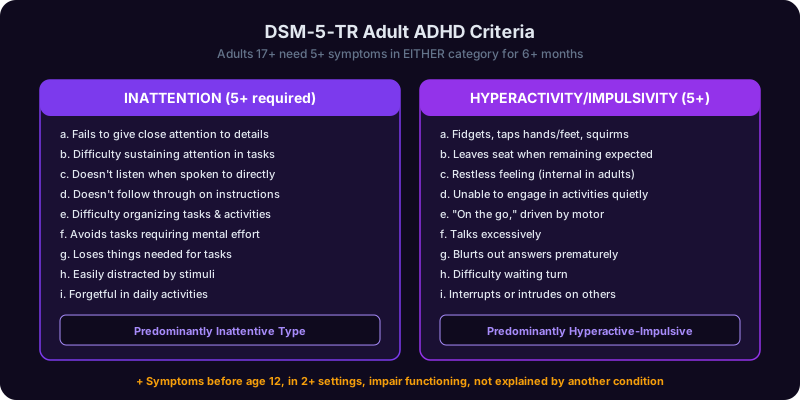
One important 2022 update to the DSM-5-TR was clarifying that the childhood onset requirement is about symptoms being present before age 12, not about formal impairment or diagnosis at that age. Many adults had subtle symptoms in childhood that did not impair them until life demands increased.
If you have spent decades wondering why everyday adult responsibilities feel disproportionately hard, a structured evaluation can either confirm ADHD or help identify what is actually going on. The remainder of this guide walks you through exactly how to prepare so that your evaluation produces a clear, defensible answer.
Medical disclaimer: Self-screening is not diagnosis. Only a qualified clinician can diagnose ADHD. This guide provides general information to help you prepare for that conversation.
Inattentive, Hyperactive, and Combined: Full Symptom Checklist for Each Presentation
The DSM-5-TR recognizes three ADHD presentations (formerly called "subtypes"). Most adults shift between presentations over their lifetime, and the same person may meet criteria for one presentation in their 20s and another in their 40s. Knowing which presentation fits your experience helps your evaluator zero in on the right diagnostic questions.
Predominantly Inattentive Presentation
This is the most common adult presentation, particularly in women and in people diagnosed later in life. The DSM-5-TR lists 9 inattentive symptoms; adults need at least 5:
- Often fails to give close attention to details or makes careless mistakes (typos in emails, missed line items in spreadsheets, errors in repetitive tasks)
- Has trouble sustaining attention during meetings, reading, paperwork, or long conversations
- Often does not seem to listen when spoken to directly, even without distraction present
- Often does not follow through on instructions and fails to finish work or chores (starts strong, fades out)
- Has difficulty organizing tasks: messy workspace, poor time management, missing deadlines
- Avoids or strongly dislikes tasks requiring sustained mental effort (tax returns, long-form writing, multi-step forms)
- Often loses things necessary for tasks (keys, wallet, phone, glasses, eyeglasses, paperwork)
- Easily distracted by external stimuli or unrelated internal thoughts
- Often forgetful in daily activities (forgetting appointments, returning calls, paying bills, picking up groceries)
Predominantly Hyperactive-Impulsive Presentation
Less common in adults; the DSM-5-TR lists 9 hyperactive-impulsive symptoms; adults need at least 5:
- Fidgeting with hands or feet, tapping, squirming when seated
- Frequently leaves seat or feels intense restlessness when expected to remain seated
- Difficulty engaging in leisure activities quietly (relaxing feels uncomfortable)
- Often "on the go" or feeling "driven by a motor"
- Talks excessively, dominates conversations
- Blurts out answers before questions are completed; finishes other people's sentences
- Has difficulty waiting in lines or for one's turn
- Interrupts or intrudes on others; jumps into conversations or activities uninvited
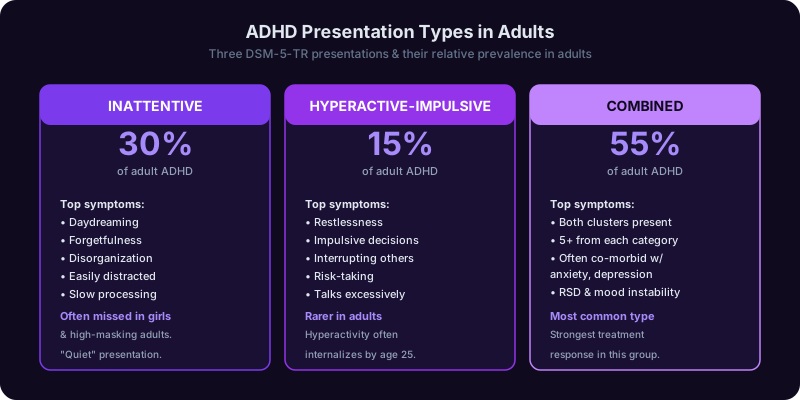
Combined Presentation
To qualify, an adult must meet thresholds for both inattentive (5+) and hyperactive-impulsive (5+) symptoms. This is the most common presentation in men and in newly diagnosed people under 30.
Additional adult-specific features not formally in the DSM but increasingly recognized by clinicians:
- Emotional dysregulation: rapid mood shifts, intense reactions, slow recovery from emotional setbacks
- Rejection sensitive dysphoria (RSD): extreme emotional pain in response to perceived criticism or rejection
- Time blindness: difficulty estimating elapsed time or how long tasks will take
- Executive dysfunction: impairment in initiation, planning, working memory, and task switching
- Hyperfocus: intense focus on stimulating tasks while routine tasks remain undoable
For a symptom-by-symptom exploration, see our guide on ADHD symptoms in adults. Bring your tallies to your evaluation; clinicians value structured self-observations over vague impressions.
The Differential: Conditions That Mimic, Mask, or Co-Exist With Adult ADHD
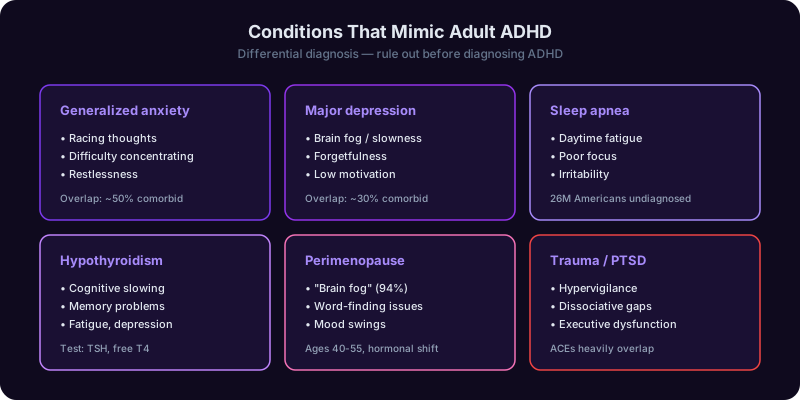
One reason evaluations exist (rather than relying on a checklist) is that many medical and psychiatric conditions produce ADHD-like symptoms. A skilled clinician will work through the differential diagnosis, ruling out or identifying co-occurring conditions before concluding ADHD. Coming to your evaluation aware of these possibilities makes the conversation faster and more accurate.
Conditions That Mimic ADHD
Generalized Anxiety Disorder (GAD): Chronic worry impairs concentration and working memory. Severe anxiety often produces "brain fog" indistinguishable from ADHD inattention, though anxiety-driven inattention responds to anti-anxiety treatment.
Major Depressive Disorder: Depression causes psychomotor slowing, concentration impairment, indecisiveness, and fatigue. Unlike ADHD, depressive cognitive symptoms typically arrive with low mood, anhedonia, and sleep/appetite changes, and they resolve when depression is treated.
Sleep apnea: Obstructive sleep apnea causes daytime sleepiness, attention impairment, and executive dysfunction. The CDC estimates 1 in 5 adults has at least mild OSA, mostly undiagnosed. A sleep study rules it in or out.
Hypothyroidism: Underactive thyroid produces fatigue, brain fog, cognitive slowing, and depression-like symptoms. A simple TSH blood test screens for it.
Perimenopause and menopause: Declining estrogen affects dopamine pathways, and many women experience their first "ADHD-like" symptoms during perimenopause (typically ages 40-55). For some, these are truly new symptoms driven by hormonal shifts; for others, they are unmasked ADHD that compensatory systems no longer cover.
PTSD and complex trauma: Trauma responses produce hypervigilance and concentration difficulty, but include intrusive thoughts, avoidance, and hyperarousal not seen in ADHD.
Conditions That Frequently Co-Exist With ADHD
According to the National Institute of Mental Health, an estimated 60-80% of adults with ADHD have at least one co-occurring psychiatric condition. Common comorbidities:
- Anxiety disorders: co-occur in approximately 50% of adults with ADHD
- Depression: co-occurs in approximately 30-40%
- Sleep disorders: insomnia, delayed sleep phase, and OSA are dramatically over-represented
- Substance use disorders: roughly 25% have a co-occurring SUD, often as self-medication
- Bipolar disorder: co-occurs in approximately 10-15%; distinguishing ADHD from bipolar II is particularly tricky and requires a careful clinician
- Learning disabilities: dyslexia and dyscalculia co-occur in 25-40%
- Autism spectrum: 30-50% overlap, particularly in adults diagnosed later in life
This is why evaluations include broader mental health screening, not just ADHD instruments. If your evaluator does not ask about sleep, mood, trauma, substance use, and physical health, that is a red flag. For strategies to manage co-existing anxiety, see how to reduce anxiety naturally.
Self-Screening Tools That Clinicians Actually Trust (ASRS, DIVA-5)
No self-screening tool can diagnose ADHD, but several validated instruments are routinely used by clinicians to structure intake and guide further questioning. Completing one or more before your evaluation gives your clinician a head start and gives you concrete data to discuss.
1. ASRS-v1.1 Six-Question Screener (WHO + Harvard)
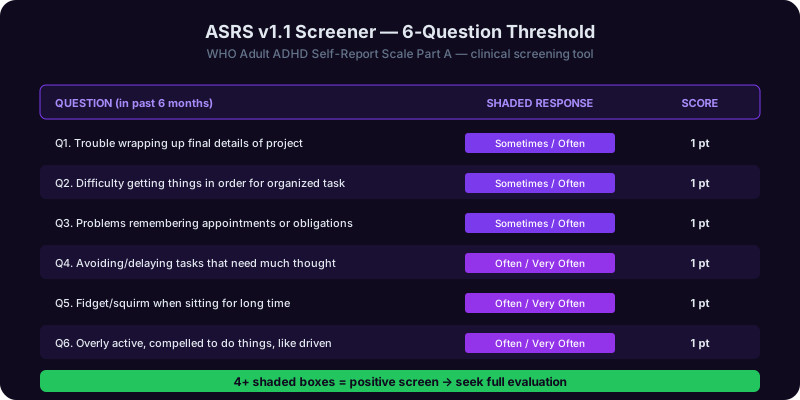
Developed jointly by the World Health Organization and Harvard Medical School, the 6-item Adult ADHD Self-Report Scale is the most widely validated brief screener in clinical use. It takes about 2 minutes. You rate how often each of 6 statements applies to you (Never, Rarely, Sometimes, Often, Very Often). Items include:
- How often do you have trouble wrapping up the final details of a project once the challenging parts are done?
- How often do you have difficulty getting things in order when you have to do a task that requires organization?
- How often do you have problems remembering appointments or obligations?
- When you have a task that requires a lot of thought, how often do you avoid or delay getting started?
- How often do you fidget or squirm with your hands or feet when you have to sit down for a long time?
- How often do you feel overly active and compelled to do things, like you were driven by a motor?
Scoring uses darkened response zones; four or more responses in the darkened zones is highly consistent with adult ADHD and indicates need for evaluation. The 6-item screener has sensitivity 68.7% and specificity 99.5% in WHO validation studies.
2. Full ASRS-v1.1 (18 Questions)
If the 6-item screen is positive, completing the full 18-item ASRS gives a more complete picture. The full scale maps directly to all 18 DSM symptom criteria (9 inattentive, 9 hyperactive-impulsive). The instrument is free, widely available online, and many clinicians ask you to bring a completed copy to your evaluation.
3. DIVA-5 (Diagnostic Interview for ADHD in Adults, 5th Edition)
The DIVA-5 is the gold-standard structured diagnostic interview for adult ADHD, developed by the Dutch DIVA Foundation. It is not a self-screener; it is administered by a clinician (typically taking 60-90 minutes) and walks through each DSM-5-TR criterion with examples for both childhood and adulthood. Many neuropsychologists and ADHD-specialist psychiatrists use the DIVA-5 as their primary diagnostic tool because it produces a defensible, documented case.
How to Use Self-Screening Honestly
Self-rating accuracy is the single biggest variable in screening quality. To maximize honesty:
- Rate based on your unmedicated baseline, not your best day with coffee and a deadline
- Consider how often a symptom occurs across multiple settings, not just at work or just at home
- Compare yourself to peers your age, not to your high-achieving best friend or your most disorganized cousin
- Ask a partner or close friend to rate you separately on the same items; discrepancies are revealing
- Do not Google answers for what "counts" as Often versus Very Often; use your gut
Bring printed or PDF copies of your completed screeners to your evaluation. Clinicians appreciate concrete data, and your scores will inform their interview structure.
The 2-Week Symptom Journal Template: What to Track and How
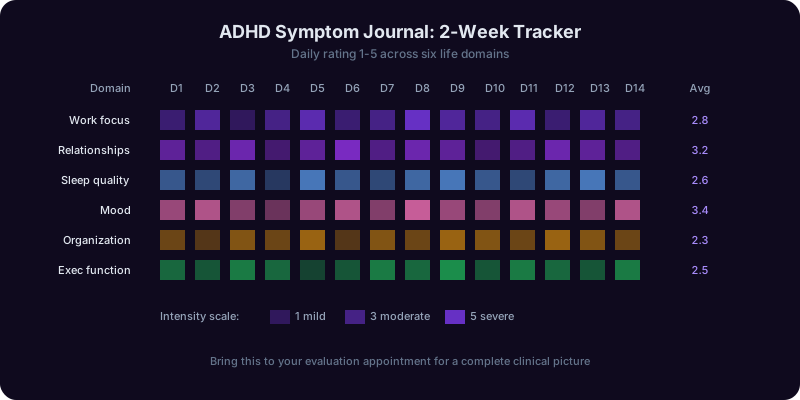
Self-screeners capture how you remember your symptoms. A real-time symptom journal captures how they actually show up day-to-day. Most adult ADHD specialists strongly recommend bringing 1-2 weeks of journal data to your evaluation. It transforms vague impressions ("I'm always disorganized") into concrete evidence ("In 10 working days, I missed 3 deadlines, forgot 2 appointments, and lost my keys 4 times").
Below is a tested template structure. Use a notebook, a spreadsheet, or a notes app (Apple Notes, Notion, Obsidian, etc.) and track these categories every evening for 14 days.
Daily Tracking Categories
- Work / Focus: Hours of intended focused work vs. actual focused work. Tasks left incomplete. Mistakes you caught (or that others caught). Times you switched tasks mid-work. Was your stimulant medication (if any) effective today?
- Time and organization: Were you late? By how much? Did you miss any appointments or deadlines? How many times did you misplace something important? Did you double-book yourself?
- Sleep: Bedtime, wake time, total hours, sleep quality (1-10), how rested you felt in the morning. Note any racing thoughts at bedtime or difficulty getting started in the morning.
- Mood and emotional regulation: Rate baseline mood (1-10), note any disproportionate emotional reactions, rejection-sensitive episodes, irritability, or rapid mood shifts. Tag the trigger if you can identify one.
- Executive function moments: Tasks you avoided despite knowing they were important. Multi-step tasks you abandoned partway. Moments where you froze ("task paralysis"). Hyperfocus episodes (what triggered them, how long they lasted, what you neglected during them).
- Relationships: Did you forget to respond to messages? Interrupt people? Feel overwhelmed by social demands? Cancel plans last-minute?
- Physical and lifestyle: Caffeine, alcohol, screen time, exercise, meals (did you forget to eat? eat impulsively?). Note any physical restlessness or fidgeting.
Why 14 Days Specifically
One week is too short to capture variability. Hormonal cycles, sleep debt, work demands, and weekend versus weekday patterns all need at least two weeks to emerge. If you can track for 30 days, even better, especially if you menstruate (capturing at least one full cycle reveals hormonal patterns).
Patterns to Highlight at Your Evaluation
Before your appointment, spend 30 minutes reviewing your journal and writing a one-page summary of patterns. Examples your clinician will value:
- "Across 14 days I missed 4 deadlines, lost items 7 times, and was late to appointments on 6 days."
- "My focus is best between 8-11am and crashes after 2pm; I cannot start tax paperwork even after 6 separate attempts."
- "I had 3 emotional episodes that I now recognize as rejection-sensitive: a vague work email, a delayed text reply, and a parking ticket."
- "Hyperfocus took over twice (a video game session of 5 hours, a coding project of 7 hours) during which I forgot to eat and missed appointments."
If maintaining a daily journal is itself impaired by your suspected ADHD (a common irony), use AI assistance. Our guide on AI journaling for mental health covers tools and prompts that make consistent journaling realistic even for people with executive function challenges.
What to Bring to Your Evaluation: The Evidence Checklist
An adult ADHD evaluation hinges on demonstrating persistent, pervasive, and impairing symptoms with childhood onset. Coming with documentation rather than just verbal recall accelerates and strengthens the diagnostic conclusion. Here is exactly what to gather.
1. Childhood Evidence (Critical for DSM-5-TR Childhood Onset Requirement)
- Report cards, especially elementary and middle school. Teacher comments are gold: "Bright but does not finish work," "Talks excessively," "Daydreams during lessons," "Disorganized," "Could do better with more effort." Photograph or scan them.
- Old psychological or speech evaluations if any were done in childhood
- School disciplinary records if you have access (frequent referrals for talking, off-task behavior, missing assignments)
- Parent or older sibling input. A short written statement from a parent describing your childhood behavior (or a 15-minute phone call your clinician can place) is one of the most valuable pieces of evidence. Sample prompt: "What was I like as a child? Was I forgetful, distractible, hyperactive, or disorganized? Did teachers complain?"
- Childhood photographs and home videos can be surprisingly useful, especially for visible restlessness
2. Work and Education Performance Documentation
- Recent performance reviews, especially any noting attention, organization, follow-through, or interpersonal issues
- A list of jobs held, durations, and reasons for leaving (frequent job changes can be informative)
- College or graduate school transcripts showing patterns (incomplete grades, repeated courses, GPA fluctuations)
- Examples of work products with errors, missed deadlines, or unfinished projects
3. Self-Screening and Journal Data
- Completed ASRS-v1.1 6-item screener and full 18-item version
- Your 2-week symptom journal with your written summary of patterns
- Optional: scores from other validated tools (CAARS-S, BAARS-IV) if you have them
4. Collateral Informant Rating
Many clinicians ask a partner, parent, or close friend to complete a brief rating scale. The standard collateral version is the ASRS Informant Version. Bring contact information for someone willing to be contacted.
5. Family History Document
ADHD is highly heritable (50-80% genetic component). A one-page family tree noting any first-degree relatives with diagnosed or suspected ADHD, learning disabilities, anxiety, depression, bipolar disorder, or substance use disorders is extremely useful.
6. Medical Records and Medication List
- List of current medications, supplements, and dosages
- Recent thyroid panel, vitamin D, B12, and CBC results if available (these rule out medical mimics)
- If you have ever had a sleep study, bring those results
- Any prior mental health diagnoses and treatments tried
7. Your Goals for the Evaluation
Write down 3-5 specific outcomes you hope for. Examples:
- "I want to know whether ADHD explains my work difficulties."
- "I need formal documentation for workplace accommodations."
- "I want to understand whether to try medication."
- "I want to rule out other conditions before settling on a diagnosis."
Clinicians appreciate clarity of purpose. It also helps you advocate for the type of evaluation you actually need (e.g., a full neuropsych battery if you need ADA documentation versus a clinical interview if you mainly want to discuss medication).
Finding the Right Evaluator: Psychiatrist, Psychologist, Telehealth, and Cost in 2026
Choosing your evaluator is one of the highest-leverage decisions in this process. The same set of symptoms can produce very different evaluations depending on the clinician's training, time per appointment, and approach. Here is how to choose wisely in 2026.
Clinician Types
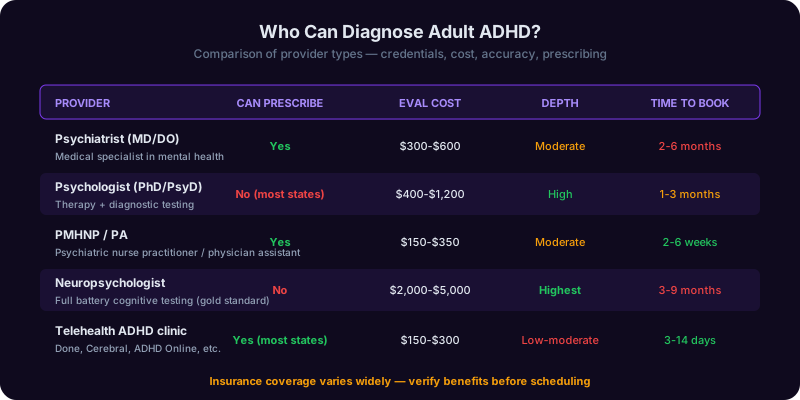
Psychiatrist (MD/DO): Medical doctor who can diagnose ADHD and prescribe medication. Best choice if you anticipate wanting medication. Adult ADHD specialist psychiatrists are in short supply; expect waits of 2-6 months. Cost without insurance: $300-$600 initial evaluation, $150-$300 follow-ups.
Psychologist (PhD/PsyD): Diagnoses and provides therapy but generally cannot prescribe (exceptions in 6 U.S. states). Best for thorough evaluation and ongoing therapy, with medication managed separately. Cost: $200-$400 initial.
Neuropsychologist: A psychologist specializing in brain-behavior relationships. Provides the most comprehensive evaluations including computerized attention tests (CPT-3, TOVA), working memory and executive function batteries, and learning disability rule-outs. Strongly recommended for ADA documentation, uncertain diagnoses, or complex comorbidities. Cost: $1,500-$3,500 over 4-8 hours.
Psychiatric Nurse Practitioner (PMHNP) or Physician Assistant (PA): Can diagnose and prescribe in most states. Often more accessible than MD psychiatrists; look for ADHD-specific experience.
Primary Care Physician: Most PCPs lack the time and training for thorough adult evaluations. Better as a long-term medication prescriber after a specialist establishes the diagnosis.
Telehealth ADHD Platforms (2026 Status)
Telehealth ADHD evaluation became widespread post-2020. As of 2026, the landscape has consolidated following DEA enforcement and platform shake-ups:
- Done: Faced legal challenges in 2024-2025; stricter intake protocols. Historically controversial quality.
- Cerebral: No longer prescribes Schedule II stimulants in most states post-DEA action; offers evaluations and non-stimulants.
- Klarity Health: Connects you with licensed providers; quality varies by clinician.
- ADHD Online: Comprehensive online evaluations with PhD psychologists; flat fee $200-$400. Generally higher-quality than rapid-prescription platforms.
- Talkiatry, Headway, Grow Therapy, Alma: Insurance marketplaces; search specifically for "adult ADHD" as a specialty.
2026 telehealth red flags to avoid: any platform that promises a diagnosis after a 15-30 minute appointment, immediately prescribes stimulants without a thorough history, charges only via subscription and pressures you to refill, or refuses to communicate with your primary care doctor.
Insurance Coverage
Most insurance plans cover psychiatric evaluations and follow-ups, often at 70-100% after deductible. However, neuropsychological testing is more variable. Some plans require pre-authorization with documented medical necessity. Call your insurer's behavioral health line before scheduling and ask: (1) Is this provider in-network? (2) Is CPT code 96138-96139 (neuropsych testing) covered? (3) What is my mental health deductible and copay structure? For navigating coverage and appeals, see our guide on affordable therapy and mental health care.
After Diagnosis: Medication Classes, Therapy Modalities, and Building Your Plan
A formal ADHD diagnosis is the start of treatment planning, not the end of the journey. Most adults benefit from a combined approach: medication to manage core neurological symptoms plus structured behavioral support to build skills that years of undiagnosed ADHD may have left underdeveloped.
Medication Classes
Stimulants (first-line, 70-80% response):
- Methylphenidate: Ritalin, Concerta, Focalin, Daytrana patch. Shorter acting, smoother onset.
- Amphetamine: Adderall, Vyvanse, Dexedrine, Mydayis. Vyvanse is a prodrug with reduced abuse potential; Mydayis lasts up to 16 hours.
Both classes are Schedule II controlled substances. Initial dosing starts low, with titration upward over weeks. Common side effects: appetite suppression, insomnia (if taken too late), dry mouth, mild blood pressure elevation. The Attention Deficit Disorder Association (ADDA) maintains detailed adult medication guides.
Non-stimulants (50-60% response rate; for people who cannot tolerate or do not respond to stimulants):
- Atomoxetine (Strattera): 24-hour coverage; takes 4-6 weeks for full effect
- Viloxazine (Qelbree): FDA-approved for adults in 2022; useful when anxiety co-occurs
- Guanfacine ER (Intuniv): often used as an add-on for emotional regulation and sleep
- Bupropion (Wellbutrin): off-label but effective when depression co-occurs
Therapy Modalities
CBT-ADHD (Cognitive Behavioral Therapy for ADHD): The most evidence-backed psychotherapy. The Safren (Mass General) and Solanto (Mount Sinai) protocols are best-researched. Typical course: 12-16 weekly sessions on organization, procrastination, time management, and addressing accumulated shame.
Executive function coaching: Not psychotherapy; focuses on practical skills (calendars, task management, body doubling, environmental design). Best for people who know what to do but struggle with consistent follow-through. Look for coaches certified by the Professional Association of ADHD Coaches (PAAC) or through ICF-accredited programs. Sessions typically $100-$300; not covered by insurance.
Mindfulness-Based Cognitive Therapy: 8-week programs show meaningful symptom improvement in mild-to-moderate ADHD, particularly for emotional regulation and rumination.
Couples therapy with an ADHD-informed therapist: If ADHD has produced parent-child dynamics or chronic conflict in your relationship, structured couples therapy can rebuild balance. Melissa Orlov's resources are widely recommended.
Building Your Evaluation Packet With Copilotly
Most of the work in this guide (compiling records, organizing journal data, summarizing patterns, listing questions) is exactly the executive-function-heavy preparation that adult ADHD makes hardest. The Mental Health Copilot helps you build your evaluation packet without your ADHD getting in the way: guide you through daily journaling, summarize 14 days into a clinician-ready one-pager, generate questions for three different evaluators to compare, and walk you through ADA accommodations after diagnosis.
After diagnosis, the same copilot helps you track medication trials, prepare for follow-up appointments with structured updates, and stay consistent with CBT homework between sessions.
Medical disclaimer: Self-screening is not diagnosis. Only a qualified clinician can diagnose ADHD. Medication and therapy decisions must always be made with a licensed healthcare professional. This content is educational, not a substitute for personalized medical advice.
Frequently asked questions
Are ADHD stimulant medications safe for adults long-term?
Should I disclose my ADHD diagnosis to my employer?
What ADA accommodations can I request for ADHD at work?
Why are women diagnosed with ADHD so much later than men?
How long does it take to get an ADHD evaluation in 2026?
Can my evaluation results be shared with my employer or insurance?
What if my evaluation says I do not have ADHD but I am sure I do?
Will an ADHD diagnosis affect my ability to get life insurance or security clearances?
Prepare for Your ADHD Evaluation with Copilotly
Use the Mental Health Copilot to build a clinician-ready evaluation packet: organize your 2-week symptom journal, summarize childhood evidence, complete validated screeners like the ASRS-v1.1, and prepare the exact questions to ask your evaluator. After diagnosis, track medication trials and stay on top of therapy homework.
- Health & Medical CopilotCoordinate your overall health picture including thyroid, sleep, and metabolic factors that can mimic ADHD
Free plan, no card. Pro from $4.99/week for every copilot across all 20 domains - about what one hour with any single professional costs per year.
Not a medical providerThis is health information, not medical advice. Always consult your healthcare provider.